A major wildfire at Mount Bromo has forced authorities to close one of Indonesia’s most popular natural attractions, disrupting tourism in East Java as firefighters continue efforts to prevent new outbreaks during an unusually dry season.
Hundreds of hectares burned at a major tourist destination
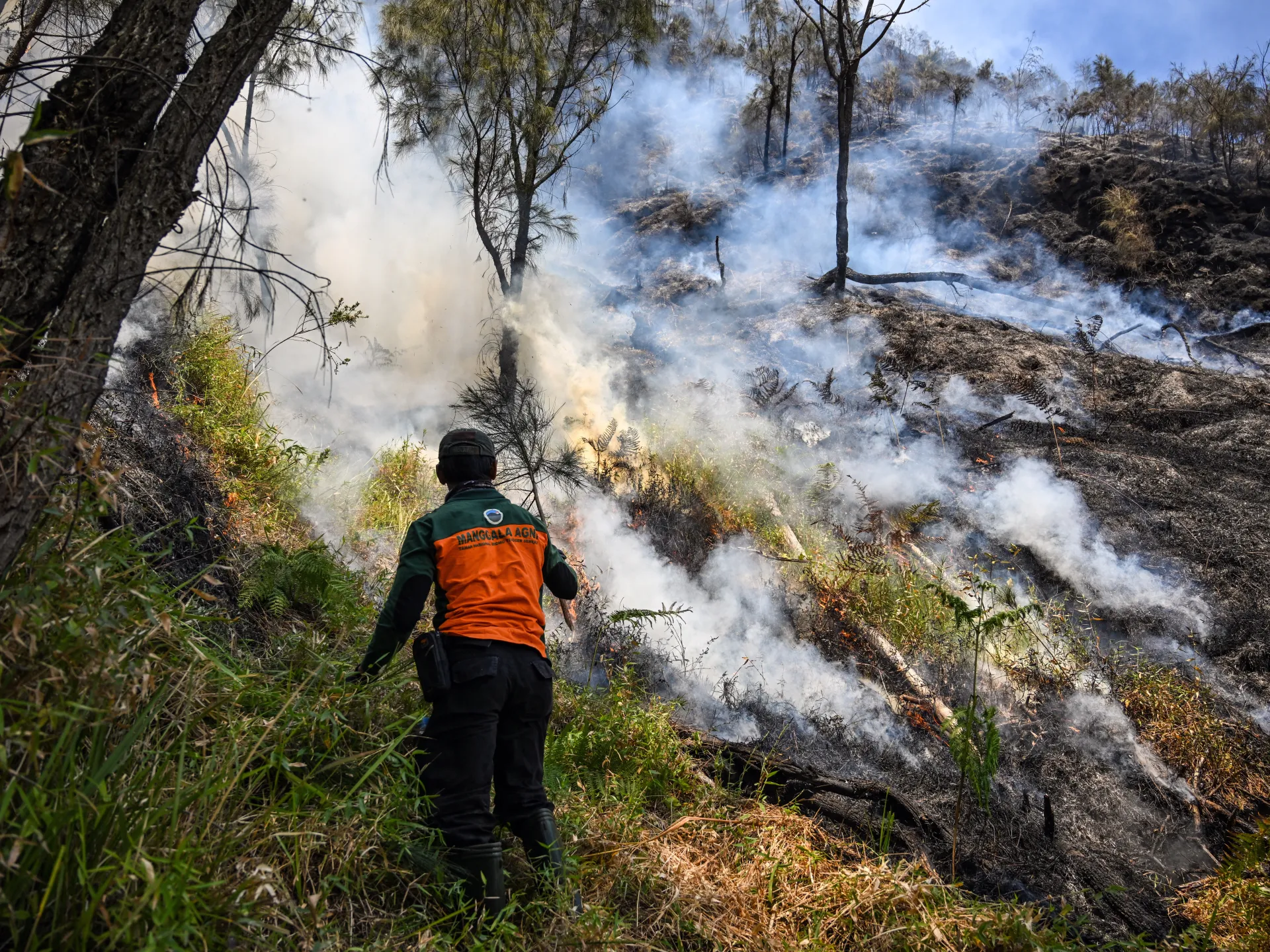
The wildfire broke out inside the Bromo Tengger Semeru National Park, an internationally known destination famous for its volcanic landscapes, sunrise views and highland scenery. According to the latest reports, the main fire has been extinguished after burning around 550 hectares (1,360 acres) of land.

However, authorities have detected new hotspots near the Bromo caldera, meaning the danger has not completely disappeared. The flames also reached the Penanjakan area, one of the most popular viewpoints for tourists visiting Mount Bromo. The affected landscape includes dry grassland, vegetation and protected areas, raising concerns not only about visitor safety but also about damage to the park’s fragile natural environment.
Tourist access suspended as safety becomes priority
Authorities have closed access to Mount Bromo and the surrounding national park while firefighting and monitoring operations continue. The closure is a major disruption for travelers who visit the area to experience its famous sunrise, volcanic scenery and jeep tours. The shutdown is also affecting the local tourism economy. Jeep drivers, trekking guides, hotels, homestays, restaurants, food sellers and other tourism-related businesses depend heavily on visitors traveling to Bromo. A prolonged closure could therefore create financial pressure for communities whose livelihoods are closely connected to tourism.
Firefighters and helicopters deployed
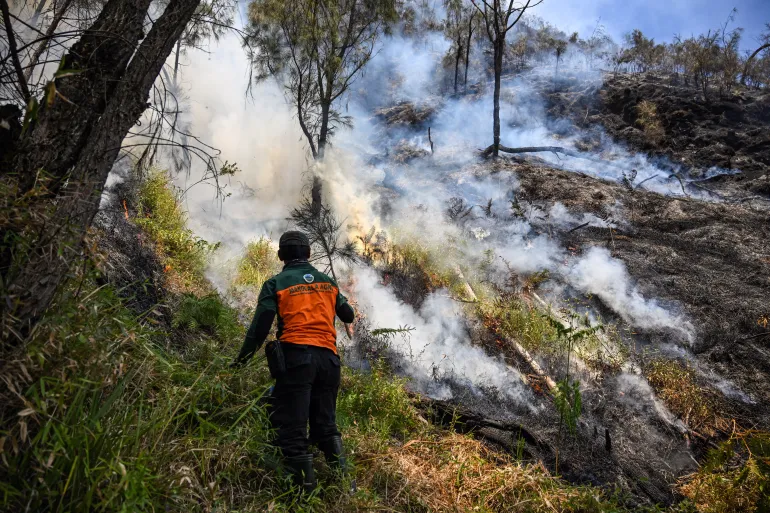
Indonesia has mobilized hundreds of firefighters, soldiers, police officers, park rangers and local volunteers to control the blaze. Ground teams are conducting patrols, cooling operations and firebreak construction to stop flames from spreading into unaffected areas. Authorities have also deployed helicopters for water bombing operations, particularly in locations that are difficult to reach by road. Firefighting teams are continuing to monitor the area for remaining hotspots and possible new outbreaks.
Dry weather and El Niño increase fire danger
The Bromo wildfire comes as Indonesia faces an elevated risk of forest and land fires because of unusually dry conditions and strengthening El Niño influences. Dry vegetation can ignite easily, while strong winds can cause flames to spread rapidly across grassland and forest areas. Indonesia’s weather authorities have identified August and September as particularly critical months, when dry vegetation and unfavorable weather conditions could increase the possibility of additional fires.
Bromo fire part of a wider wildfire crisis
The situation is not limited to East Java. Other fires have been reported across Indonesia, including peatland fires in Jambi province on Sumatra. More than 50 hectares of peatland have reportedly burned, creating smoke and concerns over deteriorating air quality. Firefighters in Jambi are facing additional difficulties because of deep peat soil, limited water supplies, difficult access, and strong winds. Indonesia has historically experienced serious forest and peatland fires during dry periods, with smoke sometimes spreading across neighboring parts of Southeast Asia.
A serious warning for nature-based tourism
The Mount Bromo incident highlights the growing vulnerability of nature-based tourism to extreme weather and environmental disasters. Destinations built around mountains, forests, national parks and other natural landscapes can face sudden closures when wildfires threaten visitors and ecosystems. For Bromo, temporarily restricting tourism is a necessary safety measure, but the economic consequences can be significant. The attraction supports a large network of local transport operators, guides, accommodation providers, restaurants and small businesses that rely on a continuous flow of tourists.
New hotspots keep authorities on alert
Although the main wildfire has been brought under control, the discovery of new hotspots means authorities cannot yet consider the threat completely over. Fire crews continue to monitor the national park and respond to areas where flames could reignite. Officials have also urged the public to avoid activities that could start new fires, including discarding cigarette butts and burning vegetation for land clearance.

Tourism recovery depends on safety
Mount Bromo remains one of Indonesia’s most important tourism attractions, but visitors will have to wait until authorities determine that conditions are safe before normal tourism activities can resume. The latest wildfire demonstrates how quickly a natural disaster can disrupt an entire tourism destination. While the temporary closure will cause short-term losses for tourism businesses, protecting visitors, local communities and the national park must remain the priority.
For now, Mount Bromo’s tourism gates remain closed, while authorities focus on extinguishing remaining hotspots and preventing another outbreak. The situation serves as a powerful reminder that protecting Indonesia’s natural attractions is increasingly linked to managing the growing risks posed by extreme weather, drought and wildfires.