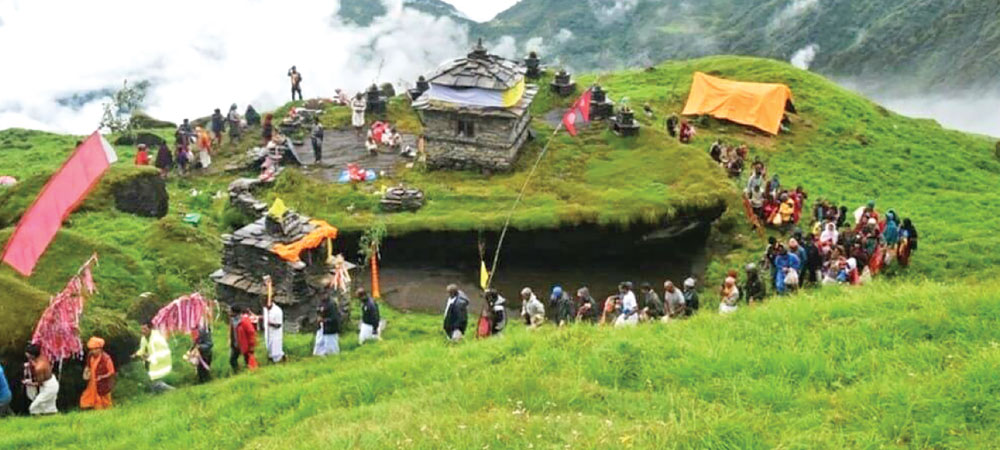
A new trekking route leading to Rikhar, a renowned religious site in Kuinemangale, Raghuganga Rural Municipality 8 of Myagdi district, has been constructed to make the journey easier for pilgrims and visitors. The new trail addresses long-standing difficulties faced by people travelling to the remote destination, where the absence of a proper footpath had made several sections of the journey particularly challenging. The initiative is expected to improve accessibility to Rikhar and support its growing potential as a religious, cultural and nature-based tourism destination in the Dhaulagiri region.
New trail improves access for pilgrims and visitors
The trekking route was constructed by Raghuganga Rural Municipality after recognizing the difficulties faced by visitors travelling to Rikhar, particularly at sections where the terrain was difficult to cross without a proper trail. According to Kulraj Paudel, Chief Administrative Officer of Raghuganga Rural Municipality, the local government allocated Rs. 500,000 from the current fiscal year’s budget for the construction of the footpath. The work was carried out through a users’ committee, allowing local representatives and community members to participate directly in the development of the access route.

The new trail has been built at several difficult locations along the route, where travellers previously had to navigate challenging terrain. Chitra Bahadur Chhetry, chairperson of the Trekking Route Construction Users’ Committee and also chairperson of the Likhar Conservation Committee, said approximately 60 meters of footpath had been constructed at different locations. He said the lack of a proper trekking route had created significant difficulties for people travelling to Rikhar, while the newly constructed sections have made movement considerably easier. The improvement is particularly important for pilgrims who travel to the site during major religious occasions.
Trail built ahead of Janai Purnima pilgrimage
One of the main purposes of the project is to facilitate the movement of devotees visiting Rikhar during Janai Purnima, an important Hindu religious festival. Special worship and religious rituals are performed at the site on this occasion, attracting pilgrims who undertake the challenging journey to the high-altitude religious destination. The construction of the trekking route is therefore expected to provide better access for devotees and reduce some of the difficulties associated with reaching the site.
For a remote destination located at approximately 4,500 meters above sea level, even relatively short sections of a poor or undeveloped trekking route can create considerable challenges for visitors. The newly constructed sections provide a basic improvement in the journey and demonstrate the role that local infrastructure investment can play in opening remote religious destinations to visitors. However, further development of safe and sustainable access facilities would be important if the area is to accommodate increasing numbers of pilgrims and tourists in the future.
Rikhar combines religious and natural attractions
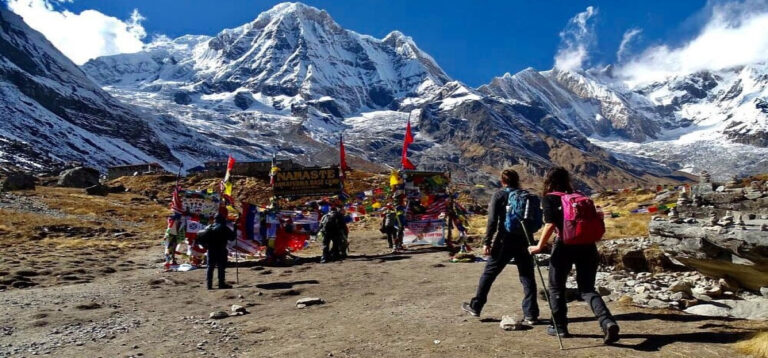
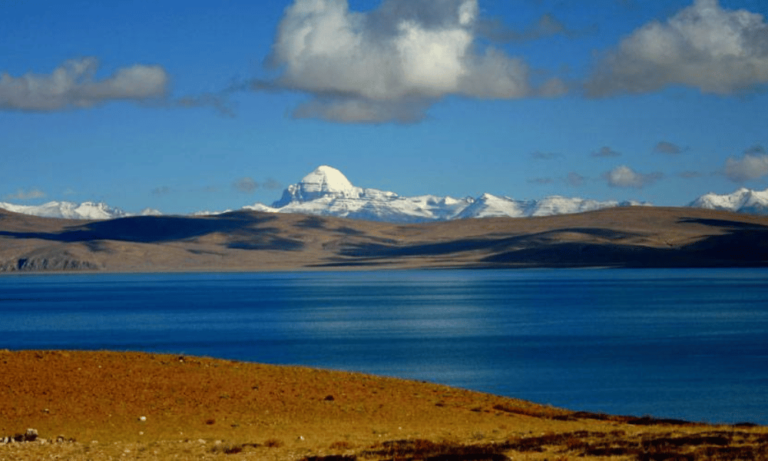
Rikhar is significant not only because of its religious traditions but also because of its dramatic Himalayan surroundings. The destination is located near the Dhaulagiri Base Camp, in the foothills of Dhaulagiri, the world’s seventh-highest mountain. Its high altitude setting gives visitors an opportunity to experience a remote Himalayan landscape while also visiting a site regarded as sacred by local communities and pilgrims. According to religious tradition, Rikhar is believed to be a place where the Seven Sages, or Saptarishis, meditated and attained spiritual knowledge. This long-standing belief has contributed to the site’s status as a pilgrimage destination. The combination of mythology, religious practices and the surrounding mountain environment gives Rikhar a distinctive character that could appeal to visitors seeking experiences that connect spirituality, culture and Himalayan nature.
Religious tourism potential remains significant
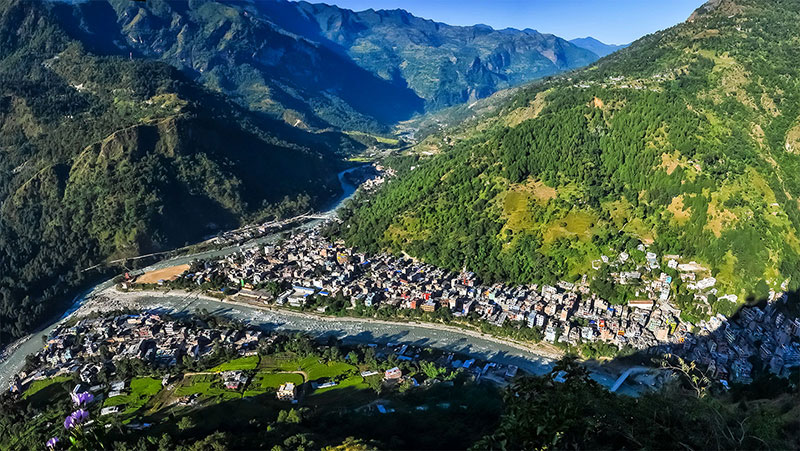
The development of the new trail has also highlighted the tourism potential of Rikhar and the wider Dhaulagiri region. Local representatives have emphasized the need for the government and local authorities to give greater priority to tourism infrastructure and promotion in the area. Improved access can serve as an important starting point, but additional facilities and coordinated promotion would be needed to establish Rikhar as a more accessible and sustainable tourism destination.
Rikhar’s religious importance provides a strong foundation for pilgrimage tourism, particularly during Janai Purnima, while its location near the Dhaulagiri Base Camp creates opportunities for combining religious visits with trekking and Himalayan exploration. Better information about the destination, improved trails, visitor facilities and responsible tourism practices could encourage more domestic and international visitors to explore the area without compromising its cultural and environmental value.
Community participation in tourism development
The involvement of local communities through the Trekking Route Construction Users’ Committee and the Likhar Conservation Committee is another important aspect of the project. Community participation can help ensure that infrastructure development reflects the needs of residents and visitors while also encouraging greater local responsibility for maintaining the route and protecting the surrounding environment.
As Rikhar is located in a sensitive high-altitude environment, future tourism development will need to balance improved visitor access with environmental conservation and protection of the site’s religious character. Investment in carefully planned trails and basic visitor facilities, combined with local participation, could allow the destination to benefit economically from tourism while reducing pressure on its natural and cultural resources.

A step toward developing Dhaulagiri tourism
The construction of the new trekking route represents a small but important step toward improving tourism access in Myagdi’s remote Dhaulagiri area. By addressing difficult sections of the trail, the local government has made it easier for pilgrims to reach one of the region’s important religious sites while also creating better conditions for visitors interested in Himalayan tourism.
With its 4,500meter altitude, proximity to Dhaulagiri Base Camp, religious history and Janai Purnima pilgrimage tradition, Rikhar has the characteristics of a distinctive religious trekking destination. Continued investment in infrastructure, conservation, promotion and visitor management could further strengthen its tourism appeal and help place Rikhar more prominently on the tourism map of Myagdi and the wider Dhaulagiri region.