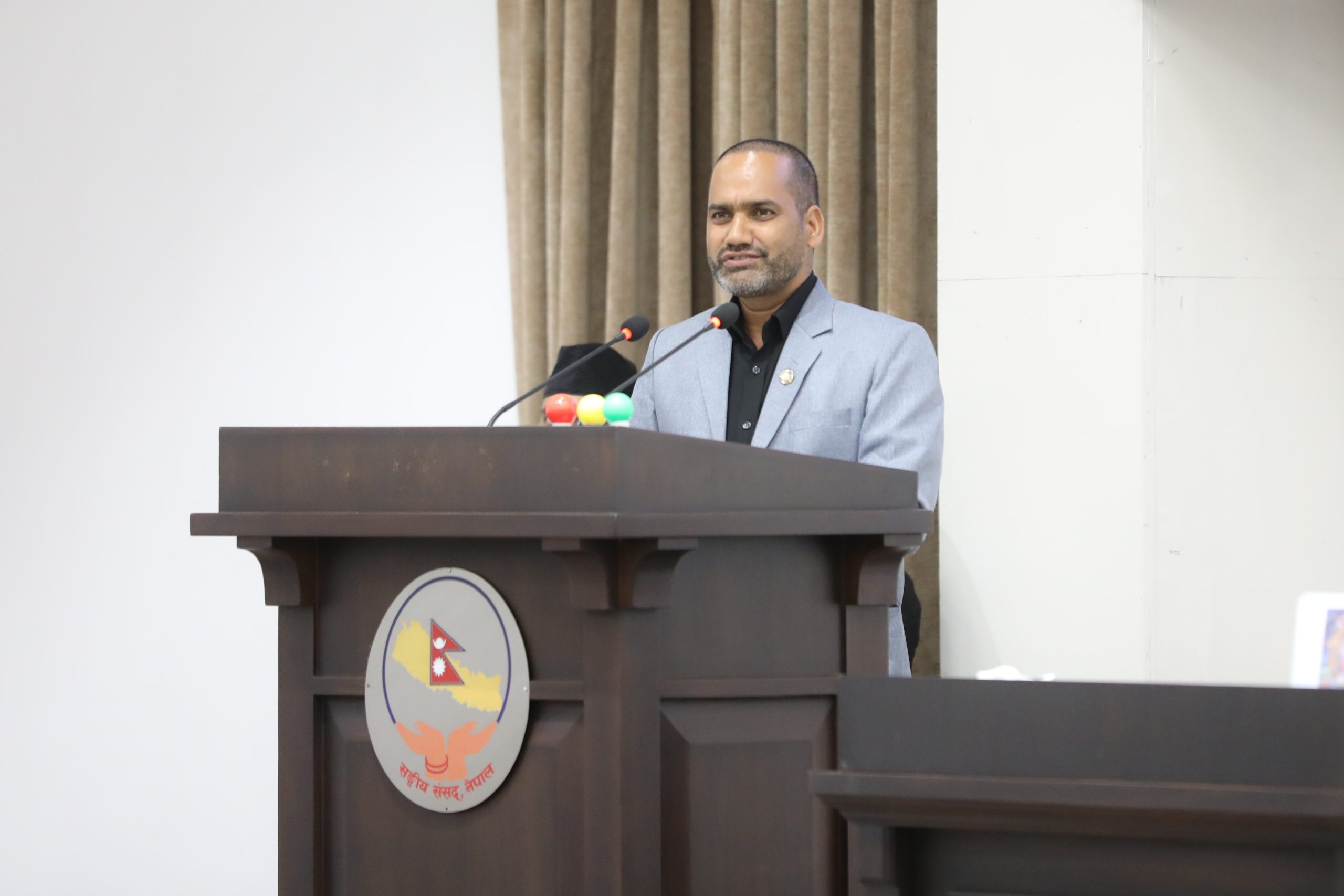
Nepal has intensified its efforts to secure removal from the European Union’s Air Safety List, with the government placing aviation safety reform, regulatory strengthening and institutional restructuring at the center of its strategy. Culture, Tourism and Civil Aviation Minister Khadak Raj Paudel told the House of Representatives that the government is determined to address the issues raised through the EU’s aviation safety assessment and demonstrate measurable improvements in Nepal’s aviation oversight system. He said the country is pursuing the issue on several fronts at the same time, combining technical reforms with changes to the regulatory structure and sustained diplomatic engagement with European authorities.
The government’s latest position signals an attempt to address the EU safety concerns through substantive reform rather than diplomatic lobbying alone. Minister Paudel said Nepal’s eventual removal from the list would have to be supported by improvements that can be assessed and verified against international aviation safety requirements. The government is therefore working on the implementation of corrective measures, strengthening the capacity of aviation regulators, improving institutional arrangements and maintaining communication with the EU. The minister said the government expects the EU’s review of Nepal’s corrective action plan to provide the next important indication of progress and help identify whether additional measures are required.
2023 EU assessment remains the foundation of the reform process
The current reform effort is linked to an on-site aviation safety assessment conducted by the European Union in Nepal from September 11 to 15, 2023. The assessment identified areas requiring corrective action within Nepal’s aviation safety and regulatory framework. According to Minister Paudel, the findings had remained insufficiently addressed for a period, but the government has now moved to formally communicate the measures being undertaken to respond to them.

A significant step came on June 5, 2026, when Nepal submitted details of its progress and corrective actions to the European Union. The EU subsequently communicated on June 12, 2026, that it would provide a review of the corrective action plan. That review is particularly important because it will allow Nepal to understand how European authorities assess the measures already implemented and whether outstanding issues remain. The government has indicated that it will use the EU’s assessment as the basis for determining and implementing the next round of necessary reforms.
Nepal is focusing on more than compliance
The government’s approach suggests that the objective is not simply to obtain a favorable decision from the EU but to strengthen the country’s aviation safety system itself. Minister Paudel said Nepal is improving technical and regulatory capabilities in cooperation with international partners, with various programs being conducted to increase expertise in aviation safety and regulation.
This capacity-building component is important because an effective aviation safety system depends on more than written regulations. It requires qualified technical personnel, effective oversight mechanisms, consistent monitoring, and the ability of regulatory institutions to identify and respond to safety concerns. Strengthening these areas can help ensure that aviation operators are properly supervised and that safety requirements are implemented consistently. The government has therefore placed technical capacity development alongside regulatory and institutional reform as part of the wider effort to meet international aviation standards.
CAAN restructuring becomes a central reform measure
One of the most significant institutional measures highlighted by the minister is the planned restructuring of the Civil Aviation Authority of Nepal (CAAN). The government intends to establish separate institutional structures for CAAN’s two major functions: aviation regulation and aviation service provision.
Minister Paudel said legislation required for the separation has already been drafted and will be presented to Parliament shortly. The proposed institutional restructuring is particularly important because it addresses the way aviation oversight is organized in Nepal. Separating regulatory responsibilities from service-provider functions is intended to create a clearer institutional distinction between those responsible for regulating aviation safety and those involved in providing aviation services. The government has presented this reform as an important component of its broader institutional improvement program.
The restructuring is being pursued alongside technical improvements because regulatory effectiveness depends heavily on the strength and clarity of the institution responsible for oversight. By creating separate structures, the government expects to establish a more clearly defined regulatory framework and strengthen the ability of the aviation authority to perform its oversight responsibilities. The proposed legislation will therefore be a major step in Nepal’s institutional reform process if it receives parliamentary approval and is subsequently implemented.

Diplomatic effort complements technical action
While technical and institutional reforms remain the core of the government’s response, Nepal is also maintaining active diplomatic engagement with the European Union and its member states. Minister Paudel said he had personally met with the EU Ambassador to Nepal to discuss the progress Nepal has made in aviation safety, the implementation of corrective measures and the government’s plans for further improvements.
The government has also approached ambassadors representing EU member states in Nepal as well as non-resident ambassadors. During these discussions, Nepal has presented its aviation safety commitments, ongoing reforms and plans while seeking cooperation and a positive role from European governments. Such engagement is intended to ensure that European authorities remain informed about Nepal’s progress while also creating a channel for continued dialogue during the reform and review process.
However, the minister made clear that diplomatic engagement cannot substitute for actual safety improvements. The government’s position is that Nepal must demonstrate tangible and measurable progress in aviation safety and regulation if it wants to achieve a sustainable resolution to the issue. This distinction is important because removal from a safety-related restriction ultimately depends on the credibility of the country’s aviation oversight system rather than political assurances alone.
EU review will determine the next phase
The next major development is expected to come from the EU’s review of Nepal’s corrective action plan. Nepal has already submitted information on the measures it has taken, and the government is waiting for the European side to assess that progress. The outcome will help establish whether Nepal has sufficiently addressed the issues identified during the earlier assessment or whether further corrective measures will be required.
The review could therefore provide a clearer roadmap for the government’s next steps. If remaining gaps are identified, Nepal will need to address them through additional technical, regulatory or institutional measures. If significant progress is recognized, the country could move closer to the next stage of discussions regarding its status on the EU Air Safety List. The government’s strategy is consequently focused on maintaining momentum rather than treating the June submission as the final step in the process.
Why the issue matters to Nepal’s international aviation sector
The EU Air Safety List is significant for Nepal because international aviation safety oversight is closely connected with confidence in a country’s air transport system. For a tourism-dependent country such as Nepal, the strength of its aviation regulatory framework is particularly important because international visitors rely heavily on air transport to enter and travel through the country.

Nepal’s international tourism industry is also closely connected to the performance and reputation of its aviation sector. Stronger safety oversight, clearer institutional responsibilities and compliance with international standards can contribute to greater confidence among airlines, passengers and international aviation stakeholders. For this reason, the government’s current reform program has implications beyond the immediate objective of leaving the EU list; it is also part of the wider effort to strengthen Nepal’s aviation infrastructure and international credibility.
Reform now faces the test of implementation
The government has presented a broad reform package involving corrective action, technical capacity-building, regulatory improvement, institutional restructuring and diplomatic dialogue. The challenge now is to ensure that these commitments translate into reforms that are fully implemented and demonstrable in practice. Drafting legislation, conducting training and communicating progress to international partners are important steps, but the effectiveness of the system will ultimately depend on how these measures operate within Nepal’s aviation sector.
Minister Paudel’s statement in Parliament indicates that the government intends to maintain pressure on all of these fronts. With the EU review of Nepal’s corrective action plan pending, the coming phase will be particularly important in determining whether the reforms already undertaken are considered sufficient and what additional action may be necessary. For Nepal, the goal is not merely to leave the EU Air Safety List, but to establish a stronger, more credible and internationally aligned aviation safety system capable of supporting the country’s long-term aviation and tourism ambitions.