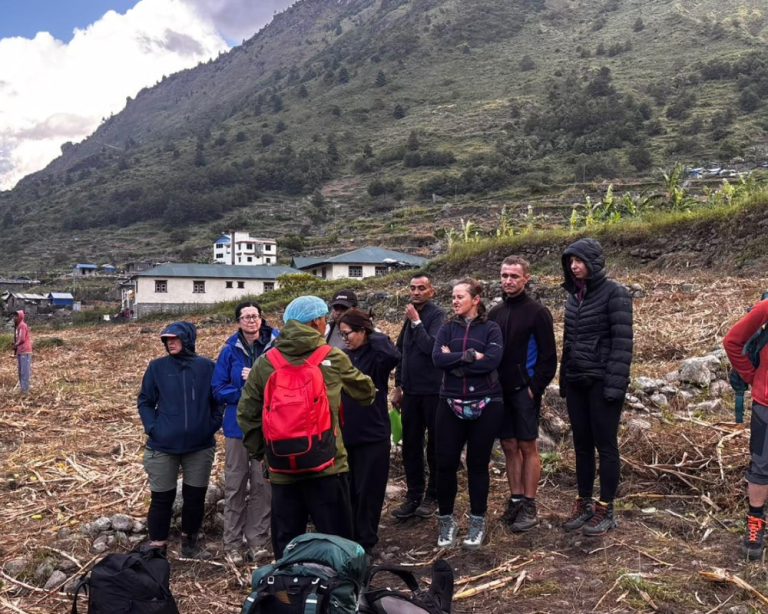
For many travelers, trekking in Nepal is a journey through spectacular mountains, forests and remote landscapes. But for the people living along these trails, trekking means something much deeper. It is a livelihood, a business opportunity and, for many families, a lifeline. In villages where farming is difficult, and other employment opportunities are limited, the steady arrival of trekkers has created an entire local economy. From teahouses and homestays to guiding, portering, farming and handicrafts, tourism has become closely connected with everyday village life.
From Farming to Tourism: A New Source of Income
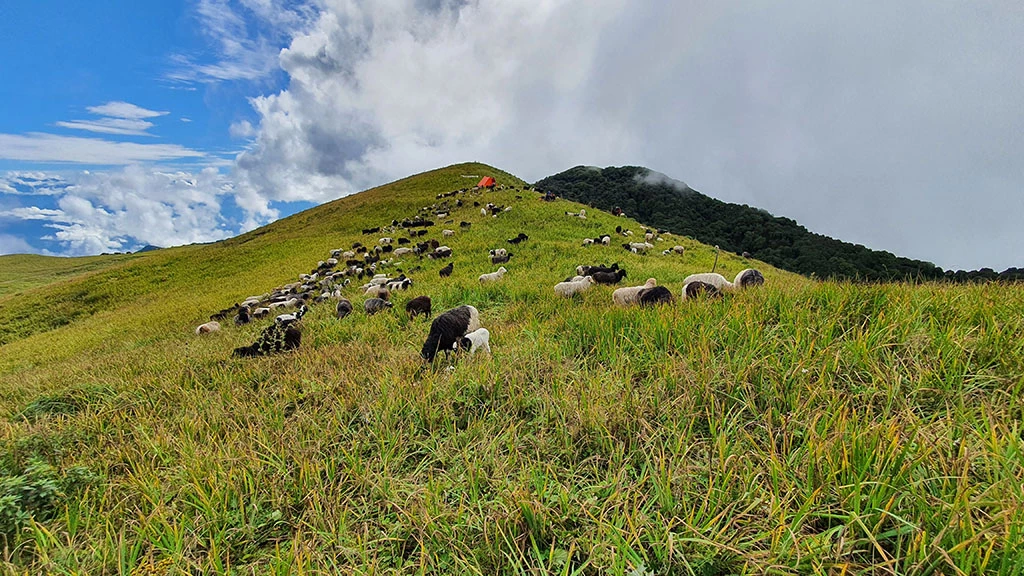
Life in Nepal’s mountain villages has traditionally depended on agriculture and livestock. However, farming at high altitudes is challenging because of steep landscapes, limited farmland, harsh weather, and short growing seasons. For many families, agricultural production alone is not enough to cover modern household expenses. Trekking has changed this economic picture. Many families now combine traditional farming with tourism-related activities. A household may grow vegetables and keep livestock while also operating a small teahouse or homestay during the trekking season. The income earned from visitors can help families pay for education, healthcare, food, transportation, and other necessities. Tourism has therefore become an additional economic pillar without necessarily replacing traditional mountain livelihoods.
The People and Livelihoods Behind Nepal’s Trekking Industry
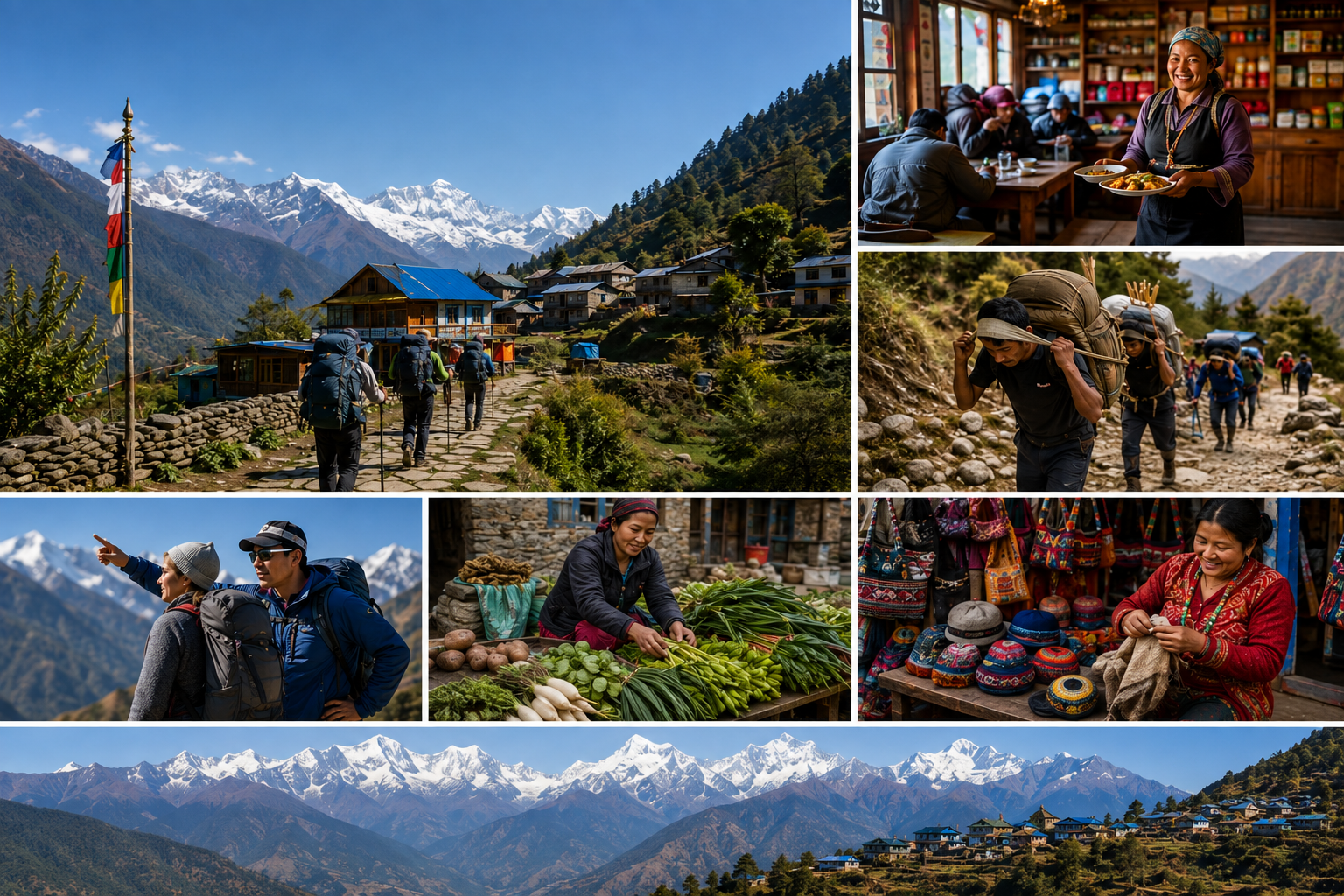
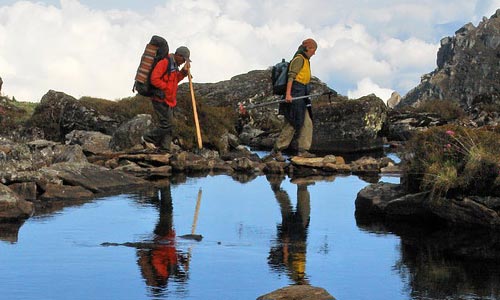
From family-run teahouses and homestays to porters, local guides and women entrepreneurs, Nepal’s trekking industry provides a wide range of employment and business opportunities for mountain communities. Teahouses serve as important sources of household income while creating additional jobs for cooks, cleaners, servers and local suppliers. The money spent by trekkers often circulates through the wider village economy by supporting farmers, shopkeepers and transport providers.
Porters are another essential part of the trekking sector, particularly in remote areas where roads remain limited. For many villagers, portering provides seasonal income and can become the first step toward careers as trekking assistants, cooks or professional guides. Likewise, local guides turn their knowledge of mountain trails, weather, culture and traditions into valuable professional skills, with experienced guides often progressing toward tourism entrepreneurship.
Trekking has also created growing opportunities for women. Many women are actively involved in operating teahouses and homestays, preparing food, producing handicrafts, and managing small tourism businesses. These activities allow women to contribute directly to household income while developing greater financial independence and entrepreneurial skills. Together, these workers form the backbone of Nepal’s trekking industry, ensuring that tourism benefits extend beyond visitors and reach the communities that make the Himalayan trekking experience possible.
One Trekker, Many Beneficiaries
The economic impact of trekking does not stop when a visitor pays for a hotel room. Imagine a trekker ordering a meal at a mountain teahouse. The vegetables may have come from a nearby farmer. The rice and other supplies may have arrived through a local transport worker. The meal may have been prepared by a local cook, while a porter helped carry supplies to the lodge. One visitor can therefore support an entire chain of local workers. This connection between tourism and other sectors is one of the biggest reasons trekking can have such an important impact on mountain communities.
Tourism Creates a Market for Local Farmers
Tourism has also created new markets for agricultural products. Mountain lodges require potatoes, vegetables, eggs, dairy products, meat, and other food items. Local farmers can supply some of these products rather than depending entirely on outside suppliers. This creates a powerful relationship: Farmers supply tourism, and tourism provides farmers with a market. When more tourism spending remains within the community, the economic benefits become more widely distributed.
Young People Find Opportunities at Home
Employment is one of the biggest challenges facing rural Nepal. Many young people leave their villages for cities or foreign countries because of limited employment opportunities. Trekking cannot solve rural migration completely, but it can create alternatives. A young villager can find work as a porter, cook, hotel employee, guide, or tourism entrepreneur. With training and experience, that first job can develop into a long-term career. For some communities, tourism therefore provides an opportunity to keep skills, energy, and entrepreneurship within the village.
Trekking Also Brings Infrastructure
Tourism can encourage improvements that benefit both visitors and residents. As trekking destinations develop, communities require better trails, bridges, electricity, communication, water facilities, sanitation and accommodation. Improved infrastructure makes life easier for residents while creating a better experience for travelers. Tourism-related training can also improve local skills in hospitality, guiding, cooking, languages and business management. In this way, trekking can contribute not only to household income but also to the broader development of mountain communities.
Culture Becomes an Economic Asset
Nepal’s mountain villages are rich in traditions, festivals, architecture, food, clothing and local customs. For many travelers, these cultural experiences are just as valuable as the mountains themselves. When tourists stay in homestays, eat local food or participate respectfully in cultural experiences, villagers can earn income while sharing their heritage. This can also encourage younger generations to appreciate and preserve traditions. Culture is no longer only something to preserve it can also become a sustainable source of livelihood when presented responsibly.
The Hidden Challenges of Growing Tourism
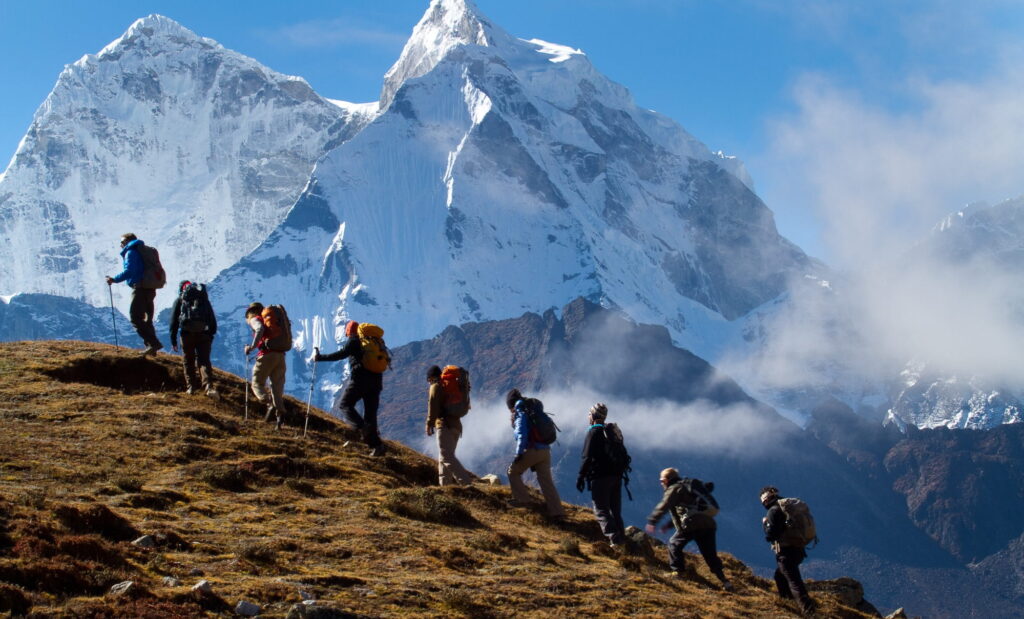
More tourists can also mean more pressure on the mountains. Popular trekking destinations may face problems involving waste, water shortages, overcrowding, environmental degradation and pressure on local resources. There are also concerns about fair wages, working conditions and the welfare of trekking workers. If tourism income is concentrated among only a few businesses, the wider community may not benefit equally. The goal, therefore, should not simply be more tourists but better, more sustainable tourism.
How Tourists Can Support Villagers
Travelers themselves can make a difference. Choosing locally owned teahouses and homestays, hiring local guides and porters, buying locally made products and eating locally produced food can help keep tourism income within the community. Trekkers can also protect the destinations they visit by reducing plastic waste, conserving water, respecting local customs and avoiding activities that damage the environment. A responsible traveler does more than visit a village; they contribute to the people and place that make the journey possible.
The People Behind Nepal’s Trekking Trails
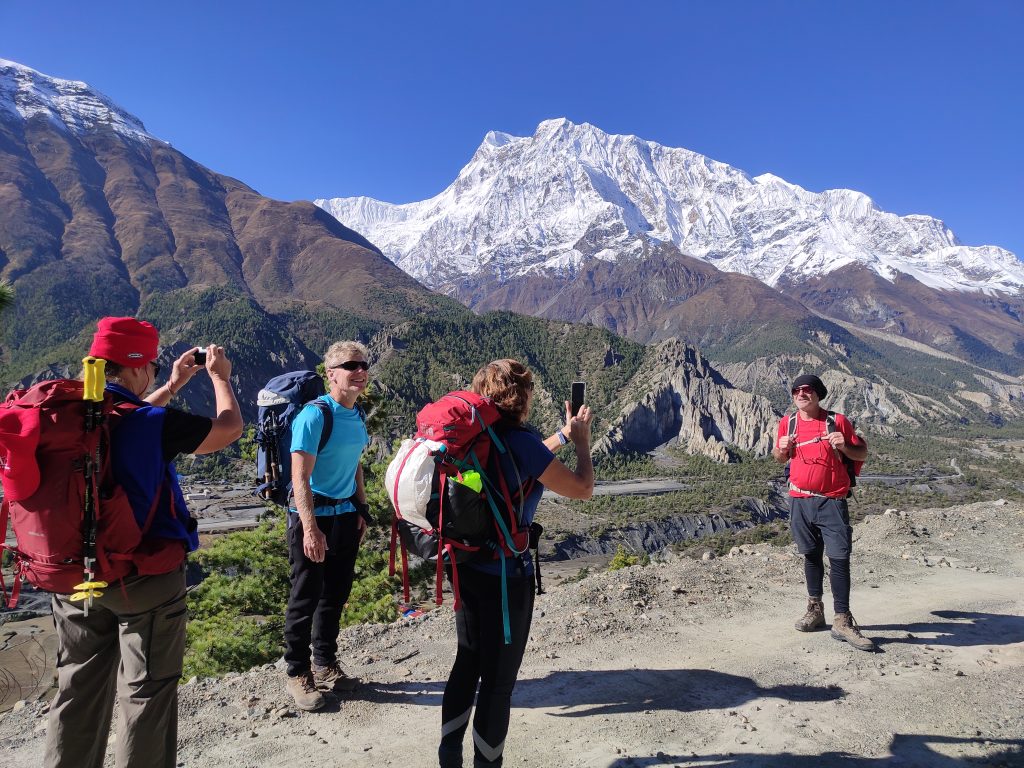
Nepal’s mountains may attract travelers, but its people keep the trekking industry alive. The teahouse owner waiting for guests, the farmer supplying fresh vegetables, the porter carrying supplies, the guide leading visitors through unfamiliar terrain, and the woman preparing a traditional meal are all part of the same tourism story. For travelers, the trail may be a path toward adventure. For villagers, it can be a path toward income, opportunity and a better future.
Trekking tourism has become much more than an industry in Nepal’s mountain regions. It has created a network of livelihoods that connects tourists with teahouses, teahouses with farmers, farmers with local suppliers, and communities with the wider economy. The future of these villages will depend on keeping that connection strong while protecting the mountains and cultures that attract visitors in the first place. When trekking is responsible, sustainable, and community-centered, every step a traveler takes can help support a household, a business, and an entire mountain community.
A Future Where Tourism Lifts Entire Communities
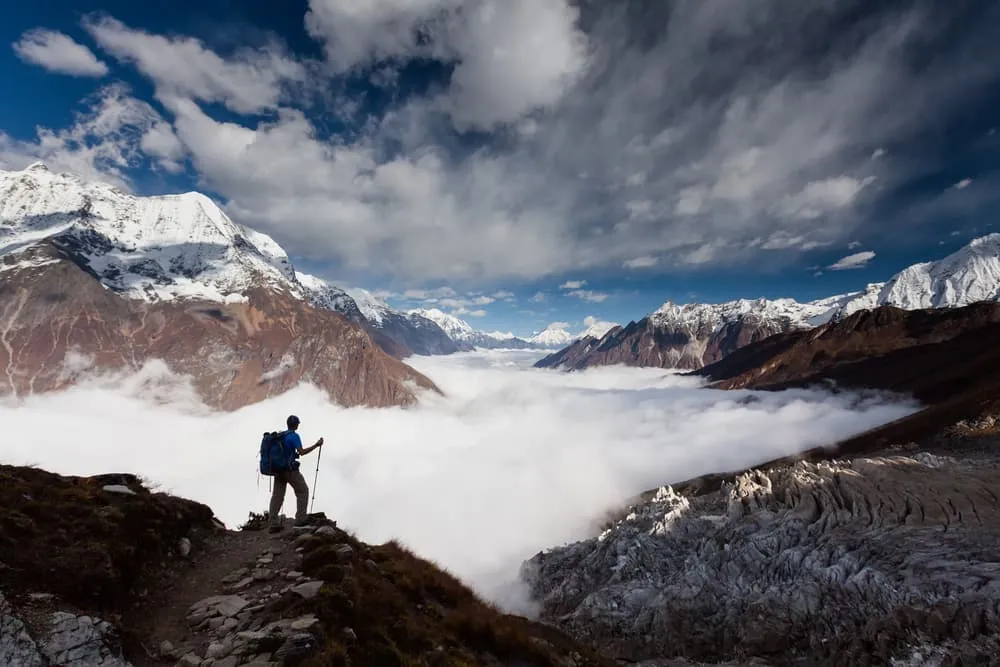
Nepal’s trekking trails are more than routes through the Himalayas; they are pathways to opportunity, dignity and economic resilience for the communities that call these mountains home. Every trekker who chooses a local teahouse, hires a local guide, eats locally produced food, or purchases a handmade product contributes to an economy that reaches far beyond a single business. When tourism is managed responsibly, its benefits can help families build better lives while giving young people meaningful reasons to remain and work in their own communities.
The strength of Nepal’s trekking industry ultimately lies not only in its mountains, but in the people who live, work and preserve them. By putting communities at the heart of tourism development and protecting the natural and cultural heritage that makes Nepal unique, trekking can continue to create jobs, encourage entrepreneurship, preserve traditions and strengthen mountain economies. For every traveler, the journey may end at the trailhead, but for a mountain community, responsible tourism can be the beginning of a brighter future.