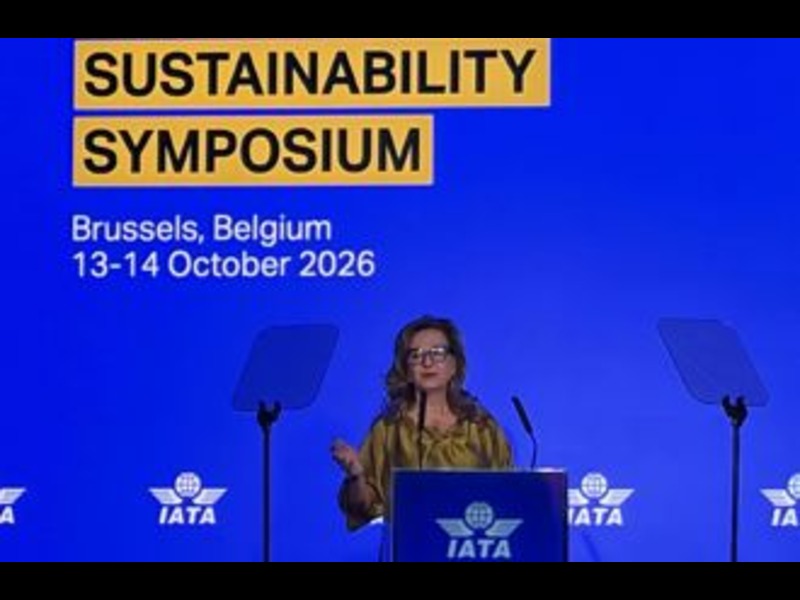
Marie Owens Thomsen, the IATA’s Senior Vice President of Sustainability and Chief Economist, believes that the focus should be on cleaner energy as the most critical lever to reduce carbon emissions in the wake of the climate crisis. Speaking at WSS 2026, Thomsen stated that phasing out fossil fuels would have a cascading effect on reducing emissions in the aviation, shipping, manufacturing, and transport sectors. This statement is applicable to the tourism industry as well, which is highly dependent on aviation and thus the availability of clean energy that will make flying accessible and affordable. Besides, the economist said that the climate change debate must not be about individual industries but the entire system that supports their operation.
Cleaner Energy at the Forefront of Sustainable Aviation
The key source of energy that Owens Thomsen believes should be phased out is fossil fuel. Her argument is that it is the main contributor to global warming, and phasing it out will have a massive impact on reducing carbon emissions in the power, steel, cement, shipping, agricultural, and computer manufacturing industries. As far as aviation and tourism are concerned, fossil fuel burning airplanes are the key source of emissions in the transportation sector.

Therefore, switching to cleaner energy will have a positive effect on the environment by reducing the carbon footprint of the aviation sector. This will satisfy the need for sustainable aviation since flying will still be available for connecting international tourists to their destinations. Furthermore, cleaner energy will improve the efficiency of aircraft and create room for developing new aircraft that are resistant to emissions. However, the switch to alternative fuels is necessary to achieve success because the aviation sector is not immune to the impact of carbon emissions.
Aviation’s Role in Tourism and Climate Action
Air travel facilitates tourism by connecting travellers with diverse attractions, including culture, nature, and mountains. In addition, it supports the tourism industry by creating jobs in the airline, hotel, restaurant, and tour business industries. Therefore, the climate crisis and the corresponding change in the energy system pose a significant threat to the tourism industry.
Owens Thomsen argues that the climate change debate should not be about individual industries but the entire system that constitutes their operation. This statement is particularly applicable to the tourism industry because the entire system hinges on aviation. However, aviation is only a part of a more significant system that comprises transport, energy, and nature. Thus, climate change discussions regarding the tourism sector should focus on cleaner energy and reducing emissions in all industries, including transport, to achieve sustainable aviation and tourism.

Fossil Fuel Dependence Remains a Major Challenge
Owens Thomsen stated that the steel, cement, shipping, agricultural, and computer manufacturing industries are all dependent on fossil fuels to a considerable extent. Therefore, a comprehensive solution to the climate crisis would require a clean energy revolution that will reduce carbon emissions in all these sectors.
As explained earlier, the aviation sector is a significant contributor to carbon emissions and, therefore, sustainable aviation will necessitate a cleaner energy system. Switching to cleaner energy will reduce aviation, shipping, and transportation emissions significantly, thus contributing to a cooler climate. Although these industries are major sources of carbon emissions, they represent a comprehensive solution to the climate crisis. However, these industries can only achieve substantial emission reductions if they invest in cleaner energy technologies.

Collaboration Needed for Sustainable Tourism Growth
The keynote speaker said that she always favours open climate change debates where everyone can question every other party without being accused of undermining their interests. Owens Thomsen invoked the philosophical principles of John Stuart Mill to explain her stand on climate change debates. According to the economist, Mill’s advocacy for free speech and expression makes it easier to accomplish necessary climate change conversations, including questioning each other’s interest, to reach a point of substantive conversation.
With regard to the aviation and tourism industries, collaboration among airline, airport, government, energy, tourism, and technology business representatives will enable them to develop effective strategies for promoting sustainable aviation and tourism. For instance, the combination of cleaner energy and transport will promote sustainable tourism while eliminating or reducing emissions. Therefore, Owens Thomsen’s speech is a reminder that sustainable aviation and tourism will depend on a collective strategy that emphasises cleaner energy.