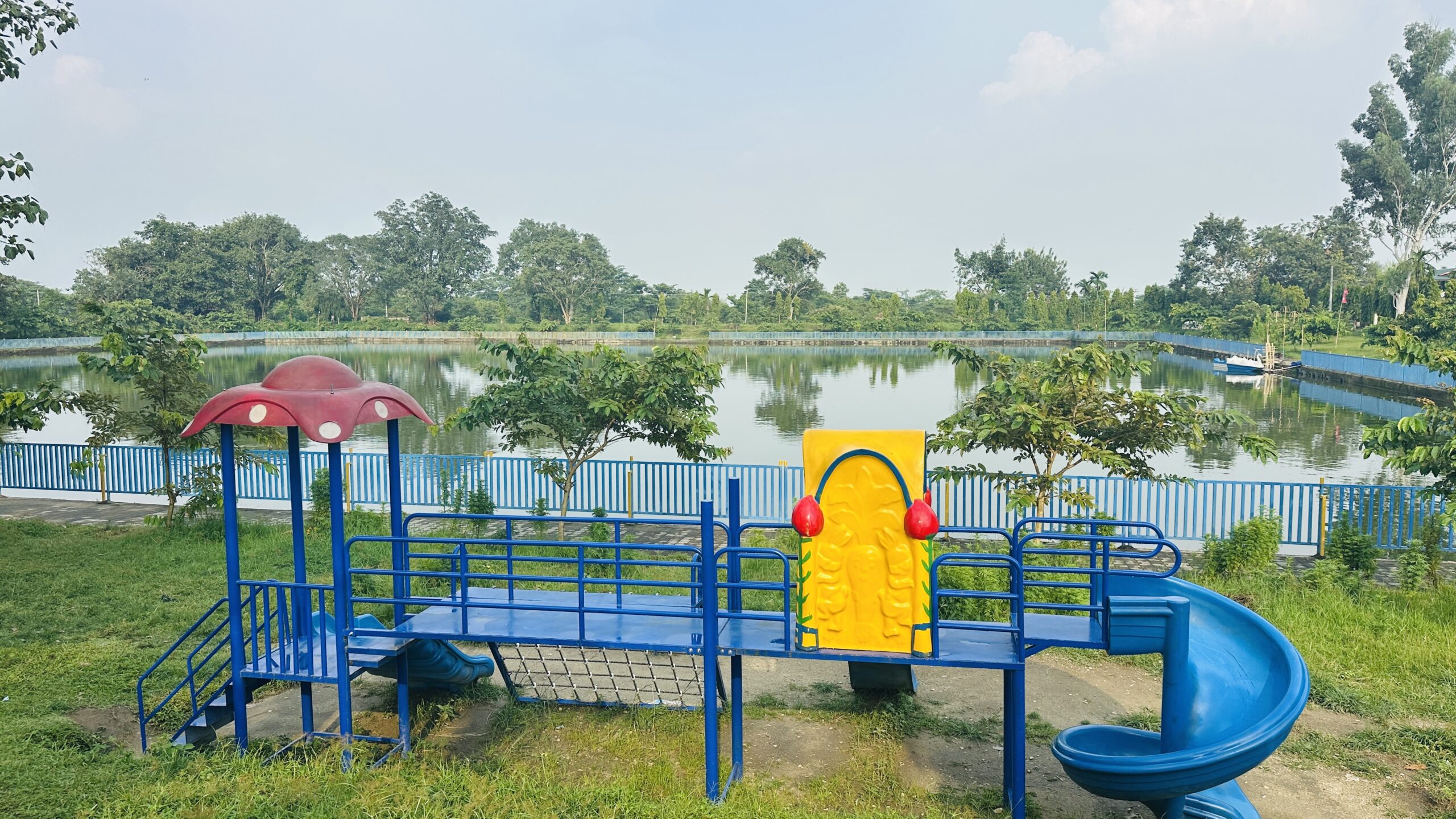
As Birtamod expands into an increasingly busy urban center, Birat Pokhari, a historic and religious site in Birtamod Municipality 3, is emerging as a sought after destination for people looking for something increasingly scarce in the city: peace, open space and a connection with nature. Situated about four kilometers south of Birtamod Bazaar, the pond has in recent years attracted domestic tourists, students, families and religious visitors, with the number of visitors rising noticeably on Saturdays and public holidays. What was once primarily regarded as a local cultural and religious landmark is gradually taking on a broader tourism role, combining recreation, religious travel, educational visits and the possibility of health tourism.
The growing interest in Birat Pokhari reflects a wider change in the way people living in rapidly developing towns spend their leisure time. With urban expansion bringing increased traffic, commercial activity and a faster pace of life, residents are increasingly looking for nearby places where they can escape the noise without having to undertake a long journey. Birat Pokhari’s location close to Birtamod gives it a particular advantage in this regard. Visitors can reach the site within a short trip from the town center and spend time with their families, enjoy the natural surroundings, participate in religious activities or simply take a break from their regular routine.
Weekend crowds turn the pond into a local tourism hub
The strongest indication of Birat Pokhari’s growing popularity can be seen during weekends and public holidays, when the premises receive a noticeable influx of visitors from Birtamod and beyond. Local resident Somnath Adhikari said people are coming not merely to pass their free time but also to enjoy the surroundings with family members and experience the calm atmosphere around the pond. According to him, Saturdays and Sundays are particularly busy, with the site attracting both local residents and visitors from outside the district who are looking for a quieter environment away from urban congestion.

This increasing visitor movement is significant because it demonstrates the potential of Birat Pokhari as a short distance leisure destination. Many visitors do not necessarily need a full day or overnight trip to experience the site; instead, the pond offers an opportunity for a short recreational outing within the Birtamod area. Families can spend time together, children can use the recreational facilities, students can take part in educational excursions and other visitors can enjoy the water body and surrounding greenery. Such destinations can become particularly important in growing cities, where easily accessible recreational spaces are limited.
Medical visitors are adding a new dimension to tourism
One of the more notable aspects of Birat Pokhari’s growing visitor base is its connection with people travelling to Birtamod for medical treatment. Adhikari said patients visiting Mechi Eye Hospital from Indian areas including Sikkim and Assam, along with their relatives and companions, have also been visiting Birat Pokhari during their free time. Their visits have introduced a potential link between the pond and health tourism, adding another dimension to the site’s tourism prospects.
For patients and their accompanying family members who may spend several days in Birtamod for medical care, nearby attractions can provide an opportunity for relaxation outside hospital routines. Birat Pokhari’s relatively close location, religious significance and natural setting make it a possible recreational stop for such visitors. Although this connection is still developing, it demonstrates how tourism in Birtamod could extend beyond conventional sightseeing by linking health related travel with local cultural and recreational experiences.
The emerging pattern also illustrates the wider economic possibilities of developing local attractions around major service centers. Visitors who travel for healthcare may also require accommodation, food, transportation and leisure activities during their stay. If destinations such as Virat Pokhari are properly conserved, promoted and connected with the city’s tourism and hospitality services, they could contribute to a broader visitor economy rather than functioning only as isolated attractions.
Urban growth is increasing demand for green spaces
The rise in visitors is closely linked to the rapid urbanization of Birtamod itself. Indra Prasai, chairman of the Birat Sarovar Development Committee, said the municipality’s growing population and expanding urban area have made access to greenery and peaceful surroundings increasingly important. In a city where commercial and residential development continues to change the landscape, Virat Pokhari provides an open environment where people can temporarily step away from the noise and intensity of urban life.
Prasai said the pond is gradually becoming established as a place where people can spend several hours away from the city’s commotion and experience a sense of mental relaxation. The attraction, therefore, is not based solely on the pond itself but on the contrast between the urban environment and the tranquillity of the site. For residents surrounded by increasingly dense development, such open and culturally significant spaces can provide an important recreational function while also preserving a visible link with the area’s heritage.
This changing relationship between urbanization and tourism could become increasingly important for Birtamod. As cities grow, destinations located close to urban centers can serve both local residents and outside visitors. Birat Pokhari has the potential to occupy this space by functioning simultaneously as a community recreation area, a cultural attraction and a tourism destination. Its future development, however, will depend on whether visitor facilities can be improved without weakening the environmental and heritage values that draw people to the site.
Boating, children’s facilities and educational visits broaden its appeal
Birat Pokhari is already offering several activities that make the destination attractive to different categories of visitors. According to the development committee, the pond premises include play facilities for children, while schools bring students for educational excursions. Various organizations also visit the site for observation programs and other activities. These uses have helped expand the site’s visitor base beyond religious pilgrims and people simply seeking a quiet place for recreation.
Boating has added another recreational element to the destination. The availability of water-based activities gives families, young visitors and other tourists another way to experience the pond rather than merely viewing it from the surrounding area. Combined with children’s facilities and educational visits, boating has helped create a more varied visitor experience. This diversification is important for a developing tourism site because it allows people with different interests to find reasons to visit throughout the year rather than limiting the destination’s appeal to a single type of traveler.
The committee has also stressed the importance of promotion and conservation. As visitor numbers grow, maintaining the cleanliness, environmental quality and overall character of the pond will become increasingly important. Greater publicity could bring more visitors, but sustainable management will be necessary to ensure that increased footfall does not place additional pressure on the water body, surrounding landscape and heritage structures.
Mythology gives the destination a deeper cultural identity
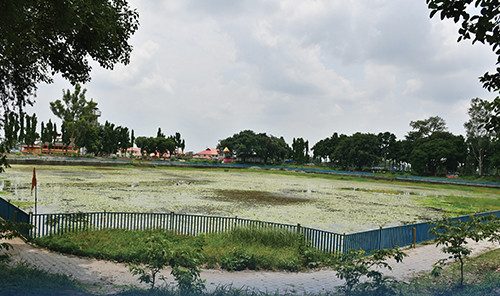
Birat Pokhari’s tourism value extends well beyond its recreational setting. The pond is deeply connected with local mythology and the cultural traditions surrounding the Mahabharata. According to local belief, King Birat had the pond constructed to provide water for his cattle during the Mahabharata era. The surrounding area is also traditionally associated with the Pandavas’ Agyatavas, the period during which they are believed to have lived in concealment.
These traditions form an important part of the identity of the destination and provide visitors with a cultural narrative that goes beyond its physical landscape. For tourists interested in Nepal’s religious and mythological heritage, the stories associated with Birat Pokhari can add depth to the visit. Rather than being simply a water body or recreational site, the pond represents a place where landscape, local belief, mythology and community memory intersect.
Such cultural narratives can be particularly valuable for developing heritage tourism. When combined with responsible interpretation, preservation and visitor information, local traditions can help visitors understand why a site matters to the community. For Virat Pokhari, its association with King Virat and the Pandavas provides a distinctive identity that could strengthen its position among cultural attractions in eastern Nepal.
Ancient shrines strengthen its religious tourism appeal
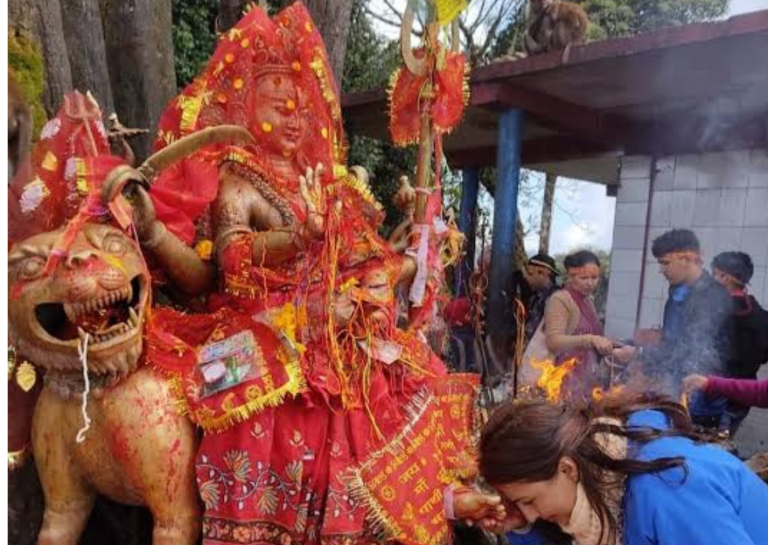
The site’s religious significance is reinforced by the presence of the ancient Gramkali shrine and Shiva temple within the pond complex. These religious structures contribute to the site’s cultural importance and continue to attract devotees, particularly during major religious occasions. The most prominent period of visitation comes during Balachaturdashi, when thousands of devotees are reported to visit the area to worship and scatter Sat Bij, a traditional religious practice involving the offering of seven types of grains.
The annual religious gathering gives Birat Pokhari a visitor base that extends beyond ordinary leisure tourism. During such occasions, the pond becomes a place of worship, pilgrimage and community gathering, bringing together religious visitors from different areas. This combination of religious significance and natural surroundings provides the destination with a distinctive tourism character and creates opportunities for developing religious and cultural tourism alongside recreational activities.
The coexistence of temples, traditional beliefs and the pond’s natural setting also means that future tourism development needs to be sensitive to local religious practices. Infrastructure and visitor facilities should support pilgrims and tourists while preserving the cultural atmosphere of the site. Maintaining this balance will be crucial if Birat Pokhari is to attract more visitors without losing the qualities that have sustained its importance over generations.
Conservation has continued for more than three decades
The effort to protect and develop Birat Pokhari is not new. The Birat Sarovar Development Committee has been involved in conservation since 2051 B.S., but the committee says progress has been constrained by insufficient funding and the lack of a long-term master plan. Despite its historical, religious, natural and tourism significance, the site has yet to receive the level of planned development required to fully utilise its potential.
Committee chairman Prasai said inadequate financial resources have made it difficult to carry out the physical development and conservation work needed at the site. The challenge is not simply about constructing new facilities; Birat Pokhari contains historical, archaeological and biological values that need to be protected alongside tourism infrastructure. Any future development therefore needs to be carefully planned so that improvements for visitors do not damage the heritage and natural environment that form the foundation of the destination’s appeal.
The absence of a long term plan can also make tourism development fragmented, with facilities and improvements being introduced without a clear overall framework. A comprehensive plan could help establish priorities for conservation, visitor management, infrastructure, recreational facilities and promotion while ensuring that the site develops in a sustainable manner. For a destination experiencing growing visitor numbers, such planning is becoming increasingly important.
Master plan aims to guide future development
Recognizing the site’s growing importance, the Virat Sarovar Development Committee is working on a master plan for the physical development, conservation and promotion of the heritage site. The proposed approach seeks to address the site’s multiple dimensions rather than focusing solely on tourism infrastructure. Historical and archaeological protection, biological conservation, recreational facilities and visitor access all need to be considered as part of a coordinated development strategy.
A well designed master plan could provide a clearer path for transforming Birat Pokhari into a professionally managed tourism destination while retaining its local character. Better visitor facilities could improve the experience for families, students, pilgrims and domestic tourists, while stronger promotion could introduce the site to visitors travelling through Jhapa and other parts of eastern Nepal. At the same time, conservation measures would help ensure that increasing visitor numbers do not compromise the pond’s environmental and cultural significance.
Birat Pokhari’s tourism opportunity extends beyond Birtamod
Birat Pokhari’s growing popularity shows how a relatively small local heritage site can develop into a meaningful tourism asset when its natural, cultural and recreational qualities come together. Its proximity to Birtamod, growing weekend visitor numbers, boating facilities, educational use, religious importance and links with medical visitors give it a diverse tourism base. Unlike destinations that depend on a single attraction, Birat Pokhari can appeal to families seeking recreation, students seeking educational experiences, pilgrims visiting religious sites and visitors looking for a peaceful natural environment.
Its development could also contribute to the wider tourism economy of Birtamod. More visitors to the pond can create demand for transportation, food services and other local businesses, while its connection with people visiting the city for medical treatment presents an additional opportunity for tourism diversification. With appropriate promotion, the site could become part of a broader itinerary linking Birtamod’s cultural, religious, recreational and service-sector attractions.

Protecting the attraction while preparing for growth
The central challenge for Birat Pokhari now is not simply attracting more people; it is managing growth without sacrificing the site’s identity. The same peaceful surroundings, cultural traditions, religious sites and natural character that currently attract visitors could be weakened by uncontrolled development or inadequate environmental management. Future investment therefore needs to prioritize conservation and responsible tourism alongside visitor facilities.
For Birtamod, the pond represents more than a place for weekend recreation. It is a living cultural landscape shaped by local beliefs, religious practices, community conservation and changing patterns of urban life. If the proposed master plan can bring together long-term conservation, appropriate infrastructure, effective promotion and community participation, Birat Pokhari could emerge as one of the more distinctive cultural and recreational tourism destinations in eastern Nepal.
As urbanization continues to transform Birtamod, the value of places that preserve open space, cultural memory and natural surroundings is likely to increase. Birat Pokhari is already showing signs of that transition, with visitors arriving for recreation, education, pilgrimage and increasingly as part of trips connected to healthcare. Its next chapter will depend on whether that growing interest can be converted into sustainable tourism development that protects the heritage while making the destination more accessible and meaningful to future visitors.