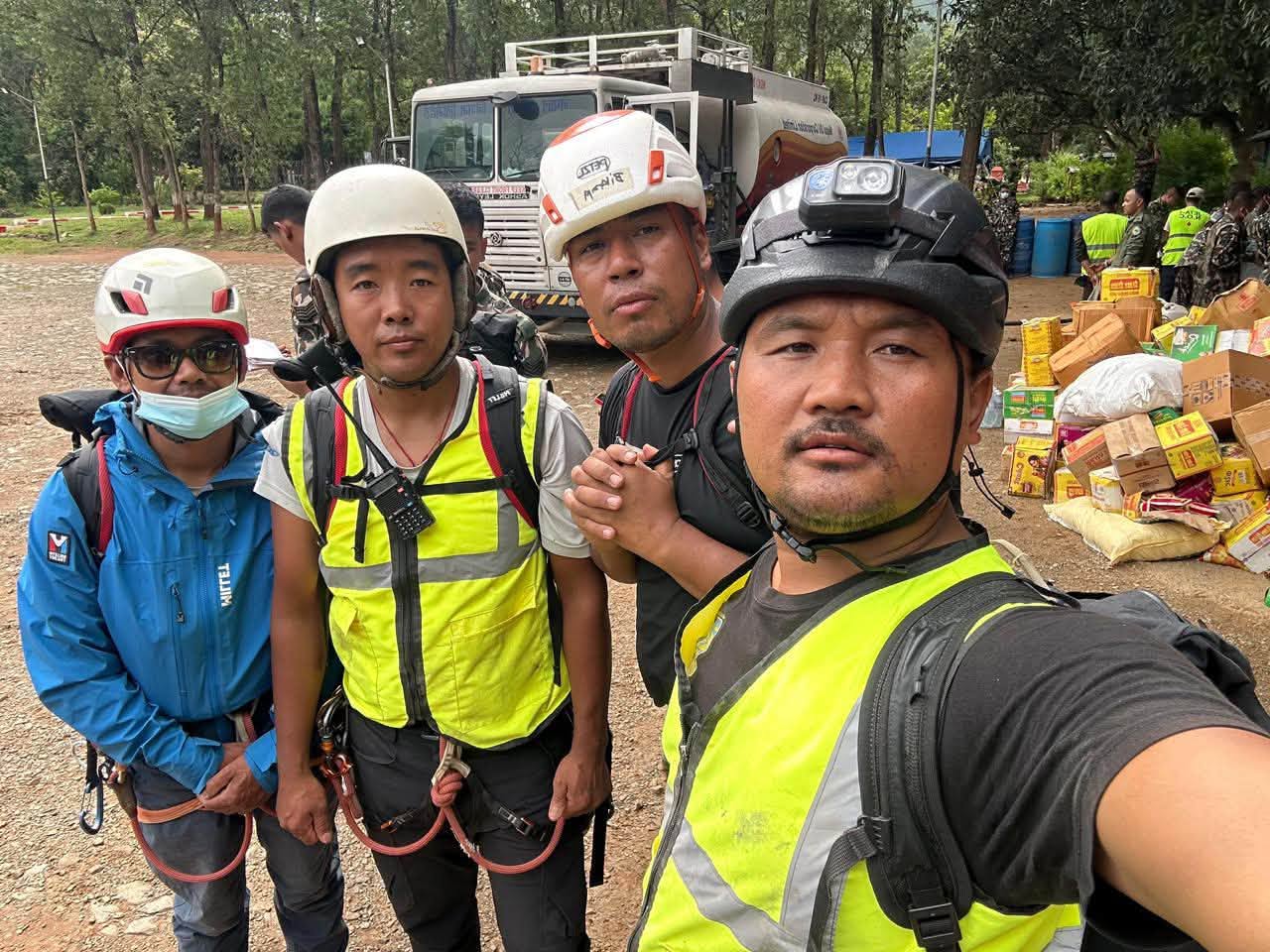
The Nepal National Mountain Guide Association (NNMGA) and Nepal Mountaineering Instructors Association (NMIA) Search & Rescue Team B has reached the flood-affected Chilime Hydropower and Syabrubesi area of Rasuwa and commenced search and rescue operations amid extremely challenging ground conditions.
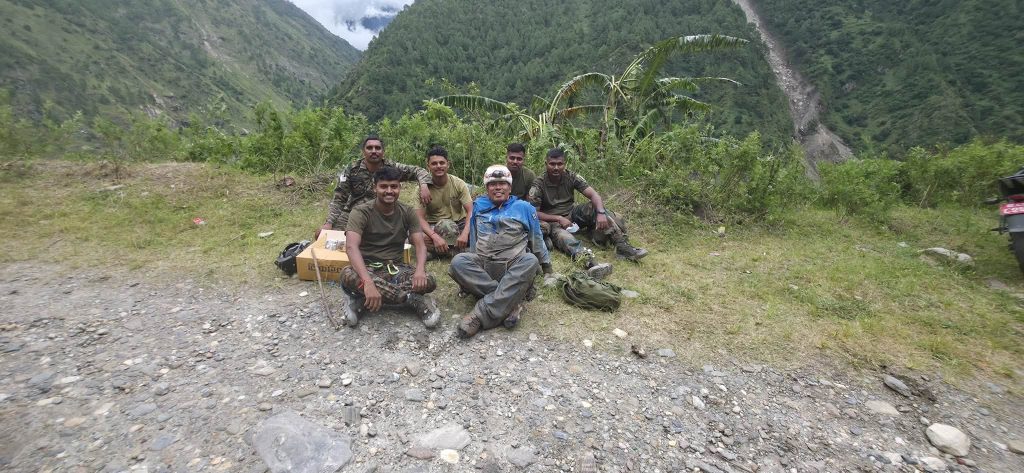
The four-member team of NNMGA and NMIA comprises mountain guides Dorjee Sherpa, Bikram Karki, Chhiring Sherpa and Dawa Jangbu Sherpa, who have been mobilised to support ongoing efforts in the heavily damaged area following the devastating floods and landslides.
Team Faced Delays Due to Flight Permission
The rescue team of NNMGA and NMIA travelled early on August 30 to Trishuli with the intention of reaching the affected area by helicopter. However, difficulties in obtaining the required flight permission prevented the team from proceeding to the site. As a result, the team remained in Trishuli throughout the day and waited for an opportunity to reach the disaster zone. The team was finally able to fly to the affected area on the morning of August 31, allowing the search and rescue operation to begin on the ground.
Further Flooding and Landslides Destroy Helicopter Landing Site
The rescue operation has been complicated by the rapidly changing conditions at the disaster site. According to NNMGA, a helicopter landing site that had been available only three days earlier was subsequently washed away by further flooding and landslides.
The loss of the landing site has created a major logistical challenge for rescue personnel. The original plan was to transport an excavator and water pumps by helicopter to the tunnel area so that large quantities of mud and debris could be removed more efficiently. However, with no suitable landing area currently available, transporting heavy machinery such as the excavator has not been possible.
Mountain Guides Install Fixed Ropes and Safety Lines
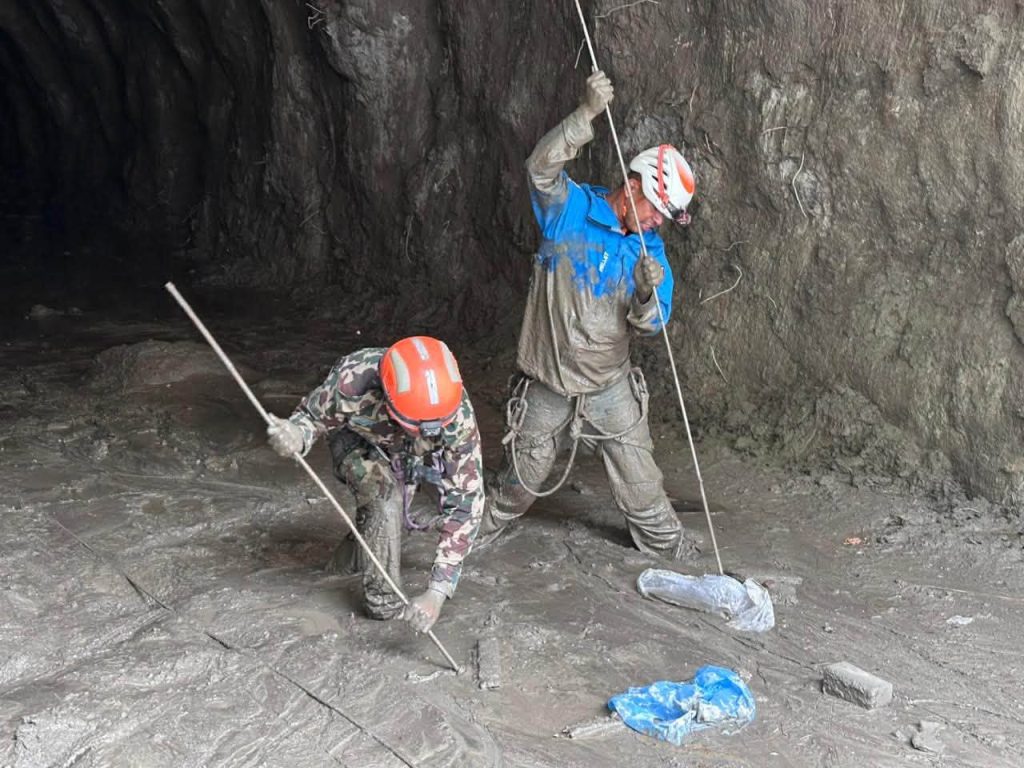
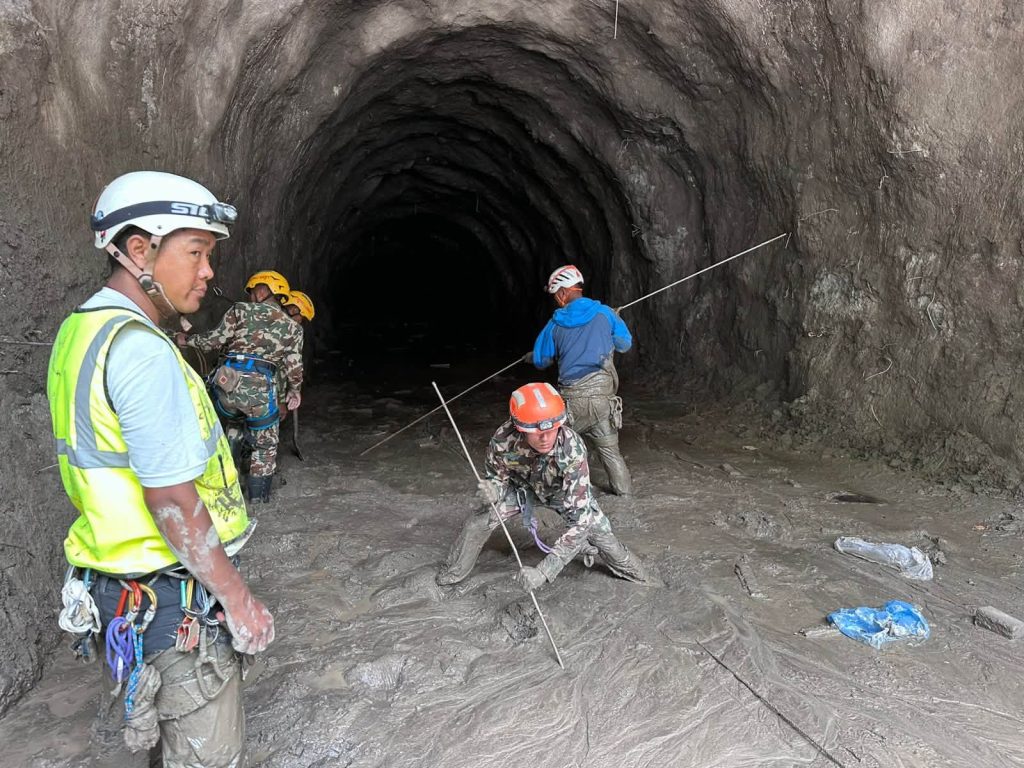
Despite the difficult conditions, the mountain guide team carried out critical safety preparations around the tunnel entrance on Monday. The team established fixed ropes and safety lines from the accessible section leading toward the tunnel entrance. Additional ropes and anchors were also installed inside the tunnel.
These systems are intended to provide safer access for workers and rescue personnel who will have to enter the tunnel and manually remove accumulated mud and debris. The installation of the rope systems is particularly important given the unstable terrain, difficult access and hazardous conditions surrounding the tunnel.
Manual Removal of Mud and Debris Planned
With heavy equipment currently unable to reach the site, the rescue team plans to begin manually removing as much mud and debris from the tunnel as possible. According to the operation plan, water pumps will be brought to the site from September 1, while rescue personnel continue clearing the tunnel manually and assessing the possibility of introducing additional equipment and alternative methods.
The rescue teams will also continue evaluating the situation inside and around the tunnel to determine the safest and most effective approach for intensifying the search operation.
Nepal Army and Indian Army Provide Support
NNMGA expressed appreciation to the Nepal Army for providing significant support and cooperation to the mountain guide team during Monday’s operation. The association also acknowledged the Indian Army for its assistance during parts of the search and rescue operation. The coordination among mountain guides, security forces and other technical personnel is expected to remain crucial as teams attempt to access areas affected by heavy mud, debris and landslides.
Rescue Operation Continues Amid Severe Challenges
The Chilime Hydropower and Syabrubesi area remains one of the challenging locations for search and rescue teams following the disaster. Repeated flooding, landslides, damaged access routes and the destruction of helicopter landing areas have significantly complicated the deployment of personnel and heavy machinery.
Despite these obstacles, NNMGA Team B has continued working to establish safer access and prepare the tunnel for further search operations. NNMGA has expressed its sincere appreciation to Team B, the Nepal Army, the Indian Army and all individuals and organisations involved in supporting the ongoing search and rescue mission. The operation will continue on September 1 with efforts focused on pumping water, manually removing mud and debris, and exploring additional options to improve access to the tunnel and strengthen the search and rescue effort.