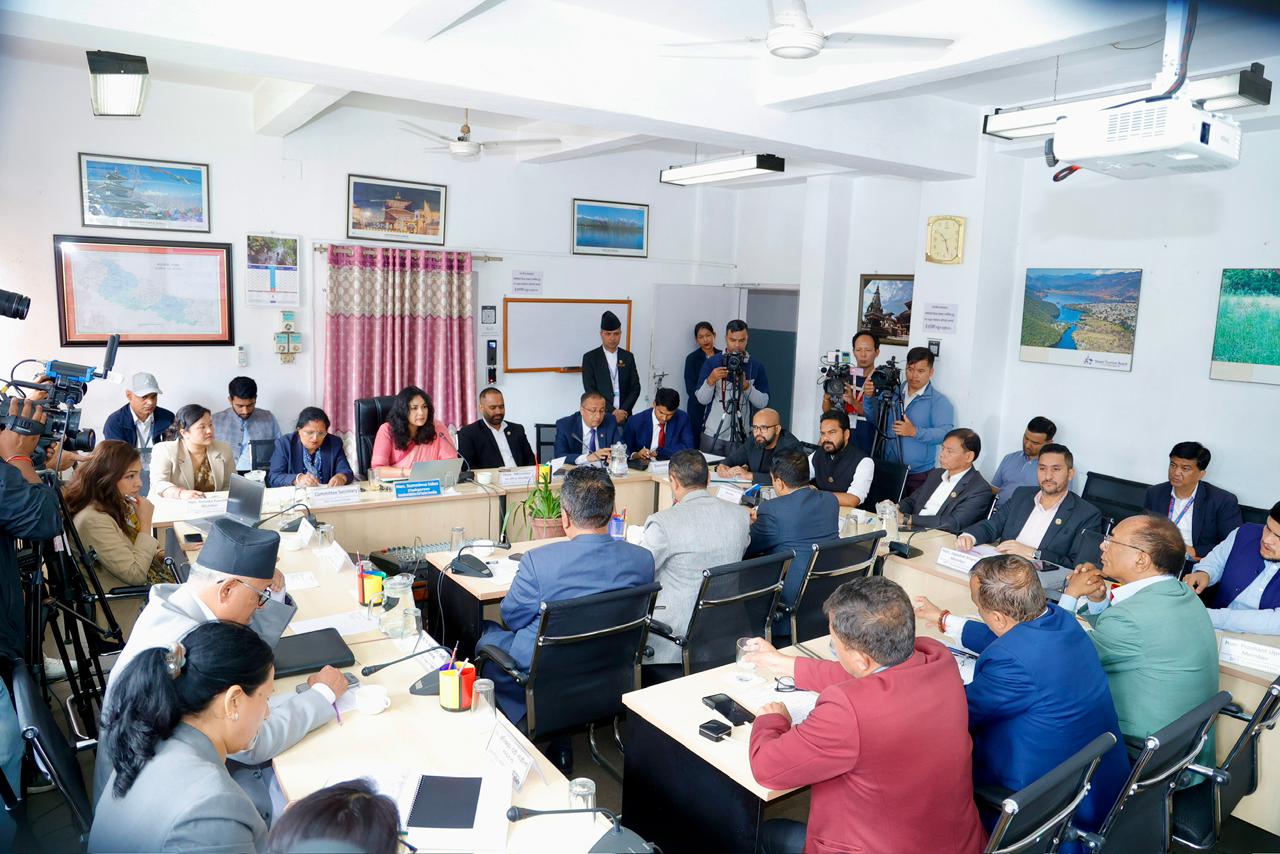
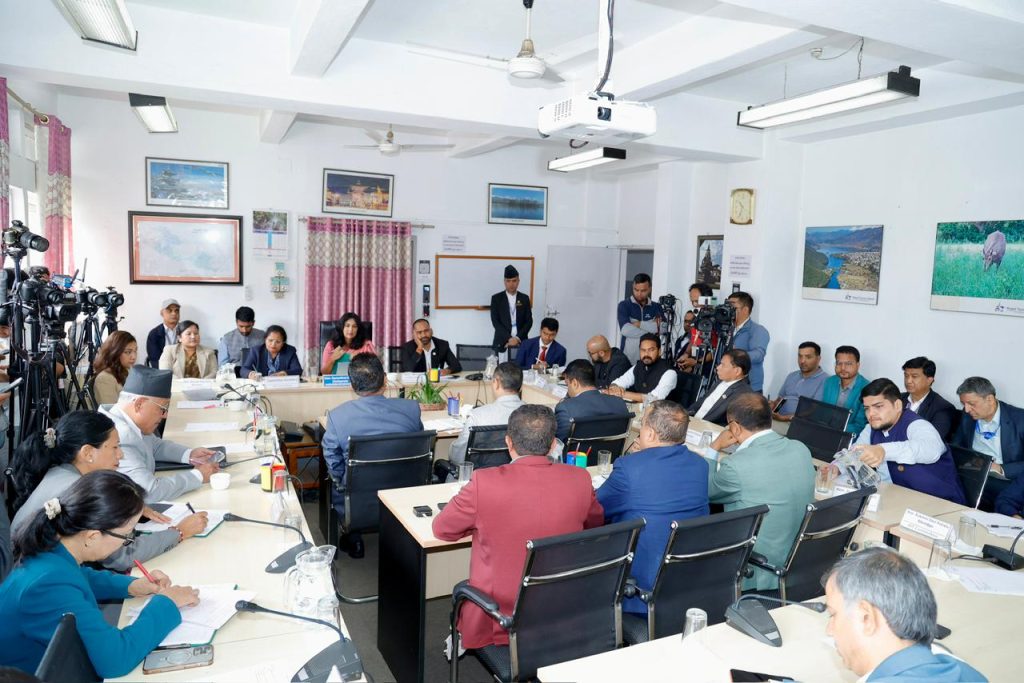
Amid the severe impact of the Bhotekoshi–Trishuli floods on Nepal’s tourism sector, the International Relations and Tourism Committee of the House of Representatives has called for an immediate and coordinated strategy to intensify the search and rescue of tourists and restore confidence in Nepal’s tourism market internationally.
The committee stressed that the government and tourism stakeholders must work together to communicate accurate, credible, and positive information about Nepal following the disaster, rather than relying solely on the message that “Nepal is safe.”
Committee Calls for Coordinated Tourism Recovery Strategy
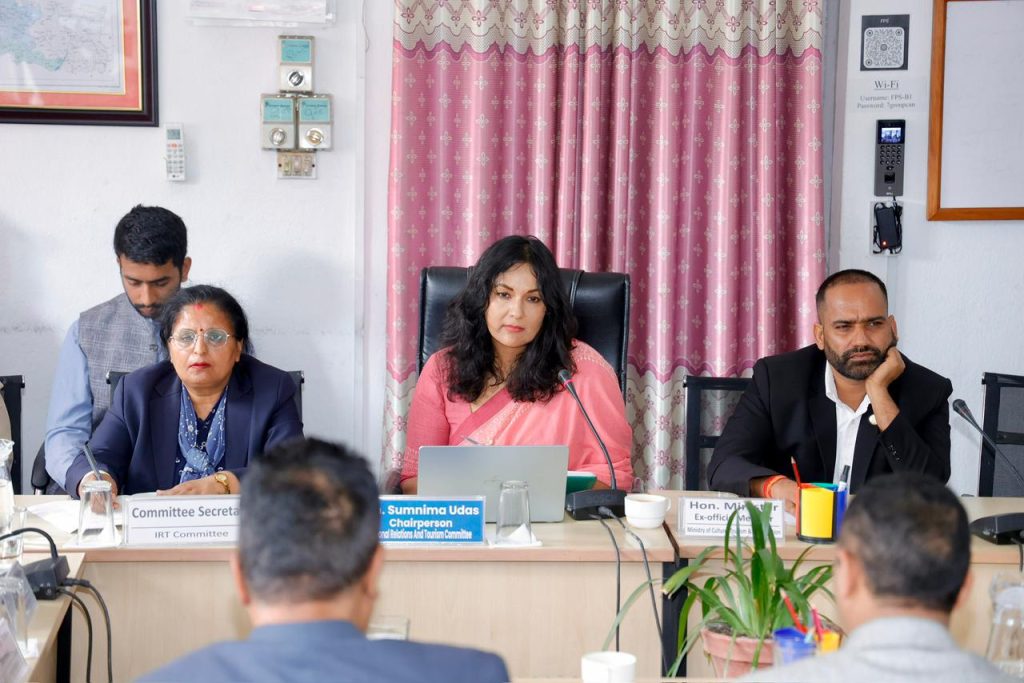
Committee Chairperson Sumnima Udas said simply declaring that Nepal is safe would not be sufficient in the aftermath of the disaster. She called for coordinated efforts by the government and the tourism sector to rebuild confidence among tourists and the international community.
Udas emphasized the need to disseminate positive and reliable information about Nepal’s tourism situation following the disaster and to ensure that international markets receive a clear picture of the areas affected and those that remain operational and safe for travel.
Government Says Rescue and Relief Remain Top Priority
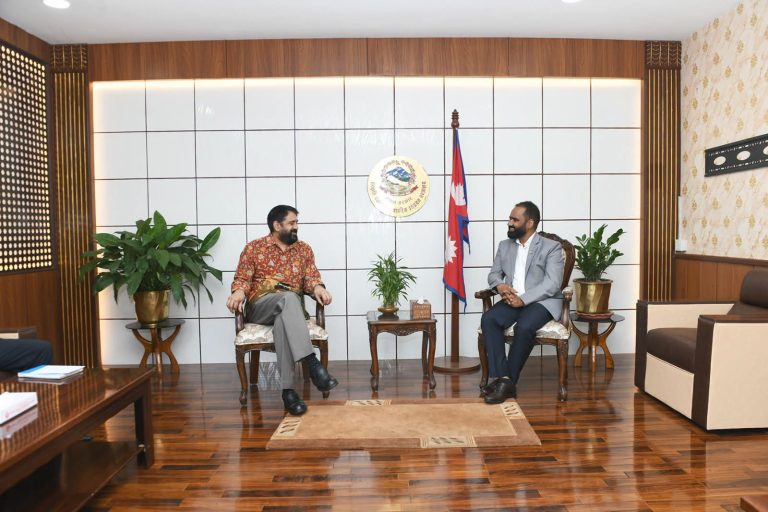
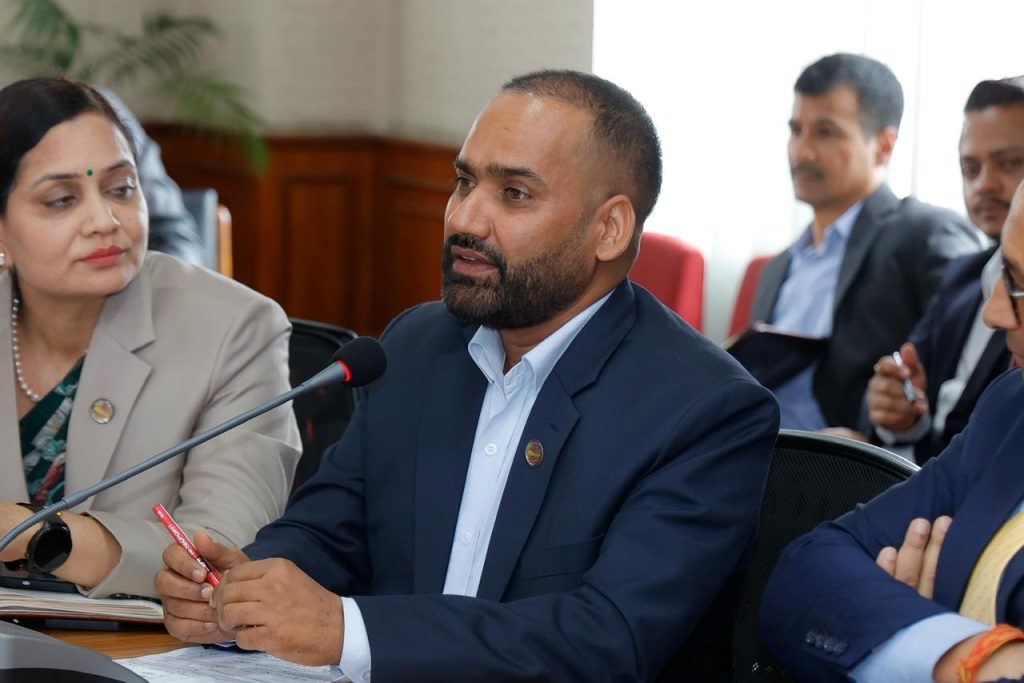
Minister for Culture, Tourism and Civil Aviation Khadak Raj Paudel ‘Ganess’ said the government remained sensitive and responsible toward rescue and relief operations following the disaster.
Minister Paudel said helicopter operations had been brought under a unified system to make rescue efforts more organized and effective. He also informed the committee that, apart from the Bhotekoshi-affected area, five flights were being operated daily free of charge as a public service.
According to Paudel, the government is also working on strategies to maintain the confidence of the international community and increase tourist arrivals to Nepal.
“Tourism is a business connected with emotions and based on empathy. The tourism sector has suffered significant human and economic losses at present. The government is working to establish an employee welfare fund for tourism workers affected by the disaster,” Paudel said.
Minister Proposes Climate Heritage Concept for Rasuwa
Minister Paudel also argued that the Bhotekoshi disaster should be viewed through the broader lens of climate change and proposed developing Rasuwa as a ‘Climate Heritage’ destination in the long term.
He said the Himalayas are a shared global climate heritage and Nepal should use the disaster to raise the issues of climate-related losses and climate justice at international forums.
The minister emphasized that Nepal should highlight the growing climate risks faced by the Himalayan region while seeking international attention and support for recovery and long-term resilience.
Lawmaker Calls for Faster Digital Information
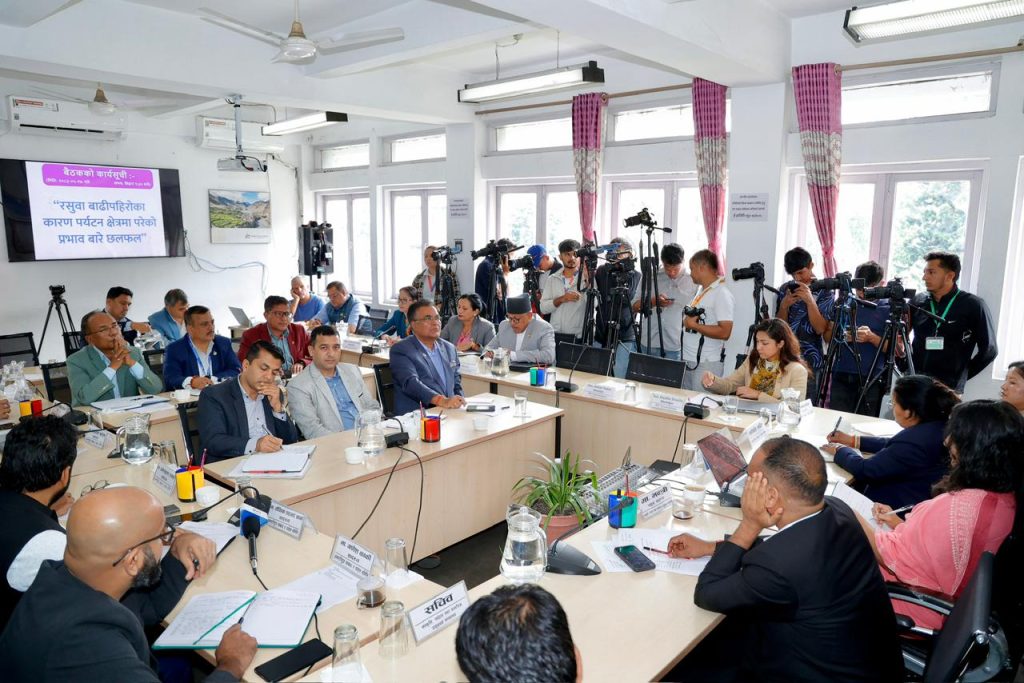
Committee member and House of Representatives member Anushka Shrestha called for crisis information to be disseminated rapidly and effectively through infographics and digital platforms.
She said the government and relevant agencies should ensure that critical information reaches the public and international audiences in a clear and easily understandable format.
Shrestha also warned that vacancies in leadership and key positions within relevant agencies could affect decision-making during a crisis. She called for the immediate appointment of officials to vacant positions to ensure effective coordination and response.
Proposal to Allocate 15% of Relief Fund for Tourism Recovery
Committee member Jagdish Kharel said the state must immediately reach citizens still waiting for rescue in the affected areas.
Kharel proposed facilitating visas and providing hotel discounts for families and relatives of foreign tourists reported missing in Rasuwa. He also suggested allocating at least 15% of the Prime Minister’s Disaster Relief Fund toward tourism recovery.
He further proposed constructing a memorial in memory of foreign tourists who lost their lives in the disaster in Rasuwa.
Climate Justice Should Be at the Centre of Tourism Policy
Committee member Prem Kumar Hamal said climate change and climate justice should now become central components of Nepal’s tourism policy.
He emphasized the need for Nepal to raise the increasing climate-related risks faced by the Himalayan region at international forums and effectively pursue the issue of loss and damage resulting from climate change.
Hamal said tourism policy should incorporate climate resilience and disaster preparedness as increasingly important components of the country’s tourism development strategy.
Committee Seeks Dedicated Help Desk for Foreign Tourists’ Families
Committee member Sandeep Rana said immediate rescue should remain the first priority and called for a dedicated assistance desk to provide information and coordination services to the families of foreign tourists.
He said the absence of timely information about missing relatives had increased anxiety among families abroad. A centralized and integrated information system, he argued, would help reduce uncertainty and ensure that families receive regular and reliable updates.
Lack of Tourist Data Creates Uncertainty
Former CEO and HoR Member \Dhananjaya Regmi pointed to weaknesses in tourist data management as another challenge during the disaster.
He said tourism businesses responsible for sending tourists to affected areas had failed to provide the Nepal Tourism Board with accurate and timely information about their clients, contributing to continued uncertainty over the actual number and status of tourists reported missing in the floods.
“Given the increasing impact of climate change globally, any country can face any kind of disaster at any time. Therefore, by guaranteeing precautionary and safety measures, we can assure the international market that Nepal is safe for travel,” Regmi said.
Tourism Workers Also Face Growing Risk
Nepal Tourism Board member Sahadev Dhamala said the tourism industry itself could remain vulnerable to disasters, with a large number of tourism workers already affected by the recent crisis.
Dhamala called for social security and insurance provisions for workers employed in the tourism sector. He also stressed the need for effective implementation of the TIMS (Trekkers’ Information Management System) to strengthen tourist information management and emergency response.
Authorities Continue Search, Rescue and Information Coordination
Director General of the Department of Tourism Ram Krishna Lamichhane said regular efforts were underway to locate tourists and travellers, conduct rescue operations and provide updates on their conditions following the devastating Bhotekoshi flood.
He said the department was collecting information on tourists in affected areas in coordination with relevant government agencies, tourism businesses and security forces.
Lamichhane stressed that continuous coordination among authorities and private-sector tourism operators was necessary to establish an accurate picture of the situation and support rescue and recovery operations.
Tourism Board Plans to Strengthen ‘Calling Nepal’ Campaign
Nepal Tourism Board Officiating CEO Hikmat Singh Ayer said the board was providing information jointly with relevant agencies during the crisis.
Ayer said the ‘Calling Nepal’ campaign would be made more effective as part of efforts to support tourism recovery. He also informed the meeting that proposals were being considered to provide discounts or free facilities on airfares and hotel accommodation if necessary.
The proposed measures are aimed at encouraging travel to Nepal once conditions are safe while helping restore confidence among international tourists.
HAN Calls for Stronger ‘Nepal Is Safe’ International Campaign
Hotel Association Nepal (HAN) President Binayak Shah described the current crisis as unprecedented and called for Nepal’s embassies and diplomatic missions abroad to actively communicate that Nepal remains safe in areas unaffected by the disaster.
Shah called for a stronger campaign carrying the message that Nepal is open and said the private sector was committed to working with the government to bring the tourism industry back to normal.
He stressed that coordinated communication through Nepal’s diplomatic network could play an important role in correcting misinformation and reassuring potential visitors.
TAAN Reports Nearly 995 Foreign Tourists Affected
Trekking Agencies’ Association of Nepal (TAAN) President Sagar Pandey said around 995 foreign tourists, including Indian nationals, were reported missing in the affected areas, while tourism infrastructure had suffered extensive damage.
Pandey called for international media based in Nepal to communicate not only information about rescue and reconstruction but also a clear message that Nepal remains prepared to welcome tourists in areas where travel is safe.
He emphasized the importance of balancing accurate reporting of the disaster with information about destinations and tourism services that continue to operate normally.
NATTA Seeks Free Visas and Special Tourism Incentives
Nepal Association of Tour and Travel Agents (NATTA) President Bharat Jung Pandey said decisions related to relief and reconstruction should be guided primarily by humanitarian considerations.
He urged the government to consider providing free visas, special hotel discounts and easier movement arrangements for tourists visiting Nepal during the period in which international travellers may face uncertainty about the country.
According to Pandey, such measures could help Nepal regain the confidence of international markets while supporting tourism businesses during the recovery period.
NMA Offers Thousands of Rescue-Trained Personnel
Nepal Mountaineering Association (NMA) President Phur Gelje Sherpa said search and rescue should remain the immediate priority following the floods.
He said a special NMA team had reached the affected area from the first day of the disaster. According to Sherpa, the association has around 12,600 personnel with rescue-related skills who could be mobilized immediately if the government provides the necessary direction.
Sherpa also said helicopters were on standby for rescue operations and called for the maximum utilization of available resources and equipment to save lives and assist people stranded in affected areas.
Expedition Operators Seek Long-Term Protection for Tourism Workers
Expedition Operators Association Nepal General Secretary Rishi Bhandari called for long-term arrangements to ensure social security for tourism workers.
He also urged authorities to prioritize movement and diplomatic coordination related to the Tatopani and Kerung border points, which are important gateways for tourism and trade.
Bhandari further called for simplified procedures concerning the legal identification of deceased foreign nationals, issuance of death certificates and other necessary legal processes following the disaster.
Tourism Recovery Requires Rescue, Information and Confidence
The committee meeting highlighted that Nepal’s tourism recovery following the Bhotekoshi–Trishuli disaster will require more than immediate rescue and relief operations. Participants emphasized the need for reliable tourist data, coordinated communication, international outreach, support for affected tourism workers and incentives for visitors.
The discussions also underscored the growing need to integrate climate change, disaster preparedness and climate justice into Nepal’s long-term tourism policy.
As rescue and recovery operations continue, the government and tourism industry are now under pressure to deliver two messages simultaneously: the affected areas require continued assistance and caution, while Nepal’s unaffected destinations remain capable of welcoming visitors where travel is safe.
The committee has effectively called for a coordinated national effort to ensure that the disaster does not permanently damage Nepal’s international tourism reputation while keeping the safety and dignity of affected people and tourists as the foremost priority.