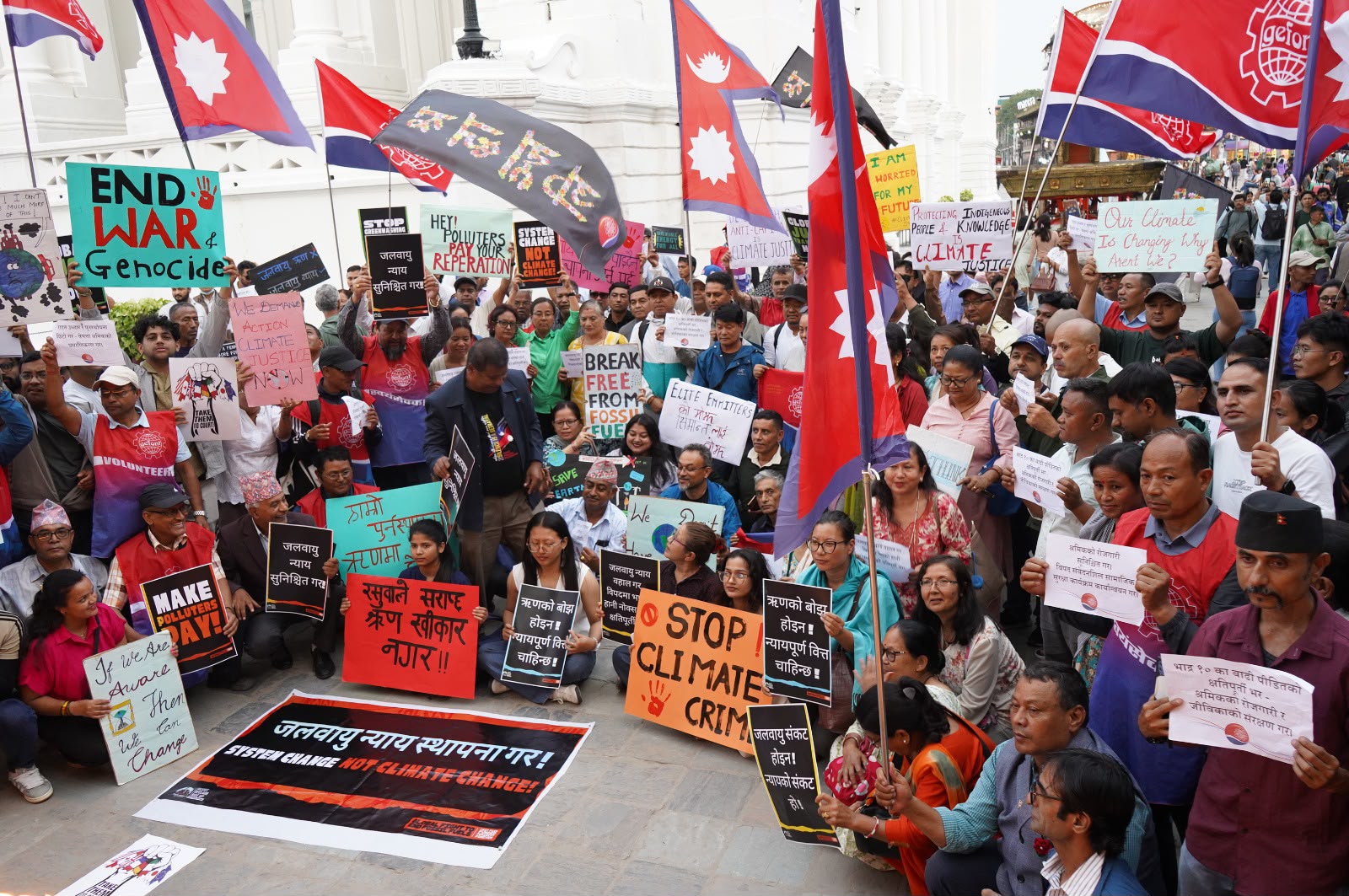
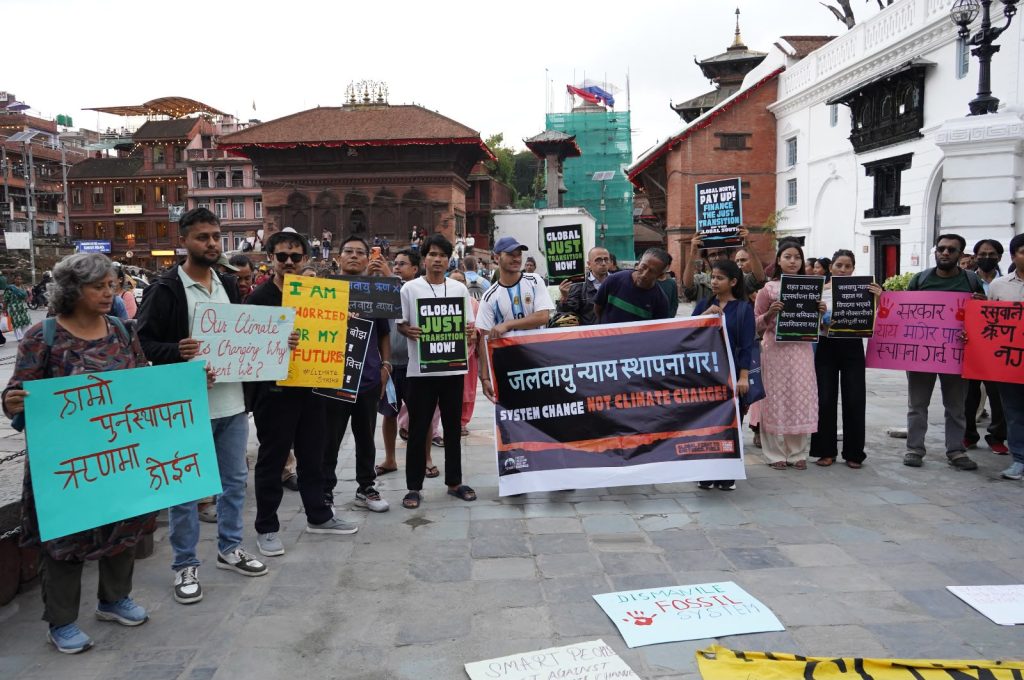
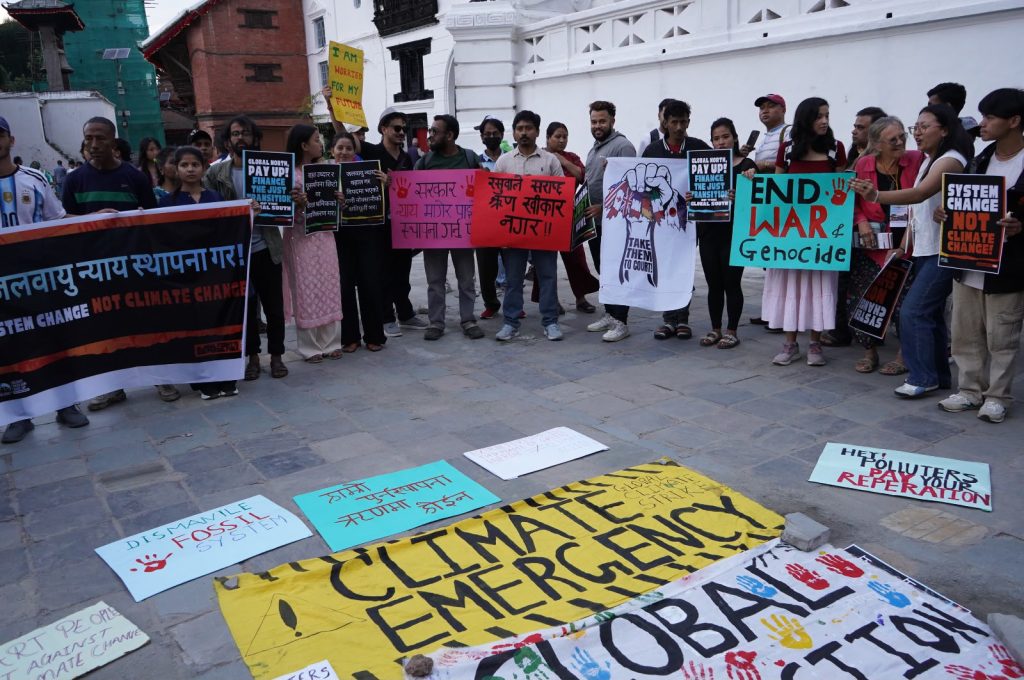
A ‘Global Day of Action’ was held last Friday at Basantapur in Kathmandu and several other locations across Nepal, bringing together civil society organizations, trade unions, environmental groups, climate activists and other stakeholders to call for climate justice, compensation for climate-related loss and damage, and a fossil fuel-free future.
The nationwide activities in Nepal formed part of the ‘Global Week of Action for a Fossil-Free Future’, an international campaign calling for stronger action against the continued expansion of fossil fuels and greater support for communities facing the impacts of the climate crisis.
Calls for Climate Compensation and Debt-Free Finance
Participants called for fair and adequate compensation for communities affected by climate change, particularly those facing loss and damage from climate-related disasters. They also demanded climate finance in the form of grants rather than loans, arguing that climate-vulnerable communities and developing countries should not be pushed further into debt while responding to a crisis to which they have contributed relatively little. The campaign further called for an end to the expansion of fossil fuel projects and public investment in fossil fuels, alongside increased investment in renewable energy and a just transition toward cleaner energy systems.
Nepal’s Climate-Related Disasters Highlighted
The programs also drew attention to the growing impacts of climate-related disasters in Nepal. Participants highlighted damage to lives and property, agriculture, infrastructure, hydropower projects, businesses and livelihoods caused by recent climate-related events. Speakers and organizers emphasized that post-disaster recovery should extend beyond rebuilding damaged physical infrastructure.
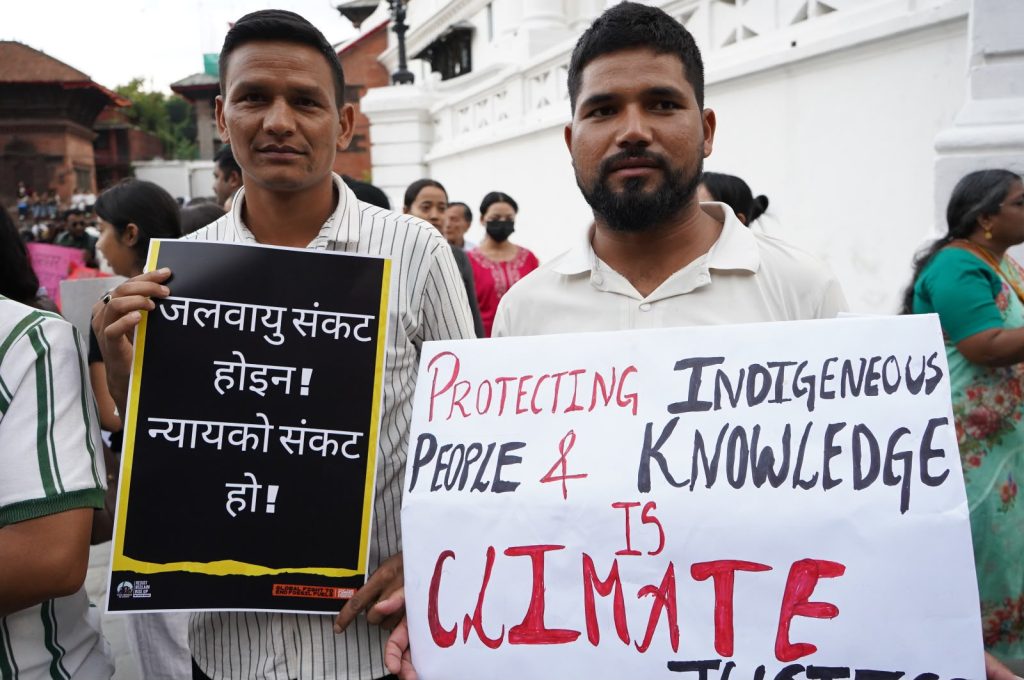
They said reconstruction efforts should also address livelihood restoration, social protection, workers’ rights and the unequal impacts of climate change on women and other vulnerable groups. The participants stressed that communities already facing the greatest climate risks should not be required to bear a disproportionate share of the costs associated with the climate crisis.
Focus on Just and Inclusive Reconstruction
Organizers called for climate response and reconstruction policies that ensure meaningful participation of affected communities. They emphasized that local people should have a role in decisions concerning recovery, financing and the rebuilding of their communities. According to the organizers, reconstruction should follow a just and inclusive approach, ensuring that workers, local communities and vulnerable groups are protected during the transition toward a more sustainable economy.
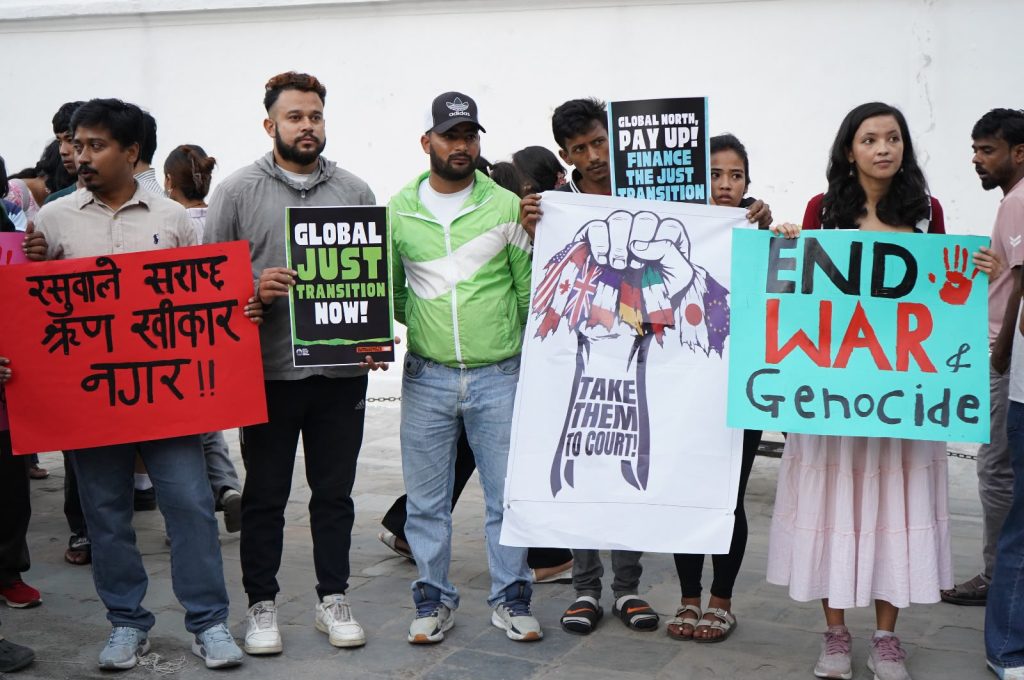
They also argued that the climate crisis should not be treated solely as an issue of emergency relief and post-disaster reconstruction. Instead, they called for policies that address the underlying causes of climate change, including dependence on fossil fuels, while promoting broader systemic changes in energy and development policies.
Events Held Across Nepal
According to the organizers, similar Global Day of Action activities were held at Gauradaha in Jhapa, Park Mode in Dhangadhi and Janak Chowk in Janakpur, alongside the Kathmandu program. The activities brought climate campaigners and community representatives together to raise awareness about climate justice and the need for a transition away from fossil fuels.
Part of Wider Asian Climate Campaign
The activities in Nepal were part of the wider Global Week of Action for a Fossil-Free Future, which is being organized across several Asian countries.
As part of the campaign, actions promoting a fossil fuel-free future, climate justice and a just energy transition have also been organized in countries including Bangladesh, India, Pakistan, Indonesia and the Philippines. The campaign seeks to connect local climate concerns with broader regional and global demands for stronger climate action, equitable financing and a transition toward renewable energy.