Kukur Tihar: Unveiling Nepal’s Ancient Tradition of Honouring Loyalty, Protection and Compassion

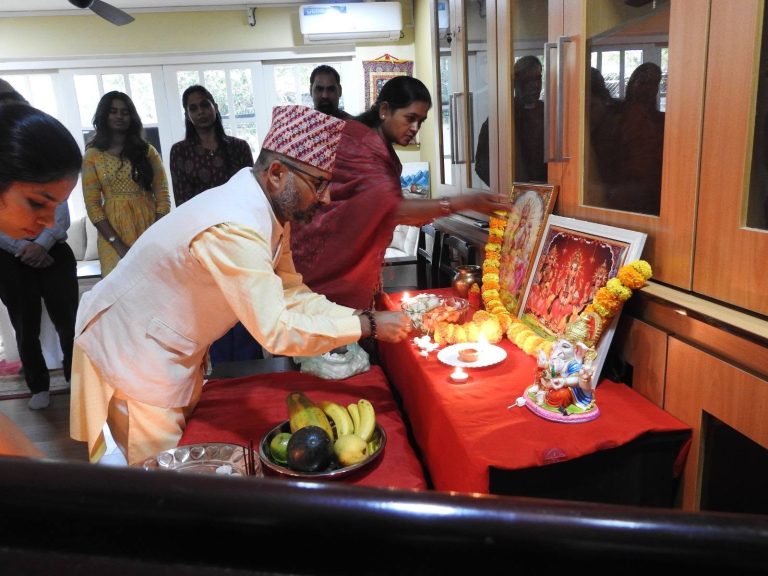
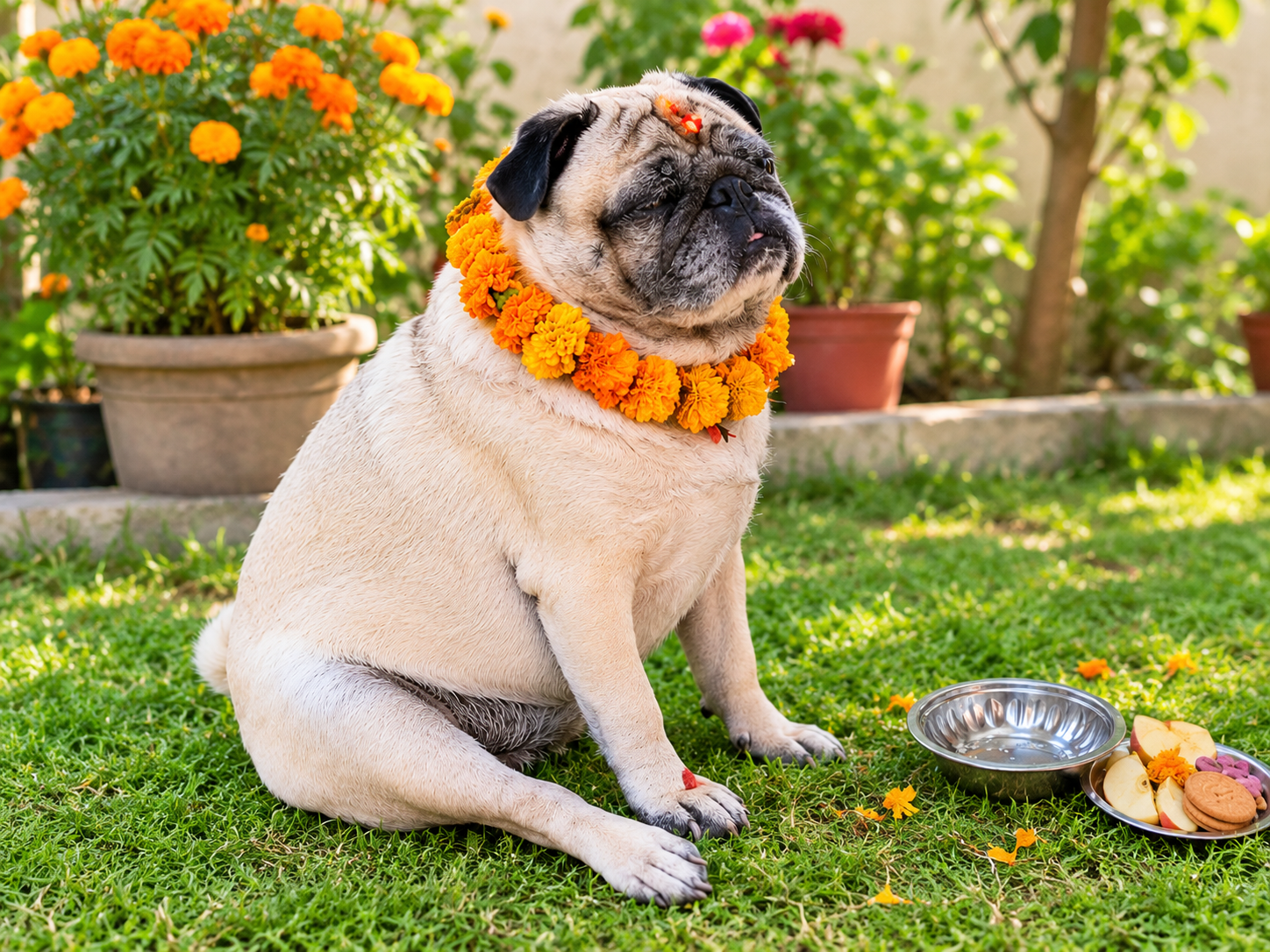
Kukur Tihar, the second day of the five-day Tihar festival in Nepal, is a unique cultural celebration dedicated to dogs. On this day, dogs, both domestic pets and stray or community dogs, are honoured with marigold garlands, tika, food and affection. The festival reflects the deep cultural relationship between humans and animals and stands as one of the most distinctive traditions of Nepal. More than a colourful festival, Kukur Tihar represents values of loyalty, companionship, protection, gratitude and respect for all living beings. It reminds people that animals have long played an important role in human society and deserve care and dignity.

Historical and Religious Roots of Kukur Tihar

The origins of Kukur Tihar are closely associated with Nepal’s broader Hindu religious and cultural traditions, particularly the stories and symbolism found in Hindu scriptures and epics. Dogs have a significant place in Hindu mythology. They are traditionally associated with Yama, the god of death, and are regarded as guardians who accompany and protect beings on the journey between life and death. In the Mahabharata, a dog also appears in one of the most memorable episodes of the epic, accompanying Yudhishthira during his final journey toward the Himalayas.
A Festival Celebrating Loyalty, Protection and Companionship
Kukur Tihar, the second day of the five-day Tihar festival in Nepal, is a unique cultural celebration dedicated to dogs. On this day, dogs—both domestic pets and stray or community dogs—are honoured with marigold garlands, tika, food and affection. The festival reflects the deep cultural relationship between humans and animals and stands as one of the most distinctive traditions of Nepal.

More than a colourful festival, Kukur Tihar represents values of loyalty, companionship, protection, gratitude and respect for all living beings. It reminds people that animals have long played an important role in human society and deserve care and dignity.
Historical and Religious Roots of Kukur Tihar
The origins of Kukur Tihar are closely associated with Nepal's broader Hindu religious and cultural traditions, particularly the stories and symbolism found in Hindu scriptures and epics.

Dogs have a significant place in Hindu mythology. They are traditionally associated with Yama, the god of death, and are regarded as guardians who accompany and protect beings on the journey between life and death. In the Mahabharata, a dog also appears in one of the most memorable episodes of the epic, accompanying Yudhishthira during his final journey toward the Himalayas.

According to the epic narrative, as Yudhishthira proceeds toward heaven, a dog remains faithfully by his side. When Yudhishthira is asked to abandon the animal, he refuses to do so, demonstrating his commitment to compassion and loyalty. The dog is ultimately revealed to have a divine identity, reinforcing the moral importance of faithfulness, compassion and righteousness.

Although different communities may interpret the religious origins of Kukur Tihar in slightly different ways, the association of dogs with Yama and his messengers is one of the most widely recognised explanations for the festival.
Why Are Dogs Worshipped During Tihar?
Dogs have historically served humans in numerous ways. They have protected homes, guarded livestock, assisted hunters and provided companionship. In modern society, their roles have expanded to include police and military work, search and rescue operations, disability assistance and emotional companionship.

Kukur Tihar transforms this everyday relationship into a ceremonial expression of gratitude.

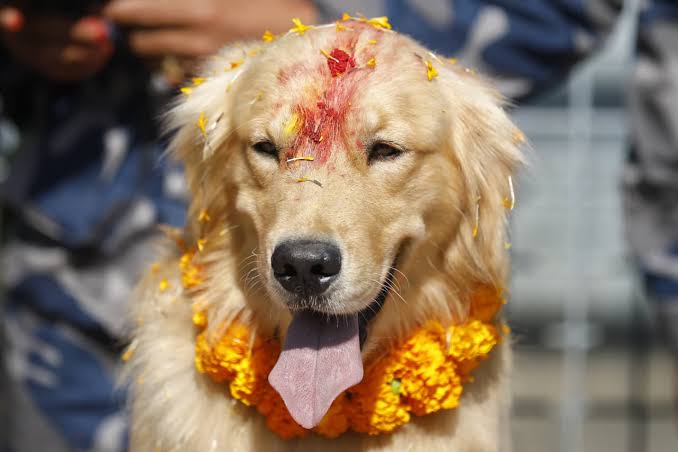
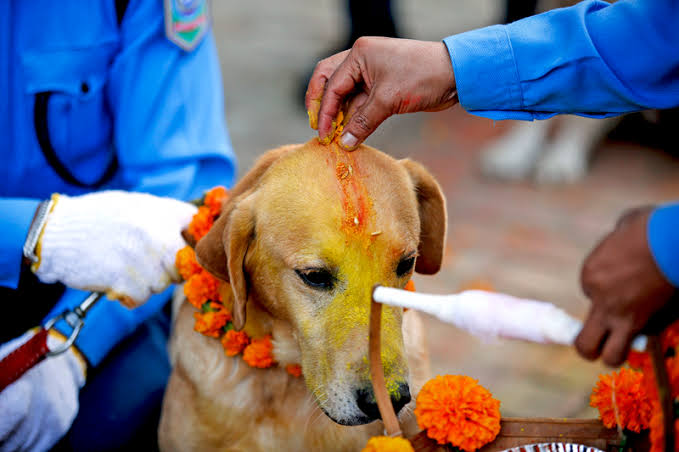
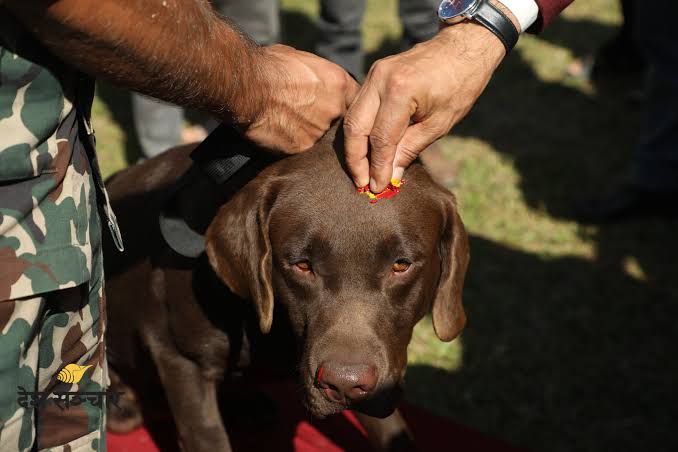
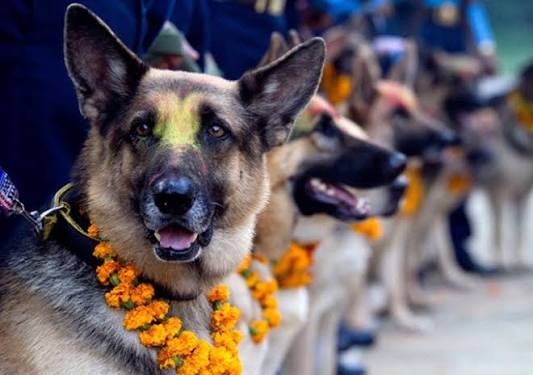
On the festival day, people traditionally place a tika on the dog's forehead and put a marigold garland around its neck. Dogs are also offered special food as a gesture of appreciation. The rituals symbolically recognise the loyalty and service dogs have provided to humans.

The practice also extends beyond household pets. In many places across Nepal, people honour stray and community dogs, allowing the festival to carry a broader message of compassion toward animals regardless of whether they have an owner.
The Significance of the Marigold Garland
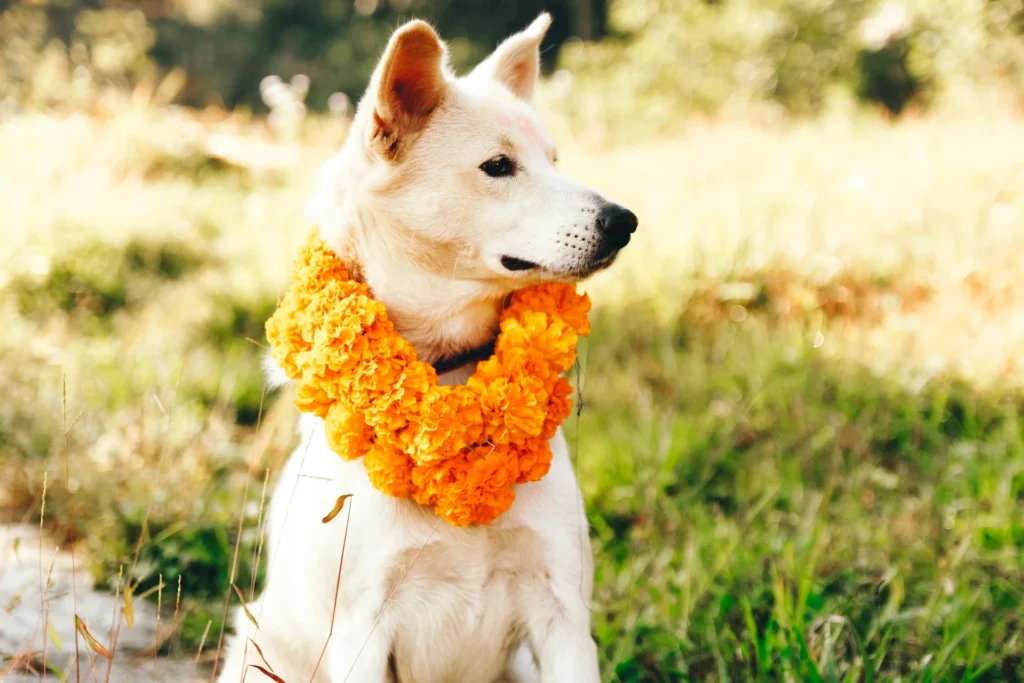
The marigold garland, commonly known as Sayapatri, is one of the most recognisable symbols of Tihar. During Kukur Tihar, dogs are adorned with these colourful garlands as a sign of honour and respect.

Marigolds are deeply connected with Nepali festivals and religious ceremonies. Their bright colour and long-lasting flowers make them especially suitable for festive rituals. Placing the garland around a dog's neck symbolically elevates the animal from an ordinary companion to an honoured participant in the celebration.
The Significance of Tika and Offerings
Another important part of Kukur Tihar is applying tika to the dog's forehead. Tika is widely used in Nepali Hindu traditions as a symbol of auspiciousness, blessing and respect.

After the ritual, dogs are offered food. Traditional offerings can include meat, milk, eggs, fruits and other foods depending on family and local customs.

The act of feeding the dogs is particularly meaningful because it turns religious respect into a practical expression of kindness. The festival therefore combines ritual, gratitude and care.
Kukur Tihar and Yama
One of the most important religious associations of Kukur Tihar is with Yama, the Hindu deity associated with death and justice. Dogs are traditionally regarded as guardians or companions associated with Yama.

Tihar itself is closely connected with the worship of Yama. The five-day festival moves through a sequence of animals, deities and family relationships, ultimately culminating in Bhai Tika, when sisters honour their brothers.

Within this broader religious framework, Kukur Tihar provides an opportunity to acknowledge the role of dogs as spiritual guardians while also celebrating their loyalty in everyday human life.
The Mahabharata and the Symbol of Loyalty
The story of Yudhishthira and the dog gives Kukur Tihar an especially powerful moral dimension.

In the Mahabharata, Yudhishthira refuses to leave the dog behind even when he is offered the opportunity to continue his journey without it. His decision demonstrates that true righteousness includes compassion and loyalty toward a faithful companion.

The dog is eventually revealed as a manifestation of Dharma, Yudhishthira's divine father. The episode is therefore often interpreted as a lesson that moral character is demonstrated through one's treatment of those who depend on and remain loyal to them.

This story provides a powerful philosophical connection to Kukur Tihar: loyalty should be answered with loyalty, and companionship should be met with compassion.
A Celebration That Goes Beyond Religion
Although Kukur Tihar has strong religious roots, its message extends beyond religious practice. In contemporary Nepal, the festival has become an important occasion for raising awareness about animal welfare and responsible pet ownership.

Images of dogs decorated with garlands and tika during Tihar have also attracted international attention, making Kukur Tihar one of Nepal's most distinctive cultural traditions.

For many people, the festival provides an opportunity to think about the treatment of animals throughout the year. The affection shown to dogs during Kukur Tihar also raises an important question: if animals are worthy of respect on a festival day, they should also receive food, shelter, medical care and protection from cruelty throughout the year.
Kukur Tihar in Modern Nepal
The celebration of Kukur Tihar has evolved alongside Nepalese society. While traditional rituals remain central, urban families increasingly celebrate the day with their pet dogs, photographs and special meals.

Animal welfare organisations and volunteers also use the occasion to promote responsible treatment of stray and community dogs. Vaccination, sterilisation, adoption and protection from abuse have increasingly become part of the wider conversation surrounding the festival.

Social media has further expanded the reach of Kukur Tihar. Photographs and videos of decorated dogs are shared widely, introducing audiences around the world to Nepal's distinctive tradition.

However, the increasing popularity of the festival also highlights the need to ensure that decorations and food offered to animals are safe and appropriate, and that animals are not subjected to unnecessary stress merely for photographs or entertainment.
A Living Tradition of Gratitude
Kukur Tihar is ultimately a celebration of a relationship that has existed for thousands of years—the relationship between humans and dogs. Its rituals may be simple, but their message is profound.

A garland represents honour. A tika represents blessing and respect. Food represents care. And the presence of the dog itself represents loyalty and companionship.

In Nepal, these elements come together during Tihar to create a festival that celebrates not only religious traditions but also one of humanity's oldest and most enduring animal relationships.

As Nepal continues to modernise, Kukur Tihar remains a powerful reminder that cultural heritage is not only about preserving rituals from the past. It is also about preserving the values behind those rituals—gratitude, compassion, respect and coexistence.

Kukur Tihar therefore stands as more than a day for worshipping dogs. It is a celebration of loyalty, a reminder of compassion, and a cultural expression of Nepal's belief that every living being deserves respect.

According to the epic narrative, as Yudhishthira proceeds toward heaven, a dog remains faithfully by his side. When Yudhishthira is asked to abandon the animal, he refuses to do so, demonstrating his commitment to compassion and loyalty. The dog is ultimately revealed to have a divine identity, reinforcing the moral importance of faithfulness, compassion and righteousness. Although different communities may interpret the religious origins of Kukur Tihar in slightly different ways, the association of dogs with Yama and his messengers is one of the most widely recognised explanations for the festival.

Why Are Dogs Worshipped During Tihar?

Dogs have historically served humans in numerous ways. They have protected homes, guarded livestock, assisted hunters and provided companionship. In modern society, their roles have expanded to include police and military work, search and rescue operations, disability assistance and emotional companionship. Kukur Tihar transforms this everyday relationship into a ceremonial expression of gratitude.

On the festival day, people traditionally place a tika on the dog’s forehead and put a marigold garland around its neck. Dogs are also offered special food as a gesture of appreciation. The rituals symbolically recognise the loyalty and service dogs have provided to humans. The practice also extends beyond household pets. In many places across Nepal, people honour stray and community dogs, allowing the festival to carry a broader message of compassion toward animals regardless of whether they have an owner.

The Significance of the Marigold Garland

The marigold garland, commonly known as Sayapatri, is one of the most recognisable symbols of Tihar. During Kukur Tihar, dogs are adorned with these colourful garlands as a sign of honour and respect. Marigolds are deeply connected with Nepali festivals and religious ceremonies. Their bright colour and long-lasting flowers make them especially suitable for festive rituals. Placing the garland around a dog’s neck symbolically elevates the animal from an ordinary companion to an honoured participant in the celebration.

The Significance of Tika and Offerings

Another important part of Kukur Tihar is applying tika to the dog’s forehead. Tika is widely used in Nepali Hindu traditions as a symbol of auspiciousness, blessing and respect. After the ritual, dogs are offered food. Traditional offerings can include meat, milk, eggs, fruits and other foods depending on family and local customs. The act of feeding the dogs is particularly meaningful because it turns religious respect into a practical expression of kindness. The festival therefore combines ritual, gratitude and care.

Kukur Tihar and Yama

One of the most important religious associations of Kukur Tihar is with Yama, the Hindu deity associated with death and justice. Dogs are traditionally regarded as guardians or companions associated with Yama. Tihar itself is closely connected with the worship of Yama. The five-day festival moves through a sequence of animals, deities and family relationships, ultimately culminating in Bhai Tika, when sisters honour their brothers. Within this broader religious framework, Kukur Tihar provides an opportunity to acknowledge the role of dogs as spiritual guardians while also celebrating their loyalty in everyday human life.

The Mahabharata and the Symbol of Loyalty

The story of Yudhishthira and the dog gives Kukur Tihar an especially powerful moral dimension. In the Mahabharata, Yudhishthira refuses to leave the dog behind even when he is offered the opportunity to continue his journey without it. His decision demonstrates that true righteousness includes compassion and loyalty toward a faithful companion.

The dog is eventually revealed as a manifestation of Dharma, Yudhishthira’s divine father. The episode is therefore often interpreted as a lesson that moral character is demonstrated through one’s treatment of those who depend on and remain loyal to them. This story provides a powerful philosophical connection to Kukur Tihar: loyalty should be answered with loyalty, and companionship should be met with compassion.

A Celebration That Goes Beyond Religion

Although Kukur Tihar has strong religious roots, its message extends beyond religious practice. In contemporary Nepal, the festival has become an important occasion for raising awareness about animal welfare and responsible pet ownership. Images of dogs decorated with garlands and tika during Tihar have also attracted international attention, making Kukur Tihar one of Nepal’s most distinctive cultural traditions.
For many people, the festival provides an opportunity to think about the treatment of animals throughout the year. The affection shown to dogs during Kukur Tihar also raises an important question: if animals are worthy of respect on a festival day, they should also receive food, shelter, medical care and protection from cruelty throughout the year.

Kukur Tihar in Modern Nepal

The celebration of Kukur Tihar has evolved alongside Nepalese society. While traditional rituals remain central, urban families increasingly celebrate the day with their pet dogs, photographs and special meals. Animal welfare organisations and volunteers also use the occasion to promote responsible treatment of stray and community dogs. Vaccination, sterilisation, adoption and protection from abuse have increasingly become part of the wider conversation surrounding the festival.

Social media has further expanded the reach of Kukur Tihar. Photographs and videos of decorated dogs are shared widely, introducing audiences around the world to Nepal’s distinctive tradition. However, the increasing popularity of the festival also highlights the need to ensure that decorations and food offered to animals are safe and appropriate, and that animals are not subjected to unnecessary stress merely for photographs or entertainment.
A Festival Celebrating Loyalty, Protection and Companionship
Kukur Tihar, the second day of the five-day Tihar festival in Nepal, is a unique cultural celebration dedicated to dogs. On this day, dogs—both domestic pets and stray or community dogs—are honoured with marigold garlands, tika, food and affection. The festival reflects the deep cultural relationship between humans and animals and stands as one of the most distinctive traditions of Nepal.

More than a colourful festival, Kukur Tihar represents values of loyalty, companionship, protection, gratitude and respect for all living beings. It reminds people that animals have long played an important role in human society and deserve care and dignity.
Historical and Religious Roots of Kukur Tihar
The origins of Kukur Tihar are closely associated with Nepal's broader Hindu religious and cultural traditions, particularly the stories and symbolism found in Hindu scriptures and epics.

Dogs have a significant place in Hindu mythology. They are traditionally associated with Yama, the god of death, and are regarded as guardians who accompany and protect beings on the journey between life and death. In the Mahabharata, a dog also appears in one of the most memorable episodes of the epic, accompanying Yudhishthira during his final journey toward the Himalayas.

According to the epic narrative, as Yudhishthira proceeds toward heaven, a dog remains faithfully by his side. When Yudhishthira is asked to abandon the animal, he refuses to do so, demonstrating his commitment to compassion and loyalty. The dog is ultimately revealed to have a divine identity, reinforcing the moral importance of faithfulness, compassion and righteousness.

Although different communities may interpret the religious origins of Kukur Tihar in slightly different ways, the association of dogs with Yama and his messengers is one of the most widely recognised explanations for the festival.
Why Are Dogs Worshipped During Tihar?
Dogs have historically served humans in numerous ways. They have protected homes, guarded livestock, assisted hunters and provided companionship. In modern society, their roles have expanded to include police and military work, search and rescue operations, disability assistance and emotional companionship.

Kukur Tihar transforms this everyday relationship into a ceremonial expression of gratitude.

On the festival day, people traditionally place a tika on the dog's forehead and put a marigold garland around its neck. Dogs are also offered special food as a gesture of appreciation. The rituals symbolically recognise the loyalty and service dogs have provided to humans.

The practice also extends beyond household pets. In many places across Nepal, people honour stray and community dogs, allowing the festival to carry a broader message of compassion toward animals regardless of whether they have an owner.
The Significance of the Marigold Garland
The marigold garland, commonly known as Sayapatri, is one of the most recognisable symbols of Tihar. During Kukur Tihar, dogs are adorned with these colourful garlands as a sign of honour and respect.

Marigolds are deeply connected with Nepali festivals and religious ceremonies. Their bright colour and long-lasting flowers make them especially suitable for festive rituals. Placing the garland around a dog's neck symbolically elevates the animal from an ordinary companion to an honoured participant in the celebration.
The Significance of Tika and Offerings
Another important part of Kukur Tihar is applying tika to the dog's forehead. Tika is widely used in Nepali Hindu traditions as a symbol of auspiciousness, blessing and respect.

After the ritual, dogs are offered food. Traditional offerings can include meat, milk, eggs, fruits and other foods depending on family and local customs.

The act of feeding the dogs is particularly meaningful because it turns religious respect into a practical expression of kindness. The festival therefore combines ritual, gratitude and care.
Kukur Tihar and Yama
One of the most important religious associations of Kukur Tihar is with Yama, the Hindu deity associated with death and justice. Dogs are traditionally regarded as guardians or companions associated with Yama.

Tihar itself is closely connected with the worship of Yama. The five-day festival moves through a sequence of animals, deities and family relationships, ultimately culminating in Bhai Tika, when sisters honour their brothers.

Within this broader religious framework, Kukur Tihar provides an opportunity to acknowledge the role of dogs as spiritual guardians while also celebrating their loyalty in everyday human life.
The Mahabharata and the Symbol of Loyalty
The story of Yudhishthira and the dog gives Kukur Tihar an especially powerful moral dimension.

In the Mahabharata, Yudhishthira refuses to leave the dog behind even when he is offered the opportunity to continue his journey without it. His decision demonstrates that true righteousness includes compassion and loyalty toward a faithful companion.

The dog is eventually revealed as a manifestation of Dharma, Yudhishthira's divine father. The episode is therefore often interpreted as a lesson that moral character is demonstrated through one's treatment of those who depend on and remain loyal to them.

This story provides a powerful philosophical connection to Kukur Tihar: loyalty should be answered with loyalty, and companionship should be met with compassion.
A Celebration That Goes Beyond Religion
Although Kukur Tihar has strong religious roots, its message extends beyond religious practice. In contemporary Nepal, the festival has become an important occasion for raising awareness about animal welfare and responsible pet ownership.

Images of dogs decorated with garlands and tika during Tihar have also attracted international attention, making Kukur Tihar one of Nepal's most distinctive cultural traditions.

For many people, the festival provides an opportunity to think about the treatment of animals throughout the year. The affection shown to dogs during Kukur Tihar also raises an important question: if animals are worthy of respect on a festival day, they should also receive food, shelter, medical care and protection from cruelty throughout the year.
Kukur Tihar in Modern Nepal
The celebration of Kukur Tihar has evolved alongside Nepalese society. While traditional rituals remain central, urban families increasingly celebrate the day with their pet dogs, photographs and special meals.

Animal welfare organisations and volunteers also use the occasion to promote responsible treatment of stray and community dogs. Vaccination, sterilisation, adoption and protection from abuse have increasingly become part of the wider conversation surrounding the festival.

Social media has further expanded the reach of Kukur Tihar. Photographs and videos of decorated dogs are shared widely, introducing audiences around the world to Nepal's distinctive tradition.

However, the increasing popularity of the festival also highlights the need to ensure that decorations and food offered to animals are safe and appropriate, and that animals are not subjected to unnecessary stress merely for photographs or entertainment.
A Living Tradition of Gratitude
Kukur Tihar is ultimately a celebration of a relationship that has existed for thousands of years—the relationship between humans and dogs. Its rituals may be simple, but their message is profound.

A garland represents honour. A tika represents blessing and respect. Food represents care. And the presence of the dog itself represents loyalty and companionship.

In Nepal, these elements come together during Tihar to create a festival that celebrates not only religious traditions but also one of humanity's oldest and most enduring animal relationships.

As Nepal continues to modernise, Kukur Tihar remains a powerful reminder that cultural heritage is not only about preserving rituals from the past. It is also about preserving the values behind those rituals—gratitude, compassion, respect and coexistence.

Kukur Tihar therefore stands as more than a day for worshipping dogs. It is a celebration of loyalty, a reminder of compassion, and a cultural expression of Nepal's belief that every living being deserves respect.

A Living Tradition of Gratitude

Kukur Tihar is ultimately a celebration of a relationship that has existed for thousands of years, the relationship between humans and dogs. Its rituals may be simple, but their message is profound. A garland represents honour. A tika represents blessing and respect. Food represents care. And the presence of the dog itself represents loyalty and companionship. In Nepal, these elements come together during Tihar to create a festival that celebrates not only religious traditions but also one of humanity’s oldest and most enduring animal relationships.

As Nepal continues to modernise, Kukur Tihar remains a powerful reminder that cultural heritage is not only about preserving rituals from the past. It is also about preserving the values behind those rituals, gratitude, compassion, respect and coexistence. Kukur Tihar therefore stands as more than a day for worshipping dogs. It is a celebration of loyalty, a reminder of compassion, and a cultural expression of Nepal’s belief that every living being deserves respect.


Press + K to search