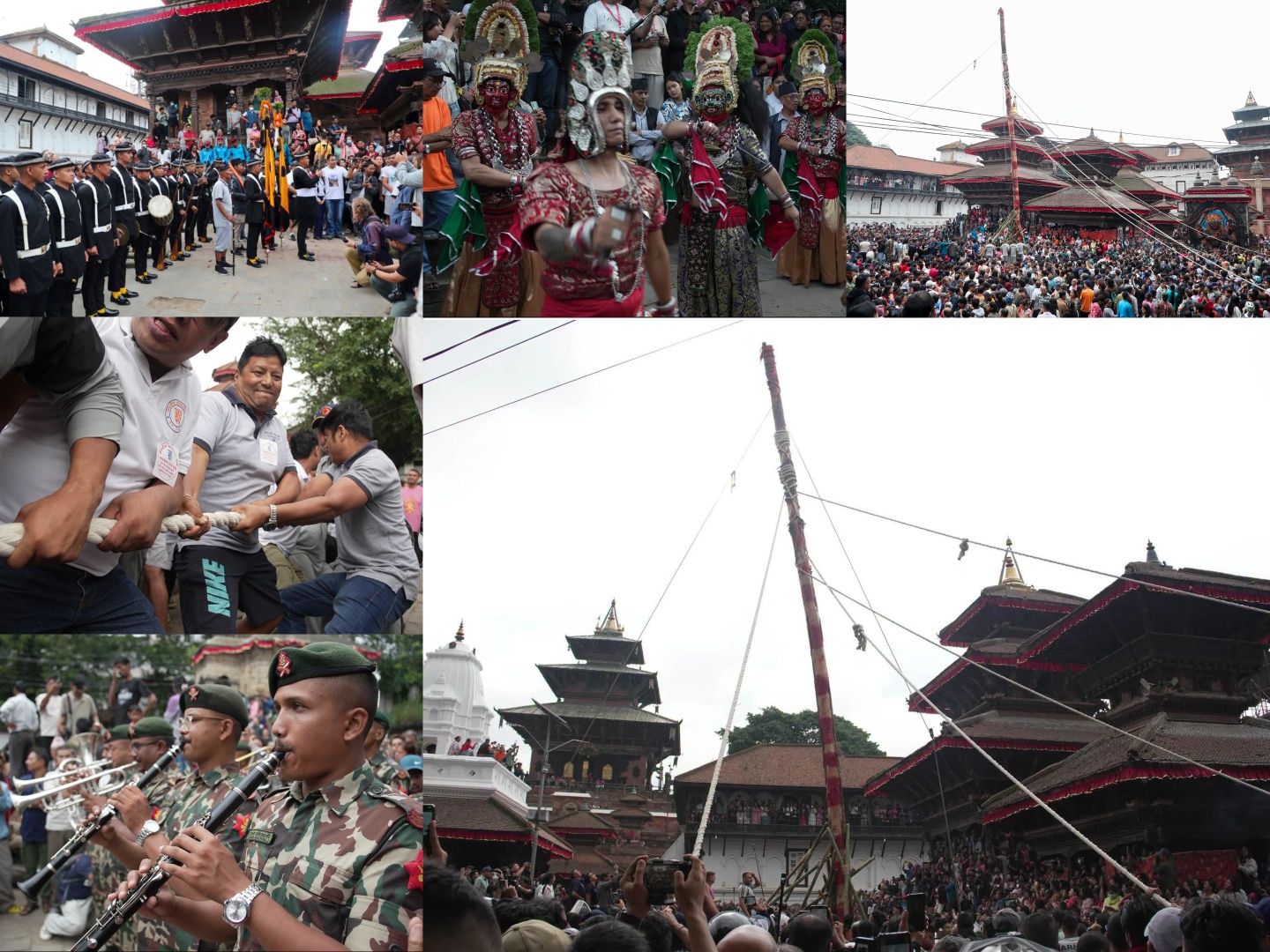
Indra Jatra, one of Nepal’s most prominent cultural and religious festivals, has officially begun in Kathmandu and Bhaktapur, bringing centuries-old Newar traditions, rituals, dances, chariot processions and religious celebrations to life across the Kathmandu Valley. The annual Indra Jatra festival formally began in Kathmandu on Wednesday morning with the traditional ‘Yasin Thanegu’ (Indradhwajotthan) ceremony.
The ceremonial Yasin, also known as the Indra flagpole, was raised at Hanumandhoka near Kageshwori Temple and in front of the historic Kal Bhairav shrine at 7:47 am. The raising of the Yasin marks the formal opening of the major Indra Jatra celebrations in Kathmandu, a festival deeply connected with the religious traditions, history and cultural heritage of the Kathmandu Valley. The Yasin traditionally contains eight pieces of wood known as ‘Lakasin,’ which represent the eight mother goddesses, or Ashtamatrika. Members of the Manandhar community from Nhays Naya and Chhwasa Tole have an important traditional role in carrying out this ritual.
Kathmandu Indra Jatra Begins With Traditional Rituals
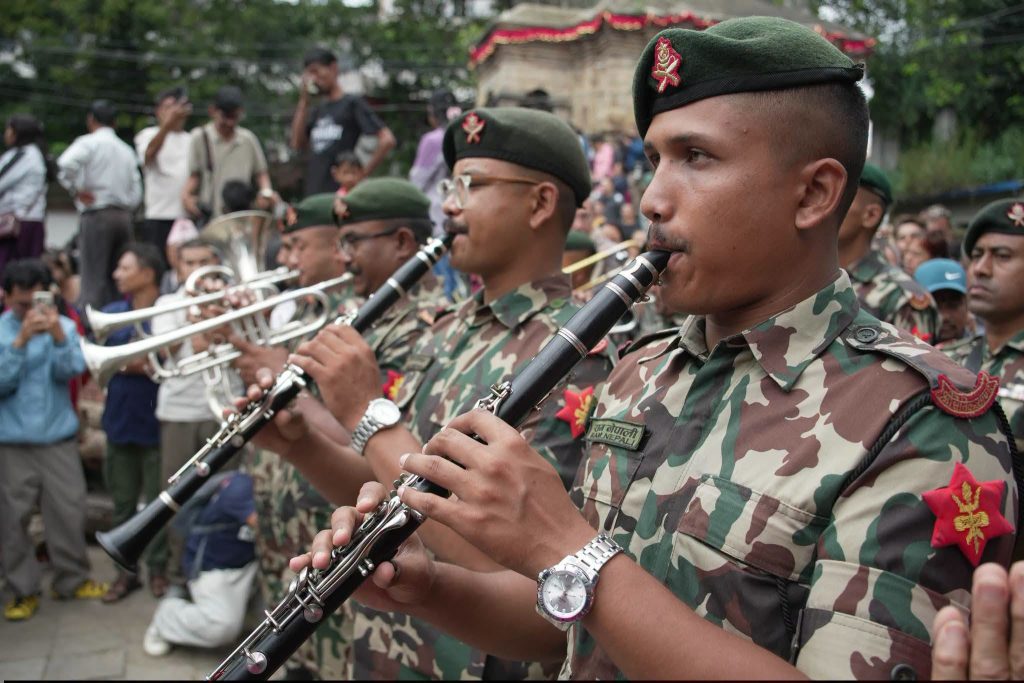
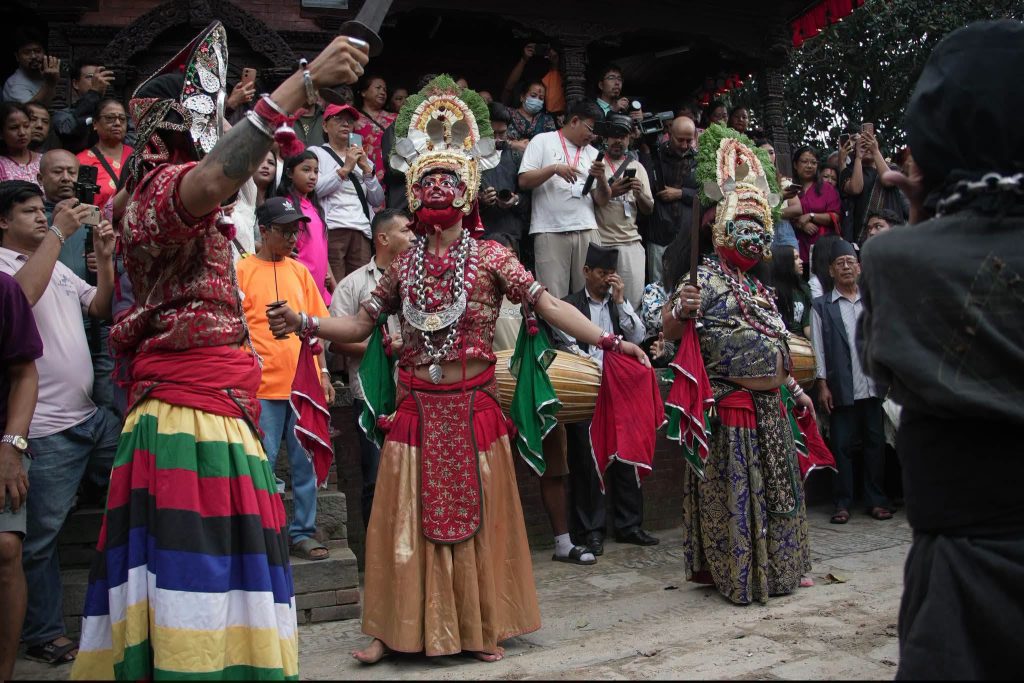
Following the raising of the Yasin, the Gurju Paltan fired ceremonial cannon shots, adding to the traditional atmosphere of the Indra Jatra opening ceremony. A white horse symbolizing Taleju Bhawani was also brought to the festival site as part of the traditional rituals, while the Dipyakhan (Devi dance) was performed during the ceremony.
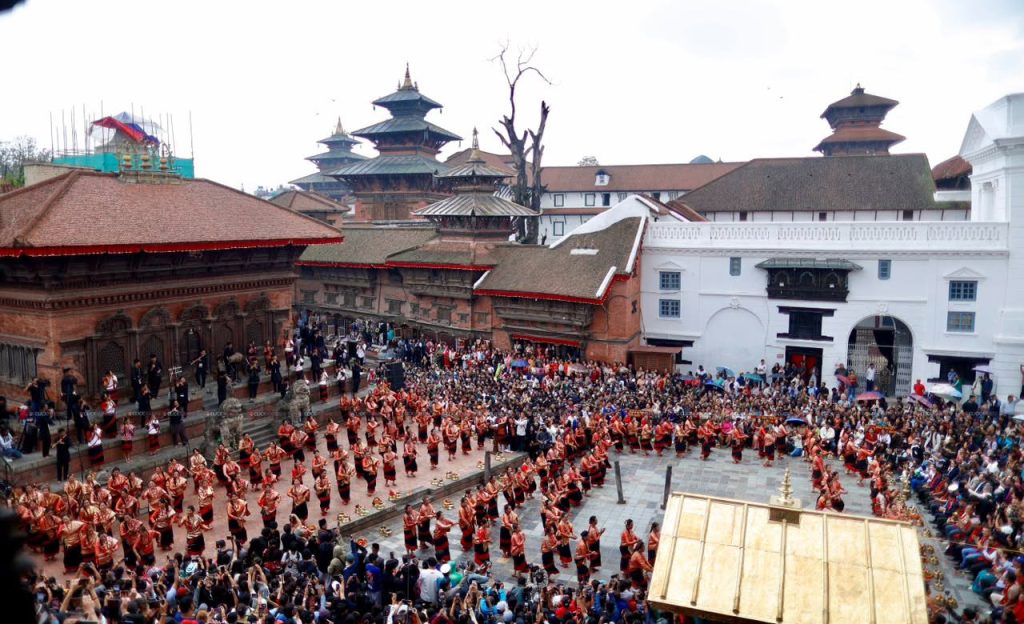
The traditional dance is regarded as the first dance presented during Kathmandu’s Indra Jatra and forms an important part of the festival’s cultural heritage. After the Yasin was erected, a ceremonial flag bearing the image of Lord Indra was flown above it. Known as ‘Halimpata,’ the flag is an important feature of the Indra Jatra ceremony, with members of the Manandhar community traditionally performing the first worship after the flag is raised.
The Yasin is topped by a structure resembling a temple finial, known as Bhogate, while a golden image of Lord Indra is placed at its base, where devotees gather to offer prayers and worship the sacred image. The opening ceremony attracted a large gathering of devotees, local residents, cultural enthusiasts and public representatives, including Kathmandu Metropolitan City acting mayor Sunita Dangol and ward representatives.
The tradition of erecting the Yasin at its present location is believed to have begun during the reign of King Rana Bahadur Shah, although the exact origin of the practice remains uncertain. Historical accounts suggest that the ceremonial pole was previously erected near the Adko Narayan Temple in Maru.
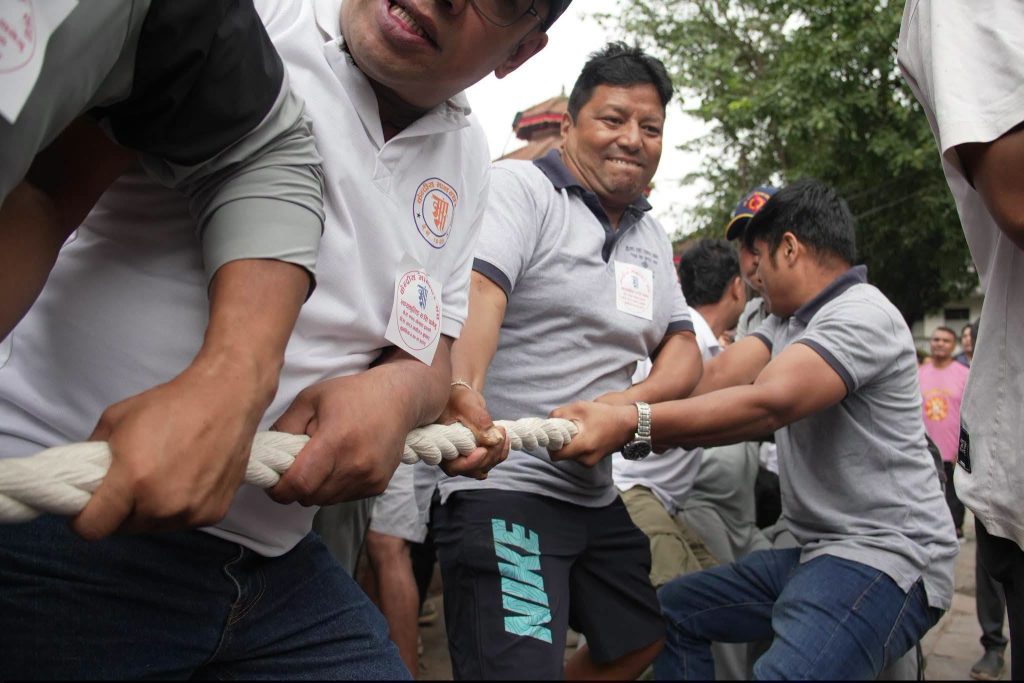
For generations, the Indra Jatra festival has been regarded as a celebration of joy, victory and community life. The festival has also become an important part of Kathmandu’s cultural tourism, attracting domestic and international visitors interested in Nepal’s Newar culture, traditional festivals, religious heritage and historic urban settlements.
Chariot Processions to Highlight Kathmandu’s Indra Jatra
The main Indra Jatra chariot procession in Kathmandu will begin on September 25, when the chariots of Kumari, Ganesh and Bhairav will be taken through the lower parts of the historic city following the completion of the opening rituals. The first day of the Indra Jatra chariot festival will be followed by the traditional Dangi procession.
Dangi is regarded as the mother of Lord Indra, and her procession is also associated with prayers for the peace of people who died during the previous year. The chariot procession will continue in the upper part of the city on September 26. Another major event, Nanichaya, will take place on September 29, when the chariots are traditionally taken through the upper-city area, including Kilagha.
The participation of local women has become an important feature of the final-day chariot procession. For the past 14 years, local women have taken the lead in pulling the chariots of Kumari, Ganesh and Bhairav, continuing the tradition while adding a strong community dimension to Kathmandu’s cultural festival. The final day of Kathmandu Indra Jatra also traditionally includes the President’s visit, during which the President receives tika from the living goddess Kumari.
Bhaktapur Celebrates Indra Jatra With Yambodhyo Tradition
Indra Jatra celebrations have also begun in Bhaktapur, where the festival is observed through distinctive local Newar traditions and community rituals. Small ceremonial poles known as ‘Yambodhyo’ were erected in several Bhaktapur neighborhoods on Wednesday, including Itachhe, Tekhapukhu, Banshgopal, Nasamana, Bulucha, Sakotha, Bholachhen, Sujamhari and Khauma. In Nepal Bhasa, Yambodhyo refers to the small ceremonial pole erected as a representation of Lord Indra.
The practice forms an important part of Bhaktapur Indra Jatra and demonstrates the distinct ways in which the festival is observed across the Kathmandu Valley. According to cultural accounts, the origins of Indra Jatra are connected with the story of Jayanta, the son of Lord Indra. It is believed that Indra’s mother, Vasundhara, required the Parijat flower for her religious observance and sent Jayanta to find it.
While searching for the flower, Jayanta was captured by demons while picking Parijat flowers. A battle subsequently took place between the gods and demons to secure his release, and the victory of the gods is traditionally associated with the beginning of Indra Jatra celebrations. Bhaktapur observes Indra Jatra for eight days, with traditional worship and community rituals continuing across different neighborhoods.
The simultaneous celebrations in Kathmandu and Bhaktapur highlight the depth and diversity of Newar culture in the Kathmandu Valley. While Kathmandu’s celebrations are prominently known for the Yasin, Kumari chariot, Ganesh and Bhairav processions, traditional dances and Hanumandhoka festivities, Bhaktapur maintains its own distinctive Yambodhyo tradition and neighborhood-based rituals.
With its ancient rituals, religious ceremonies, traditional dances, chariot processions, sacred images and strong community participation, Indra Jatra remains a major cultural heritage festival of Nepal. The festival also contributes to cultural tourism, religious tourism and heritage tourism in Kathmandu Valley, offering visitors an opportunity to experience the living traditions, architecture, history and Newar cultural identity of Kathmandu and Bhaktapur.