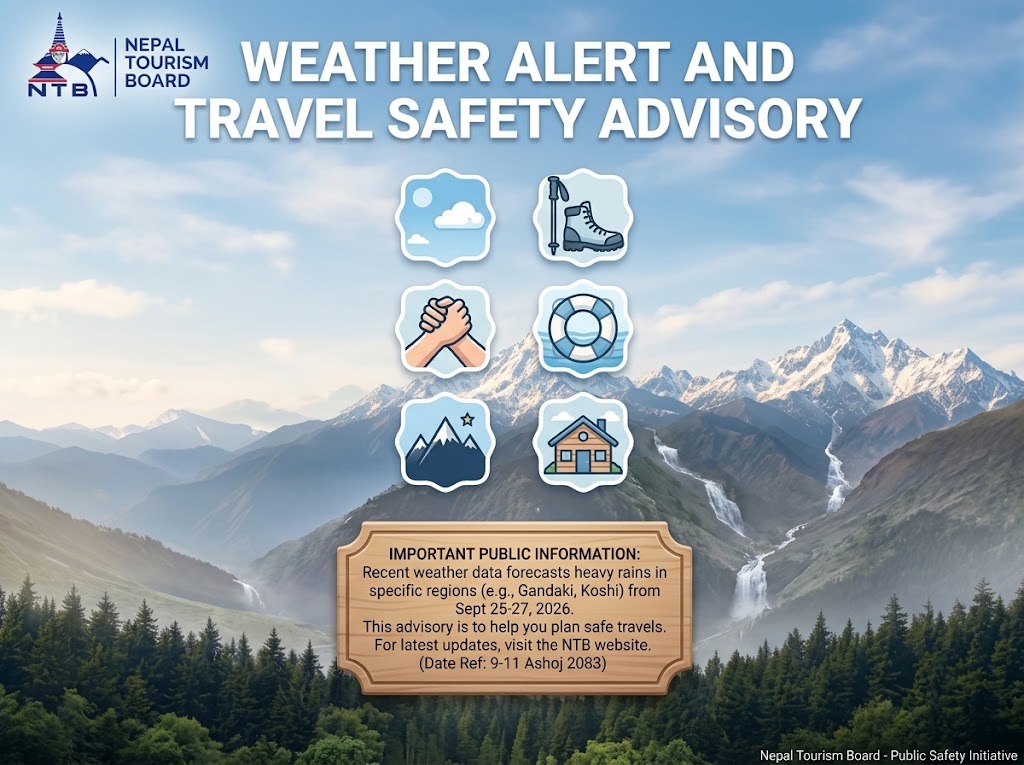
The Nepal Tourism Board (NTB) has issued a weather alert and travel advisory for visitors after forecasts indicate heavy to extremely heavy rainfall from September 25 to 27, and urges tourists to stay alert and take necessary precautions while travelling during the period. The alert has been issued based on information provided by the Department of Hydrology and Meteorology (DHM), which operates weather, hydrology and warning services relating to rainfall, flooding and other meteorological hazards.
As per the advisory, Gandaki and Lumbini provinces are expected to have heavy rainfall along with thunderstorms, lightning and wind, while extremely heavy rainfall is likely to occur in some areas of Koshi, Madhesh, Bagmati and Sudurpashchim provinces. Heavy rainfall is also likely to occur in some areas of Karnali Province during the period. The weather forecast is of particular relevance to tourists due to the rapid changes in weather that can occur across diverse altitudes in Nepal, ranging from lowlands to mountainous destinations, and the NTB has urged visitors to stay informed and make judgements based on the latest official weather and safety advisories.

Tourists Urged To Exercise Extra Caution In Mountain Areas
The Tourism Board has recommended that visitors heading to mountainous and high altitude destinations exercise extra caution in river basins and other locations that can be susceptible to hazards during periods of intense rainfall, as conditions in elevated areas can change rapidly and snowfall may also occur in higher altitude regions. Nepal’s tourism destinations range from lowland areas to high-altitude mountain ranges, and the variation in altitude makes weather monitoring of particular relevance to those travelling on outdoor adventures.
The advisory recommends that tourists consult the latest weather forecasts and official guidelines before proceeding with their journeys, and urged them to stay informed about current conditions relating to roads, flights and trekking routes, as adverse weather conditions can impact various types of travel and outdoor pursuits. In addition, the Tourism Board urged visitors to refrain from trekking, mountaineering and other outdoor activities when weather conditions become unsafe, and exercise caution while adjusting travel plans according to the latest official updates.

Rivers, Slopes And Landslide-Prone Areas Under Particular Caution
The NTB has further urged tourists to avoid areas affected by severe weather or identified as potentially hazardous during periods of heavy rainfall, including areas near rivers, streams, steep slopes and other locations experiencing landslides. The advisory has been issued as the DHM’s monitoring system focuses specifically on rainfall and hydrology, with the department’s rainfall watch highlighting the potential for landslides on steep slopes and high flows in local areas as a result of heavy rainfall.
In addition, visitors are encouraged to follow instructions issued by local authorities, security agencies, tourism professionals and tour operators, and the Tourism Board has emergency coordination mechanisms for tourists in case of a crisis, advising them to stay prepared for hazards that may arise while travelling in Nepal. The official crisis guidelines issued by the Tourism Board highlight flooding, mudslides, avalanches and other natural hazards as potential dangers that may affect tourists.

Official Updates Recommended Before Travel
The advisory has been issued as Nepal enters the tail end of the monsoon season, when heavy rainfall can impact various regions of the country, and the NTB’s warning has been issued to promote responsible travel and advance preparations, particularly for those visiting areas affected by heavy rainfall and other weather hazards. Rather than restricting tourism across the country, the advisory highlights the importance of staying informed about current conditions and adjusting travel plans as necessary.
The Department of Hydrology and Meteorology’s weather monitoring and forecasting system provides regular weather and hydrology reports and visitors can utilise the DHM’s official resources to obtain the latest information on rainfall and other weather conditions affecting travel in Nepal.