Established in 2002, Yeti Airlines Limited (YAL) is one of Nepal’s oldest domestic airline service providers and has established a significant presence in the country’s aviation sector. The airline is currently the second-largest player in Nepal’s domestic aviation industry, holding an estimated 22–23% market share in terms of passengers served in FY2025/26.
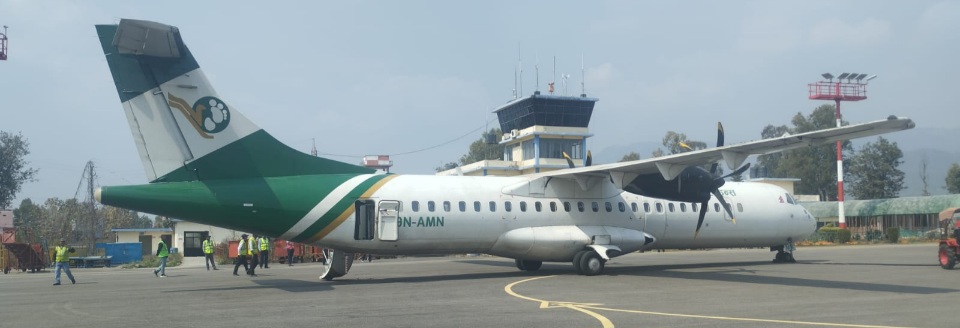
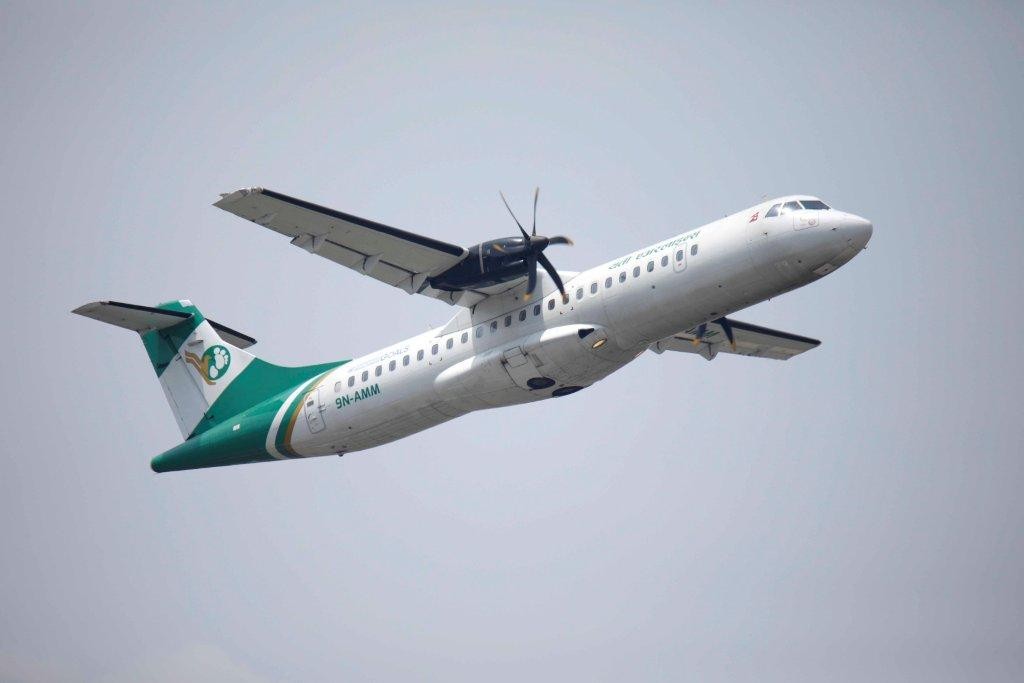
Yeti Airlines currently operates a fleet of seven ATR 72 aircraft, of which six are owned by the company and one is leased. The airline has built its operations around domestic connectivity, serving multiple destinations through its network of routes and airport hubs. Its sales offices across different airports, together with online ticket booking facilities, have supported its passenger sales and market reach.
The airline is fully owned by its promoters, with Asian Life Insurance Limited holding 29.85%, Lhakpa Sonam Sherpa holding 15.96%, and Chanda Sherpa holding 12.79%. Yeti Airlines is part of the wider Yeti World business group, which has interests across tourism and aviation-related businesses.

Experienced Promoters and Management Team
Yeti Airlines is led by an experienced promoter and management group with long-standing exposure to Nepal’s tourism and aviation sectors. Lhakpa Sonam Sherpa, Chairman of Yeti Airlines, has more than five decades of experience in the tourism industry.
The company’s leadership team includes Chanda Sherpa as Managing Director and Norbu Tshiring Sherpa as Deputy Managing Director, both of whom have extensive experience in the tourism sector. Subhas Sapkota, Chief Executive Officer, is a Chartered Accountant with more than 16 years of experience across various industries. The presence of Asian Life Insurance Limited, an institutional promoter and a major player in Nepal’s life insurance sector, is also considered to provide additional financial flexibility to the airline.
Yeti Airlines Records Rs. 5.48 Billion Operating Income in FY26
Yeti Airlines recorded total operating income of Rs. 5.475 billion in FY2025/26, compared with Rs. 5.384 billion in FY2024/25. The company had registered stronger growth in FY25, when operating income increased by around 26% compared with FY24, supported by fleet expansion and increased flight operations. However, revenue growth moderated in FY26 amid higher aviation turbine fuel (ATF) prices and a reduction in flight operations.
The airline’s EBITDA margin stood at 29.56% in FY26, compared with 33.08% in FY25 and 25.95% in FY24. Passenger occupancy improved to around 82% in FY2025/26, compared with approximately 78% in FY24. However, higher fuel prices and resulting increases in passenger fares contributed to a decline in scheduled flights and passenger traffic during FY26.
Infomerics Reaffirms ‘IRN BBB-’ Issuer Rating
Infomerics Credit Rating Nepal Limited (Infomerics Nepal) has reaffirmed the ‘IRN BBB- (Is)’ issuer rating of Yeti Airlines Limited. The rating agency has also reaffirmed the ratings assigned to the airline’s bank facilities. The Rs. 6.389 billion long-term bank facilities have retained the ‘IRN BBB-’ rating, while the Rs. 1.046 billion short-term bank facilities have retained the ‘IRN A3’ rating. Similarly, Yeti Airlines’ Rs. 551.92 million long-term/short-term bank facilities have been reaffirmed at ‘IRN BBB-/A3’. The total rated bank facilities amount to Rs. 7.987 billion.
| Facility | Amount | Rating | Rating Action |
|---|---|---|---|
| Long-Term Bank Facilities | Rs. 6,389.11 million | IRN BBB- | Reaffirmed |
| Short-Term Bank Facilities | Rs. 1,046.50 million | IRN A3 | Reaffirmed |
| Long-Term/Short-Term Facilities | Rs. 551.92 million | IRN BBB-/A3 | Reaffirmed |
| Total | Rs. 7,987.53 million | — | — |
According to Infomerics Nepal, the IRN BBB- rating indicates a moderate level of safety regarding timely servicing of financial obligations, with the issuer carrying moderate credit risk.
Long Operating Track Record Supports Rating
Infomerics Nepal said the reaffirmation of Yeti Airlines’ ratings continues to draw support from its long operating history since 2002 and stable position in Nepal’s domestic airline market. The rating agency also highlighted the company’s geographical coverage, airport-based sales offices and online booking platform, which have supported ticket sales and market reach.
Yeti Airlines’ operational performance improved significantly in FY25, particularly in terms of scheduled flights, passenger volume and total operating income. The company subsequently maintained relatively stable operations in FY26 despite pressure from higher fuel costs.
Improved Capital Structure Strengthens Financial Profile
One of the key factors supporting the rating is the significant improvement in Yeti Airlines’ capital structure following an equity infusion of approximately Rs. 2.27 billion through private placement, including premium. The proceeds were primarily used to reduce debt and finance engine overhauls of selected aircraft. As a result, the company’s overall gearing ratio improved to 1.49 times in FY26, compared with 3.10 times in FY25 and 4.45 times in FY24.
The TOL/TNW ratio also improved to 1.60 times in FY26 from 3.38 times in FY25 and 4.60 times in FY24. Improved capitalization and lower debt levels strengthened the company’s debt-servicing capacity. Its interest coverage ratio increased to 3.54 times in FY26, compared with 2.98 times in FY25 and 1.71 times in FY24, while its DSCR rose to 1.88 times from 1.13 times. Infomerics Nepal said the stronger capital structure provides greater financial headroom for the airline to absorb near-term volatility in fuel prices and passenger demand.
AMO Certification Provides Additional Business Opportunity
Yeti Airlines also benefits from its Aircraft Maintenance Organization (AMO) certification, which allows the company to undertake maintenance activities for its own fleet as well as provide maintenance services to other airlines, subject to regulatory requirements. The certification enables Yeti Airlines to reduce its own aircraft repair and maintenance costs while also generating additional revenue through maintenance contracts with other airlines.
Airline Converts Foreign Currency Loans into NPR
Yeti Airlines has converted its entire US dollar-denominated loan portfolio into Nepalese rupee-denominated loans following amendments to Nepal Rastra Bank’s foreign exchange management provisions. The move has significantly reduced the airline’s exposure to foreign exchange risk arising from its loan portfolio. However, the company recorded a one-time foreign exchange loss of approximately Rs. 327 million in FY26 following the conversion. Infomerics Nepal said the loss is largely non-recurring, while the conversion is expected to reduce foreign exchange losses going forward. The airline nevertheless continues to face some foreign exchange exposure through its purchase of aircraft spare parts denominated in US dollars, although its USD-denominated revenue provides a partial natural hedge.
Higher ATF Prices Put Pressure on Operations
Despite the improvement in its financial structure, Yeti Airlines continues to face pressure from rising aviation fuel prices. ATF accounted for approximately 32% of the airline’s total operating costs in FY25 and FY26. Recent increases in international ATF prices, linked partly to geopolitical tensions in Western Asia, have increased the company’s operating costs. Yeti Airlines has partially passed the increased costs on to passengers through higher fares.
However, the higher fares have contributed to lower passenger demand and flight operations. Scheduled flights declined by around 6%, while passenger traffic contracted by approximately 9% in FY26 compared with FY25. Infomerics Nepal said the ability of the airline to manage fuel costs, maintain passenger occupancy and protect operating margins will remain important going forward.
Route Concentration Remains a Key Rating Constraint
The airline remains exposed to concentration risk due to its dependence on a limited number of key domestic routes. Yeti Airlines operated across 18 routes in FY25, with the Kathmandu-Pokhara and Kathmandu-Biratnagar sectors accounting for a substantial share of its revenue and passenger traffic. The four routes covering the two sectors contributed around 46% of revenue and 47% of passengers in FY25, with the concentration increasing to approximately 51% of revenue and 52% of passengers in FY26.
The company’s USD-denominated revenue is also highly concentrated, with around 90% generated from two routes, particularly the Kathmandu-Pokhara sector. Infomerics Nepal said diversification of the airline’s route network and reduction of concentration in key revenue streams will remain important areas to monitor.

Working Capital Requirements Remain High
Yeti Airlines’ operations remain working-capital intensive. Its operating cycle stood at approximately 98 days in FY26, compared with 84 days in FY25 and 111 days in FY24. The higher working capital requirement was primarily driven by increased inventory holdings, particularly aircraft spare parts and components. The company strategically increased its inventory to prepare for higher spare-parts costs amid depreciation of the Nepalese rupee against the US dollar and geopolitical uncertainty. While the additional inventory supports maintenance and operational continuity, it has also increased short-term financing requirements.
Planned IPO Could Further Strengthen Capitalization
Infomerics Nepal has also considered Yeti Airlines’ planned IPO of approximately Rs. 2.1 billion in its assessment. If completed as planned, the proceeds could further strengthen the airline’s capital structure and improve its gearing profile. Going forward, the rating agency will monitor Yeti Airlines’ ability to efficiently utilize its fleet, maintain passenger occupancy, manage fuel costs, sustain operating margins and generate adequate profitability.
The company also remains exposed to intense competition, aviation-sector cyclicality and seasonality, regulatory risks, route concentration, ATF price volatility and foreign exchange exposure related to aircraft spare parts. The ability to maintain its established domestic market position while efficiently utilizing its fleet and managing these operational and financial risks will remain key factors influencing Yeti Airlines’ future financial performance.