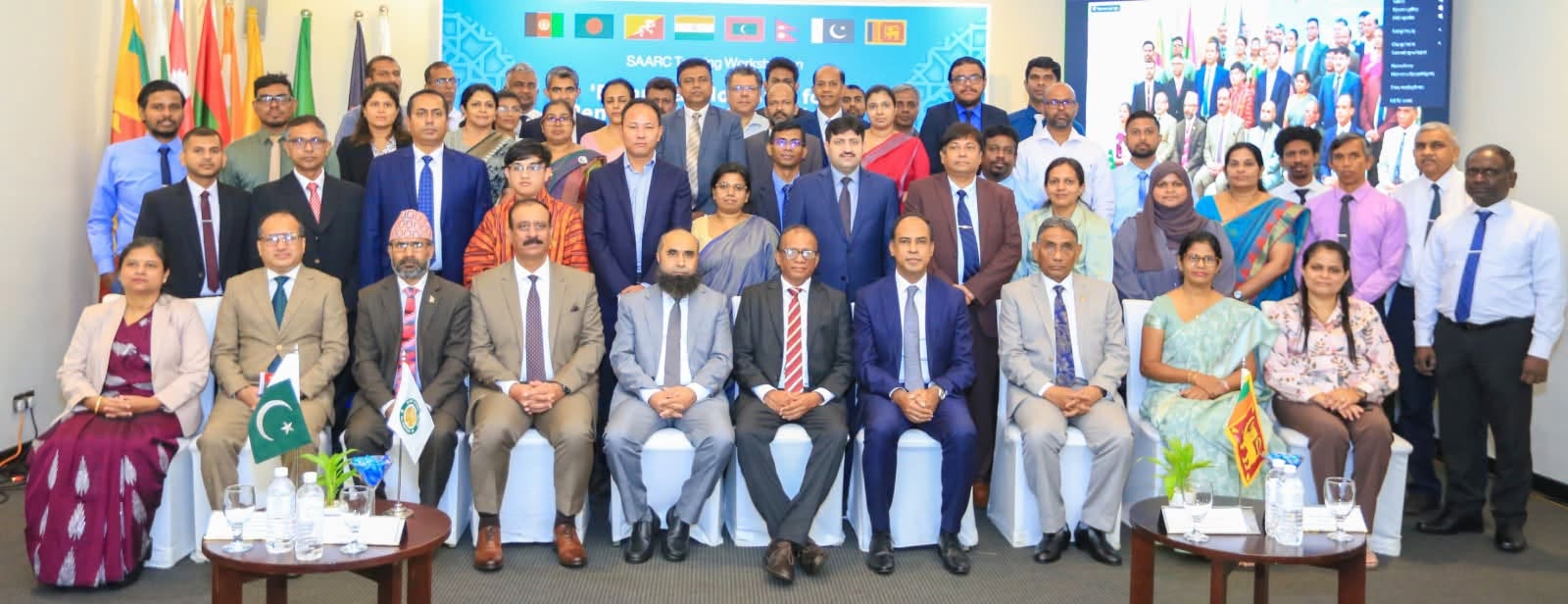
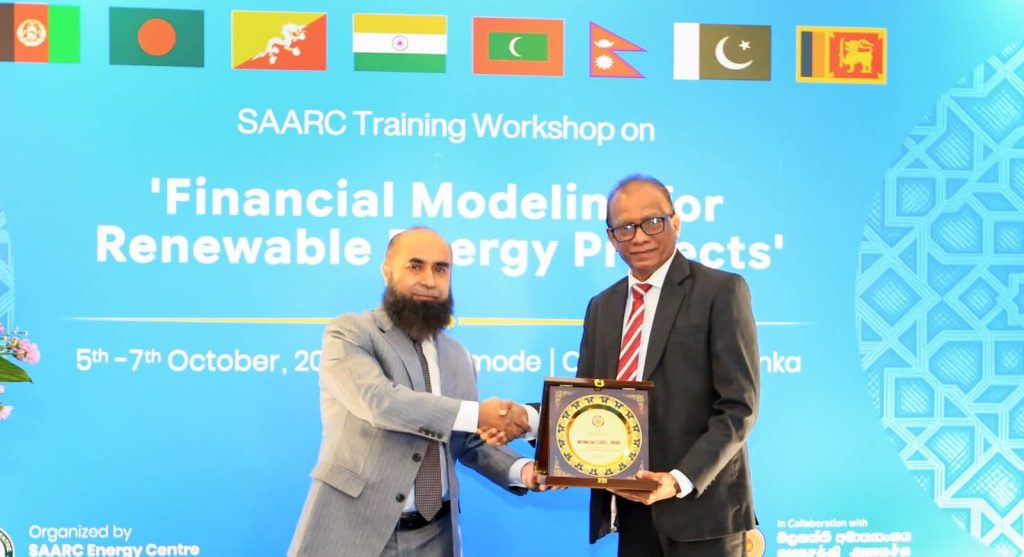
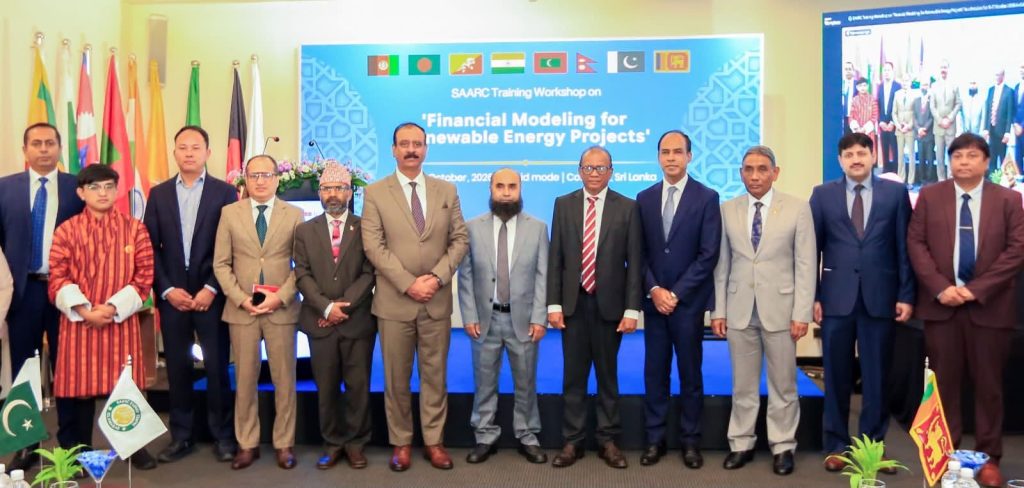
Nepal participated in the inaugural session of the SAARC Training Workshop on “Financial Modeling for Renewable Energy Projects” held in Colombo, Sri Lanka, on October 5, 2026. The workshop was organised in hybrid mode in collaboration with Sri Lanka’s Ministry of Energy, bringing together participants from SAARC member states to strengthen regional expertise in renewable energy financing. Chargé d’Affaires a.i. of Nepal, Mr. Vijay Kumar Raut, attended the inaugural session, representing Nepal at the regional training programme focused on improving financial modelling skills for sustainable energy projects.

Workshop Focuses on Renewable Energy Financing
The workshop aims to enhance participants’ capacity to develop and assess financial models for renewable energy projects while facilitating the exchange of knowledge and best practices among SAARC member states. Financial modelling plays an important role in determining the viability of renewable energy investments, assessing project costs and returns, and attracting financing for clean energy infrastructure.
Strengthening these capabilities can help countries advance renewable energy development and support the transition towards more sustainable energy systems. The programme also provides a platform for regional participants to share experiences and explore approaches to financing renewable energy projects in South Asia.
Nepal Emphasises Regional Cooperation
Nepal attaches high importance to cooperation among SAARC member states in renewable energy development, recognising its role in strengthening regional energy security and supporting climate action. Nepal’s participation reflects its interest in promoting knowledge-sharing and building institutional capacity to support sustainable energy investments. Productive deliberations at the workshop are expected to contribute to greater regional understanding of renewable energy financing and opportunities for cooperation. Regional collaboration on renewable energy is particularly important as South Asian countries seek to expand clean energy capacity, mobilise investment and address the challenges associated with sustainable development and climate change.