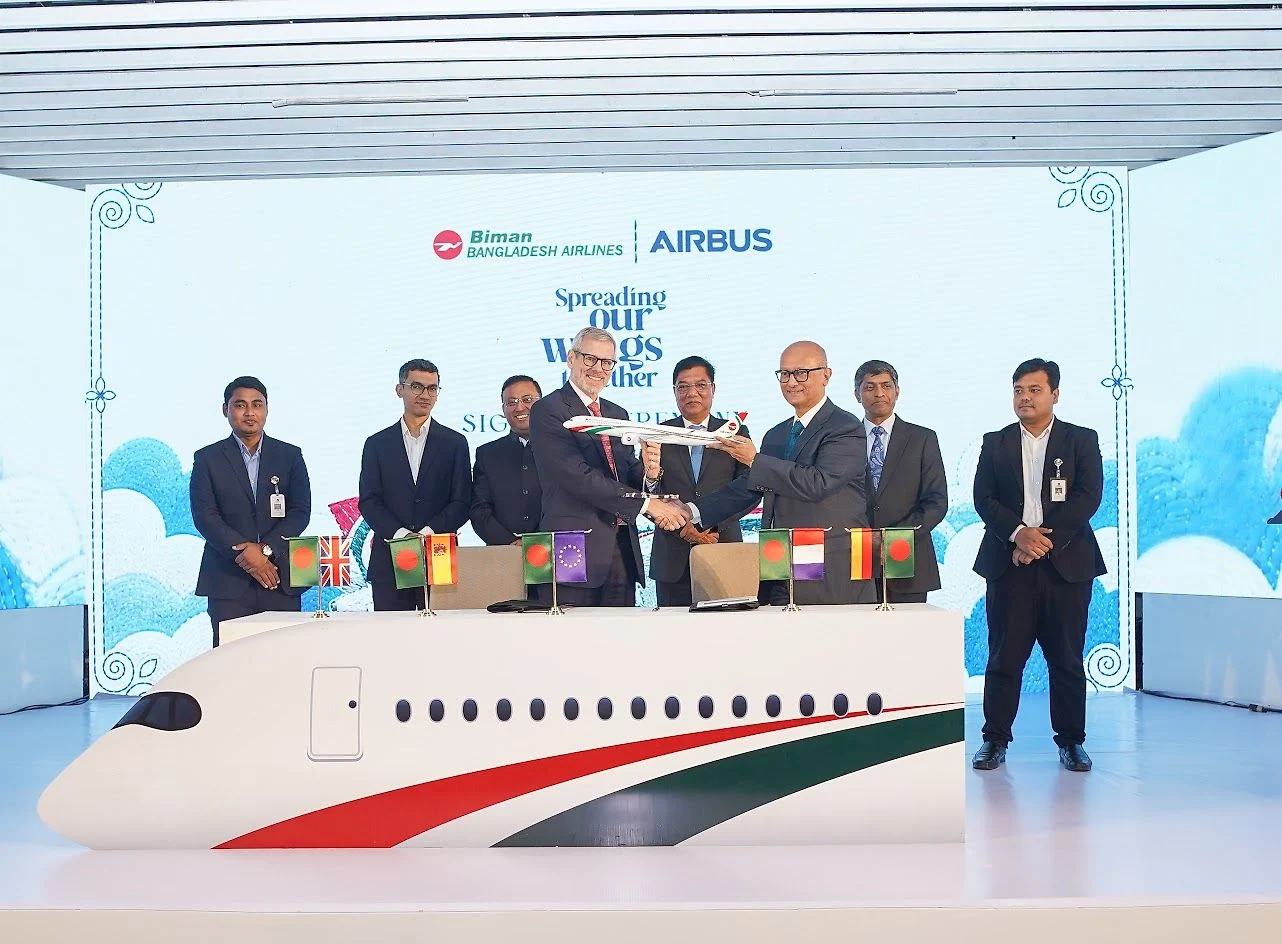
Biman Bangladesh Airlines has ordered 10 Airbus aircraft, including four A350-900 widebody jets and six A321neo narrowbody aircraft, as the Bangladeshi national carrier seeks to modernise its fleet and improve its international connectivity. The order will let Biman Bangladesh Airlines operate long-haul and regional aircraft in order to satisfy demand for different distances and enhance its competitiveness. The deal also highlights the airline’s commitment to diversifying its aircraft manufacturers, as it complements its existing Boeing fleet.
Four A350-900 Aircraft to Strengthen Long-Haul Connectivity
The four Airbus A350-900 aircraft will support Biman’s long-distance international operations, and provide an opportunity to offer long-range flights at competitive prices. Designed for intercontinental travel, the aircraft offers extended range, up-to-date cabin amenities and improved fuel efficiency compared to previous generation aircraft. With a published range of approximately 18,000 kilometres under suitable operating conditions, the aircraft could help Biman strengthen connections between Bangladesh and key destinations in Europe, North America and the Middle East, depending on future route plans and commercial requirements. Its modern cabin design is also intended to improve passenger comfort on extended journeys, while its operating efficiency could help the airline manage costs on long-distance routes.

Fuel efficiency is another important advantage of the aircraft, as Airbus reports the A350 offers approximately 25% lower fuel consumption and carbon dioxide emissions than previous-generation competitor aircraft. Actual performance depends on route length, aircraft configuration, passenger load and operating conditions, and could help Biman create opportunities to expand its international network, improve the economics of selected long-haul routes and offer more competitive services to overseas travellers, including passengers travelling between Bangladesh and countries with significant Bangladeshi communities.
Six A321neo Jets to Expand Regional Operations
The remaining six aircraft in the order are Airbus A321neo jets, set to support short- and medium-haul operations. As part of Airbus’ A320neo family, the A321neo combine new-generation engines and aerodynamic improvements to reduce fuel consumption and emissions, and could enable Biman to strengthen services across South Asia, Southeast Asia and the Middle East, depending on future network planning and market demand. Its capacity and operating characteristics may also help the airline match aircraft size to passenger demand on individual routes, potentially improving operational flexibility and efficiency.
Airbus reports the A321neo family delivers at least 20% lower fuel consumption and carbon dioxide emissions compared to previous-generation aircraft, which could help Biman manage operating expenses while supporting the development of additional regional connections.
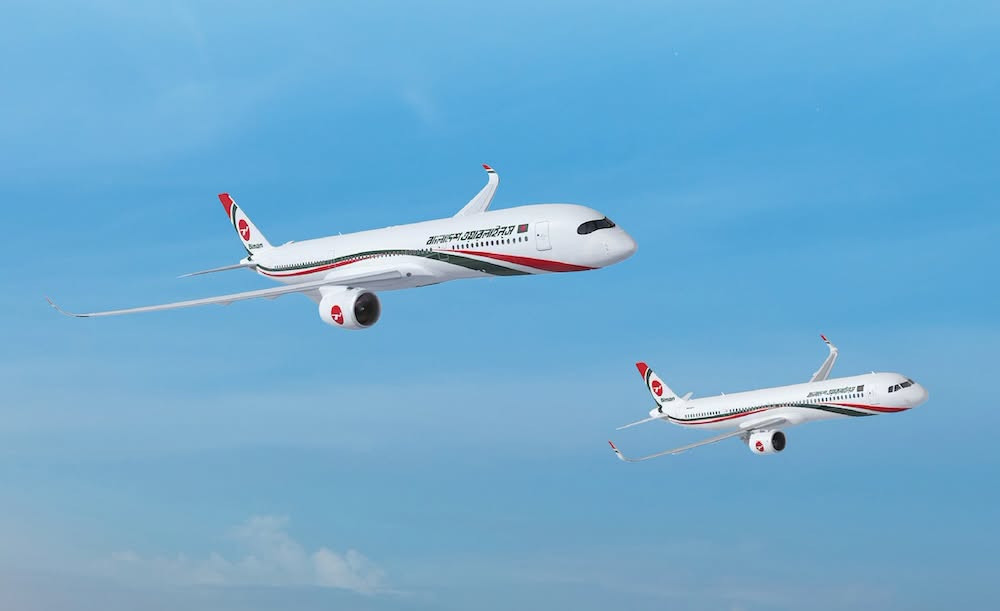
The combination of A350-900 and A321neo aircraft would allow the airline to serve long-distance international markets and shorter routes with aircraft suited to their respective operational requirements. However, introducing Airbus aircraft alongside Boeing planes will require careful planning for pilot training, engineering support, spare-parts management and maintenance to ensure that fleet expansion translates into reliable services.
Fleet Modernisation Signals Broader Growth Ambitions
Biman Bangladesh Airlines’ Airbus order forms part of a wider effort to strengthen its fleet and improve its position in international aviation. A modern aircraft fleet can help airlines improve fuel efficiency, enhance passenger experience and develop routes that may be difficult to serve economically with older aircraft. Bangladesh’s overseas workforce and diaspora also represent an important market for international air travel, with demand from passengers visiting family and friends, travelling for business and connecting with destinations across the world. Stronger air connectivity could therefore benefit not only passenger services, but also cargo transportation, international trade and tourism by improving the movement of people and goods.
Nevertheless, the success of the expansion will depend on more than aircraft acquisition, as Biman will need to maintain competitive fares, develop commercially viable routes, improve service reliability and ensure that the necessary technical and operational capabilities are in place. The airline will also need to coordinate fleet expansion with airport capacity, route permissions, crew availability and maintenance requirements. Efficient integration of the new aircraft will be essential to avoid operational disruption and ensure that the investment delivers sustainable commercial benefits.

Delivery Schedule and Financial Details Remain Key Questions
The final impact of the deal will depend on the aircraft delivery schedule, financing arrangements and Biman’s plans for integrating the new jets into its operations. These details will help determine when the airline can expand services and how the investment will affect its long-term financial position. Careful planning will be particularly important as the carrier manages a mixed fleet of Airbus and Boeing aircraft, each requiring specific training, technical support and maintenance arrangements.
For Bangladesh, the agreement represents a significant development in the national carrier’s efforts to strengthen its international presence. If implemented effectively, the expansion could improve connectivity, support passenger growth and help Biman compete more strongly in regional and long-haul markets. The Airbus order therefore marks an important milestone in the airline’s modernisation ambitions, although its long-term success will depend on confirmed deliveries, effective fleet management and the development of sustainable routes.