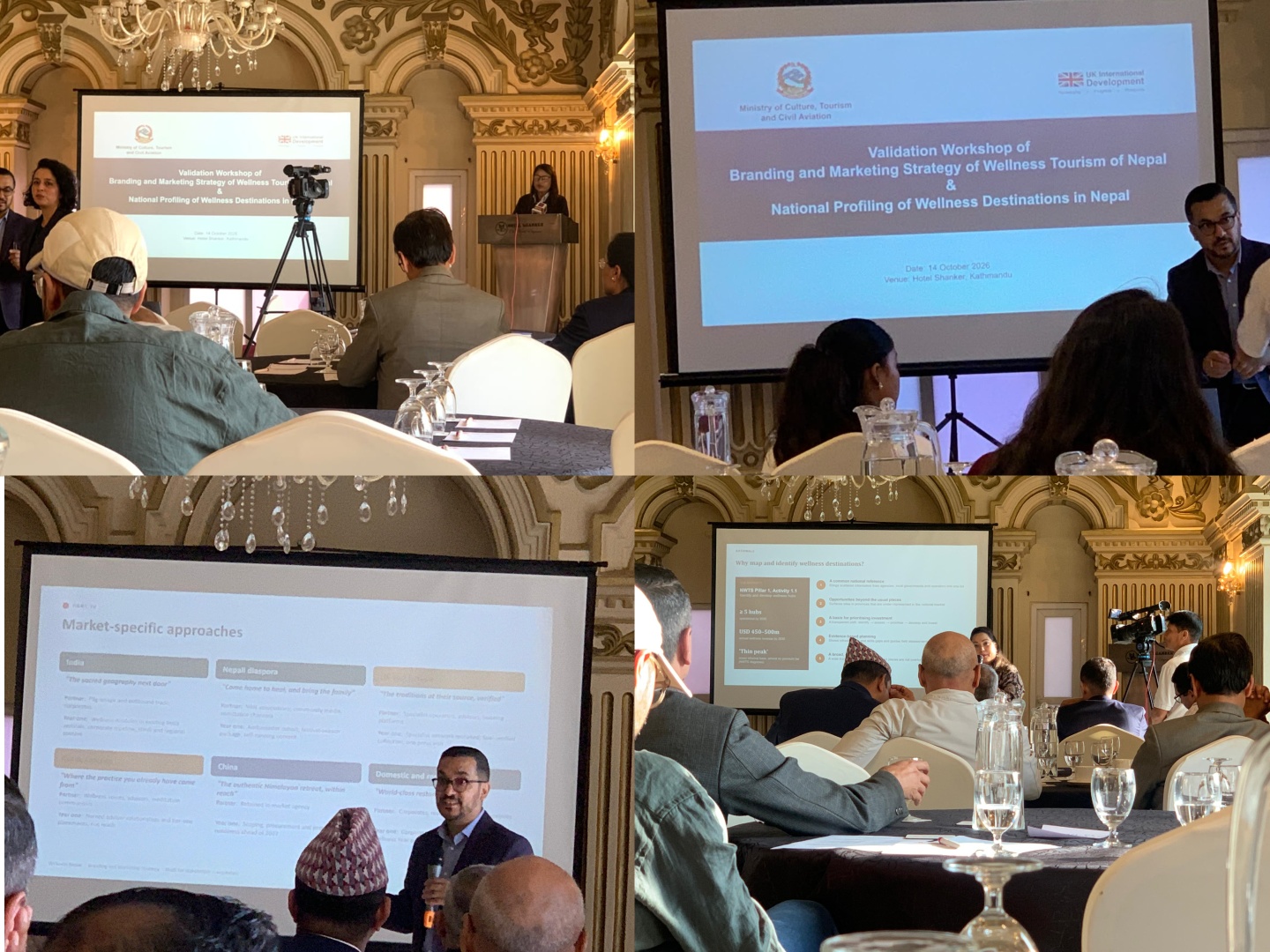
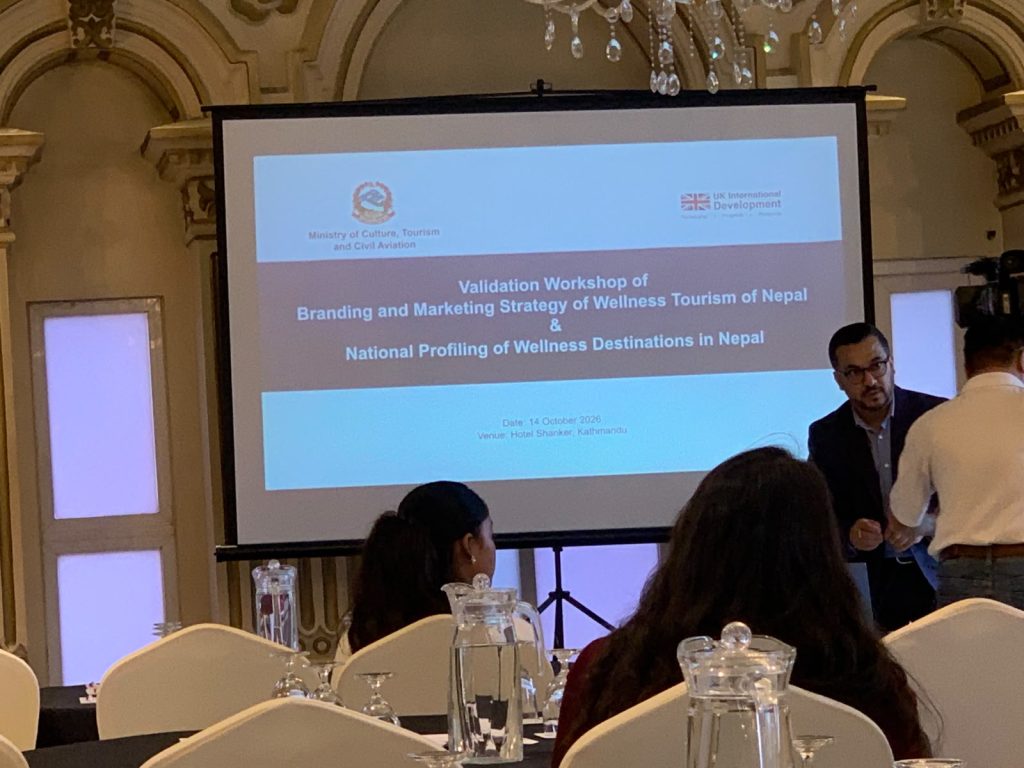
Nepal has taken a step towards strengthening its wellness tourism sector with a validation workshop on the branding and marketing strategy for wellness tourism and the national profiling of wellness destinations held at Hotel Shankar, Lazimpat, Kathmandu, on Wednesday.
The workshop brought together government officials, tourism experts and stakeholders to discuss ways to establish a distinct identity for Nepal’s wellness tourism, identify potential wellness destinations and develop a coordinated approach to promoting the country in both domestic and international markets.
The programme was organised in collaboration with the Ministry of Culture, Tourism and Civil Aviation and UK Nepal–Nepal in Business (NiB). Presentations focused on branding, market positioning, promotional planning and the identification and profiling of wellness destinations across the country.
Proposed Branding Strategy Highlights Nepal’s Unique Wellness Potential
Sudip Bhaju, Tourism Expert at UK Nepal–Nepal in Business, presented the proposed branding and marketing strategy for its wellness tourism sector. The presentation included conceptual visual identities for Wellness Nepal, featuring different logo concepts and visual elements aimed at creating a recognisable identity for the emerging sector. The concepts were presented for discussion and evaluation as part of the ongoing branding process.
The strategy also emphasised the need for the country to establish a distinctive position in the international wellness tourism market by communicating its unique wellness assets through a consistent brand identity. The discussion was followed by a question-and-answer session, during which participants provided feedback and raised issues related to the proposed branding and marketing direction.
Annual Marketing Calendar Identifies Key Promotional Opportunities
The proposed marketing strategy also includes an annual marketing calendar intended to align promotional activities with seasonal travel patterns, international events and opportunities to reach target markets. The calendar identifies potential promotional periods such as New Year travel, Indian trade fairs, the European trade fair season, International Wellness Day on April 15, International Day of Yoga on June 21, the monsoon and autumn travel seasons, and World Mental Health Day.
These occasions could be linked with digital campaigns, paid search, trade engagements, wellness product promotion, partnerships and seasonal promotional activities. The proposed calendar also takes into account Nepal’s different tourism seasons, providing a framework for promoting wellness experiences throughout the year rather than relying on a single promotional period.
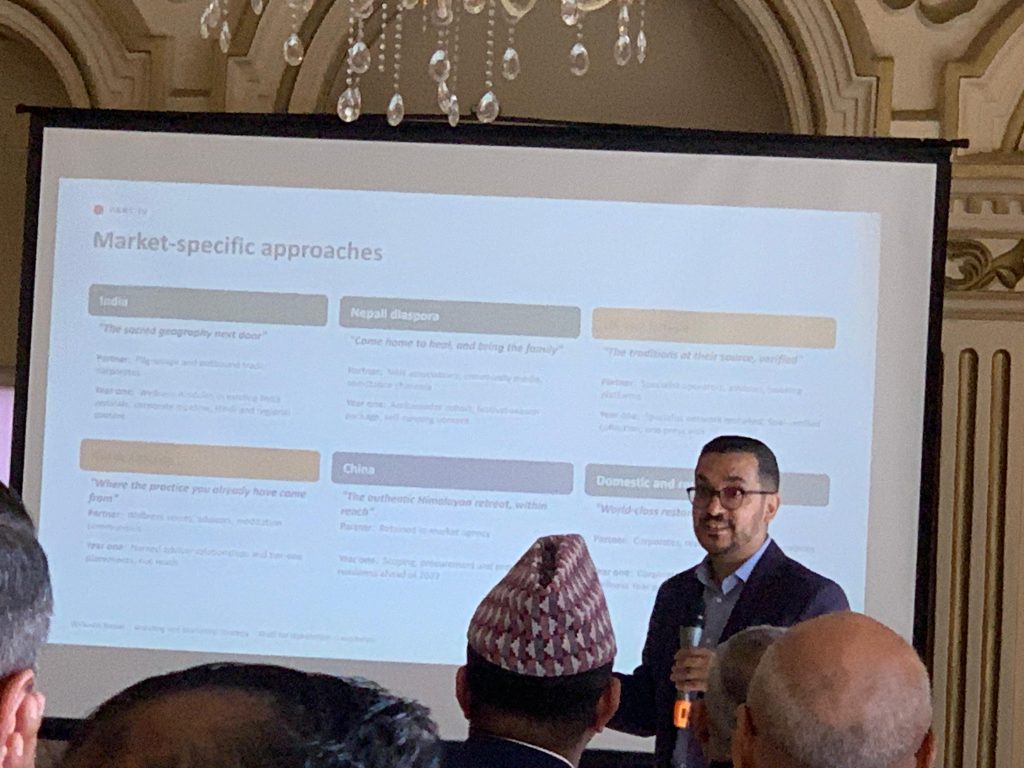
Market-Specific Approach Proposed for India, China and Diaspora
The strategy recognises that different visitor segments have different interests, motivations, and travel behaviours and therefore proposes market-specific promotional approaches. The presentation identifies target markets in India, the Nepali diaspora, China, domestic and regional markets, and other international visitor segments.
The proposed approach calls for tailoring marketing messages, partnerships, community engagement and promotional campaigns according to the characteristics of each market. Wellness experiences would also be promoted based on the specific interests and travel motivations of target visitors. Such market-specific strategies are expected to help Nepal communicate its wellness tourism products more effectively and improve engagement with potential visitors.
National Wellness Inventory Proposed to Map Destinations
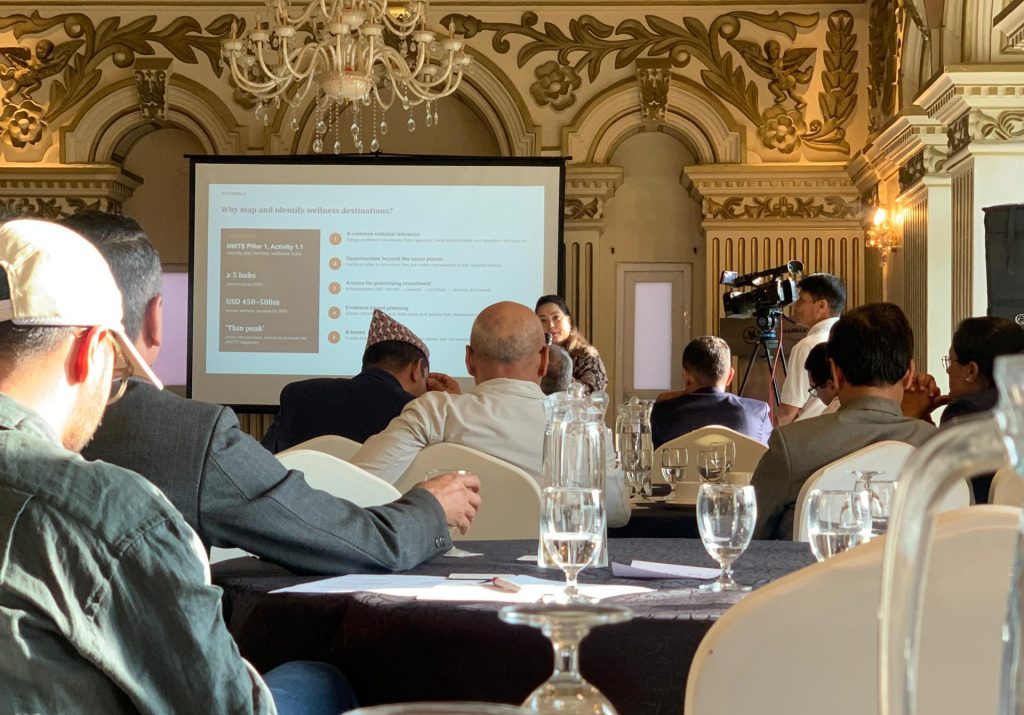
The second technical session focused on the national profiling of wellness destinations in Nepal, presented by Pragya Adhikari, Tourism Expert at UK Nepal–Nepal in Business. The presentation highlighted the need to systematically map and identify wellness destinations across the country to create a common national reference for tourism planning, investment and promotion.
A national inventory could consolidate information from government agencies, local governments and tourism operators, helping identify both established wellness destinations and lesser-explored areas with potential for future development. The proposed profiling process is also expected to provide evidence for identifying infrastructure gaps, assessing development opportunities and determining investment priorities.
Five Wellness Hubs and USD 450–500 Million Revenue Target Proposed
The proposed inventory could serve several purposes, including investment targeting, wellness hub development, standards development, progress monitoring and strategic promotion. As part of the proposed planning framework, the presentation identified a potential target of developing at least five wellness tourism hubs by 2030 and generating approximately USD 450–500 million in wellness tourism revenue by the same year.
The framework also proposes a structured system for assessing destinations and developing quality standards, with certification-related work proposed from 2027. The targets and measures presented at the workshop are part of the proposed planning framework and do not represent confirmed achievements. The national inventory is expected to provide policymakers and tourism stakeholders with a clearer basis for identifying promising destinations, directing investment and planning the development of Nepal’s wellness tourism sector.
Stakeholders Discuss Future Direction of Wellness Tourism
The technical presentations were followed by question-and-answer sessions, allowing participants to discuss the proposed strategies and provide feedback on branding, marketing and destination profiling. Sabita Karki, Undersecretary at the Ministry of Culture, Tourism and Civil Aviation, delivered the welcome remarks, while Ranjit Acharya, Tourism Advisor at UK Nepal–Nepal in Business, delivered the opening remarks.
The formal programme concluded with closing remarks by Ram Bandhu Subedi, Joint Secretary at the Ministry of Culture, Tourism and Civil Aviation. Ratish Basnyat, Team Leader at UK Nepal–Nepal in Business, delivered the vote of thanks. The programme concluded with a networking session over hi-tea.
Strategy Seeks to Position Nepal in Global Wellness Market
The workshop marks a step towards establishing a more coordinated framework for wellness tourism branding, marketing and destination development in Nepal. The proposed branding strategy and national wellness destination inventory could help improve the visibility of its wellness products, identify investment opportunities, strengthen destination planning and develop a stronger position for Nepal in the growing global wellness tourism market.