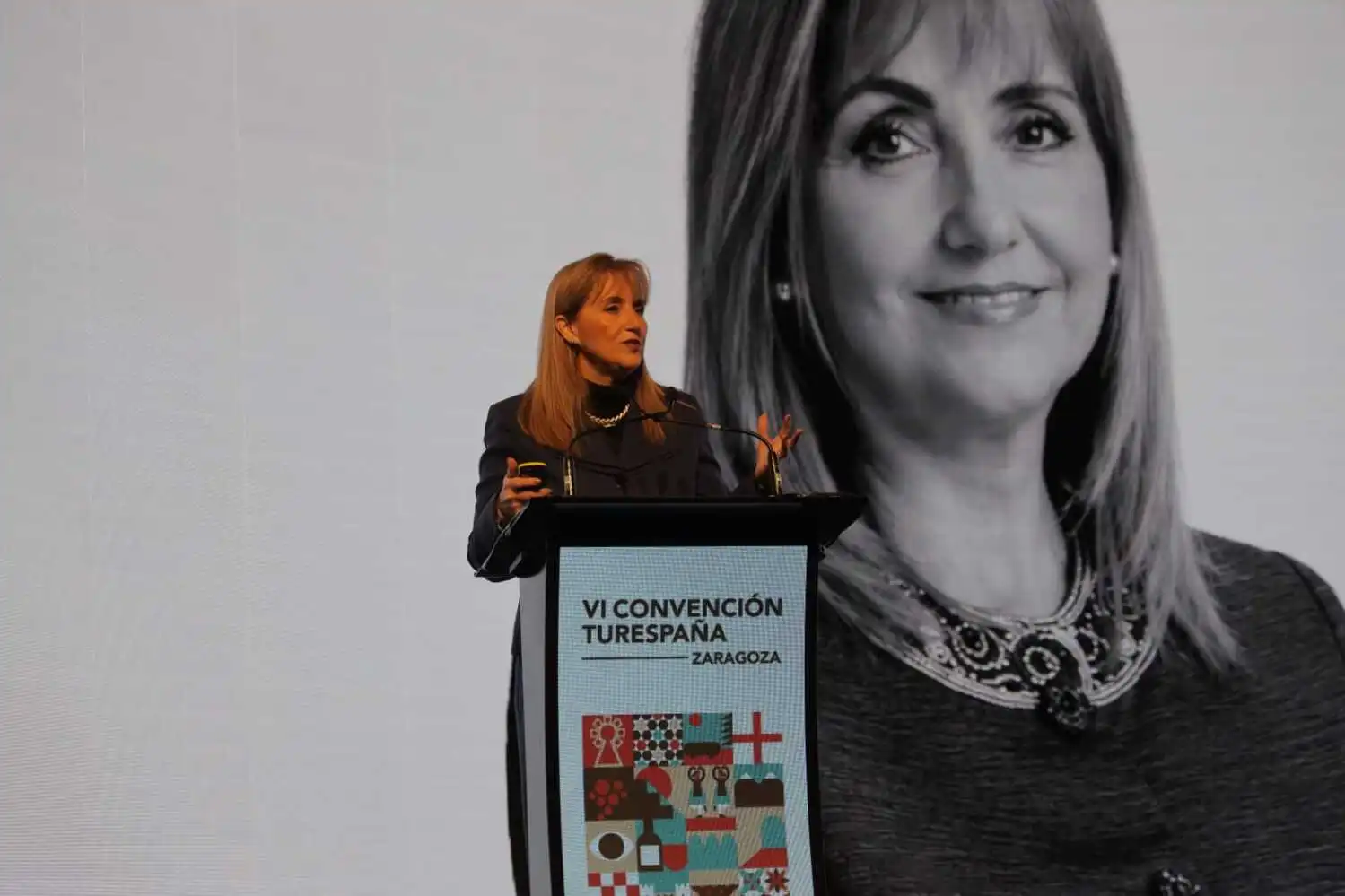
The World Travel & Tourism Council (WTTC) has highlighted Spain’s continued leadership in global tourism, with the country’s Travel & Tourism sector expected to contribute more than €269 billion to the national economy in 2026. The projection was presented during the VI Turespaña Convention, where WTTC President and CEO Gloria Guevara addressed tourism leaders from across Spain on emerging opportunities and key priorities shaping the future of the sector.
According to WTTC’s latest Economic Impact Research, the sector is forecast to grow by 4.1% in 2026, an upward revision from its earlier projection of 3.7%. The anticipated growth is also higher than the projected expansion of Spain’s overall economy, estimated at 2.7%, as well as Travel & Tourism growth expected across Europe at 3.1% and globally at 2.5%.

International Business Travel Expected to Gain Momentum
Spain is also expected to benefit from stronger international business travel in 2026. International business visitor spending is forecast to increase by 8.1%, further strengthening its position as an attractive destination for both leisure and corporate travellers. WTTC said the positive outlook reflects its strong tourism performance and continued efforts to strengthen competitiveness through investment, connectivity and cooperation between the public and private sectors.
WTTC Praises Spain’s Public-Private Collaboration
Gloria Guevara, President and CEO of WTTC, said its tourism performance demonstrates the importance of governments and the private sector working together around a shared vision. “Spain has shown that when governments and the private sector work together behind a shared vision, Travel & Tourism can become a powerful driver of economic growth, investment, and job creation,” Guevara said.
She also praised Spain’s Minister of Industry and Tourism, Jordi Hereu, for strengthening the country’s position as a leading global tourism destination while promoting policies aimed at supporting long-term competitiveness and sustainable growth. Guevara further thanked Madrid City Council and the Regional Government of Madrid for supporting the establishment of WTTC’s global headquarters in Madrid, describing the move as an indication of their commitment to attracting investment and strengthening public-private collaboration.
Jordi Hereu Receives WTTC Global Champion Award
Earlier this month, WTTC presented Jordi Hereu with its WTTC Global Champion Award during the organisation’s 26th Global Summit in Malta. The award recognised his leadership in strengthening Spain’s tourism competitiveness and his efforts to promote collaboration between governments and the private sector to support sustainable growth in Travel & Tourism.
Spain Records Strong Tourism Performance
The latest forecast builds on another record year for Spain’s tourism industry. In 2025, Travel & Tourism contributed €259 billion to the Spanish economy, equivalent to 15.3% of the country’s GDP, while supporting approximately 3.2 million jobs, or around one in every seven jobs nationwide.

Spain also maintained its position as one of Europe’s leading tourism markets, recording €115.8 billion in international visitor spending in 2025, the highest figure in Europe. International arrivals reached 96.8 million, making Spain the second-most visited destination in the world.
International Visitor Spending Reaches Record Levels
Spain accounted for 6.5% of international visitor spending worldwide and 15.6% of international visitor spending across Europe in 2025. International visitors generated 58.7% of total tourism spending in Spain, highlighting the country’s strong appeal in global travel markets. Leisure tourism remained a particularly powerful component of Spain’s tourism economy, generating €98.5 billion in international leisure visitor spending during the year.
Spain Leads Europe’s Post-Pandemic Tourism Recovery
WTTC said Spain has recorded the strongest tourism recovery in Europe since the pandemic. International visitor spending in 2025 was 21% higher than in 2019, significantly exceeding the European average growth of 2.3%. Travel & Tourism’s contribution to Spain’s GDP was also 19.9% above pre-pandemic levels, compared with a 6.5% increase across Europe. The figures underline the resilience of Spain’s tourism economy and the effectiveness of its long-term approach to investment, connectivity and cooperation between the public and private sectors.
Sustainability and AI Identified as Key Priorities
Despite the strong outlook, WTTC has identified four priority areas that will be crucial to maintaining Spain’s long-term competitiveness: sustainability, responsible destination management, innovation, and talent development. The council stressed the importance of building consensus around the social, environmental and economic dimensions of sustainability. It also called for more balanced destination management through diversification, reducing seasonality, dispersing visitors across destinations and maintaining a strong focus on residents’ wellbeing.
WTTC further emphasised the need to accelerate digitalisation and artificial intelligence adoption across the tourism sector. Greater investment in workforce skills and training, particularly among small and medium-sized enterprises, was also highlighted as essential to maintaining competitiveness in a rapidly changing global tourism environment.
WTTC Highlights Eight Global Tourism Priorities
At the European and global levels, Guevara highlighted eight strategic priorities identified by WTTC and its members: seamless and secure travel, investment, connectivity, talent and workforce development, sustainable tourism, destination stewardship, AI adoption and diversification of source markets.
WTTC said these priorities will be critical to strengthening the competitiveness of Travel & Tourism and ensuring sustainable, long-term growth for the sector. Spain’s strong performance, combined with its continued focus on investment, innovation and public-private cooperation, positions the country to remain one of the world’s leading and most resilient tourism economies.