

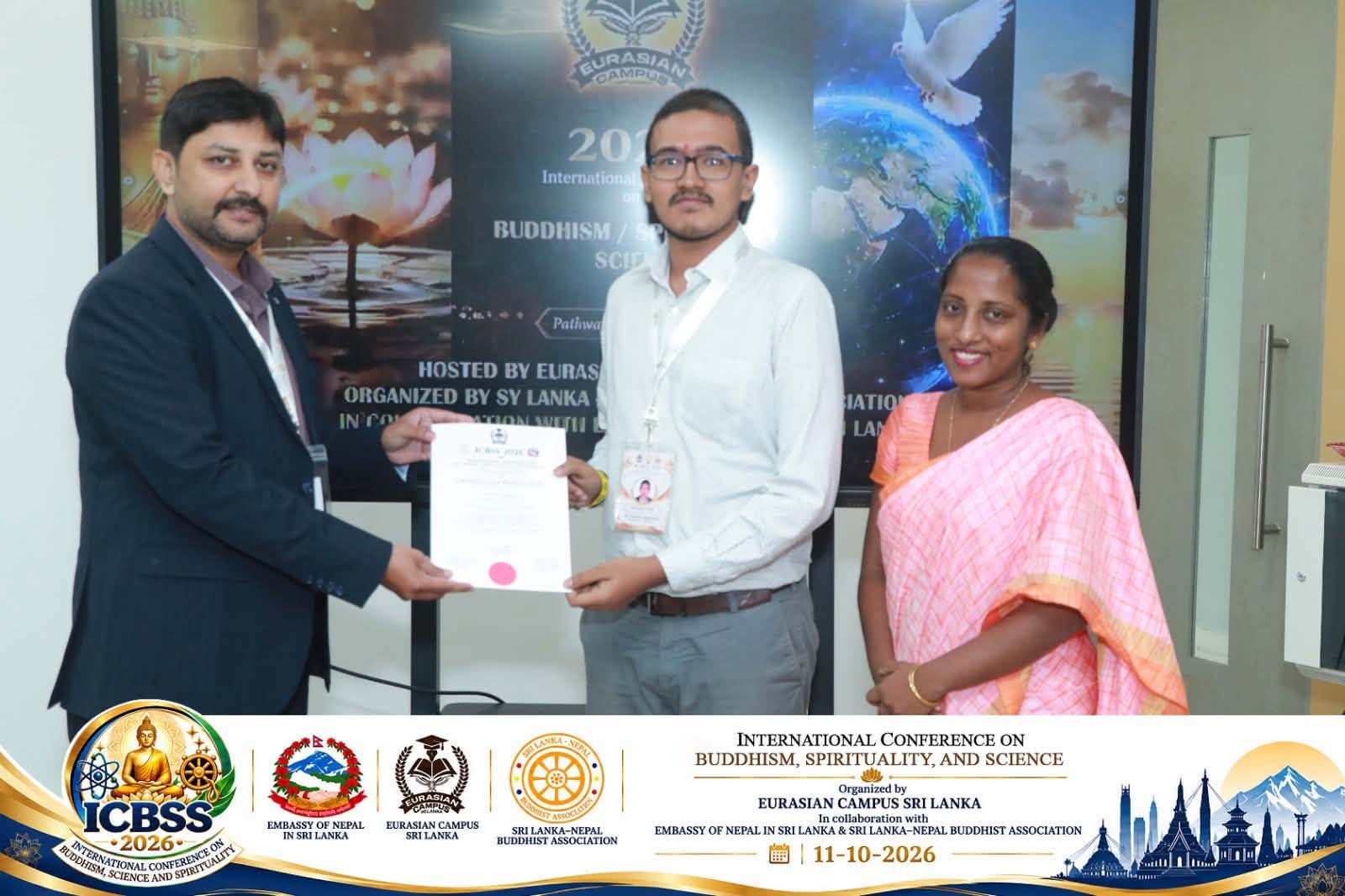
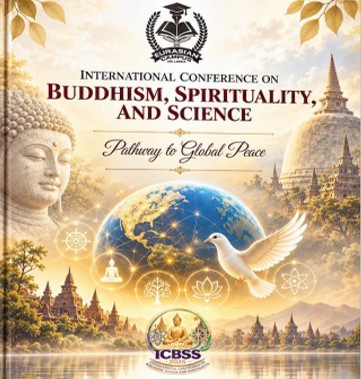
The International Conference on Buddhism, Spirituality and Science: Pathway to Global Peace (ICBSS 2026) was held on 11 and 12 October 2026 at the CEWAS Hall in Ratnamala, bringing together scholars, Buddhist monks, researchers and academics from different parts of the world. The conference was organized by the Eurasian Campus of Sri Lanka in collaboration with the Sri Lanka-Nepal Buddhist Association and the Embassy of Nepal in Colombo. The two-day gathering explored the intersection of spiritual wisdom and modern science and examined how their combined insights could contribute to addressing some of the complex challenges facing humanity.
The conference provided an academic platform for discussions on how Buddhism and science can jointly respond to contemporary sociopolitical, environmental and mental health challenges. Drawing upon the shared Buddhist heritage of Sri Lanka and Nepal, the event encouraged interdisciplinary dialogue on peace, human well-being, ethical development and sustainability. It also highlighted the historical and cultural relationship between the two countries as custodians of important Buddhist heritage and traditions.
Integrating Scientific Progress with Ethical Wisdom
As Chief Advisor of the conference, Most Venerable Dr Delthara Gunananda, Vice-Chancellor of the Eurasian Campus, emphasized the importance of combining scientific innovation with ethical and spiritual values. He noted that humanity is living through a period of rapid scientific advancement while simultaneously confronting increasingly complex global challenges. According to him, solutions to these challenges must not only be innovative but should also be guided by compassion, wisdom and ethical responsibility.
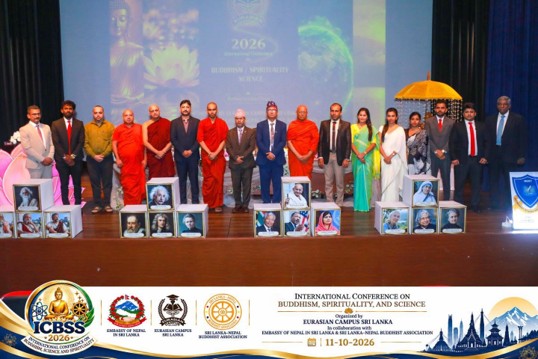
He emphasized that the integration of Buddhism, spirituality and science could provide a meaningful framework for promoting peace, social harmony, sustainable development and human well-being. His remarks set the broader tone of the conference, encouraging participants to consider scientific progress not merely in terms of technological achievement but also in relation to its impact on human values and society.
Lumbini Buddhist University Highlights Challenges of Modern Development
In his keynote address, Dr Manik Ratna Shakya, Vice-Chancellor of Lumbini Buddhist University in Nepal, highlighted the contrast between rapid technological advancement and the persistent challenges facing the world. He pointed to armed conflict, inequality and environmental degradation as major concerns and questioned the priorities of a world that continues to invest heavily in weapons while millions of people in impoverished communities struggle to meet basic needs.
Dr Shakya also raised concerns about the growing influence of artificial intelligence and its potential implications for human life and the human brain. He called for serious reflection on whether technological development is genuinely improving human life or creating new risks in the name of progress. He argued that Buddhist mindfulness could provide a systematic, first-person approach to understanding mental experiences and could therefore contribute to scientific research into the human brain. He further emphasized that Buddhist ethics and principles should be considered as philosophical resources in discussions on peace, human dignity, environmental sustainability, responsible science and technology, and the value of human life.
Strengthening Sri Lanka-Nepal Buddhist Cooperation
Addressing the gathering, Venerable Wetara Mahinda, President of the Sri Lanka-Nepal Buddhist Association, expressed confidence that the conference would contribute to strengthening the longstanding friendship and cooperation between Sri Lanka and Nepal. He also highlighted the importance of academic and spiritual exchanges in promoting mutual understanding between the two countries.
The conference served not only as an academic platform but also as an opportunity to reinforce the shared Buddhist heritage connecting the two nations. Through dialogue among scholars, religious leaders and researchers, participants explored opportunities for deeper cooperation in Buddhism, education, research and peacebuilding.
Nepal Highlights Climate Crisis and the Role of Spirituality
As Guest of Honour, Mr Vijay Kumar Raut, Chargé d’Affaires of the Embassy of Nepal in Sri Lanka, drew attention to the devastating floods that struck several districts of Nepal in August 2026 and claimed more than 1,400 lives. He connected the disaster with the broader global climate crisis and highlighted the disproportionate impact of climate change on vulnerable countries such as Nepal.
Quoting Nepalese Prime Minister Balendra Shah’s speech at the 81st United Nations General Assembly, he emphasized that Nepal contributes less than 0.1 percent of global greenhouse gas emissions while facing severe consequences from climate-related disasters. He noted that climate change does not respect national borders, with glaciers, floods and other environmental hazards affecting communities regardless of political boundaries.
Mr Raut argued that the Buddha’s teachings could provide an important ethical and spiritual response to such challenges. He explained that science provides evidence, knowledge and early warning systems, while spirituality can provide people with inner strength to cope with loss and encourage compassionate action. According to him, bringing the two perspectives together can create a meaningful pathway towards global peace.
Science and Buddhist Practice Share a Culture of Inquiry
Dr Purna Bahadur Nepali, former Ambassador of Nepal to Sri Lanka and an Advisor to the conference, explored the similarities between scientific inquiry and Buddhist practice. He noted that science encourages people to observe, investigate, question and test their understanding, while Buddhist practice similarly emphasizes observation of the mind, disciplined inquiry and direct experience.
Dr Nepali also called for a balanced and evidence-based approach to scientific research on meditation and mindfulness. He stressed the importance of welcoming neuroscientific research while maintaining a clear distinction between established scientific evidence, emerging hypotheses and traditional Buddhist claims. Such an approach, he suggested, could help create constructive dialogue between contemporary science and Buddhist knowledge without compromising academic rigor.
More Than 50 Research Papers Presented
Following the inaugural speeches, the conference moved into its principal academic programme, featuring parallel paper presentation sessions conducted both in person and online. More than 50 research papers were presented during the two-day event, with physical presentations held on 11 October and online sessions conducted the following day.
The academic papers were organized under five major themes: Buddhist Philosophy, Spirituality and Religious Studies; Mindfulness, Psychology and Human Well-being; Peace, Ethics, Society and Interreligious Dialogue; Buddhism, Science, Consciousness and Contemporary Thought; and Sustainability, Environment, Heritage and Human Development.
The wide-ranging themes reflected the conference’s central objective of bringing together different academic disciplines and perspectives. Researchers examined the relationship between Buddhist philosophy and contemporary thought while also exploring practical applications of Buddhist principles in mental health, peacebuilding, environmental protection and sustainable human development.
Mindfulness, Peace and Environmental Sustainability Take Centre Stage
Across the various sessions, researchers examined how Buddhist philosophy approaches fundamental questions concerning life and death, while others focused on the potential contribution of mindfulness to mental health and emotional well-being. Several presentations explored how compassion, ethical conduct and Buddhist principles could contribute to conflict resolution, social harmony and interreligious dialogue.
Other researchers examined consciousness and humanity’s relationship with the natural environment. Discussions on sustainability explored how Buddhist approaches to moderation, interconnectedness and compassion could inform contemporary efforts to protect ecosystems and promote responsible development.
The academic sessions transformed the broader ideas presented during the opening ceremony into detailed research-based discussions. They provided scholars with an opportunity to present their findings, exchange perspectives and explore areas for future interdisciplinary research.
A Shared Pathway Towards Global Peace
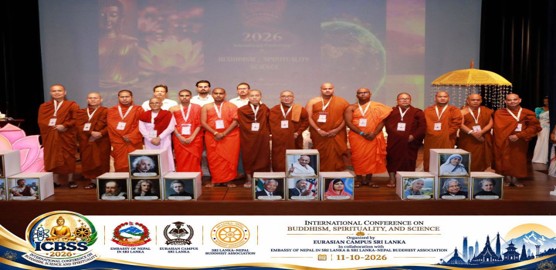
The two-day conference concluded with academic sessions bringing together scholars, monks and researchers from different countries and disciplines. The discussions demonstrated the growing interest in examining the relationship between Buddhist wisdom and modern science as complementary approaches to some of the world’s most pressing challenges.
The organizers emphasized that the conference was not intended to place science and spirituality in opposition but to encourage meaningful dialogue between the two. By combining scientific evidence and inquiry with Buddhist principles of compassion, mindfulness, ethics and wisdom, the conference sought to contribute to discussions on peace, human dignity, environmental sustainability and human flourishing.
The organizers also expressed their commitment to continuing the partnership between Sri Lanka and Nepal and supporting further academic and intellectual exchanges in the years ahead. ICBSS 2026 therefore emerged as a platform where Buddhist philosophy, scientific inquiry, and contemporary global concerns converged, reinforcing the idea that peace requires not only technological progress but also ethical responsibility and human wisdom.
Article By: Prashant Kumar Raut (A Nepalese citizen currently studying Environmental Science at the University of Delhi)