
The Metropolitan Hotel Limited (TMHL) has received a reaffirmation of its credit ratings from Infomerics Credit Rating Nepal Limited (Infomerics Nepal), with the rating agency maintaining IRN BB (Double B) for the company’s long-term bank facilities and IRN A4 (A Four) for its short-term bank facilities. The rating action covers total bank facilities of Rs. 2.255 billion, comprising long-term bank facilities of Rs. 2.245 billion, enhanced from Rs. 1.894 billion, and short-term bank facilities of Rs. 10 million, reduced from Rs. 85 million.
According to Infomerics Nepal, the reaffirmation primarily reflects the hotel’s completion of its first full year of commercial operations and the resulting improvement in its operating performance, while the ratings continue to benefit from the company’s established promoter group, strategic location, association with the internationally recognized Accor hospitality brand, and the favorable long-term outlook for Nepal’s tourism and hospitality sector.
Revenue Improves Significantly with First Full Year of Operations
The Metropolitan Hotel, which operates under the Mercure Kathmandu brand, recorded a substantial improvement in its operating performance during FY 2025/26 as it completed its first full year of commercial operations. The Metropolitan Hotel Limited (TMHL) reported Total Operating Income (TOI) of approximately Rs. 268 million in FY26, compared with around Rs. 93 million in FY25, when the hotel had only operated for a limited period. The hotel commenced its soft opening in November 2024 and began full-fledged commercial operations on January 15, 2025.
The improvement in revenue during FY26 was supported by higher contributions from both room operations and food and beverage services, with room revenue accounting for approximately 49% of total revenue and food and beverage services contributing around 37%. The Metropolitan Hotel Limited (TMHL) also recorded positive EBITDA of approximately Rs. 18 million in FY26, resulting in an EBITDA margin of 6.66%, compared with a negative EBITDA position in FY25. However, despite the improvement at the operating level, the company continued to report negative Profit Before Tax (PBT) and Profit After Tax (PAT), mainly because of the relatively high interest and depreciation burden associated with its debt-funded project investment.
Occupancy Improves, While Average Room Rate Declines
The Metropolitan Hotel Limited (TMHL)’s operational performance showed gradual improvement during FY26, with average occupancy increasing to approximately 41% from 19% in FY25. The improvement in occupancy contributed significantly to the growth in room revenue, which increased from approximately Rs. 33 million in FY25, when the hotel had only six months of operations, to around Rs. 131 million in FY26.
However, the improvement in occupancy was accompanied by pressure on room pricing, with the hotel’s Average Room Rate (ARR) declining to approximately Rs. 8,350 in FY26 from Rs. 9,141 in FY25. Infomerics Nepal noted that occupancy remained volatile throughout FY26, ranging from approximately 22% to 60%, while The Metropolitan Hotel Limited (TMHL) achieved a peak monthly occupancy of around 60% in June FY26. Although the gradual improvement in occupancy and revenue indicates growing market acceptance, the hotel is yet to reach full operational stabilization, and its ability to sustain higher occupancy while improving room realization will remain important for its future financial performance.
Strong Accor Association and Experienced Promoters Support Rating
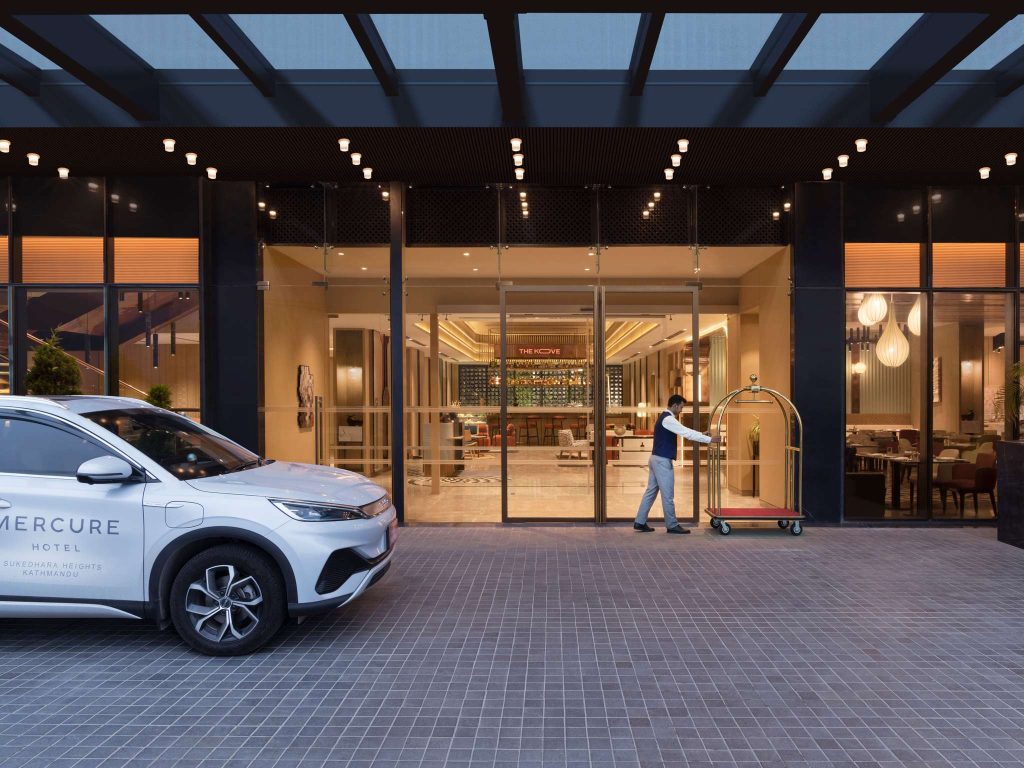
The rating continues to derive support from The Metropolitan Hotel Limited (TMHL)’s association with the Accor Group, one of the world’s leading international hospitality companies. The Metropolitan Hotel Limited (TMHL) has entered into an agreement with AAPC India Hotel Management Private Limited (Accor Hotels) to operate the property under Accor’s globally recognized Mercure brand. The association is expected to enhance the hotel’s brand visibility, market positioning and ability to attract domestic as well as international guests. In addition to its international brand association, the company benefits from an experienced promoter and management team.
Chairman Desh Bandhu Basnet has more than 25 years of industry experience and has served as an executive member of various national and international committees, while Director Rajendra Raut brings more than 35 years of experience across different industries and has held executive positions in several national committees. Infomerics Nepal considers the experience of the promoter group and management team to be a key strength supporting the company’s operations and long-term business prospects.
Strategic Sukedhara Location Provides Competitive Advantage
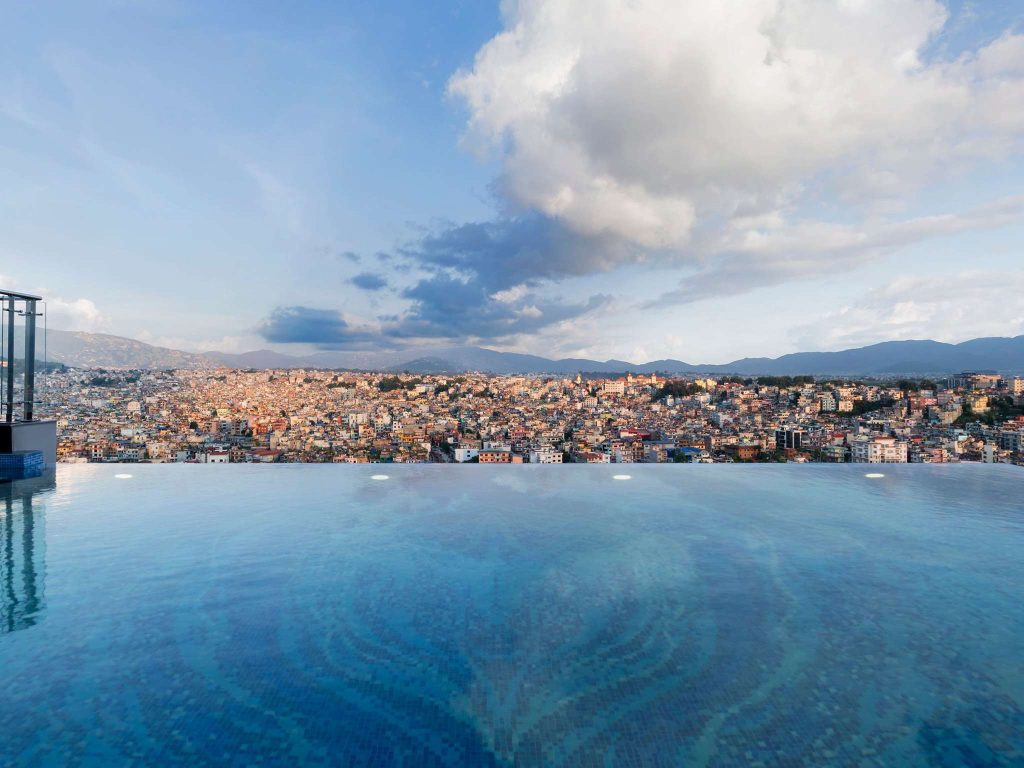
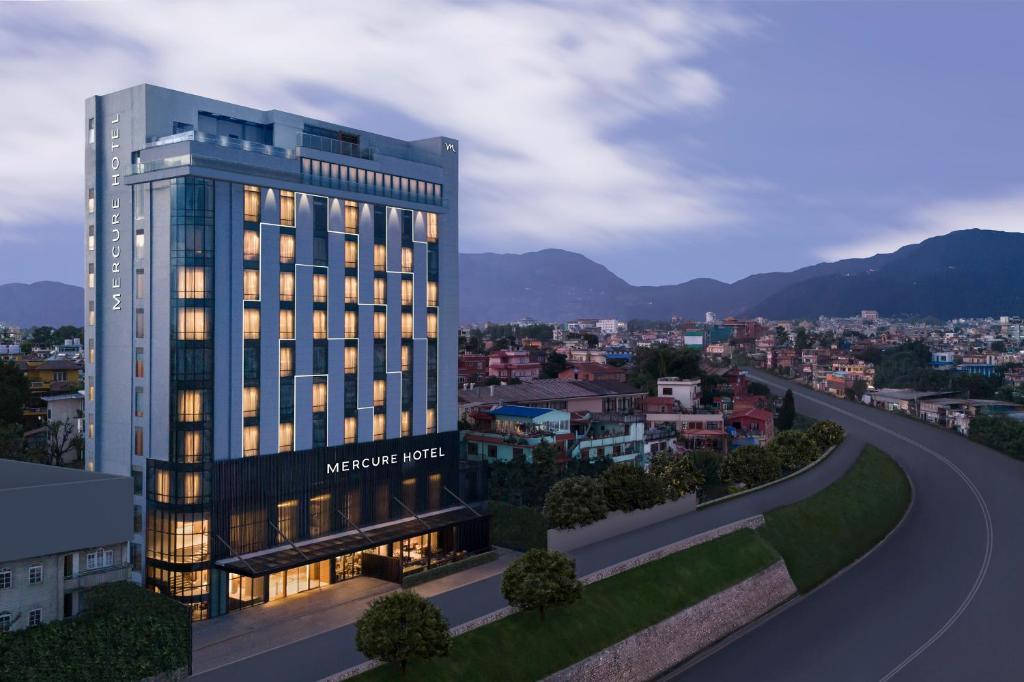
The Metropolitan Hotel Limited (TMHL)’s hotel is strategically located in Sukedhara, Kathmandu, providing access to major commercial areas, tourist attractions and cultural destinations within the Kathmandu Valley. The Metropolitan Hotel Limited (TMHL) is also located within convenient reach of several UNESCO World Heritage Sites and Tribhuvan International Airport, providing accessibility for both domestic and international travelers.
The strategic location is expected to support the hotel’s ability to attract business travelers, leisure tourists and other visitors to Kathmandu. Infomerics Nepal believes that the location could support occupancy growth and revenue generation over the medium to long term, although the company will need to compete with a growing number of established and newly developed hotels operating across the Kathmandu market.
High Leverage and Weak Debt Coverage Remain Key Concerns
Despite the improvement in operating performance, the company’s financial risk profile remains below average due to its relatively short operating track record and highly leveraged capital structure. The Metropolitan Hotel Limited (TMHL) project has been largely debt-funded, with the company’s overall gearing ratio standing at 3.18 times in FY26, compared with 3.22 times in FY25. Meanwhile, the Total Outside Liabilities to Tangible Net Worth (TOL/TNW) ratio increased to 3.89 times in FY26 from 3.54 times in FY25, indicating continued pressure on the company’s financial risk profile.
The debt-servicing position also remains weak, with the company’s interest coverage ratio standing at only 0.13 times in FY26, while its DSCR remained below unity. These indicators reflect the company’s limited internal cash generation relative to its debt-servicing obligations. However, the recent equity infusion has provided some financial cushion, and Infomerics Nepal expects that improvement in profitability, stronger cash generation, effective cost control and gradual deleveraging could help strengthen the company’s financial profile over time.
Hotel Yet to Achieve Full Operational Stabilization
Infomerics Nepal has identified operational stabilization as one of the key factors that could influence The Metropolitan Hotel Limited (TMHL)’s future credit profile. The Metropolitan Hotel Limited (TMHL) has only recently completed its first full year of commercial operations, and its occupancy levels remain volatile. The hospitality business typically involves a relatively long gestation period, particularly for newly established properties, as hotels require time to build their customer base, establish brand recognition and achieve sustainable occupancy levels.
The Metropolitan Hotel Limited (TMHL) has demonstrated an improvement in operational performance during FY26, but it will need to maintain this momentum and convert higher occupancy into stronger room realization, profitability and cash accruals. The company’s ability to manage operating costs while improving occupancy and maintaining competitive room rates will therefore remain critical to its ability to achieve sustainable financial performance.
Intense Competition and Limited Diversification Pose Challenges
The rating agency has also highlighted the intense competition prevailing in Nepal’s hotel industry, particularly in Kathmandu. The sector consists of a large number of organized and unorganized players, while the number of hotels continues to increase as investors and the government focus on expanding tourism infrastructure. At the same time, demand growth has not always kept pace with the increase in supply, putting pressure on occupancy, room rates and operating profitability across the industry.
Given the high operating leverage associated with the hospitality business, weaker-than-expected occupancy or room realization can have a significant impact on profitability. The Metropolitan Hotel Limited (TMHL) also operates a single hotel property in Kathmandu, resulting in limited geographic and segment diversification. Since the performance of the hotel industry remains closely linked to tourist arrivals and broader economic conditions, the company’s ability to compete effectively with both established properties and newly emerging hotels will remain an important consideration.
Favorable Tourism Outlook Supports Long-Term Prospects
Despite the challenges, Infomerics Nepal has considered the long-term prospects of Nepal’s tourism industry to be favorable. Government initiatives aimed at promoting tourism, improving infrastructure and strengthening the country’s hospitality ecosystem are expected to support demand for hotel accommodation over the longer term. Nepal’s attractions, cultural heritage, natural destinations and growing international tourism potential provide a supportive environment for the expansion of the hospitality sector.
For The Metropolitan Hotel Limited (TMHL), the combination of the Mercure brand, its strategic Kathmandu location and the expected long-term growth of Nepal’s tourism industry provides a foundation for future expansion. However, the company will need to navigate the sector’s seasonality, cyclicality, competitive pressure and fluctuations in international tourist arrivals while strengthening its financial position.
Stabilizing Operations and Improving Debt Servicing Key to Future Rating
Going forward, The Metropolitan Hotel Limited (TMHL)’s ability to stabilize operations, achieve and sustain healthy occupancy levels, improve average room realization, strengthen profitability and generate sufficient cash accruals to meet debt-servicing obligations will remain the key rating sensitivities.
Infomerics Nepal has emphasized that stronger operating performance combined with effective cost management and gradual deleveraging could improve the company’s debt coverage indicators and overall financial risk profile. Conversely, continued weak occupancy, pressure on room rates, high finance costs or delays in achieving operational stabilization could constrain the company’s financial performance.
Company Profile and Financial Performance
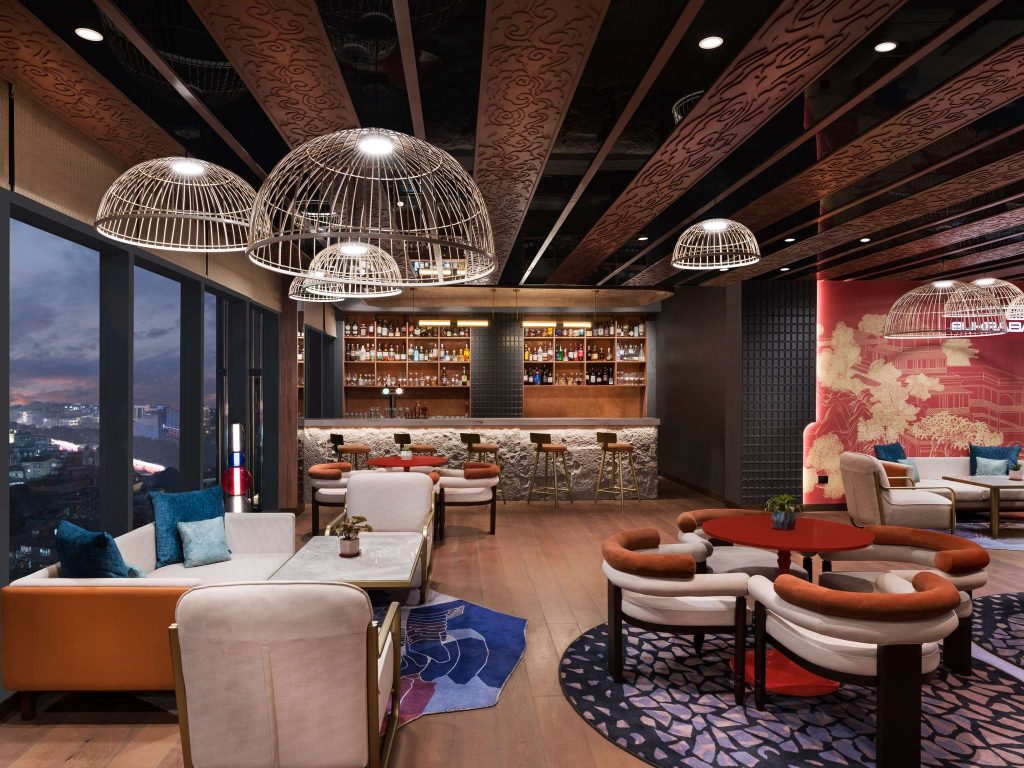
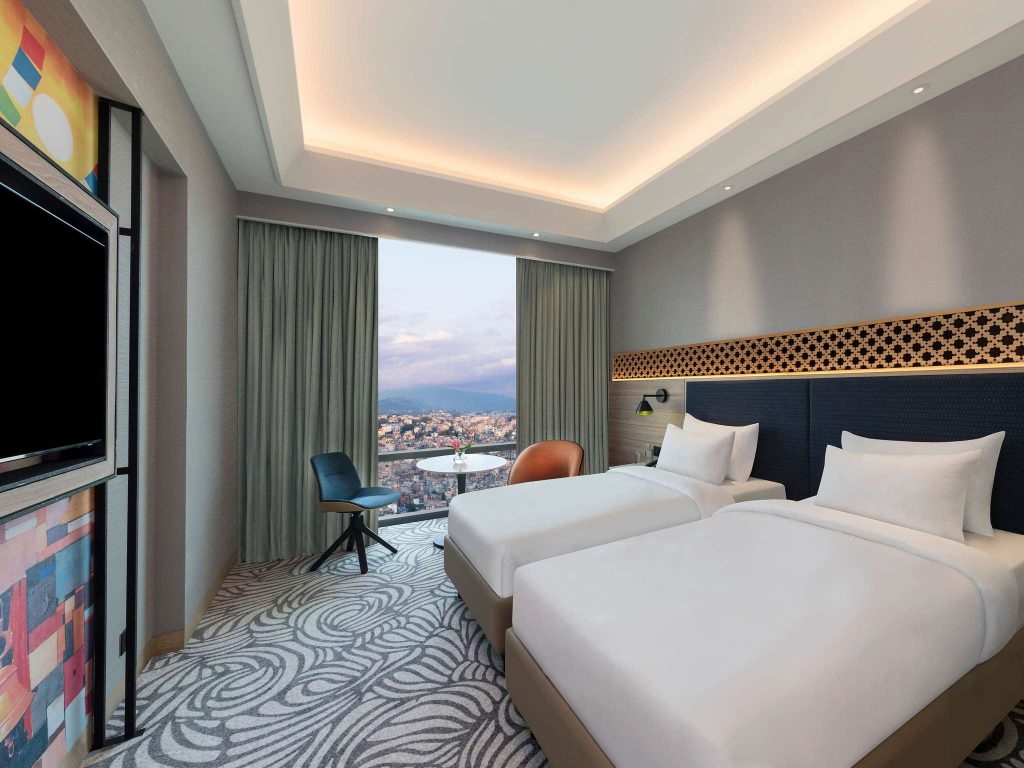
The Metropolitan Hotel Limited was incorporated in July 2016 and was subsequently converted into a public limited company in July 2024. The Metropolitan Hotel Limited (TMHL) is a special-purpose vehicle that owns and operates a 105-key five-star hotel in Sukedhara, Kathmandu, with the total project cost standing at approximately Rs. 3.217 billion. The hotel operates under the Mercure brand through its agreement with Accor Hotels and forms part of AB Holdings, with Chairman Desh Bandhu Basnet holding approximately 50% of the company.
According to Infomerics Nepal’s standalone financial indicators, The Metropolitan Hotel Limited (TMHL)’s Total Operating Income increased from Rs. 93 million in FY25 to Rs. 268 million in FY26, while its EBITDA margin improved to 6.66% in FY26 from a negative level in FY25. The current ratio improved to 0.69 times from 0.35 times, although the TOL/TNW ratio increased to 3.89 times and overall gearing remained high at 3.18 times. With the hotel now moving beyond its initial operational phase, the company’s ability to translate its improving revenue and occupancy performance into sustainable profits and stronger debt-servicing capacity will be central to its future credit profile.