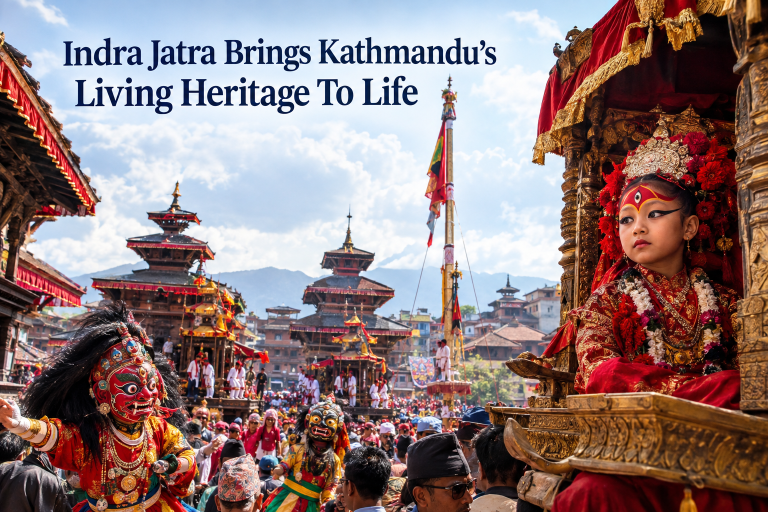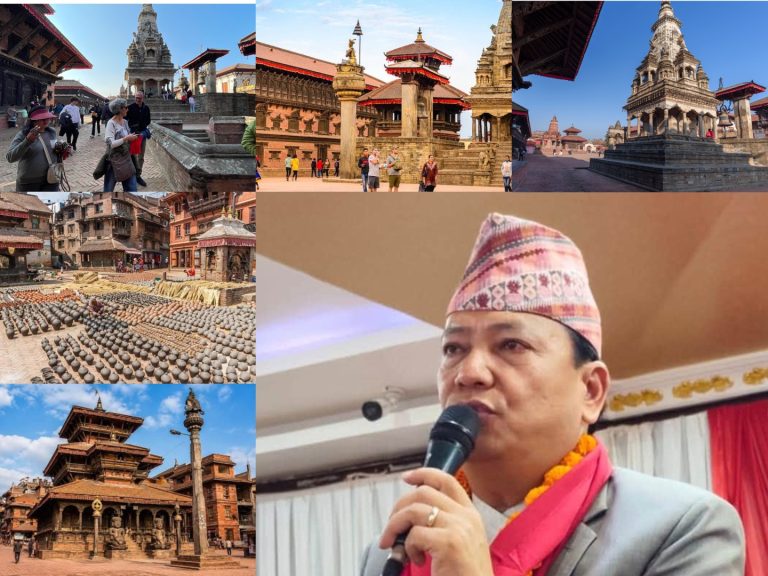
In Bhaktapur, the unique Mupatra Jatra, a part of the eight-day-long Indra Jatra festival, has officially begun. This traditional festival, celebrated annually from the second to the fourth day of Ashwin Krishna Paksha, features a unique portrayal of demons and is locally referred to as the “Raksas Jatra.”
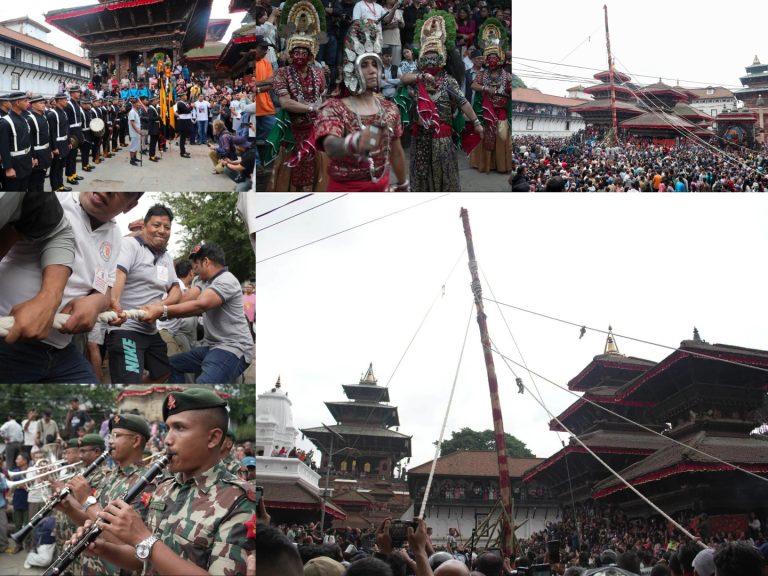
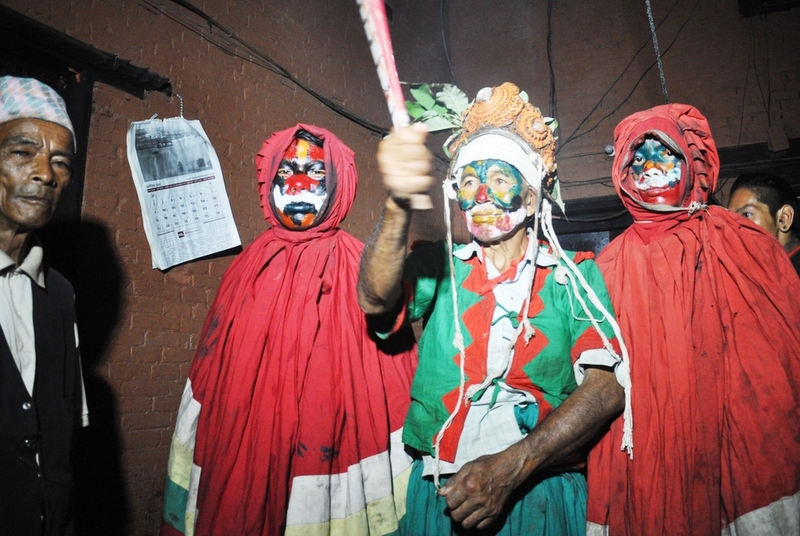
The highlight of the festival is the performance of the Mupatra, a demonic character represented by three individuals – one main demon and two assistants, known as “Dhicha.” These participants are dressed in demon-like attire, adorned with colorful makeup, and wield swords as they parade through the streets of Bhaktapur.
During the procession, the Mupatra demons symbolically circle the Yaman Dya poles, which are erected in various parts of the town, striking them with swords three times. This act is believed to represent the cutting of the rope that binds the god Yaman Dya, freeing him on the first day of Indra Jatra.
Before the Mupatra Jatra begins, residents of the Sakulan neighborhood light two traditional lamps (Ya Matah) in front of the Bhimsen Temple at Dattatraya. The ceremonial lamp-lighting is followed by a procession with the statue of Sala Ganesh, which is carried through the town.
On the second day of the festival, the Ya Matah is lit by the Manandhars of Golmadhi, and the statue of Chhuma Ganesh is carried to Taleju Bhawani temple at Durbar Square. After the ritual procession, the statues of Sala Ganesh and Chhuma Ganesh are returned to their respective deity homes (Dyo Che).
The festival culminates on the fourth day, when a special puja is performed at the Akash Bhairav Temple in Taumadhi, followed by another symbolic procession featuring the demonic Masha Bhairav. This final day also sees the lighting of two Ya Matah lamps in front of the stone spout at Bulucha and a grand parade through the streets.
According to folklore, the Mupatra Jatra re-enacts a legendary tale from the Devi Purana. In the story, Lord Indra sends his son Jayanta to Earth to find the Parijat flower for his mother, Basundhara, who needs it for a religious vow. Jayanta is captured by demons while picking the flower and is tied up in the town square.
Indra, upon discovering this, wages a battle with the demons, eventually freeing his son by cutting the ropes that bound him. This epic battle is said to have been first dramatized by King Jagat Prakash Malla during the Malla era and has continued as a tradition in Bhaktapur ever since.
Cultural historian Dr. Purushottam Lochan Shrestha explains that the act of binding Yaman Dya and the Mupatra’s performance of cutting the ropes mirrors the local folklore surrounding the freeing of Jayanta.
The final day of the festival holds another significant belief – Mupatra and Pulukisi, a representation of Indra’s elephant, must never meet. According to local legend, if Pulukisi tramples Mupatra, there will be no legal consequences. Therefore, great care is taken to ensure that the two never cross paths during the festival.
Interestingly, those who perform as Mupatra are considered untouchable for life and are ostracized from the community, a custom that has led to outsiders being chosen for the role by the Guthi Institution.
The Mupatra Jatra, with its deep cultural significance and connection to ancient legends, remains a vibrant and essential part of Bhaktapur’s Indra Jatra festivities, drawing visitors and preserving a rich cultural tradition.