
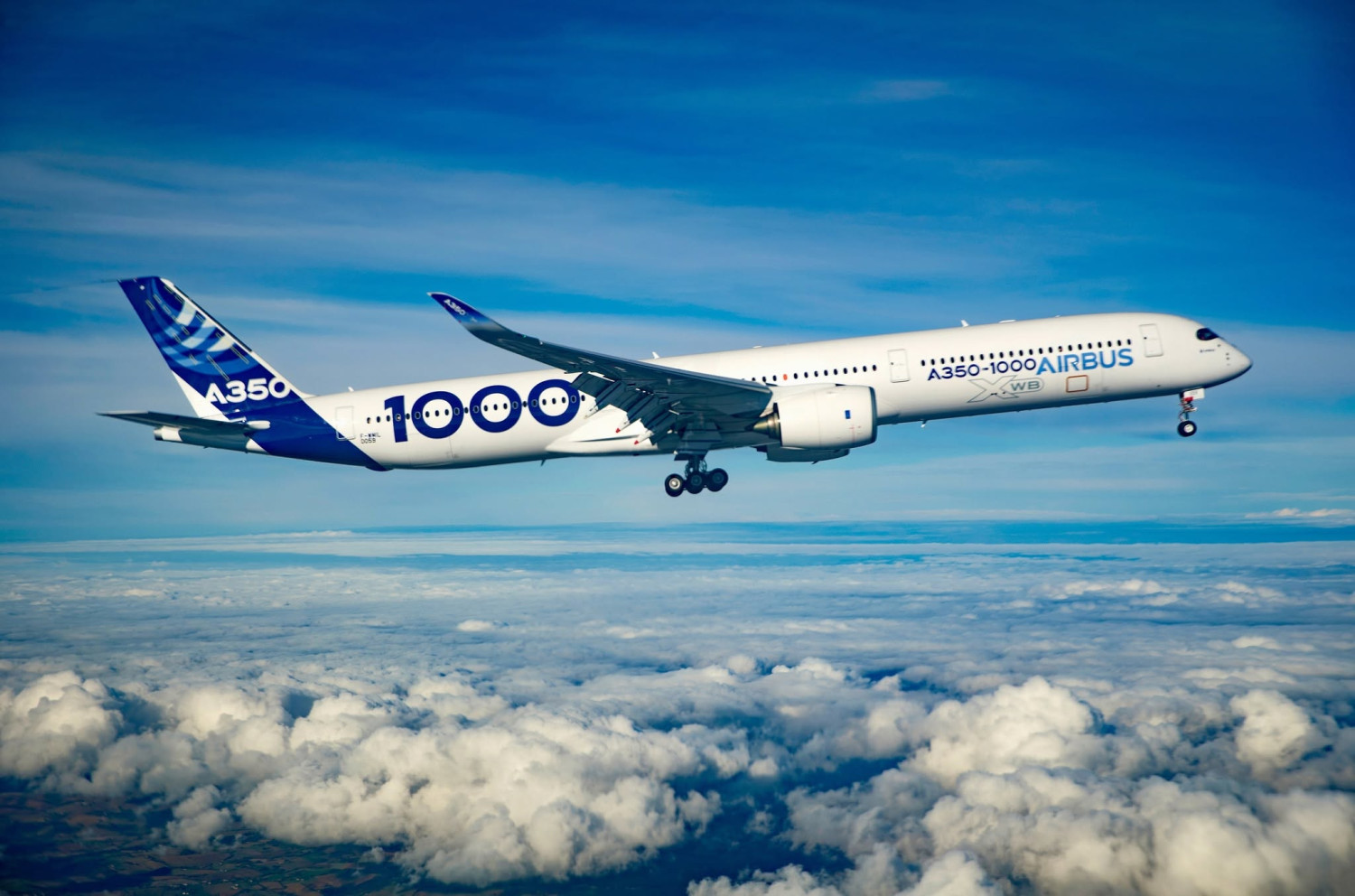
European aircraft manufacturer Airbus is celebrating the 10th anniversary of the maiden flight of its A350-1000, one of the world’s largest and most advanced twin-engine widebody passenger aircraft. The milestone marks a decade since the aircraft first took to the skies on November 24, 2016, beginning its journey towards transforming long-haul air travel through improved efficiency, greater passenger capacity and enhanced onboard comfort. To commemorate the anniversary, Airbus highlighted the aircraft’s contribution to international aviation and its role in making long-distance journeys smoother, quieter and more comfortable.
The A350-1000 is the largest passenger variant of the A350 XWB family and has become an important aircraft for airlines operating high-capacity, long-range international routes. The anniversary also comes as Airbus continues to expand the A350 platform with new developments, including the ultra-long-range A350-1000ULR and the A350F dedicated freighter, reflecting the aircraft family’s growing importance in both passenger and cargo aviation.
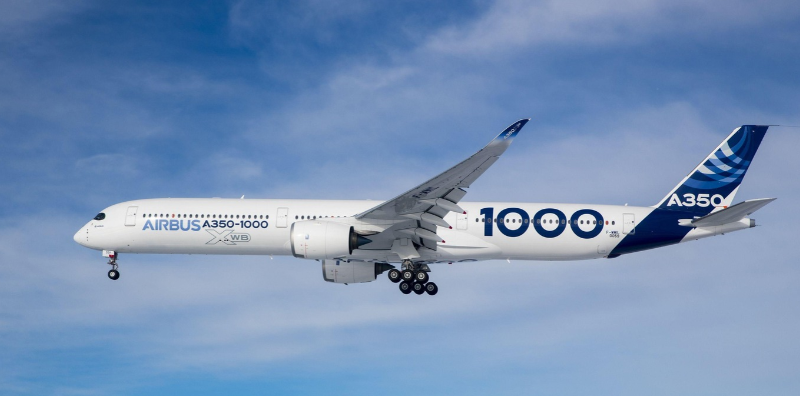
A350-1000 Completes Historic Maiden Flight in 2016
The A350-1000 programme reached a major milestone on November 24, 2016, when its first development aircraft, MSN059, completed its maiden flight from Toulouse-Blagnac Airport in southwestern France. The aircraft took off at 10:42 a.m. local time and returned safely after a flight lasting four hours and 18 minutes. Powered by two Rolls-Royce Trent XWB-97 engines, the aircraft was operated by a six-member flight-test team comprising experimental test pilots and flight-test engineers. During the inaugural flight, the crew evaluated the aircraft’s handling characteristics and flight envelope while monitoring its performance and systems. Airbus engineers on the ground also monitored the aircraft through a real-time telemetry link.
The successful maiden flight initiated an intensive flight-test and certification programme. Airbus planned to use three development aircraft to evaluate different aspects of performance, including handling, braking, engines, flight-control systems, cabin conditions and long-distance operations. The A350-1000 was developed as a larger-capacity version of the A350-900. Measuring approximately seven metres longer than its smaller counterpart, the aircraft can accommodate around 40 additional passengers in a typical three-class configuration. It also features more powerful engines, a modified wing trailing edge and new six-wheel main landing gear to support its increased size and operational requirements.
Advanced Technology Enhances Efficiency and Passenger Comfort
The A350-1000 combines advanced aerodynamics, lightweight materials and modern aircraft systems to support efficient long-haul operations. Its airframe uses carbon-fibre-reinforced plastic and other advanced materials, helping reduce structural weight while maintaining strength and durability. The aircraft is powered by Rolls-Royce Trent XWB-97 engines, each producing up to 97,000 pounds of thrust. The engines were specifically developed for the larger A350-1000 and provide the power required for long-distance flights with a high passenger capacity.
Passenger comfort is another important feature of the A350 family. The Airspace cabin is designed to provide a more spacious environment, with improved lighting, cabin air management, temperature and humidity control, and modern entertainment and connectivity systems. The aircraft’s design also focuses on reducing cabin noise, supporting a more comfortable experience during extended journeys. The A350-900 and A350-1000 share approximately 95% of their systems part numbers and the same pilot type rating, allowing airlines to benefit from significant operational commonality between the two variants.
This shared design helps simplify fleet operations, pilot training and maintenance. Airbus has highlighted a 25% improvement in operating costs compared with previous-generation competing aircraft. This should be distinguished from a direct claim of a 25% reduction in fuel consumption and carbon emissions, as the manufacturer’s historical comparison refers to operating costs.
Qatar Airways Leads Commercial Operations as Global Fleet Expands
Following its development and certification programme, the A350-1000 entered commercial service with Qatar Airways, which became the aircraft’s global launch customer. Airbus delivered the first A350-1000 to the airline on February 20, 2018, marking a significant development in the airline’s long-haul fleet strategy. The aircraft was the first A350-1000 delivered to an airline and featured Qatar Airways’ Qsuite business-class product. With its larger passenger capacity and long-range capability, it was designed to serve routes where airlines require a combination of high seating capacity, premium cabin space and operational efficiency.
Over the years, the A350-1000 has expanded its presence among international airlines, including British Airways, Virgin Atlantic, Cathay Pacific, Japan Airlines and Philippine Airlines. Its adoption by carriers across different regions reflects the demand for modern widebody aircraft capable of supporting long-distance international travel. The aircraft offers a maximum range of approximately 8,000 nautical miles, depending on configuration and operating conditions. This capability allows airlines to connect major international markets through long-haul services while offering passengers modern cabin facilities.
A350 Family Moves Towards New Long-Haul and Cargo Opportunities
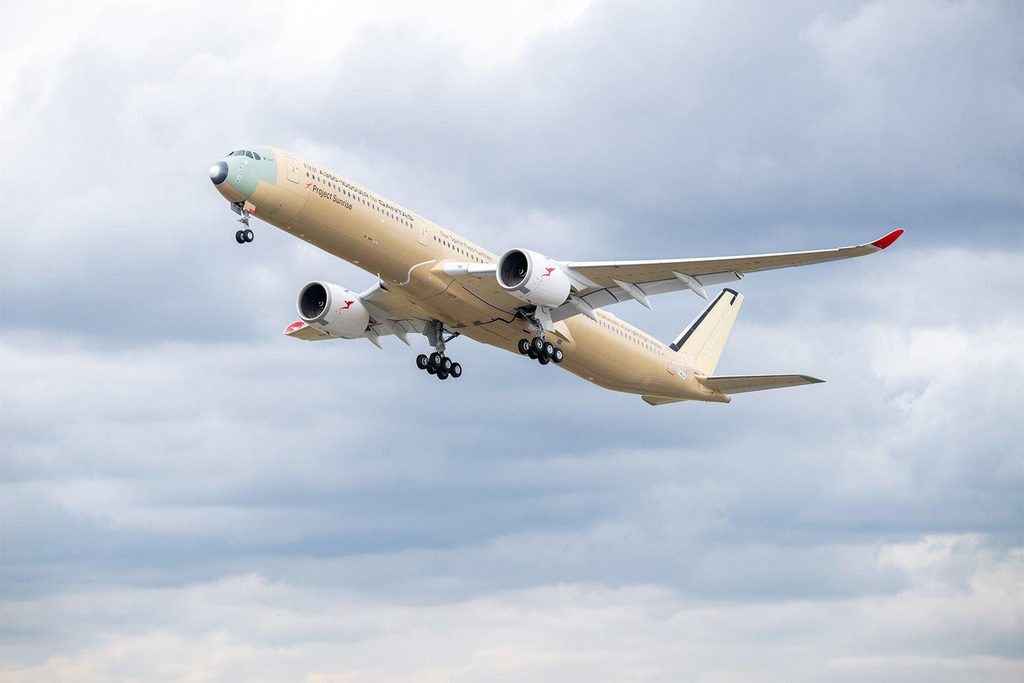
As the A350-1000 enters its second decade, Airbus is advancing new developments based on the aircraft family’s technology and design. One of the most notable projects is the A350-1000ULR, a specialised ultra-long-range version being developed for Qantas’ Project Sunrise programme. The aircraft features an additional 20,000-litre rear centre fuel tank and modifications to support flights lasting up to 22 hours. Qantas’ first Project Sunrise A350-1000ULR completed its maiden test flight on June 3, 2026, beginning a dedicated testing and certification programme. The airline plans to introduce nonstop services connecting Australia’s east coast with London and New York from October 2027.
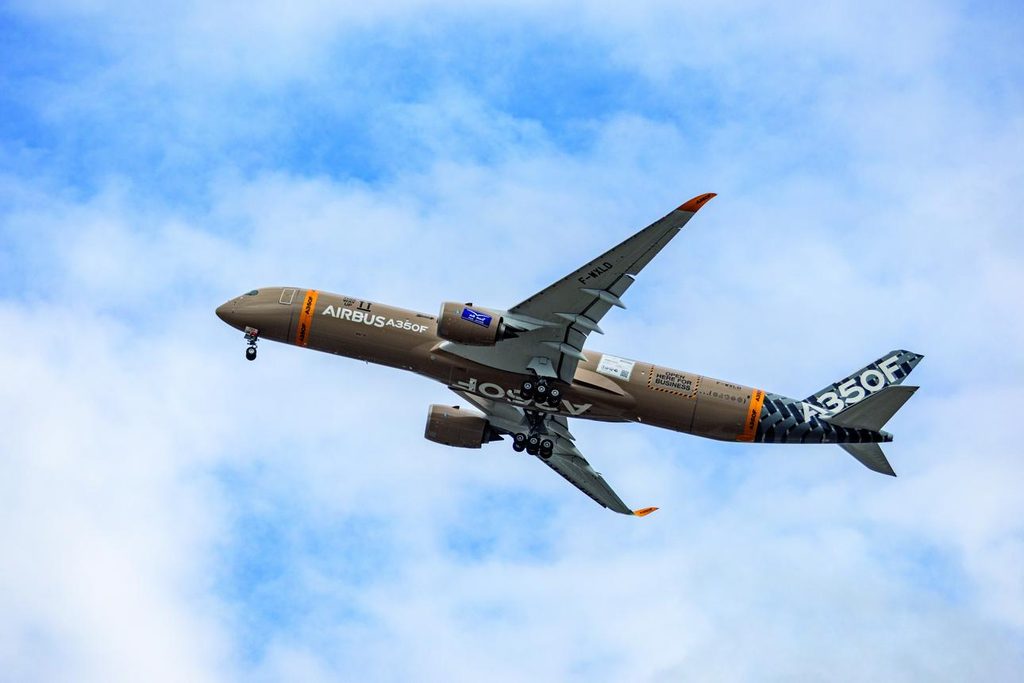
Airbus is also expanding the A350 platform into the global air cargo market through the A350F freighter. The aircraft completed its maiden flight on September 29, 2026, from Toulouse, beginning its flight-test campaign. Designed to carry up to 111 tonnes of payload over a range of up to 4,700 nautical miles, the A350F features a large main-deck cargo door and an airframe built with advanced lightweight materials.
Airbus reported 115 A350F orders from 14 disclosed customers at the end of August 2026. The freighter is expected to enter service in 2027, subject to the completion of testing and certification. The A350-1000’s 10-year milestone therefore represents more than an anniversary for a single aircraft model. It highlights a decade of development in long-haul passenger aviation and the continued evolution of the A350 family towards new opportunities in ultra-long-range travel and international air cargo.