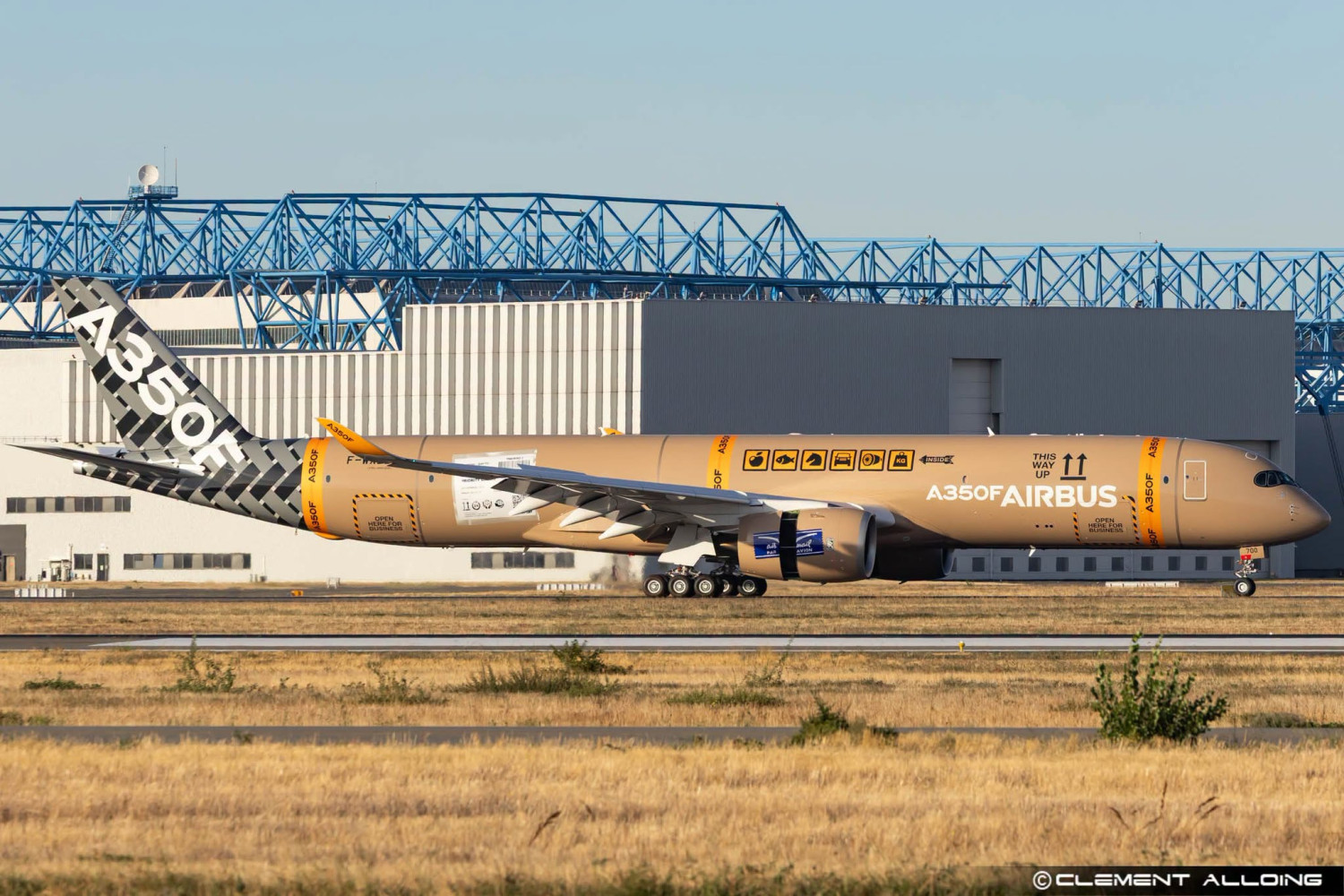
Airbus took another step towards the maiden flight of its next-generation A350F freighter, after the first test aircraft performed a key high-speed rejected takeoff test at Toulouse-Blagnac Airport. The aircraft, which has the serial number MSN700 and registration F-WXLD, executed two Rejected Takeoff (RTO) tests on September 24, completing a key milestone in the ground testing program ahead of the flight-test campaign.
Airbus A350F Set For September 29 First Flight
Following the completion of these latest ground tests, Airbus is now preparing for the A350F’s maiden flight, set to occur next month, provided weather and operational conditions support. It is expected to depart Toulouse at some point between 10:30 and 10:45 local time, before concluding the 4-hour test flight back on the ground.

This will mark the beginning of a significant flight-test campaign involving two A350F test aircraft, representing an estimated 400 hours of combined testing. This extensive campaign will be required to thoroughly evaluate the aircraft under a wide variety of operational conditions prior to entering service.
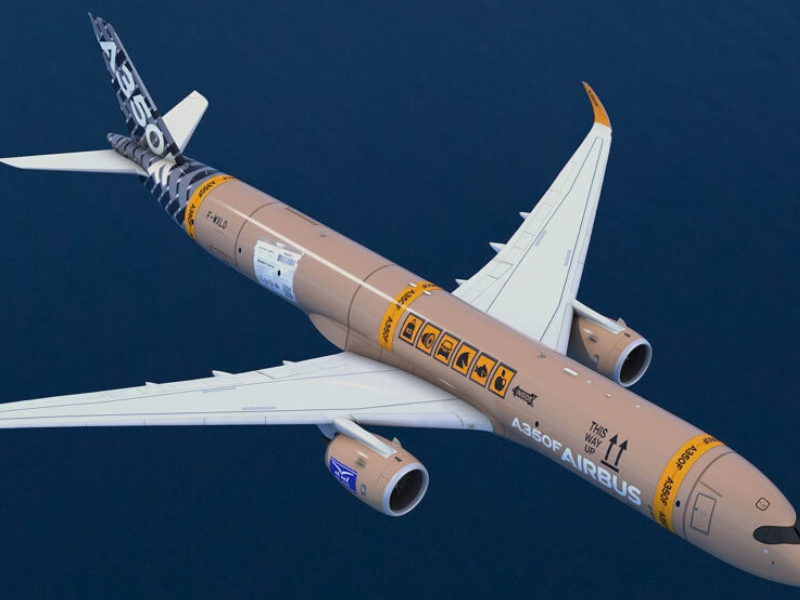
Two Test Aircraft Will Focus On Different Areas
The two test aircraft involved in the A350F flight-test campaign have been given slightly different roles. The first aircraft, MSN700, which has just completed the rejected takeoff tests, will primarily be used to evaluate its aerodynamic performance, flight control characteristics and autopilot capabilities.
Meanwhile, the second test aircraft, MSN701, will be focused more on testing the freighter’s onboard systems. Among the various flight-test conditions to which the aircraft will be subjected, its air conditioning and fire/smoke protection systems are among those which will be evaluated. This will enable Airbus to validate the aircraft’s performance under the broad spectrum of conditions that it would encounter in operation, while also supporting the certification process for the A350F.

A350F To Focus On Long-Haul Cargo Flights
The A350F is essentially a modified version of the A350, with the necessary changes made to create a dedicated freighter variant. Its main-deck cargo door has been specially designed to facilitate the loading of bulk freight and large pallets, enabling it to carry up to 111 tonnes of cargo with a maximum range of 8,700 km. It is designed to meet the demands of long-haul cargo operations, where the need to transport large volumes of freight is necessary.
In addition, the A350F is expected to play a major role in helping to transition the industry toward more modern freighter fleets. As both of the A350F test aircraft complete their respective test campaigns, Airbus will be able to gather the information needed regarding the aircraft’s capabilities. It will then be able to enter the certification process, with a view to entering service in the second half of 2027. Following completion of the flight-test campaign, the A350F will be poised to enter service as one of the newest-generation widebody freighters available to the market.