What was once a relatively unknown destination sixteen years ago, the Annapurna Base Camp has now emerged as one of Nepal’s most vibrant trekking hubs. Located in Annapurna Rural Municipality–4 of Myagdi district, the base camp of the 8,091-meter Annapurna I has undergone a remarkable transformation driven by identification, infrastructure development, and active tourism promotion.
Local authorities and tourism stakeholders say the area, once overlooked in official mapping and tourism narratives, is now experiencing a surge in both domestic and international visitors, far beyond its infrastructural capacity.
Tourism Growth Driven by Infrastructure and Promotion
According to Annapurna Rural Municipality Chair Bharat Kumar Pun, the growing popularity of the base camp is the result of coordinated efforts to develop trekking trails, basic infrastructure, and hospitality services. “The geographical fact that Annapurna Base Camp lies in Myagdi has now been firmly established, and after developing access trails and promotional activities, the number of tourists has increased beyond what the existing infrastructure can handle,” he said. “Because it is a short and relatively easy trek, it has become a preferred destination for domestic tourists.” The municipality has focused on improving connectivity, signage, and lodging facilities, making the destination more accessible for trekkers seeking a shorter Himalayan experience compared to other high-altitude expeditions.

Rediscovery of a Forgotten Route and Historical Significance
Until 2067 BS, the presence of Annapurna Base Camp in Myagdi was not widely recognized, with most references placing it only in Kaski district. This changed after the visit of Annapurna’s first summiteer, Maurice Herzog, in 2012, who provided key insights into the original expedition route and base camp location in Narchyang.
Following this revelation, a local research team led by then headmaster of Prabha Secondary School, Tej Gurung, undertook an exploratory mission to trace the historical trail. The team successfully identified the route by walking through the banks of Nilgiri and Annapurna rivers, constructing temporary wooden bridges at 68 points along the way. Later, in 2077 BS, Annapurna Rural Municipality officially mapped and named the trail “Maurice Herzog Trail” in recognition of its historical significance.
A ‘Virgin Destination’ Emerging on Nepal’s Trekking Map
According to Gurung, the route remained largely undeveloped for years, but has now evolved into a “virgin trekking destination” after gradual infrastructure improvements over the past decade. The Narchyang–Base Camp trekking route, officially operational for the past three years, now offers trekkers a rare blend of natural adventure and historical exploration. The base camp, situated at an altitude of 4,190 meters above sea level, can be reached in a two-day trek, with a return on the third day, making it one of the shortest high-altitude trekking experiences in Nepal.
Rising Tourist Flow and Hospitality Challenges
Hotel entrepreneur Michael Pun from Bhusket noted that the area has seen a sharp rise in tourist arrivals, especially during the spring and autumn seasons. “Earlier, we used to host around 50 guests per day in temporary shelters, but during peak seasons, the number has exceeded 200,” he said. “Since permanent infrastructure is restricted within the Annapurna Conservation Area Project (ACAP), we are forced to manage visitors in tents and temporary arrangements.” He added that while ACAP has permitted limited temporary structures, the growing influx of tourists has created pressure on accommodation and service quality.
Road and Trekking Connectivity Improvements
In recent years, significant progress has been made in improving access to the base camp. A 20-kilometer road now connects Narchyang to Humkhola, while a 22-kilometer basic trekking trail extends from Humkhola to the base camp. Previously, the area was accessible only by helicopter for climbers and expedition teams. Today, trekkers can reach the base camp through a combination of road travel and hiking, opening the region to a much wider audience.
Scenic Beauty and Natural Attractions
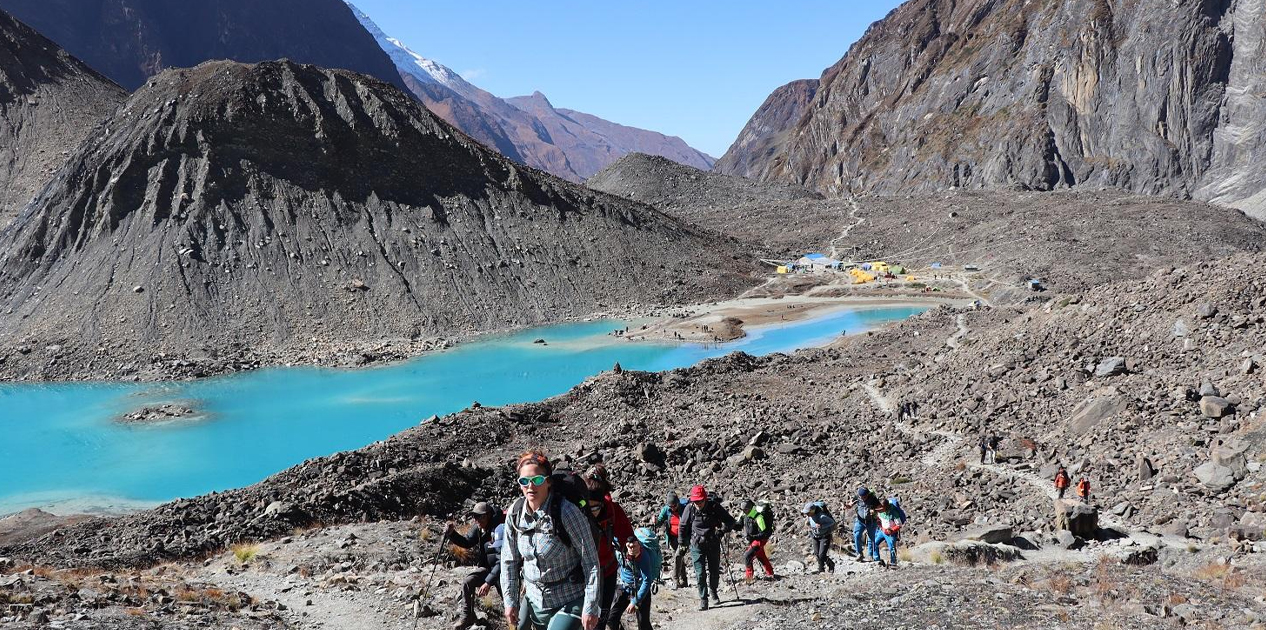
The trekking route offers a diverse and visually stunning experience. Travelers walk alongside the Mistri River, passing cascading waterfalls, dense forests, rare flora and fauna, and dramatic Himalayan landscapes. The journey typically takes two days of trekking, with an additional day for return, allowing visitors to experience both Annapurna and Nilgiri Himalayan ranges along the route.
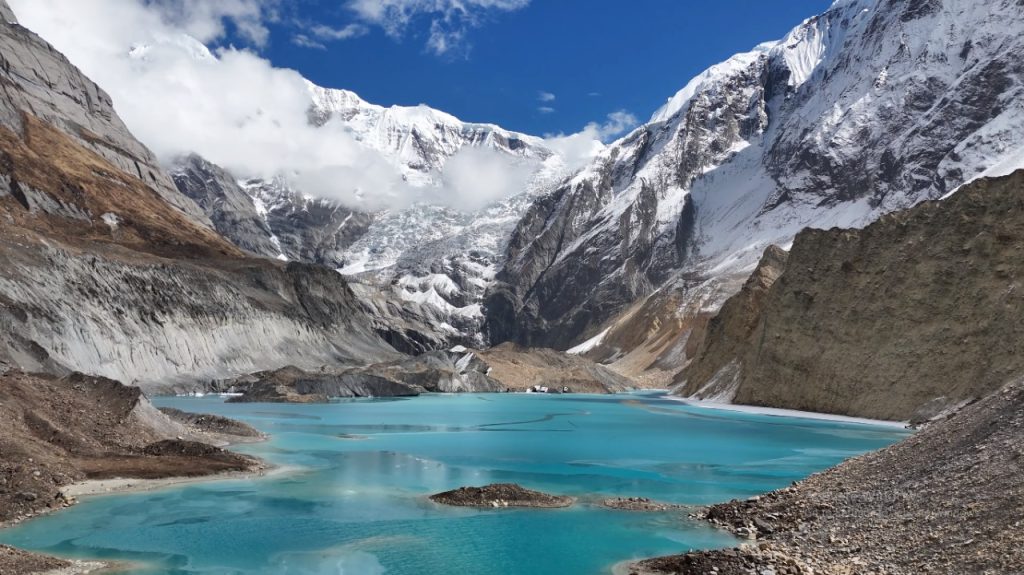
The base camp itself lies in a flat valley beneath towering peaks, offering panoramic mountain views. Just below it, at 4,050 meters, lies the pristine Panchakunda Lake, a natural glacial lake formed by meltwater from Annapurna Himal. One of the major highlights of the destination is the ability to view both Annapurna Himal and Panchakunda Lake together, creating a unique visual experience for trekkers.

Heritage Site and Conservation Concerns
The base camp area also features a small open-air museum, which includes statues of Maurice Herzog, Louis Lachenal, and Sonam Wangchuk Sherpa, the pioneering members of the first Annapurna ascent team. A copper inscription lists the names of 536 climbers who have successfully summited Annapurna Himal.
Despite its growing popularity, the region faces several challenges. Lack of communication facilities, limited health services, inadequate waste management, and insufficient accommodation capacity are emerging concerns. Authorities also report difficulties in emergency evacuation due to weak network coverage, especially for trekkers suffering from altitude sickness. Environmental pressure is also increasing, with waste management becoming a major issue during peak trekking seasons.
Need for Sustainable Development
Officials emphasize the need for completing remaining trail construction, upgrading suspension bridges, and improving essential services to ensure sustainable tourism growth. While Annapurna Base Camp in Myagdi has successfully transformed into a sought-after trekking destination, experts warn that without balanced infrastructure and environmental management, its long-term sustainability could be at risk. Nevertheless, the region stands today as a powerful example of how rediscovery, community effort, and strategic tourism development can turn a once-forgotten Himalayan trail into a thriving global attraction.