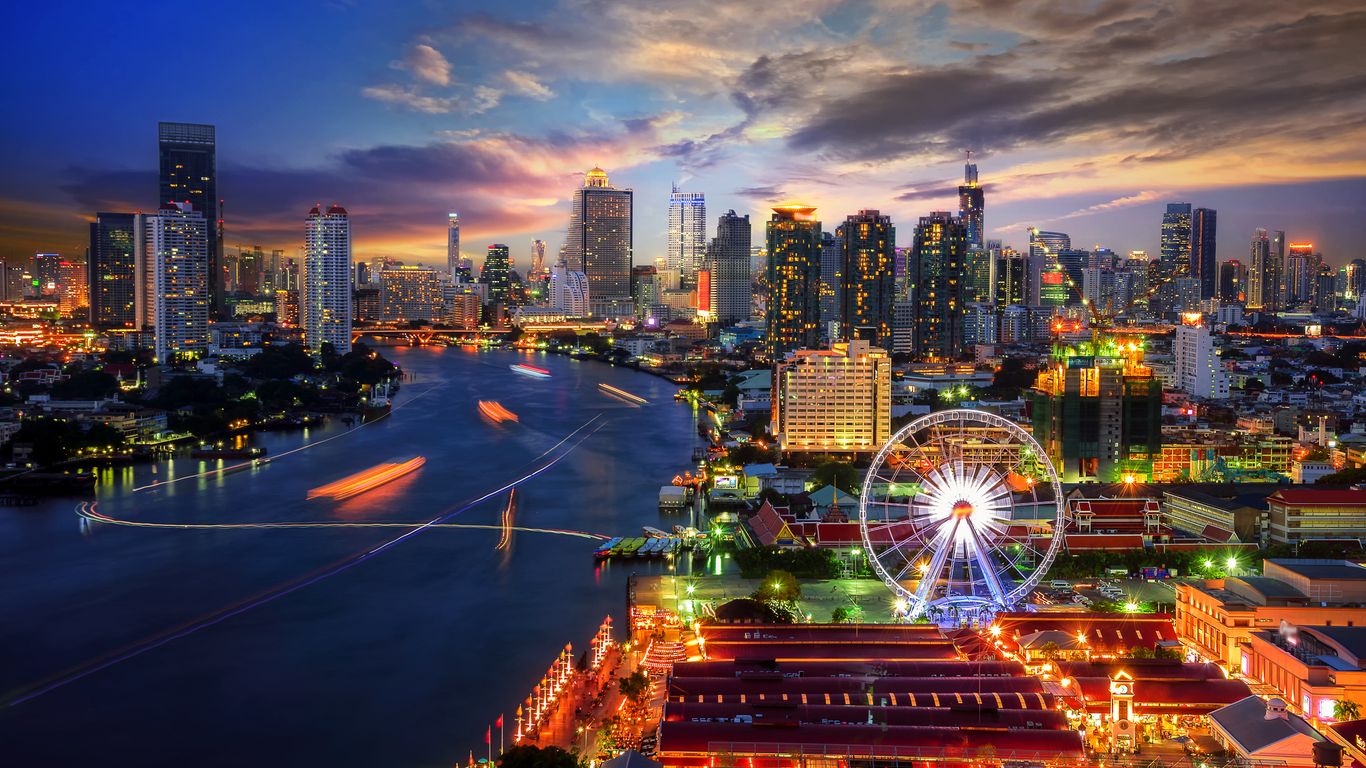
Bangkok has once again claimed its position as the world’s most visited city for 2025, welcoming approximately 30.3 million international visitors, surpassing competitors such as Hong Kong and London. According to the Euromonitor International Top 100 City Destinations Index, the Thai capital continues to lead in global tourism, driven by renowned cuisine, vibrant nightlife, favorable visa policies, and a strong post-pandemic recovery. Despite ranking lower in overall urban attractiveness, Bangkok’s sheer visitor volume remains unparalleled.
Bangkok Leads Global Tourism in Arrivals
Bangkok’s international arrivals reached 30.3 million in 2025, outperforming major competitors including Hong Kong (23.2 million), London (22.7 million), and Macau (20.4 million). The city’s popularity is fueled by its culinary scene, lively nightlife, iconic landmarks, and the so-called “White Lotus effect”, a tourism boost attributed to the filming of a popular TV series in Thailand. Relaxed visa policies and improved connectivity have also played a crucial role in attracting visitors from across the globe.

Despite its dominance in arrivals, Bangkok ranks 20th in the overall attractiveness index, which measures factors such as sustainability, infrastructure, economic performance, and high-tech urban features. In this context, other global cities like Paris, Madrid, Tokyo, Rome, and Milan surpass Bangkok, emphasizing that high visitor numbers do not always align with broader urban appeal. Among Asian cities, Bangkok ranks as the fourth-highest, following Tokyo (#3), Singapore (#9), and Seoul (#10).
The Top Five Cities in Overall Attractiveness
Euromonitor’s 2025 index highlights cities excelling in overall appeal rather than sheer visitor numbers:
- Paris, France – Ranked #1 for the fifth consecutive year.
- Madrid, Spain
- Tokyo, Japan
- Rome, Italy
- Milan, Italy
Paris, despite ranking first in attractiveness, welcomed only 18 million international visitors, far fewer than Bangkok, highlighting the Thai capital’s global dominance in visitor volume.
Resilience of Global Travel
Euromonitor’s report underscores the resilience of the global travel sector, which grew despite inflationary pressures and geopolitical tensions. Nadejda Popova, Global Head of Loyalty at Euromonitor, noted that international arrivals to the top 100 cities rose by 8% to 702 million in 2025, reflecting the sector’s adaptability and recovery.
Key trends shaping urban tourism include:
- Resilience: Continued growth despite economic and geopolitical challenges.
- Value over Volume: Focus on longer stays and higher spending to manage overtourism.
- AI Integration: Adoption of AI to enhance visitor experiences and improve operational efficiency.
- Sustainability: Emphasis on eco-friendly practices and sustainable urban mobility.
Bangkok’s Digital Transformation in Tourism
In 2025, Bangkok will have emerged as a leader in digital transformation within tourism, leveraging technology to manage its massive influx of visitors. Key initiatives include:
- Thailand Digital Arrival Card (TDAC): Mandatory since May 1, 2025, streamlining immigration and enhancing visitor experience.
- AI-Powered Personalization: The Tourism Authority of Thailand (TAT) uses AI to deliver personalized experiences, moving away from mass tourism.
- Smart City Infrastructure: AI tools monitor tourist density and manage urban flow, preventing overcrowding and supporting digital nomads and remote workers.

Bangkok: A Hub for Digital Nomads
Bangkok has also become the top city for digital nomads in 2025, offering extensive digital infrastructure, 5G connectivity, and “workation” hubs optimized with AI for booking, logistics, and workspace allocation. The city’s combination of affordability, convenience, and technological innovation makes it a prime destination for remote professionals seeking a vibrant urban lifestyle.
Bangkok’s dominance in international arrivals demonstrates the city’s strength in tourism recovery and global appeal. While challenges remain in infrastructure and sustainability, continued investment in digital innovation, AI-driven management, and personalized experiences positions Bangkok to maintain its status as a leading global tourism hub in the coming years.