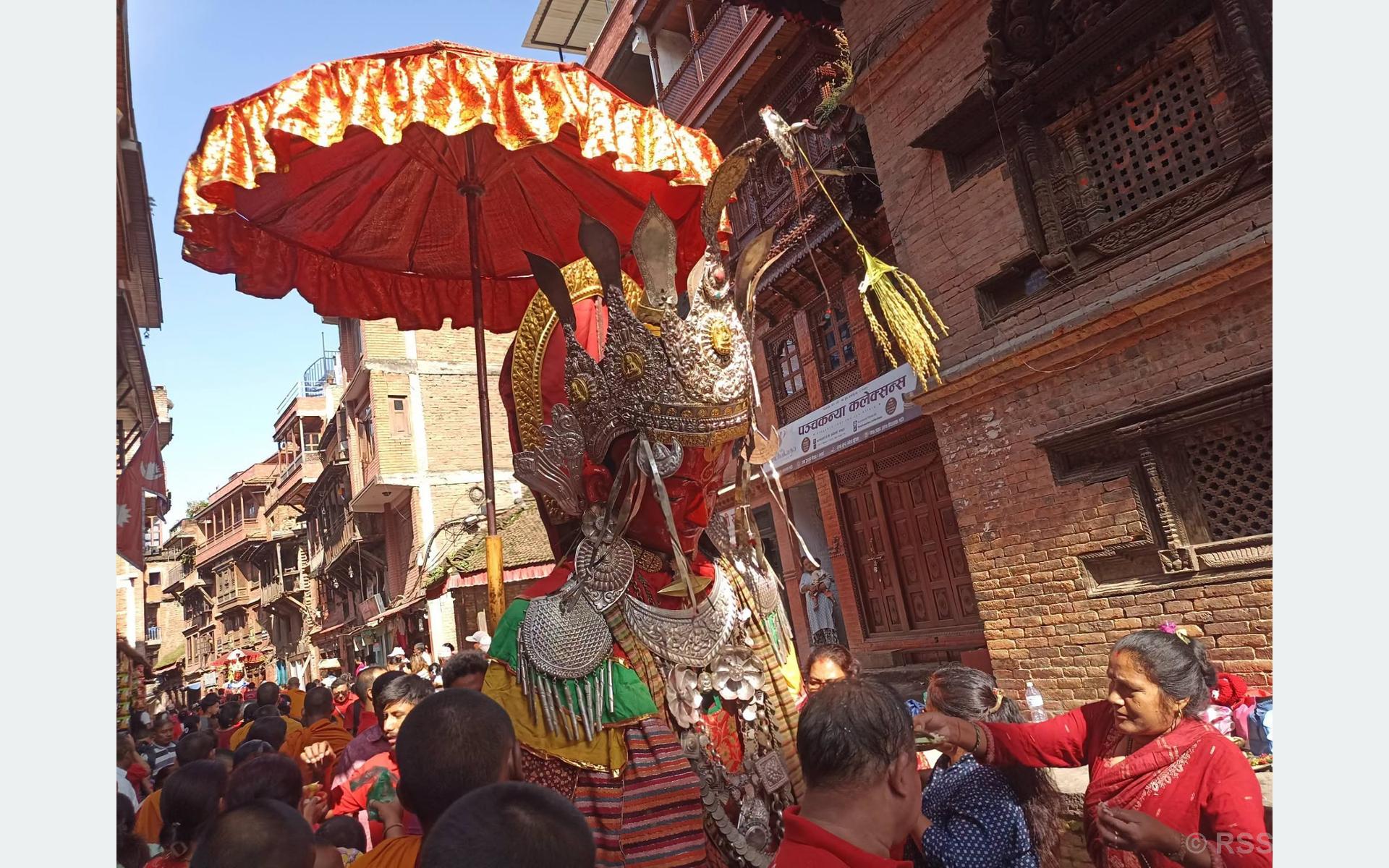
The traditional Panchadan Festival is being observed in Bhaktapur today with the ceremonial procession of five Dipankara Buddhas through different parts of the historic city. The festival, known locally as “Panjadan” or “Panjaran,” is observed annually on Bhadra Krishna Trayodashi, according to Buddhist tradition.
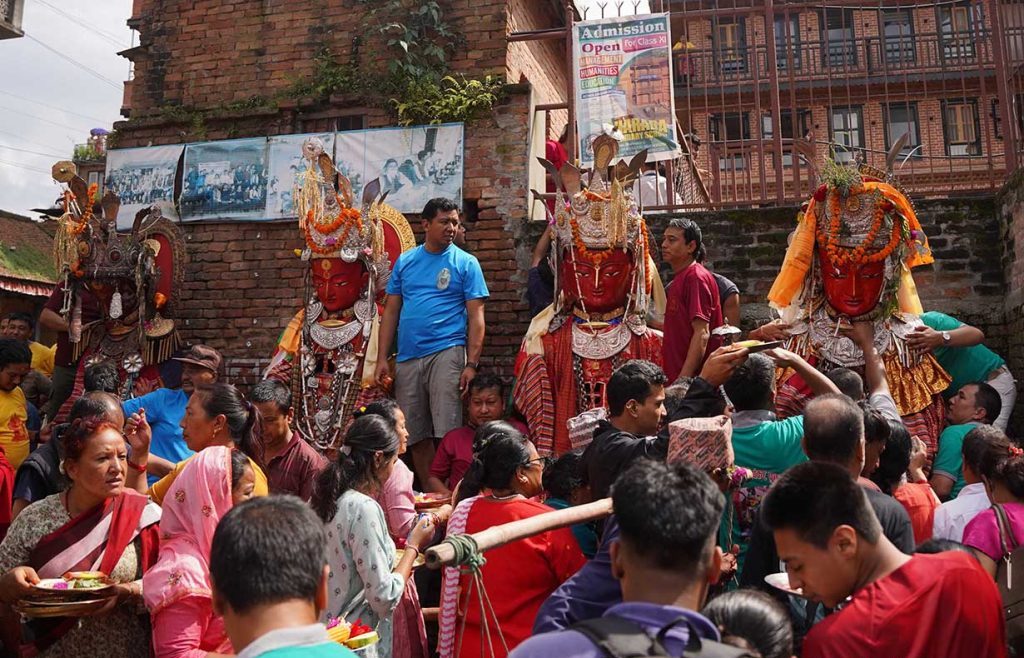
During the festival, five Dipankara Buddha images brought from major Buddhist monasteries are taken around the city and displayed at different locations and Buddhist shrines throughout the day. Panchadan is celebrated in Kathmandu Valley and some surrounding districts, but the festival in Bhaktapur has distinctive cultural traditions and rituals that set it apart from celebrations elsewhere.

A Tradition Rooted in Bhaktapur’s Buddhist Heritage
According to local tradition, Panchadan is believed to have been initiated during the reign of Malla King Naresh Malla in Nepal Sambat 775, with Vajracharya Jayadev credited with starting the festival. The five Dipankara Buddhas are brought together at the Suryamadhi Dabu, where devotees offer various agricultural products and other items according to their capacity. The five Buddhas are associated with different historic Buddhist monasteries in Bhaktapur.
These include the Dipankara Buddha of Prashannashil Mahavihar in Kwathandau, the Dipankara of Chaturbrahma Mahavihar in Sakotha, the Dipankara of Mangal Dharma Deep Mahavihar in Jhorvahi Palikhel, the Dipankara of Jayakirti Mahavihar in Thathuvahi Itachhen, and the Dipankara of Bauddha Sanskriti Vihar in Kuthuvahi near the Bhaktapur Minibus Park.
Residents traditionally offer raw agricultural produce such as rice, maize, wheat, soybeans, rock salt, bottle gourd, beans, and cucumber to the Dipankara Buddhas. The festival also provides an opportunity for devotees to make offerings to Shakya and Vajracharya priests and Buddhist monks. Many residents begin their offerings early in the morning, particularly those who have agricultural work or other responsibilities later in the day.
Five Types of Offerings and Traditional Music
Panchadan is closely associated with the tradition of donating a wide range of food, agricultural products, household items,s and religious materials. Offerings traditionally include items such as sunflower flowers, incense, lamps, fragrance, and food, along with rice, wheat, quati, peas, black gram, yam, and radish. Devotees also offer drinks such as sugar water, fruits and traditional medicinal items including harro and amala.
Other offerings can include salt, oil, needles, thread, rope, brooms, white cloth, monastic robes, seating materials, chalk and dativans, reflecting the festival’s broader tradition of supporting religious communities and fulfilling everyday needs. The festival route also has an important ritual connection with Bhaktapur’s Buddhist heritage. The worship is traditionally associated with the Adipadm Mahavihar in the eastern part of the city and continues toward Thathuvahi in the west.
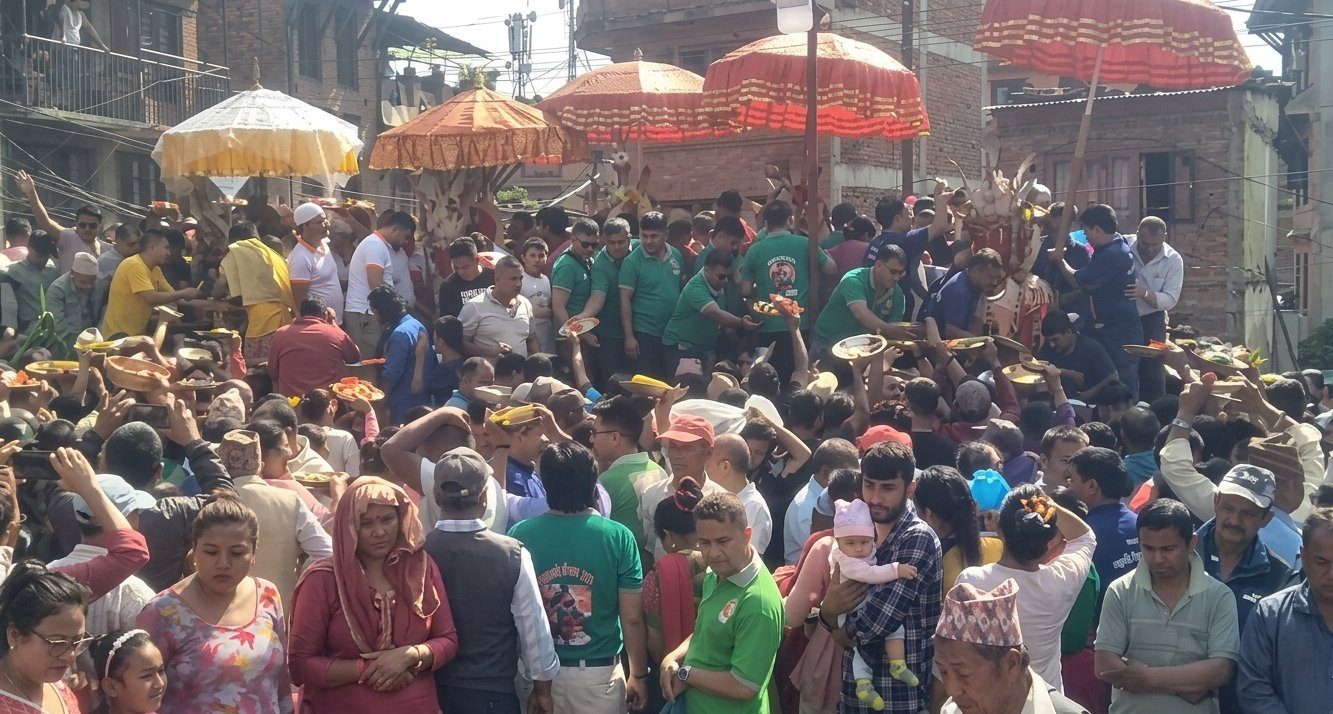
One of the most distinctive attractions of Panchadan is the traditional Gula music. At Taumadhi, Buddhist devotees recite donation hymns and religious verses while traditional musical groups perform. Instruments and musical traditions such as Gula Dha, Ponga, Dapha bhajan and Shringabheri accompany the procession of the Dipankara Buddhas.
A Living Cultural Tradition Facing Changing Participation
The festival brings together people of different generations. Children, young people and elderly devotees traditionally line up to receive alms, while Buddhist followers participate in the procession carrying Pindapatra, locally known as Gulupa, as part of the traditional alms-giving practice.
However, residents say participation among younger generations has declined in recent years. Resident Ujjwal Chandra Vajracharya, who has participated in Panchadan since childhood, said that many young people today feel reluctant to participate in receiving Panchadan, resulting in lower participation compared with the past.

For devotees such as Albert Vajracharya, the festival remains an important expression of Buddhist faith and social responsibility. He said that followers traditionally set aside a portion of their earnings for charity and make offerings during Panchadan. He also emphasized that the five figures carried during the festival are five Dipankara Buddhas, not representations of the five Pandavas, a distinction that is important to understanding the religious significance of the festival.
The Aarti Guthi Newa Sangh of Jetavarga Mahavihar in Tekacho, Bhaktapur-2, has appealed to devotees to pack and organize the different items offered during Panchadan separately so that the offerings can be presented in a systematic manner. With its combination of Buddhist rituals, traditional music, historic monasteries, community participation, and centuries-old donation practices, Panchadan continues to represent an important part of Bhaktapur’s living cultural heritage and offers visitors an opportunity to experience the city’s deeply rooted Newar Buddhist traditions.