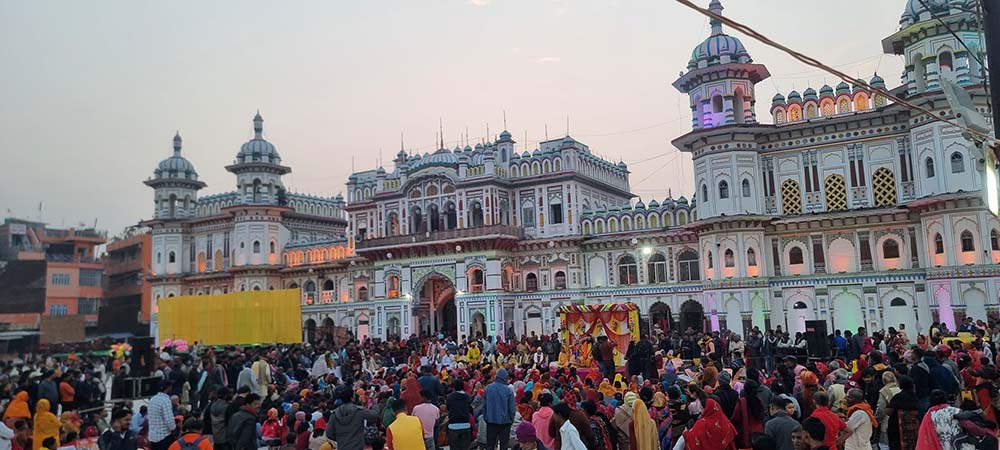
The sacred Bibaha Panchami festival, commemorating the divine union of Princess Sita and Lord Ram in the Treta Yug, is being celebrated across the country today with great enthusiasm, devotion, and traditional splendour. The celebrations have reached their peak in Janakpurdham, the historic city believed to be the birthplace of Goddess Sita and the ancient capital of Mithila. The festival, observed annually on the fifth day of Marga Shukla Paksha in the Nepali month of Mangsir, attracts the thousands of devotees, cultural enthusiasts, and visitors from Nepal and India.
Ancient Rituals Revived in Janakpurdham
Janakpurdham, located in Madhesh Province, has once again transformed into a vibrant spiritual centre as age-old Mithila traditions come to life. The city’s iconic Janaki Temple, adorned with colourful lights and floral decorations, remains the focal point of the celebrations where rituals, processions, and the religious recitations continue from the dawn to dusk.

The festival commenced with the traditional Nagar Darshan, held on the first day. As part of this ritual, children dressed as Lord Ram and his brother Laxman were paraded around the city, drawing the attention of devotees and tourists. This symbolic representation of the royal visit is one of the key highlights of the festival, believed to bring the prosperity and blessings to the community.
Sequential Rituals Symbolizing the Divine Wedding
Bibaha Panchami spans several days, each designated for a specific ritual that recreates the divine wedding ceremony of Ram and Sita.
Phulbari Leela
The second day, known as Phulbari Leela, was marked by vibrant dance performances and grand processions depicting episodes from the Ramayana. Cultural troupes performed traditional dances showcasing Mithila art, mythology, and folklore, adding colour and energy to the celebrations.
Dhanusha Yagya and Tilakotsav
On the third day, the ritual of Dhanusha Yagya, symbolizing the legendary episode of Lord Ram breaking the divine bow of Lord Shiva, was performed with strict adherence to Vedic customs. This was followed by Tilakotsav on the fourth day, during which representatives from Ayodhya ceremonially offered gifts and blessings, recreating the royal traditions of the ancient era.
Matkor and Ram-Sita Swoyambar
The fifth day was observed as Matkor, marked by a symbolic ritual of preparing soil for the wedding pavilion. The festival culminates with the grand re-enactment of the Ram-Sita Swoyambar, the divine engagement and wedding ceremony, drawing massive crowds at the Janaki Temple premises. Devotees from Nepal and India gather to witness the spiritual union, which holds deep cultural and religious significance for followers of Sanatan Dharma.
Farewell to Pilgrims Marks the Conclusion
On the day following the Swoyambar ceremony, Janakpurdham bids farewell to visiting saints, religious leaders, and pilgrims from neighbouring Indian cities, including Ayodhya, who arrive annually to participate in the festival. Their ceremonial departure marks the formal conclusion of Bibaha Panchami. The emotional farewell, filled with exchanges of blessings and goodwill, reflects the historic cultural ties between the Mithila region and Ayodhya, reinforcing centuries-old traditions and spiritual connections.

A Festival of Cultural Harmony
One of the notable aspects of Bibaha Panchami is its spirit of inclusivity. People from various religious backgrounds, including Buddhism and Sikhism, participate in the festivities, reflecting Nepal’s long-standing culture of harmony and respect. While Hindu devotees primarily lead the rituals, the event draws observers from multiple communities who come to experience the cultural richness and spiritual depth of the celebration.
Throughout the festival, devotees worship Lord Ram and Goddess Sita, offering prayers and paying homage to the divine couple. The energy, chants, music, and rituals that fill Janakpurdham during these days reaffirm its identity as a living heritage site, preserving traditions that date back thousands of years.