China has celebrated the success of its longest-ever Lunar New Year holiday, reporting record-breaking domestic travel and tourism revenue that provided a strong boost to the country’s consumption-driven economic recovery. Officials say the nine-day Spring Festival break, extended this year to stimulate spending, triggered an unprecedented surge in mobility, leisure travel, and cultural tourism across the nation.
Record Travel and Spending Figures
According to the Ministry of Culture and Tourism, Chinese residents made 596 million domestic trips during the holiday period, which concluded on Monday. Total tourism expenditure reached 803.5 billion yuan (approximately $117 billion), the highest level ever recorded for the Lunar New Year season in China.
Both travel volume and tourism income rose by nearly 19 percent year-on-year, compared with last year’s shorter eight-day holiday. Authorities had deliberately lengthened the break to encourage households to spend more on travel, dining, and entertainment as policymakers work to strengthen domestic demand.
Compared with 2025 figures, travellers made an additional 95 million trips, while tourism revenue climbed 126.5 billion yuan. However, spending per trip averaged 1,348 yuan, marginally below last year’s 1,351 yuan, suggesting that while more citizens travelled, many remained cautious about individual expenditures amid broader economic uncertainties.
Spring Festival Travel Rush Sets Global Scale in China
The holiday forms part of China’s annual 40-day Spring Festival travel season, often described as the largest human migration on Earth, with total journeys forecast to reach 9.5 billion trips this year. The 2026 celebration, marking the Year of the Fire Horse, is expected to see overall traveller numbers increase by more than five percent compared with the previous year. Transport networks, highways, and railways operated at near-capacity levels as families reunited, tourists explored cultural destinations, and urban residents sought traditional experiences in smaller communities in China.
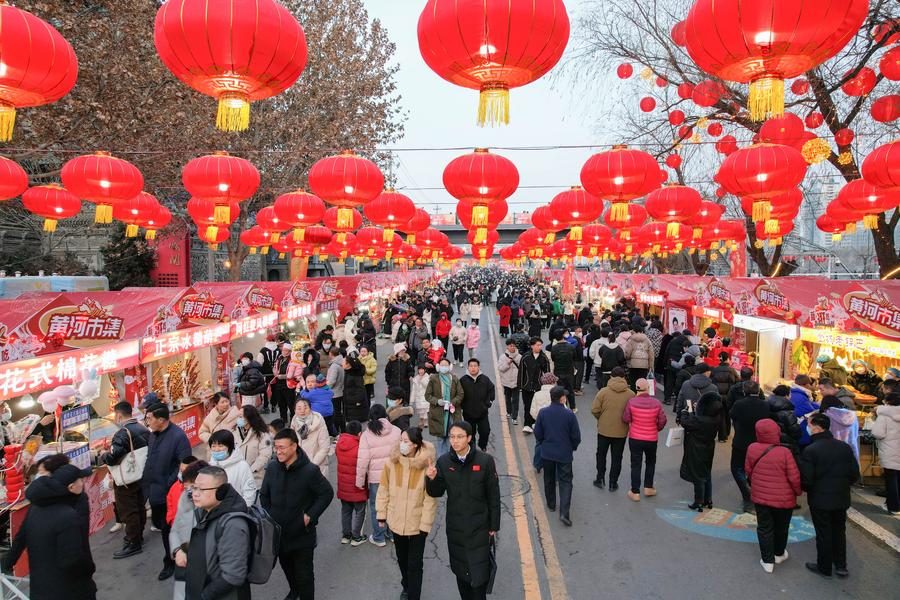
Major Landmarks and Scenic Areas Draw Massive Crowds in China
Tourist attractions nationwide reported dramatic rises in visitor numbers. Iconic sites such as the Great Wall saw dense crowds throughout the holiday, reflecting strong interest in heritage tourism. Natural scenic destinations also experienced sharp growth. The Jiuzhaigou area in Sichuan received 182,700 visitors during the festival period, representing a 17.7 percent increase from the previous year. Meanwhile, Zhangjiajie, famous for its dramatic sandstone pillars, reported a 10.27 percent rise in tourist arrivals during the first five days alone.
Coastal and rural regions also benefited. Villages in Fujian attracted travellers eager to experience traditional folk customs such as you shen, colourful parades honouring local deities, and celebrating community heritage.
Strong Performance Across Major Cities
China’s largest metropolitan centres recorded robust tourism growth as well. Shanghai welcomed 21.67 million visitors, an increase of 8.36 percent from last year, while tourism-related spending surged 20.9 percent to 25.6 billion yuan.
The capital, Beijing, hosted 19.84 million tourists, generating total tourism revenue of 33.14 billion yuan during the holiday window in China. Officials noted that urban tourism combined shopping, cultural exhibitions, and entertainment with traditional temple fairs and seasonal celebrations, creating a blend of modern consumption and heritage experiences.
Rise of Lower-Tier Destinations and Cultural Tourism
Travel platforms reported a notable shift in consumer preferences this year, with many tourists opting for county-level cities and culturally rich destinations rather than major metropolitan hubs. Data from LY.COM showed that hotel bookings in parts of Guangdong, including the coastal city of Shantou, rose by more than 80 percent compared with the previous year.
This trend reflects a growing desire among travellers to rediscover what tourism analysts call a more authentic “New Year flavour,” characterised by local cuisine, folk rituals, and slower-paced celebrations rooted in tradition.
Demand Surges for Festival Experiences
The intense demand for holiday entertainment made tickets to special performances highly competitive. In Tangshan, visitors sought seats for a traditional molten-iron fireworks display, a centuries-old spectacle performed during Spring Festival celebrations. Many travellers reported difficulty securing tickets due to overwhelming popularity and limited availability.
Catering and Hospitality Sectors See Steady Gains
The tourism boom extended into the food and beverage industry. Sales revenue at key catering businesses monitored by the Ministry of Commerce rose 5.2 percent compared with last year’s holiday. Hotpot giant Haidilao reported serving more than seven million customers nationwide within the first five days of the festival, with customer traffic on Lunar New Year’s Eve and New Year’s Day rising by over 10 percent year-on-year. Restaurants in tourist zones and hometown communities particularly benefited from the surge of returning families.
Film Industry Sees Unexpected Holiday Slump
Despite the broader consumption boom, China’s cinema sector experienced a significant decline. Box-office revenue during the Spring Festival totalled 5.75 billion yuan, down 39.5 percent from last year, while admissions dropped 35.8 percent to 120 million, according to ticketing platform Maoyan. Analysts attributed the downturn to weaker audience response to new film releases rather than reduced holiday activity overall.
Tourism Emerges as Key Economic Driver
Chinese authorities view the record-breaking holiday as evidence that domestic tourism remains a crucial pillar in sustaining economic momentum. The extended holiday policy was designed specifically to encourage travel, retail consumption, and service-sector growth at a time when households remain careful about discretionary spending. While the slight decline in per-trip expenditure indicates continued consumer caution, the sheer scale of participation demonstrates strong underlying demand for travel and cultural experiences.
With the broader Spring Festival travel season still underway, officials expect continued high mobility and sustained tourism activity in the months ahead. Analysts say the Year of the Fire Horse has begun with powerful momentum for China’s hospitality, transportation, and cultural sectors, reinforcing the government’s strategy of leveraging domestic tourism as a stabilising force for long-term economic growth.
The 2026 Lunar New Year season has not only set new records but also highlighted evolving travel patterns, where cultural heritage, regional experiences, and family reunions increasingly shape the world’s largest annual migration.