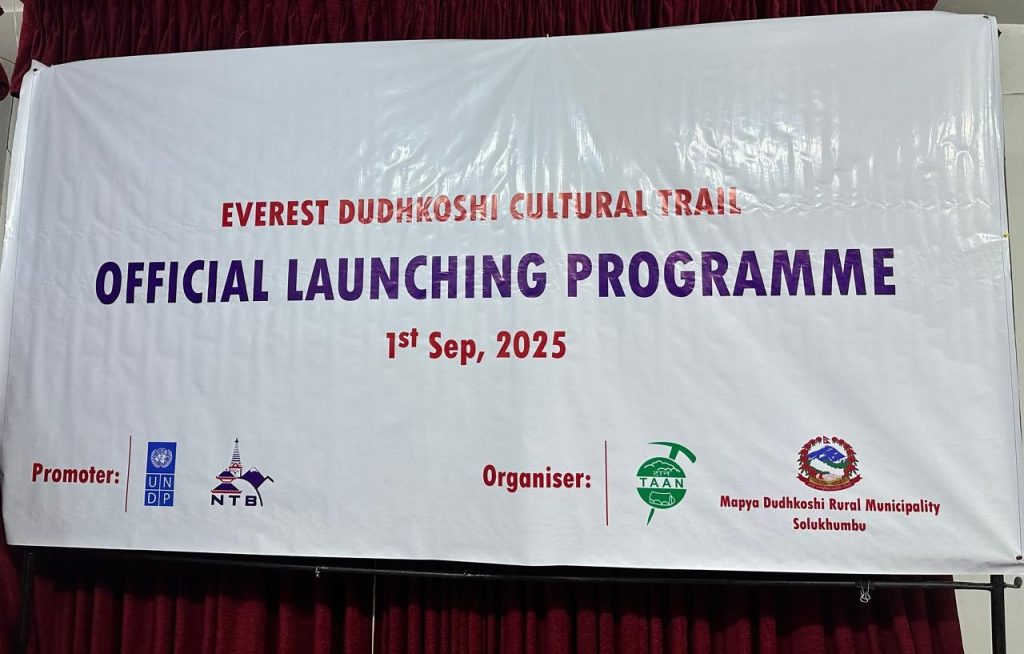
On September 1, 2025, a new trekking route named the “Everest Dudhkoshi Cultural Trail” was officially launched in Kathmandu. The trail, designed to blend stunning Himalayan scenery with rich cultural experiences, was introduced through a joint effort by Mapya Dudhkoshi Rural Municipality (RM) in Solukhumbu, the Nepal Tourism Board (NTB), and the Trekking Agencies’ Association of Nepal (TAAN).
Formal Launch Ceremony in Kathmandu
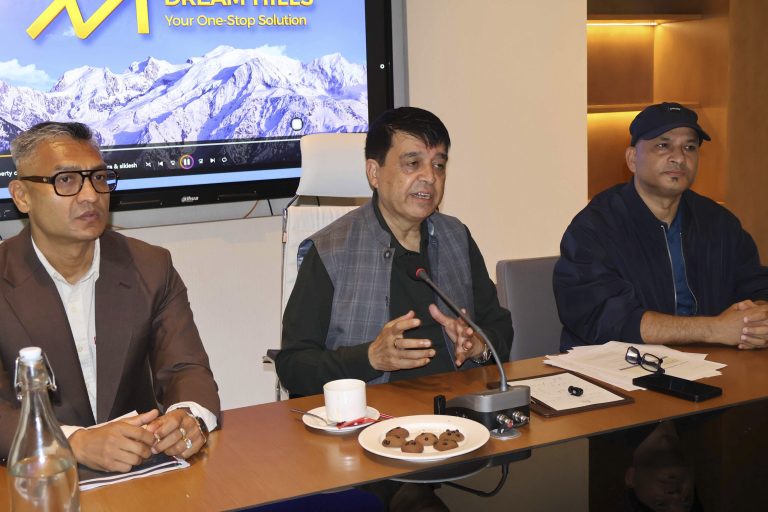
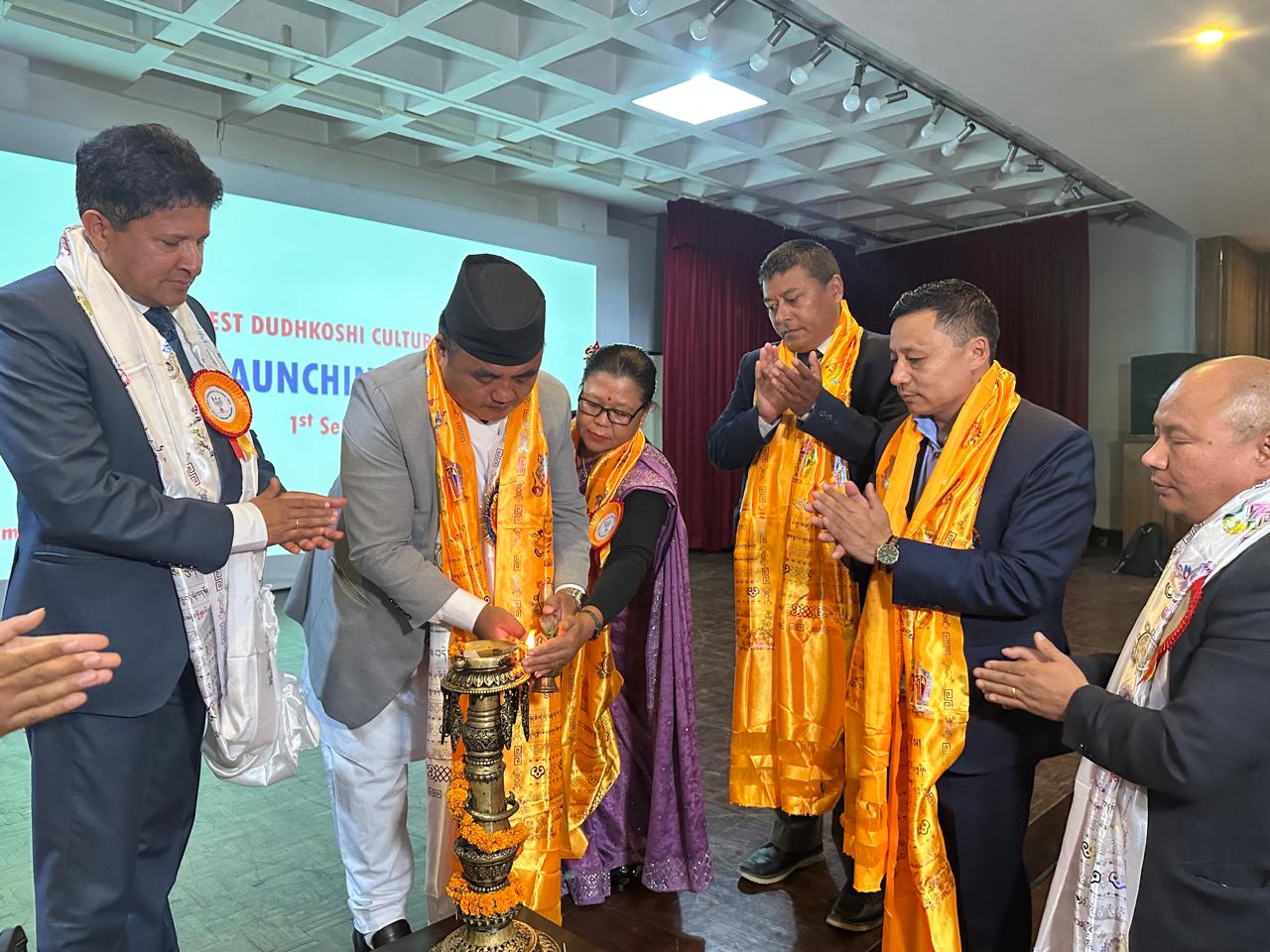
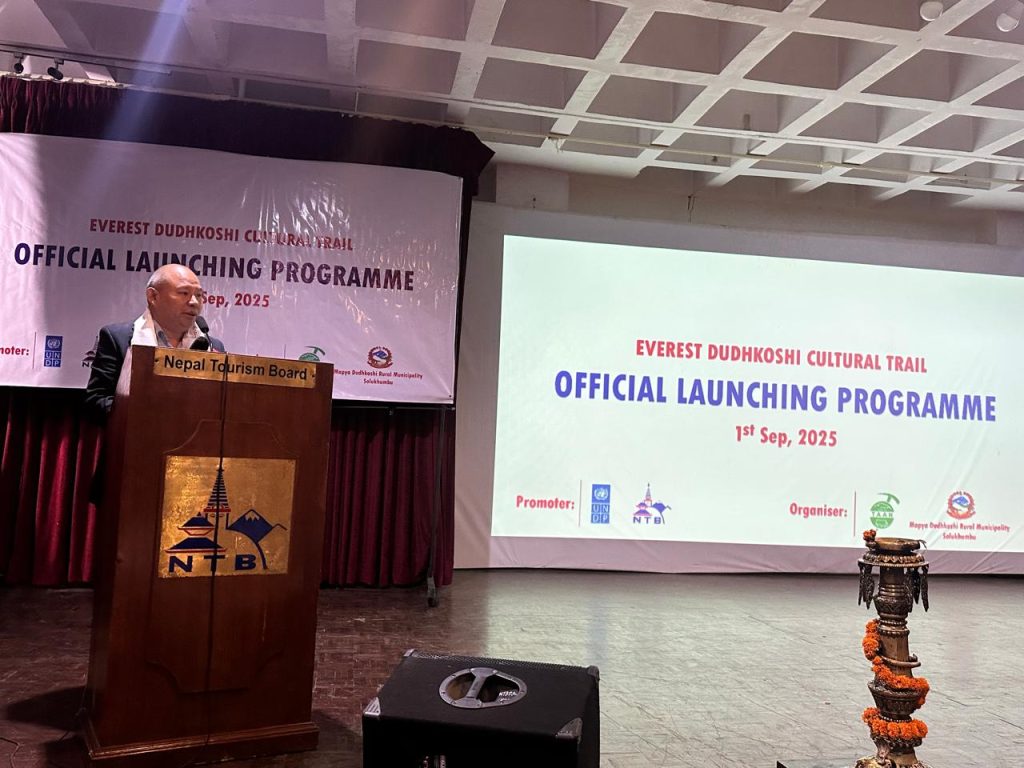
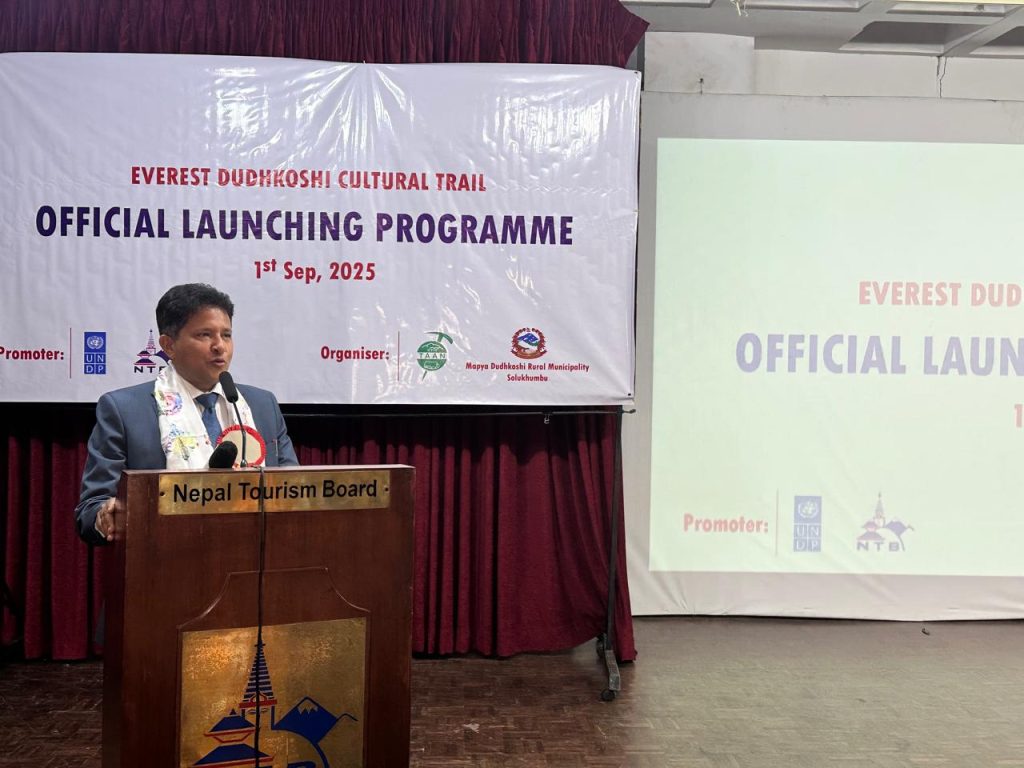
The official unveiling took place at the NTB Hall, Kathmandu, in the presence of prominent figures from Nepal’s tourism, government, and trekking sectors. The event was graced by Hon. Man Bir Rai, Minister for Defense, Government of Nepal, as the Chief Guest, who officially inaugurated the trail.

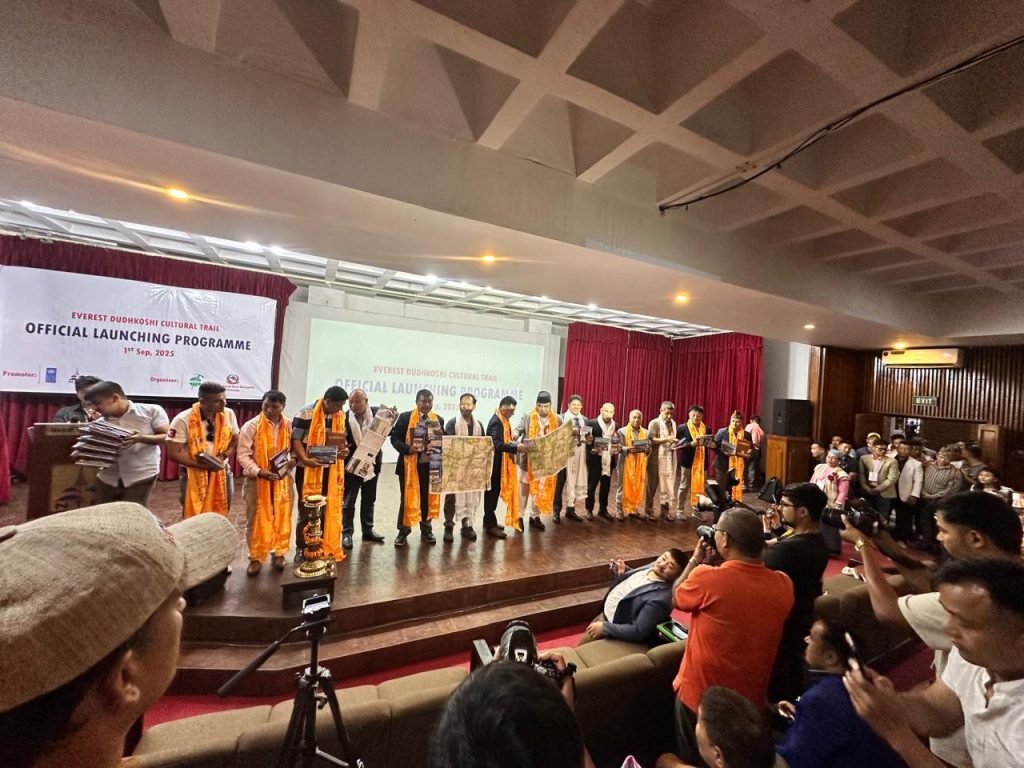
The promotional materials for the new trekking route were jointly unveiled by Mr. Buddhi Kiran Rai, Chairperson of Mapya Dudhkoshi RM; Hon. Man Bir Rai, Minister for Defense; Mr. Sagar Pandey, President of TAAN; Mr. Deepak Raj Joshi, Chief Executive Officer of NTB; Mr. Bachchu N. Shrestha, Senior Advisor to the Minister for Defense; Mr. Karma Sherpa, Senior Vice President of TAAN; Mr. Sonam G. Sherpa, General Secretary of TAAN; and Mr. Pasang Sherpa, President of the Sherpa Tourism Entrepreneurs Association of Nepal, among others.
The ceremony marked not just the official recognition of the trail but also the collaborative spirit between local governments, national tourism bodies, and trekking industry associations to promote sustainable tourism in the Himalayan region.
A Unique Blend of Nature and Culture
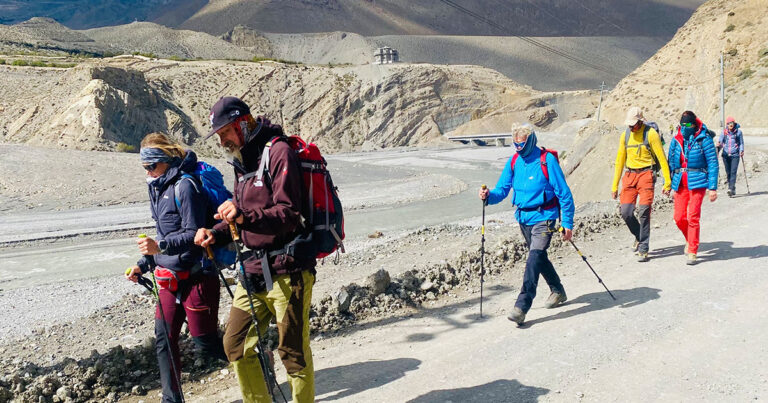
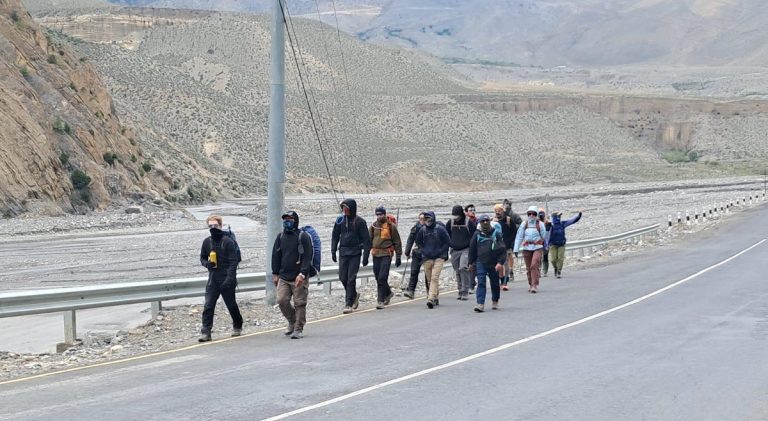
The Everest Dudhkoshi Cultural Trail has been developed to offer trekkers an immersive experience of both natural beauty and cultural heritage. The route provides breathtaking views of Mt. Everest and surrounding Himalayan peaks, while also leading visitors through villages rich in Sherpa, Rai, and other indigenous traditions.
Trekkers will have the opportunity to participate in local festivals, taste authentic regional cuisine, and experience traditional hospitality, making the journey as culturally enriching as it is visually stunning. The trail is positioned as a year-round trekking destination, offering varied experiences depending on the season.
Trail Duration and Connectivity
The trekking route spans 5 to 9 days, catering to both short-term travelers and those seeking extended adventures. It serves not only as a standalone cultural trekking experience but also as a gateway to other major trekking destinations in the region, including:
- Khumbu Valley – Home to the Everest Base Camp route
- Mera Valley – Known for the Mera Peak climbing route
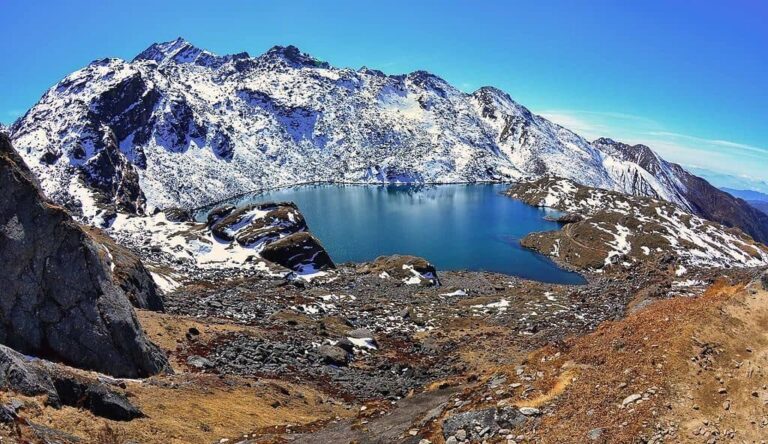
- Dudhkunda–Numbur Valley – Famous for its serene glacial lake and mountain vistas
This connectivity positions the Everest Dudhkoshi Cultural Trail as a strategic addition to Nepal’s trekking network, providing options for both cultural immersion and high-altitude adventure.
Joint Development and Funding Support
The trail’s creation was a collaborative effort between Mapya Dudhkoshi RM and TAAN, combining local knowledge with industry expertise in trekking route design. Financial and promotional backing was provided by the Nepal Tourism Board and the UNDP-executed Sustainable Tourism for Livelihood Recovery Project (STLRP).
The STLRP played a crucial role in ensuring that the trail’s development aligns with principles of sustainable tourism, aiming to generate long-term income for local communities while preserving the natural and cultural environment. This approach supports both economic recovery in rural areas and environmental conservation.
Boost to Local Economy and Tourism Diversification
Speaking at the launch, officials emphasized that the trail would diversify Nepal’s trekking portfolio and distribute tourism benefits beyond the highly popular Everest Base Camp route. By attracting trekkers to less-frequented areas, the trail will help reduce congestion in existing trekking hotspots while creating new income opportunities for local entrepreneurs, homestay operators, and guides.
Local leaders highlighted that the Mapya Dudhkoshi region has long possessed untapped tourism potential, thanks to its stunning landscapes and vibrant traditions. The official launch of this trail provides a platform to showcase these strengths to a global audience.
Sustainability and Cultural Preservation
One of the key objectives behind the trail’s development is to promote responsible tourism practices. The route has been designed to minimize environmental impact while encouraging visitors to engage respectfully with local cultures. Efforts are being made to train local guides, establish waste management systems, and develop community-led tourism services that ensure economic benefits remain within the region.
By linking cultural heritage sites, monasteries, and traditional settlements, the Everest Dudhkoshi Cultural Trail also serves as a cultural preservation initiative. Trekking along the route allows visitors to learn about centuries-old traditions, crafts, and lifestyles that are increasingly under pressure from modernization.

Statements from Key Stakeholders
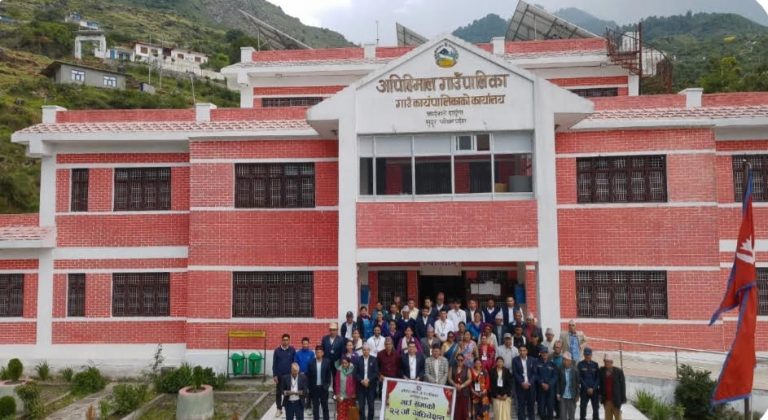
During the event, Hon. Man Bir Rai expressed his appreciation for the initiative, noting that the trail represents an important step in expanding Nepal’s tourism offerings while benefiting rural communities. Mr. Buddhi Kiran Rai emphasized the rural municipality’s commitment to supporting infrastructure development, promoting homestay programs, and ensuring high service quality for trekkers.
NTB CEO Deepak Raj Joshi highlighted that the board would actively promote the trail both domestically and internationally, integrating it into Nepal’s broader tourism marketing campaigns. TAAN President Sagar Pandey assured continued support in maintaining the trail and training tourism service providers to ensure trekkers have safe and memorable experiences.
A New Chapter in Cultural Tourism
The launch of the Everest Dudhkoshi Cultural Trail marks a significant milestone in Nepal’s efforts to promote sustainable, diversified, and community-based tourism. With its combination of awe-inspiring mountain views, vibrant cultural encounters, and strategic connections to other trekking routes, the trail is poised to become a must-visit destination for both domestic and international travelers.
By leveraging partnerships between local authorities, national tourism bodies, and the private sector, this initiative not only opens up new trekking opportunities but also contributes to economic empowerment and cultural preservation in one of Nepal’s most iconic regions.