A pioneering long-distance expedition tracing the journey of water from the summit of Mount Everest to the Bay of Bengal is set to spotlight the intricate connections between Himalayan glaciers, South Asia’s river systems, and downstream communities. Launched under the Summit to Sea initiative by Nepal-based outdoor education organisation Initiative Outdoor, the expedition aims to combine adventure with environmental education and climate awareness.
A 1,830-Mile Journey from Summit to Sea
The expedition covers a continuous 1,830-mile route, beginning with a clean ascent of Mount Everest (8,848 metres) and concluding with a kayak journey through major rivers flowing into the Bay of Bengal. The initiative seeks to demonstrate the Himalayas’ role as “natural water towers,” where glaciers and snowfields feed rivers that sustain nearly two billion people across South Asia.

Organisers emphasise that the expedition links high-altitude ecosystems with downstream freshwater systems, highlighting the risks posed by climate change, pollution, and unsustainable tourism practices. By connecting mountains to rivers and communities, the initiative aims to foster awareness of water security and environmental stewardship across diverse landscapes, from Mount Everest.
Climate Risks and Freshwater Pressure
The Himalayan region is warming at nearly twice the global average, resulting in accelerated glacier retreat, rising snowlines, and increased risks of avalanches and glacial lake outburst floods. These changes threaten both mountaineering safety and water availability for downstream populations.
South Asia, home to almost a quarter of the world’s population, has access to only about four percent of global renewable freshwater. Pollution from untreated sewage, plastics, industrial waste, and black carbon emissions has further intensified glacier melt and river degradation, organizers noted, highlighting the urgent need for sustainable practices.
Everest Waste and Downstream Impact
The project also addresses growing concerns over waste accumulation on Mount Everest. Rising climber numbers and inadequate waste management have resulted in garbage and human waste contaminating snowfields, which eventually flow into rivers relied upon by local communities. Health risks, including waterborne diseases, have become pressing concerns in these settlements.
The expedition will adhere strictly to Leave No Trace® principles, stressing that cleaning mountains alone is insufficient without fostering behavioural and ethical changes among climbers and visitors, from Mount Everest.
Leadership and Local Engagement
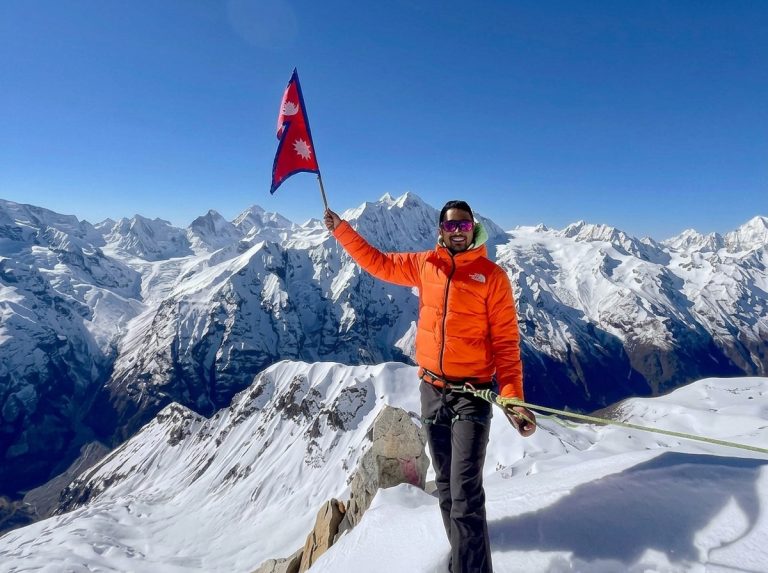
The expedition is jointly led by Chandra B Ale, Founder and Director of Initiative Outdoor, and Nishan Adhikari, an outdoor educator and adventure photographer. The journey integrates sustainability workshops, safety training, and environmental education for local communities along mountain and river corridors.
Ale, who has decades of experience in Nepal’s mountains and rivers, founded Initiative Outdoor in 2003 to provide international-standard outdoor leadership and safety training. The expedition also involves renowned mountaineer and guide Ang Tshering Lama, who has summited Everest five times and led one of the highest-altitude rescues ever recorded at 8,600 metres in 2017. Lama has also contributed to post-earthquake rescue and rebuilding efforts in remote areas.
Community, Education, and Tourism Impact
Beyond the adventure, Summit to Sea aims to deliver lasting benefits for local communities. The project focuses on job creation for Sherpas, training Nepali guides in rescue skills and eco-tourism practices, and supporting local schools and river-based businesses.
Planned outcomes include real-time storytelling, a documentary film, photo exhibitions, youth ambassador programmes, and community-based Leave No Trace education along mountain and river corridors. The total project budget of USD 100,000 covers expedition logistics, mountain and river safety programs, media documentation, and community engagement initiatives, prioritizing fair wages, safety, and local economic benefits.
Mountains and Rivers as Vital Ecosystems
By linking Nepal’s highest peak with its river systems and the sea beyond, the expedition aims to redefine how mountains and rivers are perceived. They are not only adventure destinations but also critical ecosystems that support livelihoods, tourism, and climate resilience across South Asia.

Organisers believe the initiative will inspire climbers, adventurers, and local communities to embrace sustainable practices while highlighting the urgent need to protect the Himalayan environment for generations to come.
This unique expedition positions Nepal as a hub for innovative environmental education, adventure tourism, and climate action, demonstrating that safeguarding the Himalayas and their rivers is vital for the future of millions of people downstream.