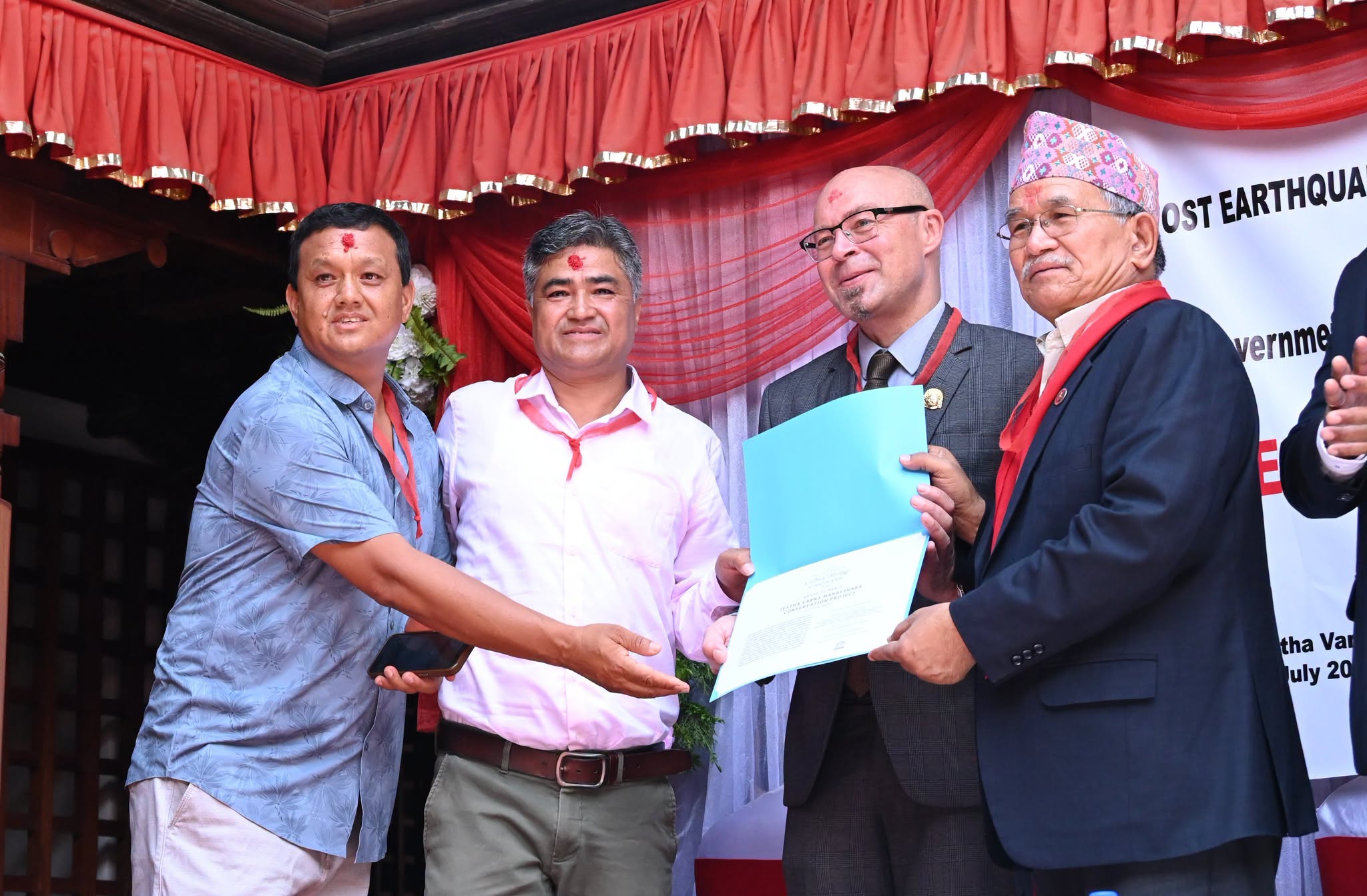
Jestha Varna Mahavihara, one of Nepal’s historically significant Buddhist heritage sites, has officially received the prestigious Award of Merit under the 2025 UNESCO Asia-Pacific Awards for Cultural Heritage Conservation, recognizing its outstanding contribution to heritage preservation and cultural conservation.
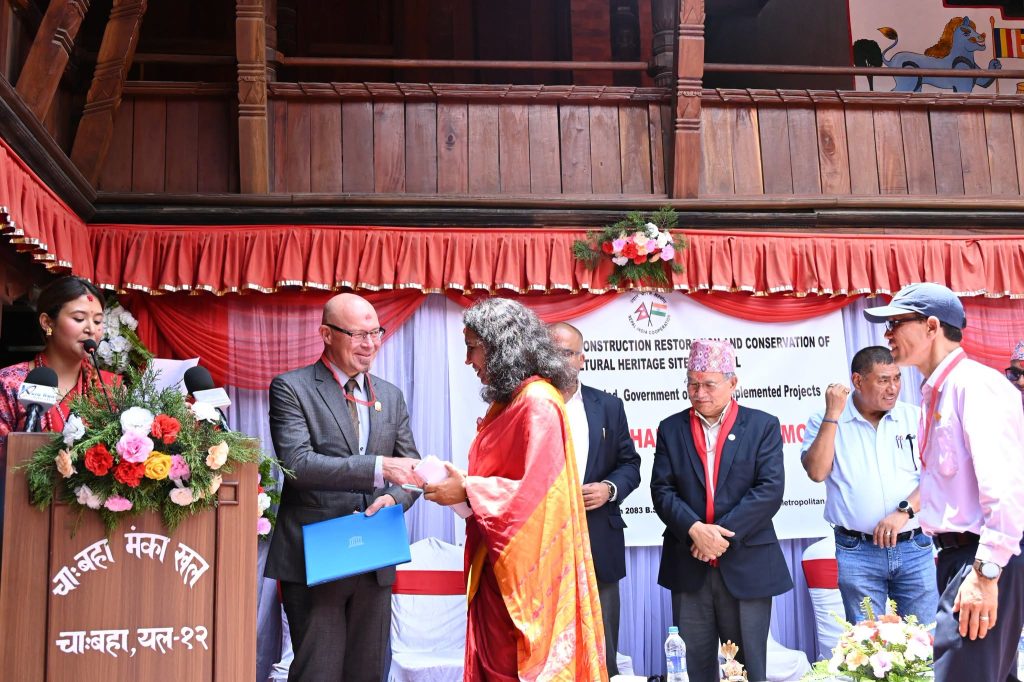
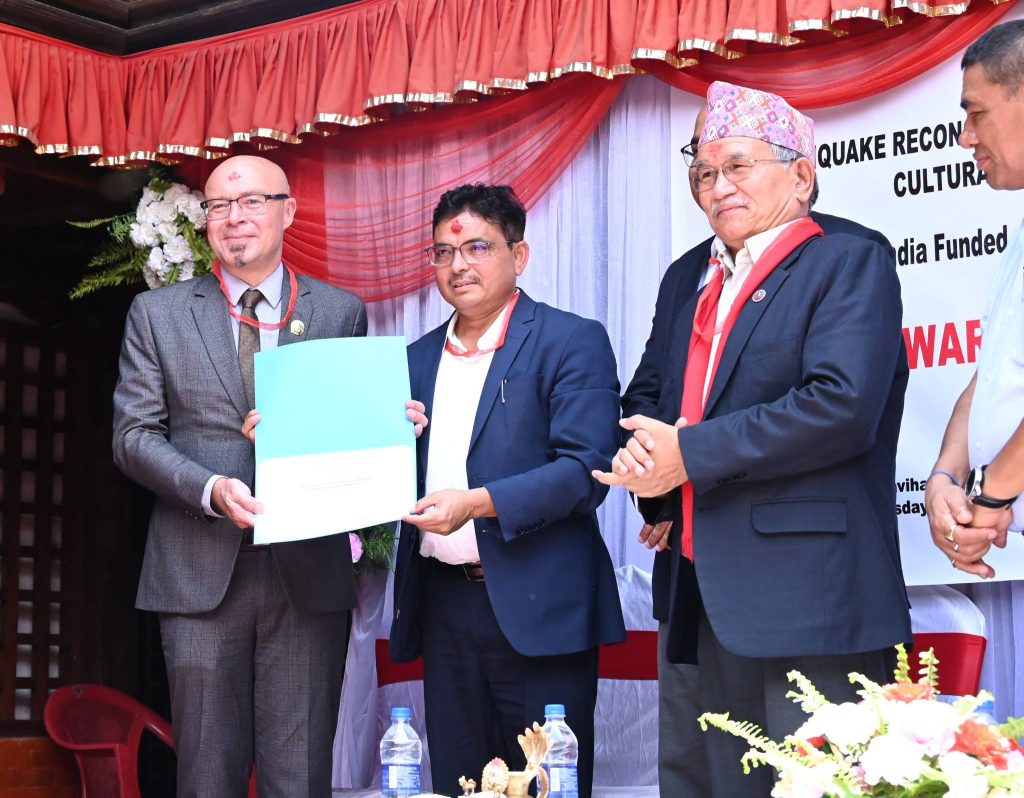
The Jestha Varna Mahavihara award was formally presented during a special ceremony organized at the Mahavihara premises, marking a proud moment for Nepal’s cultural heritage sector and the local community involved in the conservation effort.
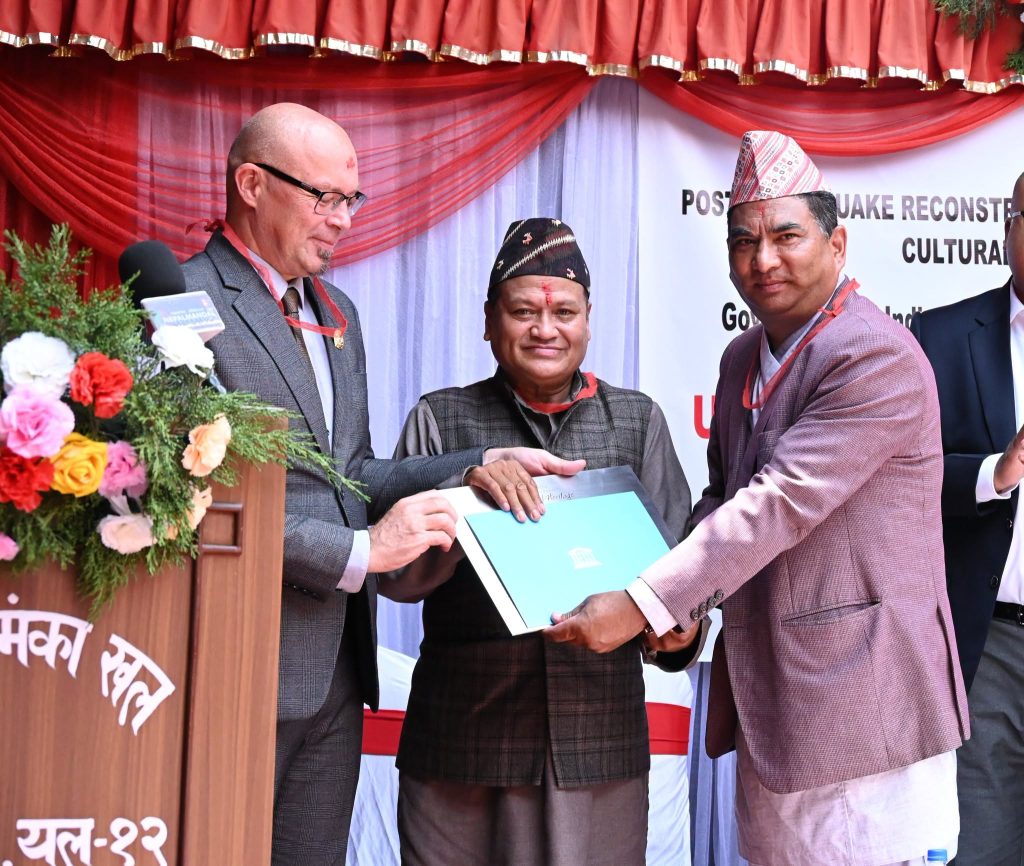
UNESCO Representative Presents Award in Special Ceremony
During the ceremony, Jaco du Toit, UNESCO Representative to Nepal, officially handed over the prestigious award to community representatives associated with the conservation and management of the heritage site.
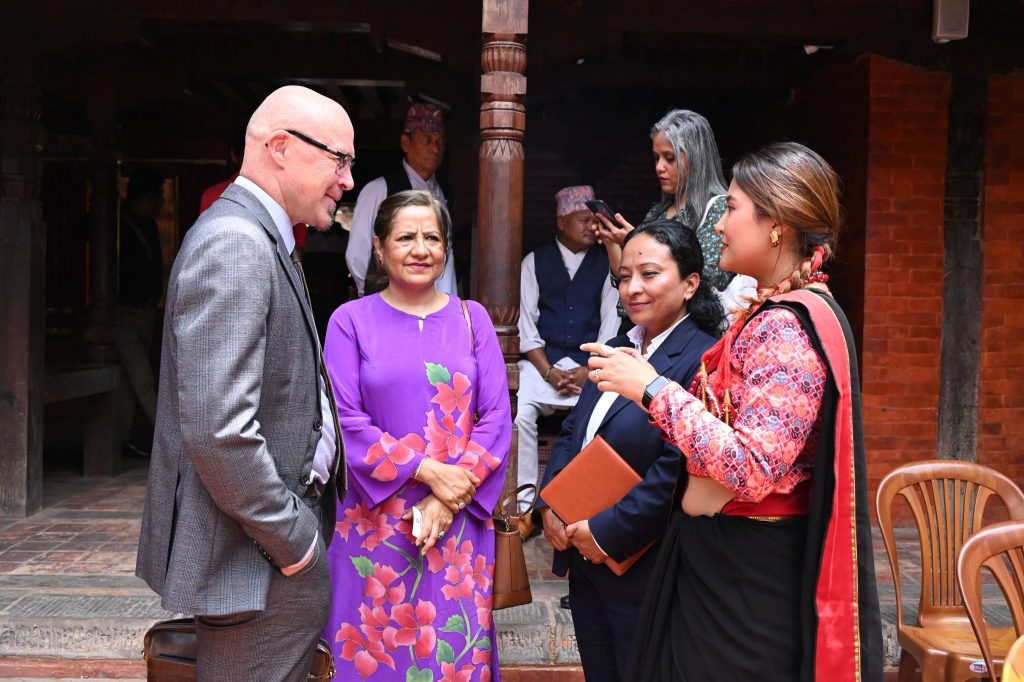
The recognition highlights the successful restoration and preservation efforts undertaken to protect the centuries-old monastery while maintaining its cultural and religious significance. The event also celebrated the collective efforts of heritage experts, conservationists, and the local community who contributed to the project.
17th-Century Monastery Restored Through Comprehensive Conservation Approach
The award-winning project focused on the restoration and reconstruction of the 17th-century Newar Buddhist monastery, applying a holistic conservation model designed to protect both its architectural value and spiritual identity.
The conservation work involved extensive archival research, structural repairs, archaeological assessments, and the development of a comprehensive long-term conservation plan. Experts carefully balanced restoration efforts to ensure the authenticity of the historic structure remained intact while strengthening the building’s long-term resilience against future deterioration.
Preserving a Living Heritage While Protecting Sacred Traditions
A key feature of the conservation initiative was its commitment to preserving the Mahavihara as a living heritage site. Restoration work was carried out in a way that allowed daily religious rituals and traditional practices to continue uninterrupted, ensuring the sacred and spiritual character of the monastery remained fully protected throughout the conservation process.
This approach has been widely recognized as an exemplary model of heritage conservation that successfully combines physical restoration with the safeguarding of living traditions and community identity.
International Recognition for Nepal’s Cultural Heritage Preservation Efforts
The international recognition received by Jestha Varna Mahavihara reflects Nepal’s growing success in protecting and preserving its rich cultural heritage for future generations. The award stands as a testament to the dedication, collaboration, and commitment of local communities, conservation professionals, and cultural institutions working together to safeguard Nepal’s historic treasures.
The achievement has been widely celebrated as an important milestone in promoting Nepal’s heritage conservation efforts on the global stage, further reinforcing the country’s reputation as a nation rich in history, culture, and living traditions.