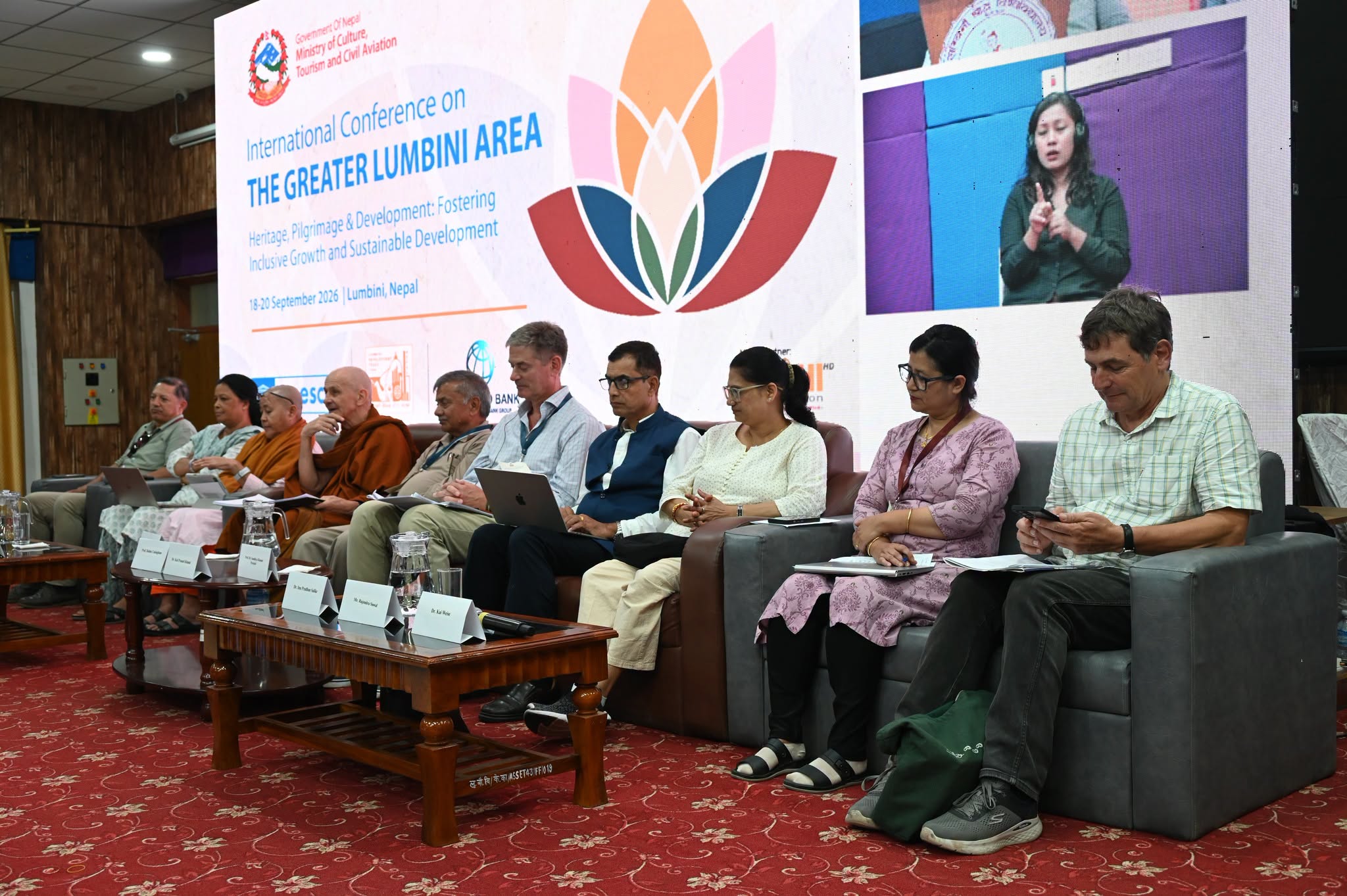
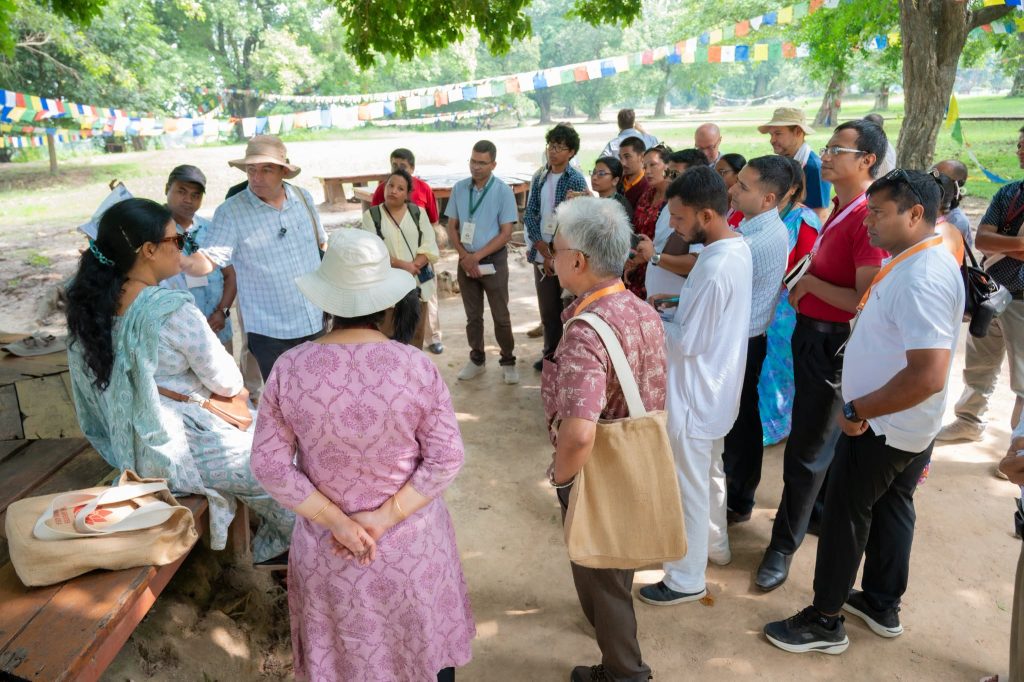
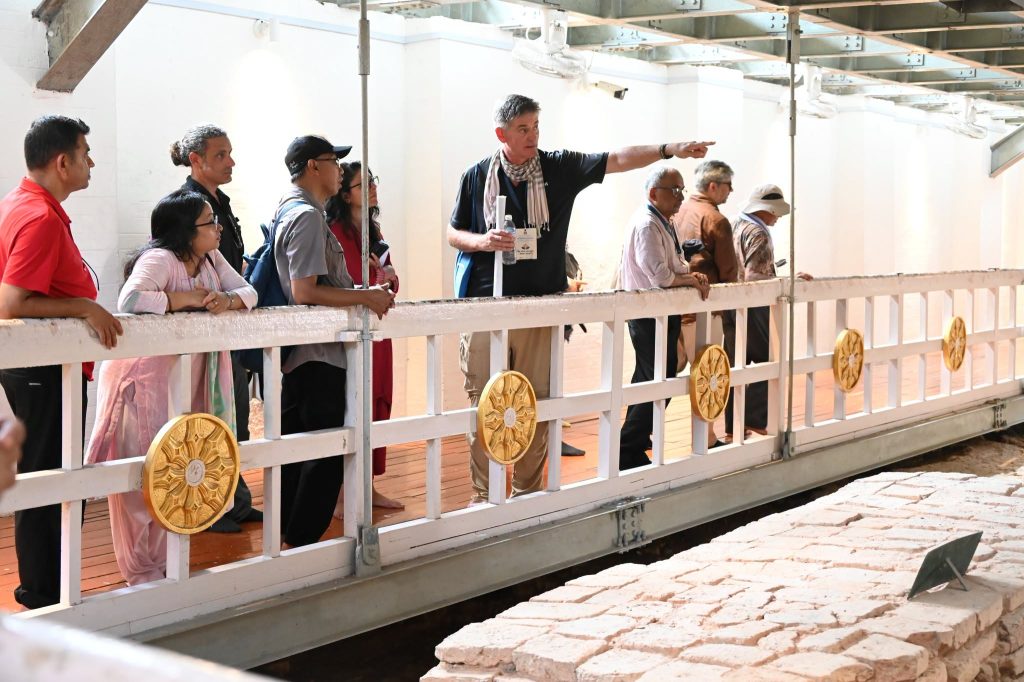
The second day of the International Conference on the Greater Lumbini Area shifted the focus from discussions inside the conference hall to direct engagement with some of the region’s most important religious and archaeological sites. Participants visited Lumbini, the Maya Devi Temple area, and Tilaurakot to gain a firsthand understanding of the heritage landscape and the challenges involved in protecting and developing the wider Greater Lumbini Area.
The three-day international conference, being held from September 18 to 20, has brought together government representatives, heritage and tourism experts, Buddhist leaders, development partners and local stakeholders to develop practical recommendations for the region’s future.
Field Visits Connect Conference Discussions With Lumbini’s Heritage
The site visits provided participants with an opportunity to observe the Greater Lumbini Area beyond presentations and technical discussions. Walking through Lumbini, the Maya Devi Temple area and Tilaurakot allowed participants to examine the relationship between heritage conservation, pilgrimage, tourism and the communities living around these important sites. The Greater Lumbini Area includes Lumbini, the birthplace of Buddha, as well as other historically and spiritually significant locations such as Tilaurakot-Kapilvastu and Ramagrama.
UNESCO and other partners have emphasized the need to safeguard this wider sacred landscape while ensuring that tourism and visitor management are developed in ways that respect its cultural and archaeological importance. The field-based approach also allowed participants to consider the practical challenges that need to be addressed as the region develops as an international pilgrimage and cultural tourism destination. Discussions around heritage-sensitive planning, visitor experience, infrastructure and local participation are central to the conference’s broader objective of translating dialogue into action.
Risk Mapping and Physical Planning Take Center Stage
Following the site visits, participants returned to the conference venue for technical presentations on the future planning of the Greater Lumbini Area. A Risk Map presentation covered Lumbini, Tilaurakot-Kapilvastu and Ramagrama, providing a framework for understanding areas where development and visitor-related activities require particular attention.
Risk-sensitive planning is especially important in a landscape where archaeological remains, religious sites, visitor facilities and modern infrastructure exist alongside one another. Earlier heritage planning work has also emphasized the importance of identifying archaeological risk levels and ensuring that infrastructure and visitor facilities are compatible with the protection of significant remains.
A Physical Plan presentation for the wider Greater Lumbini Area was also held during the day. The planning discussions are intended to help establish a more coordinated approach to development across the region, rather than treating individual heritage and pilgrimage sites separately.
Knowledge Circles Turn Observations Into Recommendations
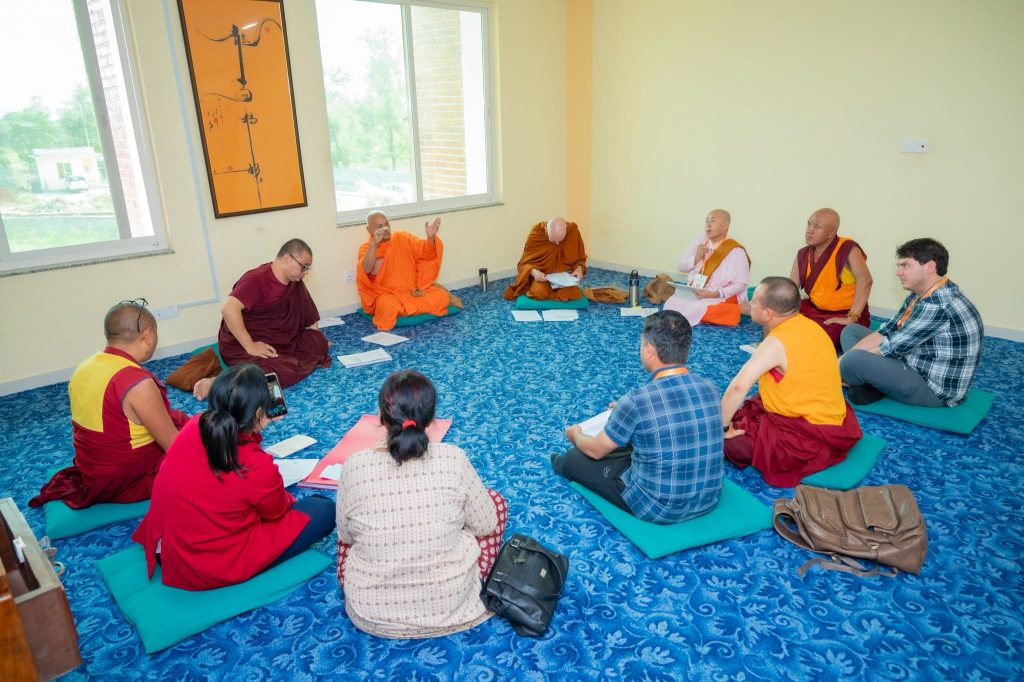
The day’s discussions continued through Knowledge Circles, where participants revisited observations from the field visits and considered how they could be translated into practical recommendations. The groups worked on identifying concrete actions as well as appropriate “dos and don’ts” for the development and management of the Greater Lumbini Area. Their discussions were later brought together through a cross-group synthesis session, allowing participants to compare perspectives and identify common priorities.
The approach reflects the conference’s broader goal of moving beyond high-level discussion toward action-oriented recommendations. UNESCO has described the conference as an effort to strengthen heritage conservation, evidence-based visitor management, inclusive local development and sustainable tourism, with the final Communique expected to provide practical recommendations.
Conference Heads Toward Final Recommendations
With the second day completed, the conference is moving into its final stage on September 20. Participants are expected to consolidate the recommendations emerging from the technical sessions, field observations and Knowledge Circles before the conference concludes with its final Communique.
The conference is being organized by the Ministry of Culture, Tourism and Civil Aviation in collaboration with UNESCO, Lumbini Development Trust and the World Bank. The Greater Lumbini Area Development initiative is intended to support tourism infrastructure and services while preserving the sanctity and heritage value of Lumbini and creating greater opportunities for surrounding communities.
The outcome of the three-day gathering is therefore expected to provide a shared framework for managing the Greater Lumbini Area as a living sacred landscape, while supporting sustainable pilgrimage and tourism, heritage protection and inclusive local economic development.