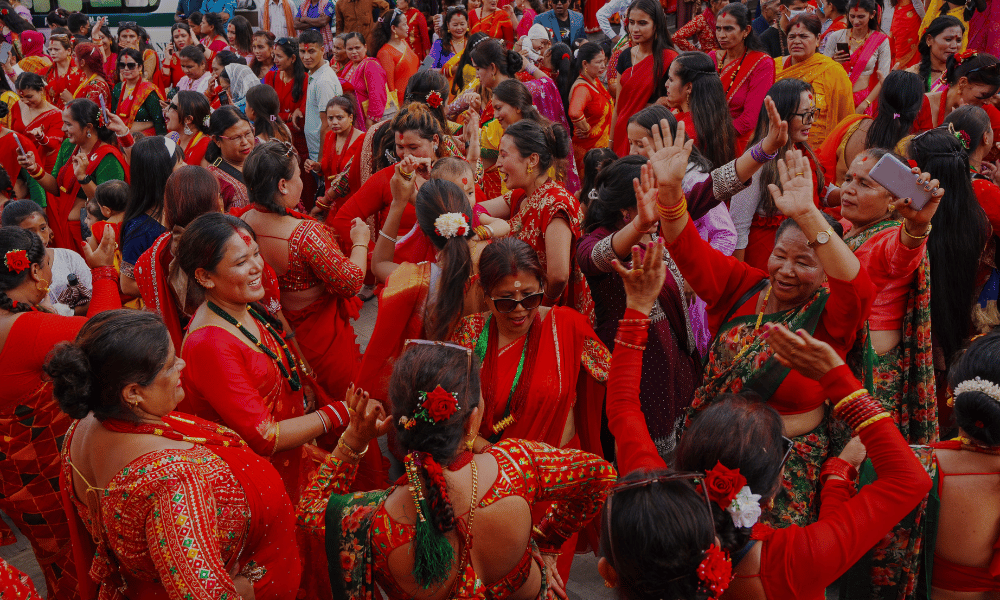
Nepal is preparing to celebrate Haritalika Teej, a vibrant Hindu festival that holds a special place in the country’s religious and cultural life. Celebrated mainly by women, Haritalika Teej is marked by fasting, prayers, temple visits, traditional songs, dancing, family gatherings and colourful attire.
Observed during the Hindu month of Bhadra, the festival is dedicated to Goddess Parvati and Lord Shiva. For generations, women across Nepal have observed Haritalika Teej as an expression of devotion, faith and family well-being. Today, the festival remains an important part of Nepal’s cultural identity while also offering visitors a chance to experience one of the country’s most colourful religious traditions.
A Festival Rooted in the Story of Parvati and Shiva
The history of Haritalika Teej is closely associated with the Hindu mythology surrounding Goddess Parvati and her devotion to Lord Shiva. According to the traditional story, Parvati wished to marry Shiva and devoted herself to intense penance to win his acceptance. However, her father, Himalaya, wanted her to marry Lord Vishnu instead. Parvati was determined to follow her own wish, and a close friend is said to have taken her to a forest so she could continue her spiritual practice away from the proposed marriage.
Parvati continued her devotion and performed severe penance for Shiva. Her dedication eventually won Shiva’s acceptance, and the two were united in marriage. This story forms the spiritual foundation of Haritalika Teej. The festival is therefore associated with love, devotion, determination and the sacred relationship between Parvati and Shiva. The name “Haritalika” is traditionally linked to the story of Parvati being taken away by her friend. Over time, the festival became deeply established in Nepali society, with its religious traditions being passed from one generation to another.
From Dar Khane Din to Rishi Panchami
The traditional Teej celebration begins with Dar Khane Din, when women gather with relatives and friends for a special feast before starting their fast. Homes and communities become lively with traditional Teej songs, dancing and conversations, turning the occasion into both a religious and social gathering.
The following day is the main Haritalika Teej festival. Women visit Shiva temples, offer prayers and observe a fast. Traditionally, some women observe a nirjala fast, abstaining from both food and water, while others follow different practices based on their health, beliefs and family traditions.
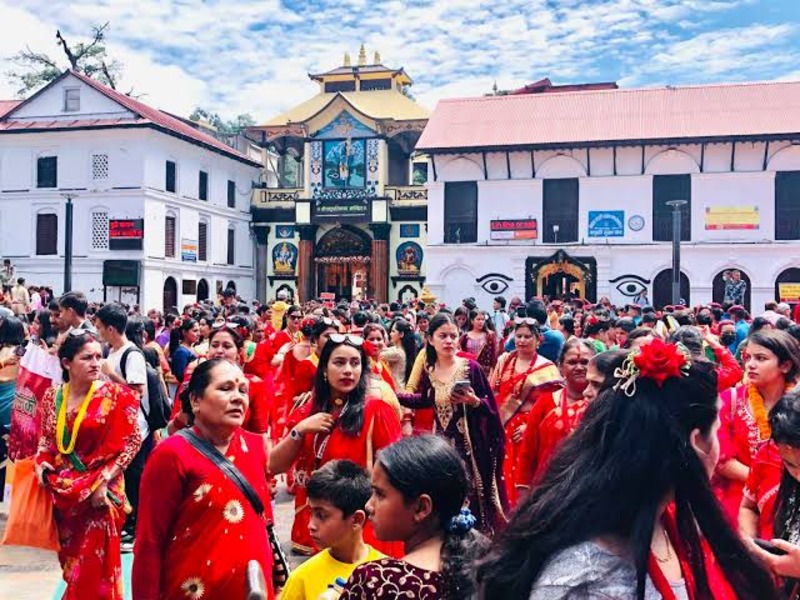
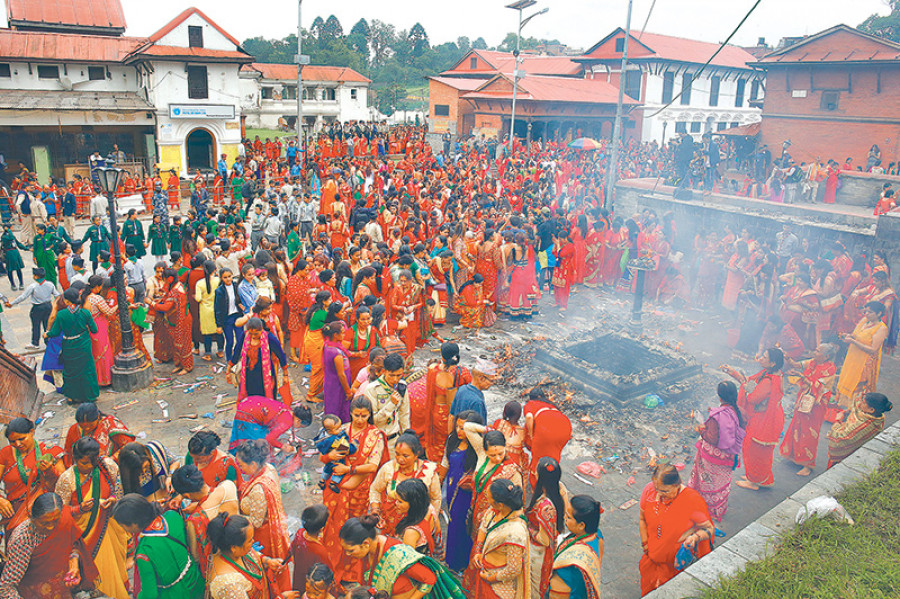
Women dressed in red saris and other colourful traditional clothing can be seen visiting temples, wearing bangles, jewellery and other ornaments associated with the festival. In Kathmandu, Pashupatinath Temple becomes one of the main centres of Teej worship, drawing large numbers of devotees. The celebration concludes with Rishi Panchami, which is traditionally dedicated to the Saptarishis, or Seven Sages. Various purification and religious rituals are performed as part of the final day of the festival.
More Than a Religious Celebration
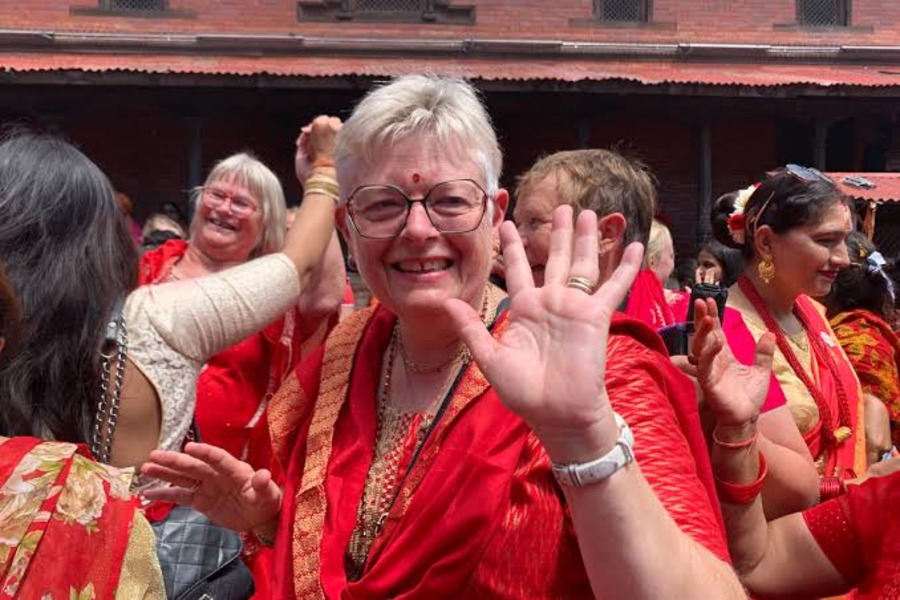
Teej has grown beyond its strictly religious role and has become an important expression of Nepal’s cultural heritage and women’s traditions. The songs and dances performed during the festival often reflect family life, relationships, social experiences and everyday emotions, giving Teej a strong connection with Nepali society. The festival also creates a unique cultural atmosphere for visitors. Historic temples and pilgrimage sites become particularly lively, while the sight of women in traditional red attire, accompanied by Teej songs and celebrations, offers a memorable glimpse into Nepal’s living heritage.
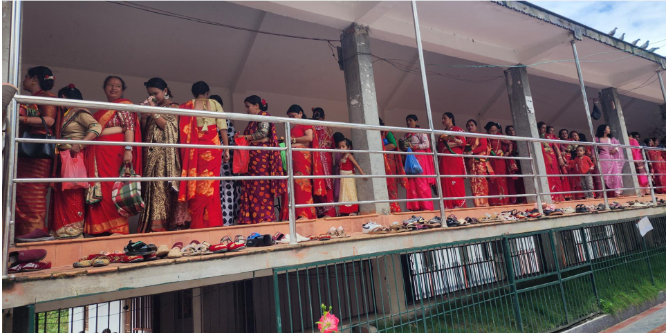
For cultural and religious tourism, Teej provides an opportunity to experience traditions that have survived for generations. Among the many destinations associated with the festival, Pashupatinath holds particular significance because of its longstanding connection with Lord Shiva.
As Nepal celebrates Haritalika Teej, the festival continues to bring together faith, tradition, music, family and community. Its enduring appeal lies not only in its ancient religious story but also in the way each generation continues to give the celebration its own voice while preserving its cultural roots.