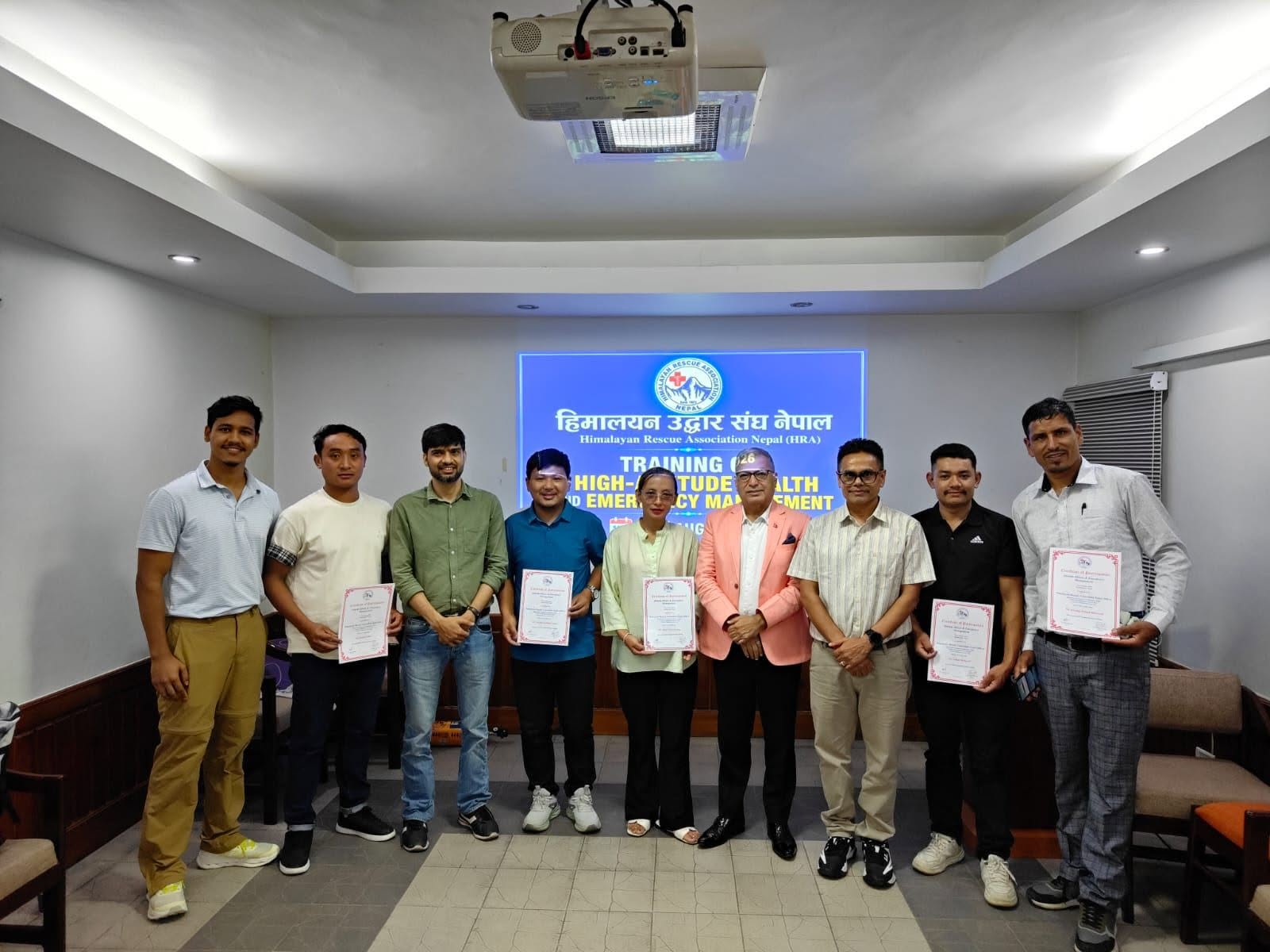
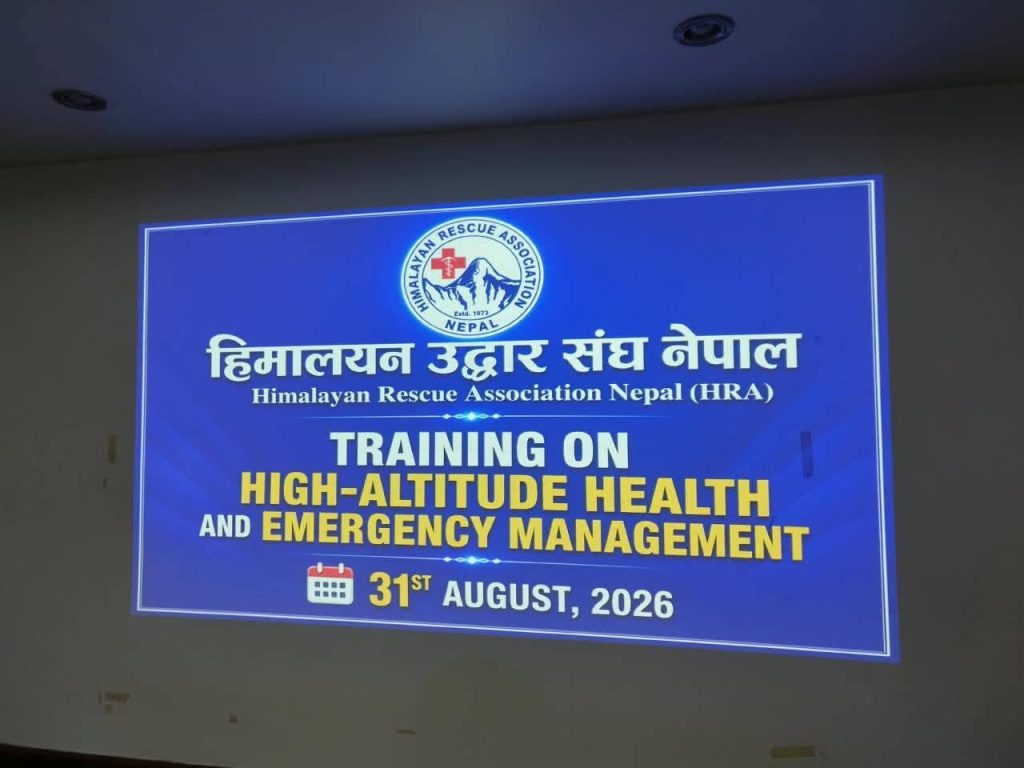
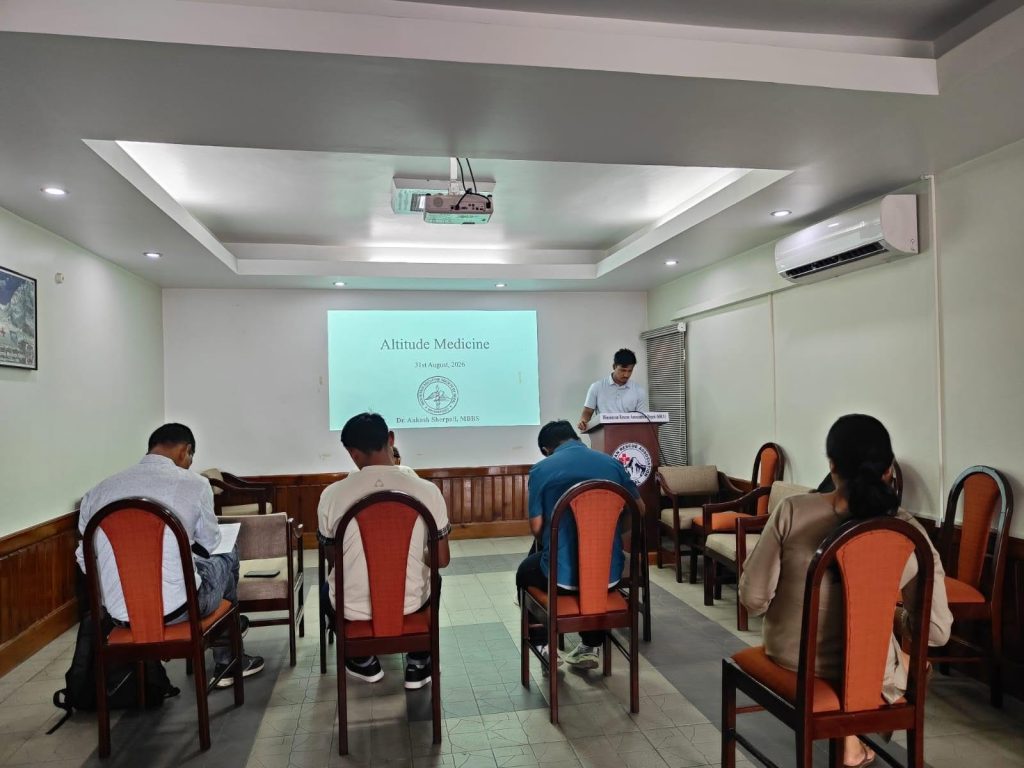
The Himalayan Rescue Association Nepal (HRA) has taken another step toward strengthening health and safety preparedness in Nepal’s mountain tourism areas by conducting a one-day training on Altitude Illness and Emergency Management for health workers serving the Taplejung-Kanchenjunga region. Held on August 31, 2026, in collaboration with Action for Nepal, the training focused on equipping frontline healthcare workers with the knowledge and confidence needed to recognize altitude-related health problems and manage emergencies in remote mountain environments, where medical assistance and specialized facilities may not always be readily accessible.
Preparing Frontline Health Workers For High Altitude Emergencies
The training centered on one of the most important aspects of mountain healthcare: early recognition and effective management of altitude illness. In high altitude destinations, health conditions can change quickly, and identifying warning signs at an early stage can be critical to preventing a manageable illness from developing into a serious emergency. The program therefore focused on strengthening the practical skills of local health workers so they can respond with greater confidence when dealing with altitude-related conditions and other medical emergencies in challenging and geographically remote settings.

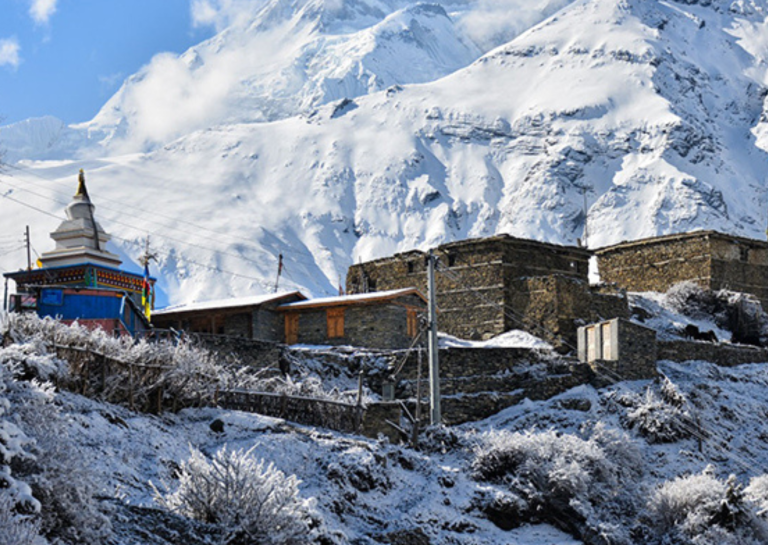
For communities and travelers in the Taplejung-Kanchenjunga area, this kind of preparedness is particularly significant. The region is associated with trekking, mountain landscapes, and remote Himalayan travel, bringing visitors into environments where weather, elevation, terrain, and distance from major medical facilities can create additional health and safety challenges. Having healthcare workers with stronger emergency management knowledge within or close to these communities can provide an important layer of support for people living in the region as well as trekkers and other visitors traveling through the mountains.
Safer Mountains Begin With Stronger Local Healthcare
Mountain tourism safety is not limited to well-maintained trails, experienced guides, or reliable transportation. Local healthcare capacity is also a vital part of a safe tourism infrastructure, particularly in destinations where reaching a hospital or specialist medical facility may require considerable time and logistical coordination. Strengthening the capabilities of health workers who are already serving remote communities can help create a more responsive local safety network and improve preparedness for medical situations that may arise during mountain journeys.
This is especially important in Nepal, where many trekking destinations are located far from urban medical centers and where visitors may spend several days traveling through remote terrain.
A trained local health workforce can help communities respond more effectively to emergencies while providing travelers with greater confidence that medical assistance is available within the region. By investing in knowledge, practical skills and emergency preparedness, initiatives such as the HRA training contribute to a broader approach to responsible and safer mountain tourism.
Strengthening The Kanchenjunga Region From The Ground Up
The collaboration between HRA and Action for Nepal also highlights the importance of building healthcare capacity at the local level rather than depending entirely on external assistance during emergencies. Training health workers who are already familiar with the communities, terrain, and conditions of the region can strengthen the first response available close to where an incident occurs. This local preparedness can become particularly valuable when difficult terrain or remote locations make immediate access to advanced medical facilities challenging.
The initiative also reflects HRA’s wider belief that strong local healthcare systems are essential for safer mountains and healthier communities. In areas where tourism and community life are closely connected to the Himalayan environment, improving medical preparedness benefits more than individual travelers. It strengthens the resilience of local communities, supports people working in the tourism sector, and helps create a safer environment for everyone who lives, works, or travels through the mountains.

A Step Toward Safer And More Resilient Mountain Tourism
The August 31 training represents more than a single day of professional learning. It is part of the broader effort to strengthen emergency readiness in one of Nepal’s important mountain regions, where the needs of local communities and the demands of tourism increasingly intersect. By improving the ability of health workers to recognize altitude illness, respond to emergencies, and act confidently in remote settings, the initiative can contribute to a stronger safety foundation for the region.
As Nepal continues to promote its Himalayan destinations to trekkers and adventure travelers, health and emergency preparedness will remain an important part of sustainable tourism development. The Kanchenjunga region’s appeal is rooted in its remote mountain environment, but that same remoteness makes preparedness essential. Strengthening healthcare where it matters most can help ensure that the mountains remain not only destinations of adventure and discovery, but also places where communities and visitors can travel with greater safety and confidence.