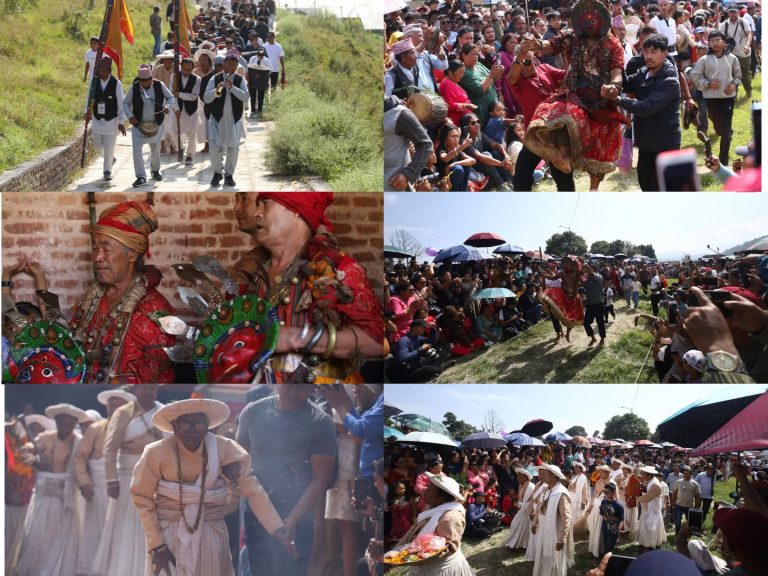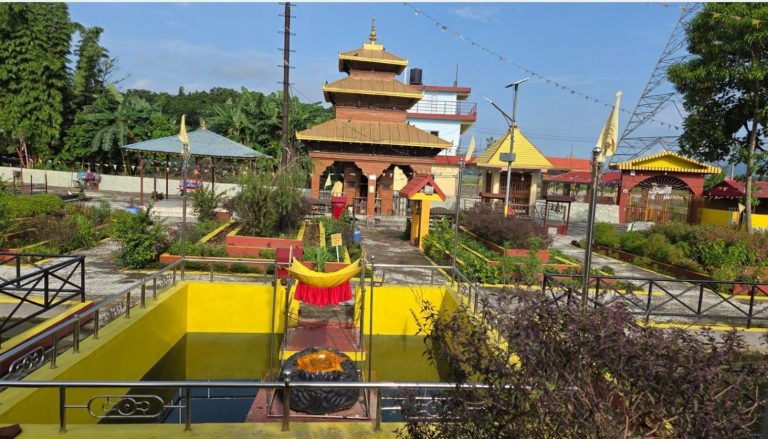
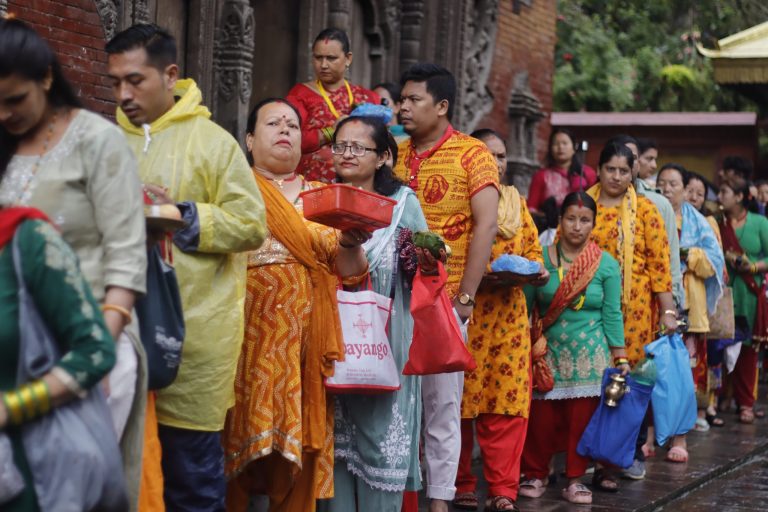
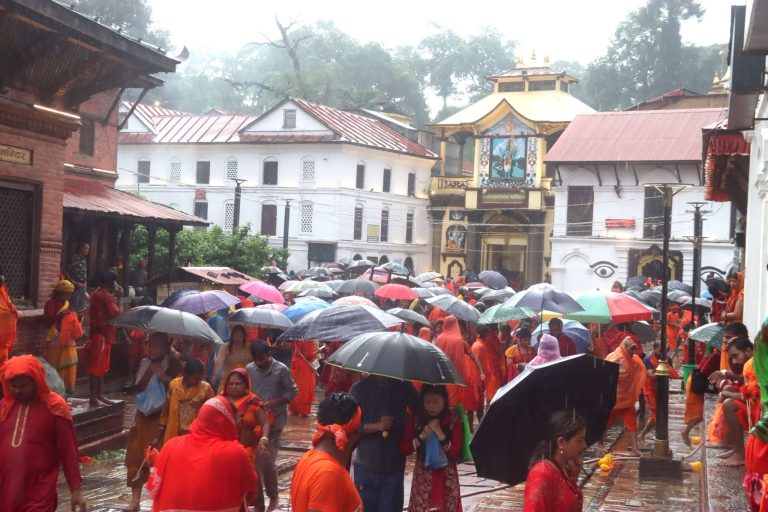
The traditional Kolmati Ghat Snan is being observed today on Bhadra Krishna Panchami, drawing devotees to the historic Kolmati Ghat in Danchi, Kageshwori Manohara Municipality 4, Kathmandu. The annual religious observance is associated with bathing in the sacred waters of the Kolmati River and paying homage at a site whose importance has been preserved through Nepal’s religious traditions and ancient scriptures.
References in the Skanda Purana, including the Himavat Khanda (Nepal Mahatmya), describe the spiritual importance of Kolmati Ghat and the religious merit associated with bathing and having darshan at the site on Bhadra Krishna Panchami. Beyond the religious ceremony itself, the observance provides an opportunity to highlight a lesser-known sacred destination in the Kathmandu Valley, where rivers, temples, mythology and living traditions come together to form an important part of Nepal’s cultural heritage.
Ancient Scriptures Preserve The Sacred Legacy Of Kolmati Ghat
The religious importance of Kolmati Tirtha and Kolmati Ghat is particularly highlighted in Chapter 128 of the Nepal Mahatmya, which describes sacred places associated with the Bagmati River and its surrounding landscape. According to the traditional account, devotees who bathe at Kolmati Ghat and receive darshan there on Bhadra Krishna Panchami are believed to receive extraordinary religious merit, with the benefit traditionally compared with that of millions of cow donations.

Such descriptions demonstrate the elevated spiritual status given to the site in Hindu religious tradition and help explain why devotees continue to observe the bathing ritual even as Kathmandu’s urban landscape continues to change around it. The tradition is rooted not simply in the physical act of bathing but in the belief that sacred rivers and pilgrimage locations carry a deeper spiritual significance that connects present-day worshippers with the religious history described in classical texts.
The origin of the name Kolmati is itself connected with religious tradition. According to Pandit Bal Mukunda Devkota, the word Kola is associated with Varaha, or the boar incarnation of Lord Vishnu, and the river flowing from Shwetabarahi came to be known as Kolmati.
The place where the Kolmati River meets the Bagmati subsequently became known as Kolmati Ghat. This connection between the river’s name, mythology, and sacred geography gives the destination an identity that extends beyond its role as a bathing site. For visitors interested in Nepal’s religious heritage, such traditions provide insight into how names of rivers, temples and settlements are often closely connected with stories preserved through generations.
A Sacred Confluence Where Three Rivers Meet
The spiritual character of the area becomes even more significant at the point where the Kolmati, Bagmati and Chailmati rivers converge, forming what is regarded as Triveni Ghat. River confluences have traditionally held an important place in Hindu pilgrimage culture, and the meeting of these three waterways has contributed to the site’s religious identity.
The significance of the confluence is documented in religious and classical texts, which preserve accounts explaining the origins and sacred associations of the rivers and landmarks in the area. As a result, the landscape itself becomes part of the pilgrimage experience, with the rivers, ghats, temples and places of worship collectively forming a sacred cultural environment. Traditional accounts also explain the origin of the name Chamati, which is believed to have developed from a religious episode involving Lord Vishnu in his Vamana incarnation.
According to the account, when Brahma offered water to Lord Vishnu, some of the water fell onto his clothing, leading to the river being associated with the name Chaelmati. The name is believed to have later evolved into Chaulmati. A stone connected with this sacred story is still worshiped as Chaulanarayan, providing another important religious landmark within the area. These traditions contribute to the cultural richness of the destination and show how mythology has been woven into the physical landscape, allowing religious narratives to remain connected with places that continue to be visited and worshiped today.
Kolmateshwor Mahadev And The Rise Of A New Pilgrimage Attraction
Situated slightly above Kolmati Ghat is the Kolmateshwor Mahadev Temple, adding another established religious site to the area. The temple forms part of the broader sacred landscape surrounding Kolmati Ghat, where devotees can encounter multiple places of worship within a relatively concentrated area. The presence of such religious landmarks strengthens the area’s identity as a pilgrimage destination and provides visitors with an opportunity to experience several layers of religious heritage rather than focusing on a single ritual or monument.
The area has gained further attention with the construction of Nepal’s first Lakshmi Hayagriva Temple, established through the active efforts of its spiritual leader, Swami Jagadish Prapannacharya. The addition of the Hayagriva temple has created a new point of interest within the existing religious landscape and is beginning to draw domestic and international religious tourists.
Its emergence is particularly significant from a tourism perspective because it adds a contemporary place of worship to a destination whose importance is already rooted in traditional temples, sacred rivers and scriptural references. The growing attraction of the temple indicates that new religious infrastructure, when connected with an established sacred environment, can contribute to increasing visitor interest in lesser-known pilgrimage locations.
Kolmati Emerges As A Promising Religious Tourism Destination
The observance of Kolmati Ghat Snan demonstrates how living religious traditions continue to sustain Nepal’s cultural heritage and create opportunities for religious tourism. The destination brings together several elements that are important to pilgrims and culturally interested visitors: an established bathing tradition, references in ancient religious literature, a sacred river confluence, historic places of worship, and a newly developed temple attracting visitors from within and outside Nepal. Rather than being defined solely by a single annual event, Kolmati’s significance comes from the combination of these features and the continuing religious practices associated with them.

The growing interest in the Lakshmi Hayagriva Temple, alongside the traditional importance of Kolmati Ghat and Kolmateshwor Mahadev Temple, could further strengthen the area’s profile among religious visitors. For domestic travelers, the site offers an opportunity to explore a sacred destination within Kathmandu that remains closely connected with local traditions, while international religious tourists can experience another aspect of Nepal’s diverse Hindu heritage beyond the country’s better-known pilgrimage destinations. The continued observance of Kolmati Ghat Snan therefore represents not only the preservation of an ancient religious practice but also the gradual development of a destination where faith, mythology, sacred geography and tourism intersect.
Preserving Sacred Heritage Through Pilgrimage And Tourism
Kolmati Ghat’s importance ultimately lies in the way its religious traditions continue to be practiced rather than existing only as historical references. The annual bathing ritual on Bhadra Krishna Panchami keeps the connection between the site and its traditional religious narratives alive, while the temples and sacred confluence provide a physical setting in which those traditions continue to be experienced. The construction of the Lakshmi Hayagriva Temple has added a new dimension to this heritage landscape, bringing renewed attention to the area and contributing to its emerging appeal among religious tourists.
As Nepal continues to promote destinations beyond its most established tourism centers, sites such as Kolmati Ghat and its surrounding sacred landmarks offer an opportunity to broaden the country’s religious and cultural tourism map. The combination of scriptural heritage, sacred rivers, temples, and continuing rituals gives the area a distinctive character that can appeal to visitors seeking spiritual and cultural experiences. The ongoing observance of Kolmati Ghat Snan consequently serves as a reminder that Nepal’s tourism potential is not limited to mountains and adventure destinations; its living religious heritage remains an equally important part of the country’s tourism identity.