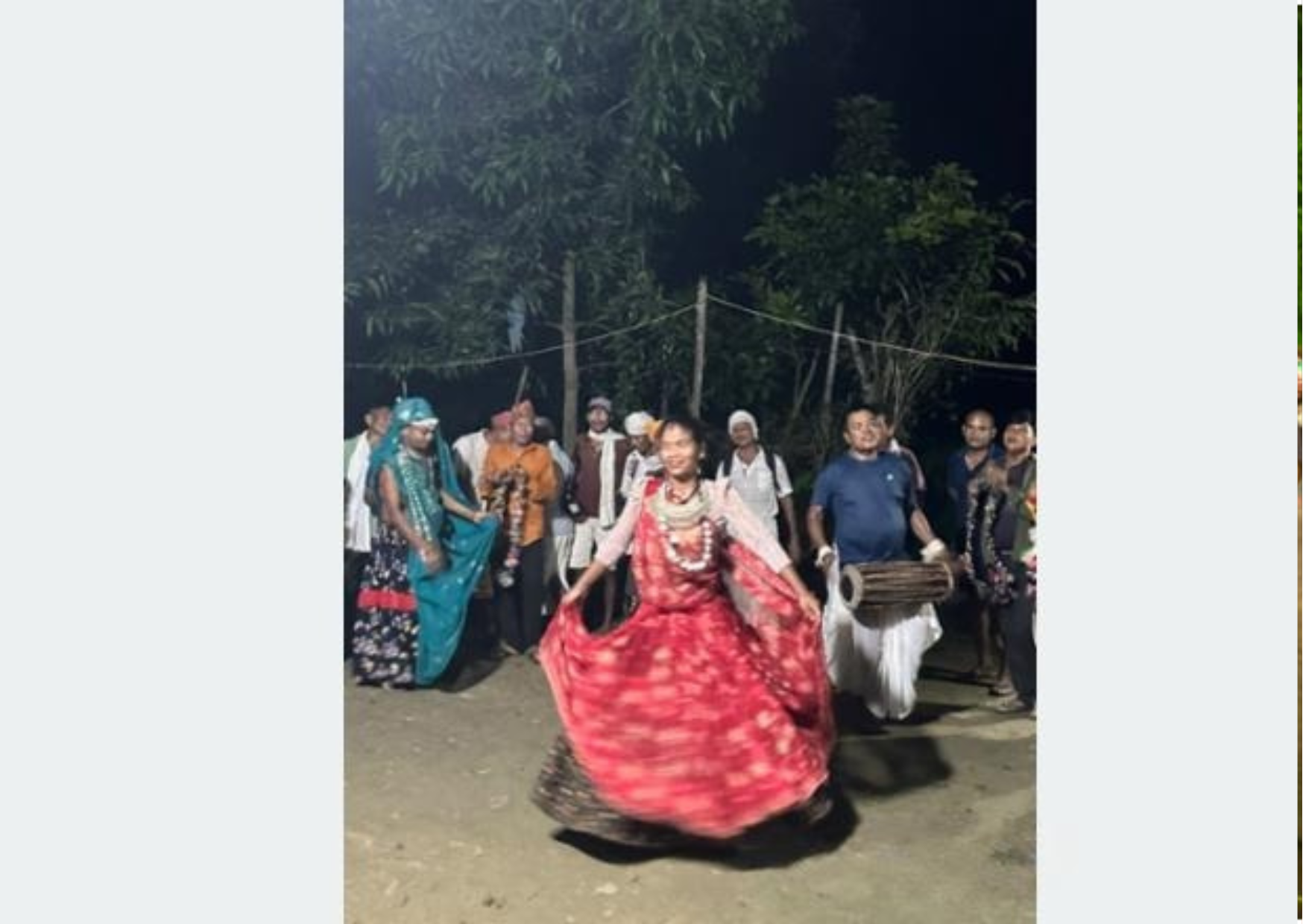
The traditional Hurdungwa dance has brought the Tharu villages in Bardiya to life as the Desauri Tharu people celebrate Dashain with folk music, collective dance and rituals that have been passed down through generations. As the sun sets, people gather in the courtyards of local community leaders to sing and dance to the rhythms of the madal and manjira.
The Desauri Tharu community performs this traditional dance that originates from Desaun after Hareeri Puja held in the month of Bhadra. This year, the dance has been performed up to the Dashain festival as well as an effort to keep their indigenous culture alive. With many Desaun Tharus residing in Bardiya, the dance is performed in unison by women and men of different households who come together to keep the tradition of folk music and dance alive.

Hurdungwa Dance Becomes a Highlight of Dashain Celebrations
In Bhaisahi village of Gulariya Municipality-12, people have gathered together in the evenings to perform the Hurdungwa dance as Dashain approaches. “We all gather together to sing and dance as Dashain approaches,” said Tetiram Tharu. “After finishing plowing the fields, people gather in the evening and continue to sing and dance even at night.”
Even in preparation for the performances, people have gathered together. In the Motipur of Bansgadhi Municipality-6, people have been seen repairing madal drums, choosing singers, and creating groups of dancers and musical performers to make the performances more entertaining and organized.
Traditional Songs and Rhythms Define the Performance
The performances always start with the Lachhari songs where two groups of performers take turns to create rhythm with bamboo sticks and sing. “The songs start ,and then the lyrics talk about cutting and weaving bamboo to make a cage,” said one of the performers. Lyrics of many traditional songs have been passed down through oral tradition and serve as folk rhymes and stories. The dance is performed by two groups that sing and talk to each other, creating verses and responding to them. The groups can be formed by only men or a mix of men and women.
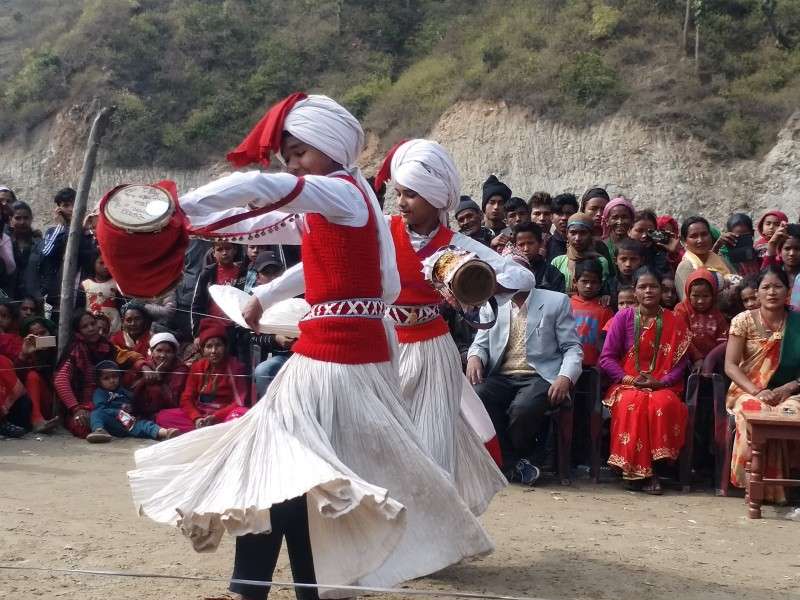
The leader of the group is called the Mohiya, and the second-in-command is the Pichhgunya. Another interesting feature of this dance is that men can also dress up as women to play the character of Bathinya. The main instruments played during the performances are the manjira and madal, with the two groups of performers alternating between singing and dancing. The rhythm of these traditional musical instruments along with the voices of the singers creates the characteristic sound of this dance.
Folk Songs Preserve Religious and Cultural Narratives
“There are different types of folk songs based on the time of their performance and the activity for which they are sung,” said Prashuram Tharu. “The songs performed during the day are called Dingitwa, the ones performed during the night are Kahara while the songs performed in the morning are Bihagara.” Other types of songs include Lachhari, Phulwar, Chudari Bilap and Mahirawan.
The lyrics of many songs narrate the stories of Hindu religious figures such as Lord Shiva and Goddess Parvati as well as Lord Rama and his brothers. In many ways, these traditional songs serve as a medium to keep the stories and beliefs of the Tharu people alive. Various folk songs also show the variety of traditions and customs of the Tharu people. It is evident from the various types of songs that Hurdungwa dance is not only performed during Dashain, but it also serves as a traditional folk music performance.

A Seasonal Tradition Across the Tharu Community
“Hurdungwa dance is performed from the Hareeri Puja of Bhadra month up to a week after Dashain,” said Bahadur Bairagi Tharu, chairperson of the Barbardiya Barghar Network. “Although it is mostly performed at night, the dance is also performed during the day up to the Dashain festival, especially from Mahanavami to Dashain.” The Desauri Tharu people mainly reside in Bardiya district along with the adjacent districts of Banke, Dang, Kailali and Kanchanpur.
However, even within Bardiya district, the dance is performed slightly differently in different areas. Although the basic traditions of Hurdungwa dance have been kept the same, the variations across different regions make it an interesting cultural practice. As the Dashain festival brings people together, the Hurdungwa dance allows the Desaun Tharu people to rejoice the festival in their unique way and pass on their culture and traditions to the younger generations. Hurdungwa dance performances that have been practiced for centuries continue to be a part of the celebrations in Bardiya district as an indigenous cultural practice that can also serve as a potential tourism spot for Nepal.
Source-RSS