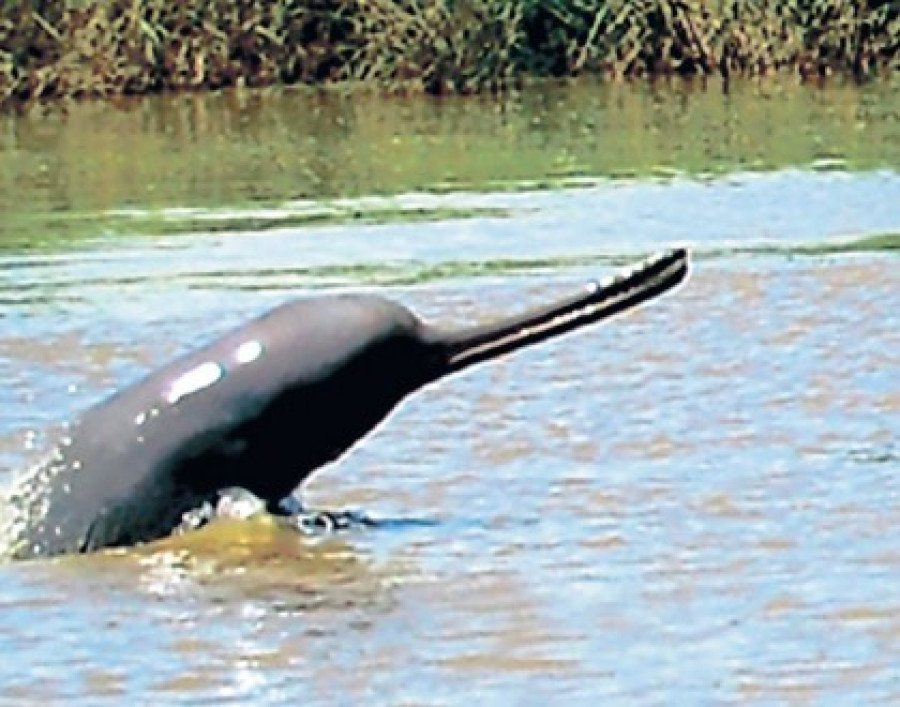
The Koshi Tappu Wildlife Reserve has reported a positive rise in the dolphin population in the Sapta Koshi River. On the occasion of World Environment Day, the Reserve revealed the results of a four-day dolphin census, indicating a notable increase of three dolphins compared to last year.
Dolphin in Koshi Tappu Wildlife Reserve
According to Bhupendra Prasad Yadav, Senior Conservation Officer at the Reserve, this year’s census recorded 22 dolphins in total, which includes 15 adults, 5 sub-adults, and 2 calves. “This data is a positive sign for the Sapta Koshi ecosystem. It signals change and emphasizes the need for continued conservation and awareness,” said Officer Yadav.
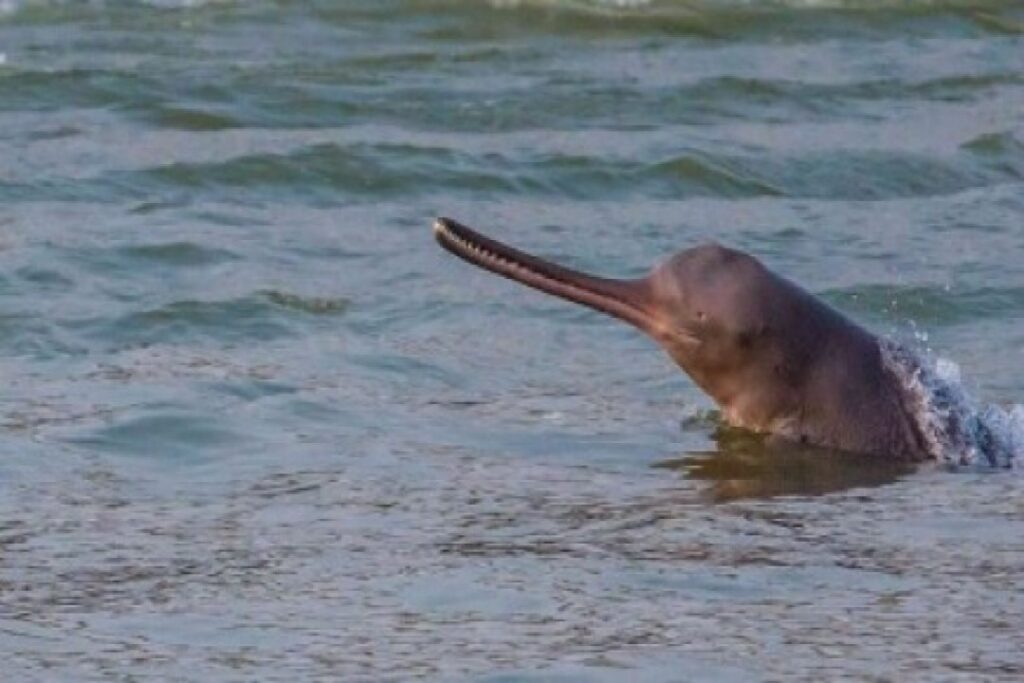
The Reserve has been conducting regular dolphin counts every year to support conservation initiatives. The dolphins found in this area belong to the Gangetic species (Platanista gangetica), which is considered rare and endangered. “Dolphins prefer clean and deep water, and their presence indicates good water quality and a healthy aquatic environment,” added Yadav.
This year’s census was conducted with technical support from the National Trust for Nature Conservation, Koshi Conservation Centre, Shree Bhimkali Guld, and Himali Prakriti Sanstha. Historically, the dolphin population in the region has shown gradual growth. In 2012, only 11 dolphins were recorded, which increased to 17 in 2017. Since then, the Reserve has prioritized dolphin conservation, initiating regular annual monitoring efforts. In 2022, 17 dolphins were recorded, followed by 19 each in 2023 and 2024.
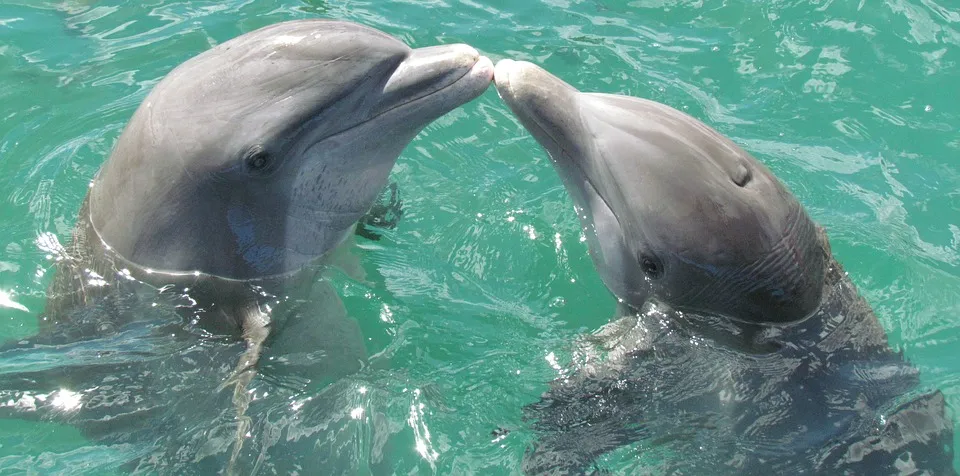
The Koshi Tappu Wildlife Reserve has reaffirmed its commitment to enhancing dolphin protection and preserving their natural habitat, signaling continued collaboration with national and local conservation stakeholders.
This rise in dolphin numbers offers hope not only for conservationists but also for promoting eco-tourism in the region, drawing attention to Koshi Tappu’s rich biodiversity and the critical importance of sustainable environmental practices.