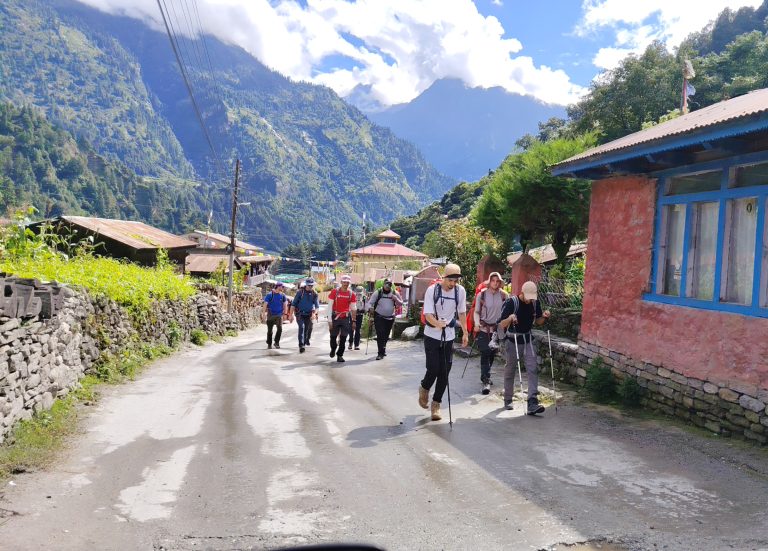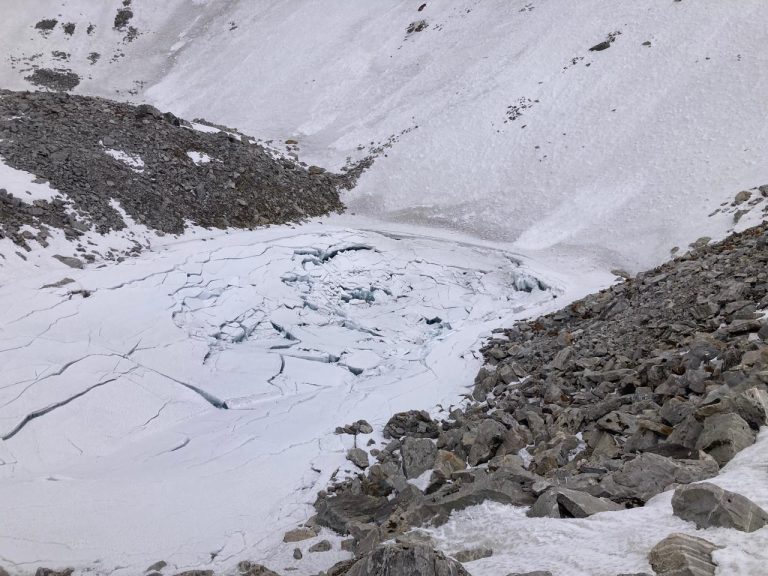
When people think of Mustang, many immediately envision iconic places like Muktinath Temple, Kagbeni, Damodar Kunda, Lo Manthang, Jomsom, Lete, and Marpha, as well as the scenic lakes, mountains, and the unique local art and culture. Mustang’s blend of nature, culture, barren landscapes, and sacred sites for both Hindu and Buddhist pilgrims, along with historical palaces, monasteries, rivers, lakes, and caves, already attracts many visitors. Recently, however, the increasing visibility of rare wildlife in the region has added a new layer of attraction.
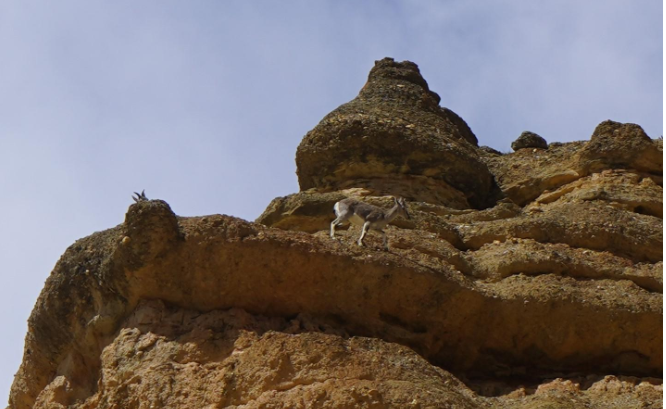
Tourism entrepreneur Chewang Rinjin Gurung, who also serves as a ward member for Lo Manthang Rural Municipality-5, shared that rare wildlife species have been spotted in areas surrounding the Jomsom-Korala road. On Thursday, while traveling on the Lo Manthang-Jomsom route, tourists were thrilled to witness a herd of blue sheep grazing near the road, despite the presence of vehicles and people, according to Gurung.
Pema Chiring Gurung from Ghar, Lo-Ghekar Damodarkunda Rural Municipality-4, mentioned that he saw herds of blue sheep in five different spots during his Thursday journey from Damodarkunda to Ghar. “These herds of blue sheep, often seen on the pilgrimage route to Damodar Kunda, have become a captivating sight for visitors,” said Pema, who regularly escorts pilgrims on horseback to and from the sacred site. “These animals are frequently spotted in the hills near Damodarkunda, Santawan Peak, and Kheta areas.”
Pema also noted that at an altitude of 5,000 meters near Damodarkunda, Tibetan gazelles, mountain rats, snow leopards, wolves, blue sheep, and red pandas can be found. Furthermore, wildlife sightings have become more frequent along the Korala border, the cliffs of Chhoser’s Jhong Cave, and near areas like Samar and Bhena hills, as well as along the routes leading to Sanda. Suresh Bhattarai from Dulegauda, Tanahun, expressed his excitement at encountering these wild animals during his travels.
According to Pramod Raj Regmi, head of the Annapurna Conservation Area Project (ACAP) office in Jomsom, wildlife populations have increased due to heightened awareness within local communities, conservation education, and stricter control over poaching.
“The reason why wild animals are now seen near villages and roads, especially in Upper Mustang, is due to the conservation awareness that has spread among the residents,” Regmi stated. “With Mustang bordering Tibet, the area is becoming a hotspot for discovering new species of animals and birds, offering great potential for future studies.”
While the growing presence of wildlife is a draw for tourists, it has brought challenges for local farmers. Lopsang Chhoppel Gurung, a farmer from Yara, Lo-Ghekar Damodarkunda Rural Municipality-4, mentioned that wolves and snow leopards have been preying on their sheep and yaks.
“The wolves and snow leopards have been killing our livestock, causing us hardship,” he explained, adding that protecting their animals from these predators, especially those kept in mobile pens, has become increasingly difficult. Farmers in Mustang have urged the government to increase the compensation provided to those affected by wildlife and to make the relief process more accessible.
Despite these challenges, ACAP continues to run awareness programs focused on wildlife conservation and curbing poaching in Mustang.