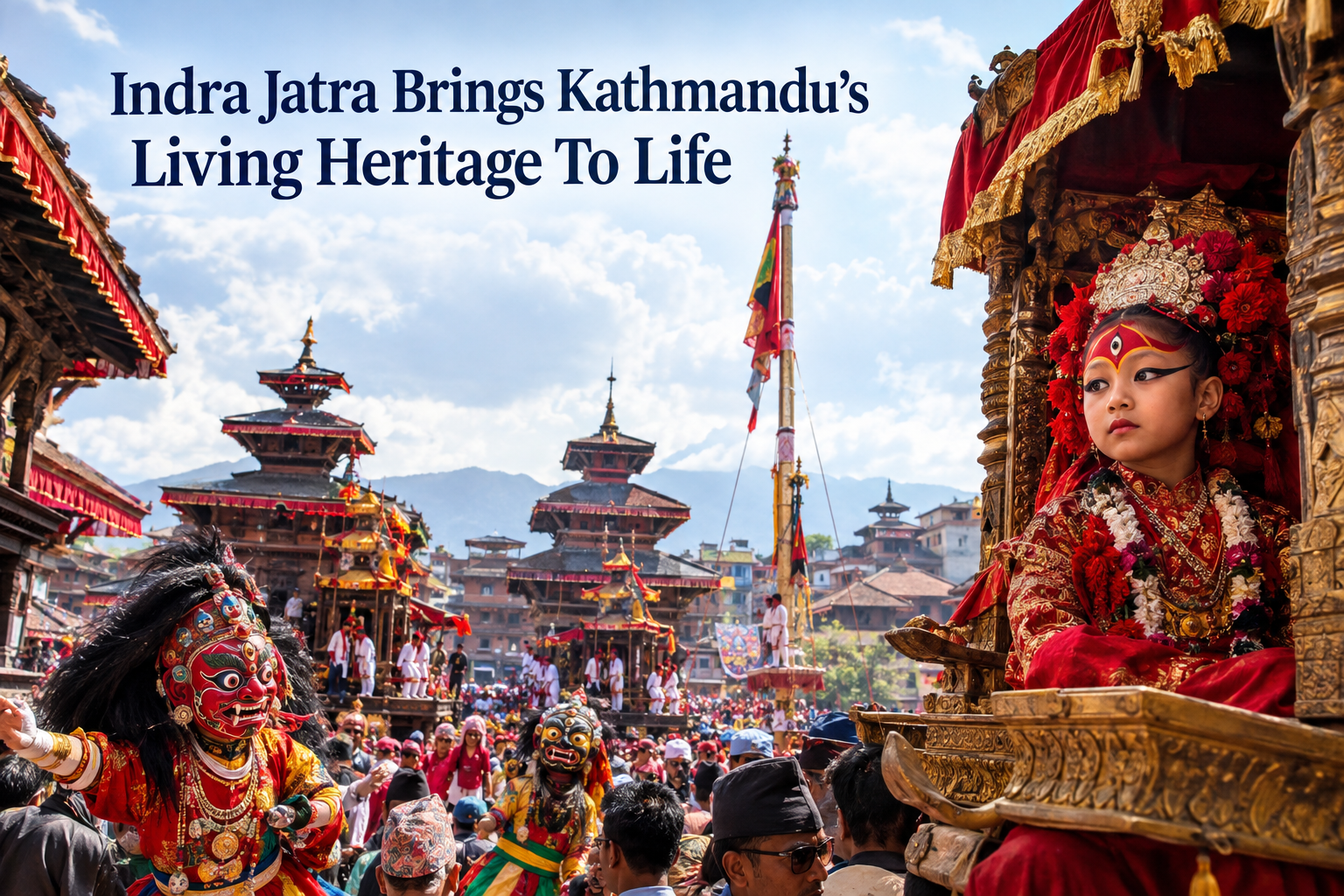
Indra Jatra is one of Kathmandu Valley’s grandest traditional festivals, celebrated with vibrant chariot processions, masked dances, rituals, and centuries-old Newar cultural traditions. Eight days of traditional chariot processions, masked dances, sacred rites, and religious observances, plus the appearance of the Living Goddess Kumari, come together to form this vibrant celebration in the ancient capital of Nepal. From the ritual observances at Hanuman Dhoka and Basantapur Durbar Square to the dazzling processions that follow around the city, Indra Jatra is a grand festival that showcases Kathmandu’s living heritage of music, art, and community life.
A festival of faith, heritage and community
The historic streets of Kathmandu come alive with chariot processions, masked dances, music and religious ceremonies during the Indra Jatra, one of the Kathmandu Valley’s most important traditional festivals, which takes place around Basantapur Durbar Square and the old city.
Celebrated primarily by the Newar community, the eight day festival sees devotees, performers, local residents and visitors come together for a celebration that combines religious devotion with centuries old cultural traditions. The festival formally begins with the ceremonial erection of the Indradhwaja, a sacred wooden pole at Hanuman Dhoka, marking the start of a series of rituals and public celebrations. In 2026, the main Kumari, Ganesh and Bhairav chariot procession is scheduled to begin on September 25.
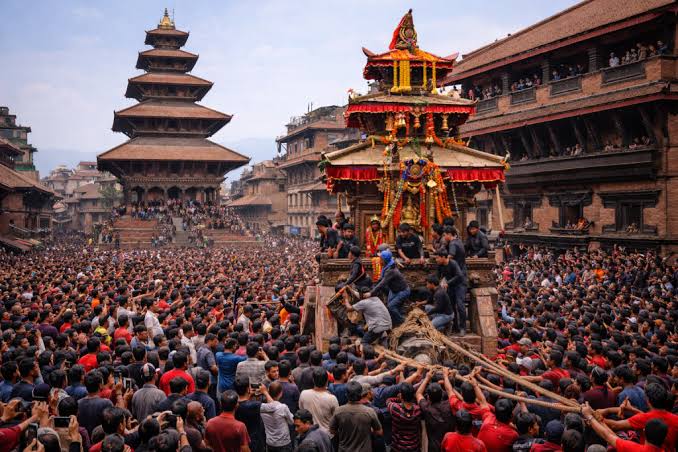
For visitors, Indra Jatra offers an opportunity to experience Kathmandu’s historic urban culture, beyond its monuments and temples. Narrow streets surrounding Basantapur, Maru, Indra Chowk, Asan and other traditional neighbourhoods become gathering places for religious ceremonies, traditional music and performances. The central attraction is the procession of Kumari, the Living Goddess, accompanied by chariots representing Ganesh and Bhairav. The festival also features Lakhe dances, Pulukisi, Bhakku, Mahakali and Dashavatar performances, creating a distinctive combination of sacred ritual, theatre, music and community celebration.
From the raising of the Indradhwaja to the chariot processions
One of the defining rituals is the raising of the Indradhwaja, or Yosin, which symbolises the formal beginning of the festival. Kathmandu Metropolitan City records that the pole is raised near Hanuman Dhoka, in front of Kal Bhairav, following traditional ceremonies involving local Newar communities. The wooden structure is treated as sacred after it has been erected, and several rituals are performed around it during the festival period. The tradition surrounding the present location is associated with the historical period of King Ran Bahadur Shah, although the exact origin of the practice is not certain.
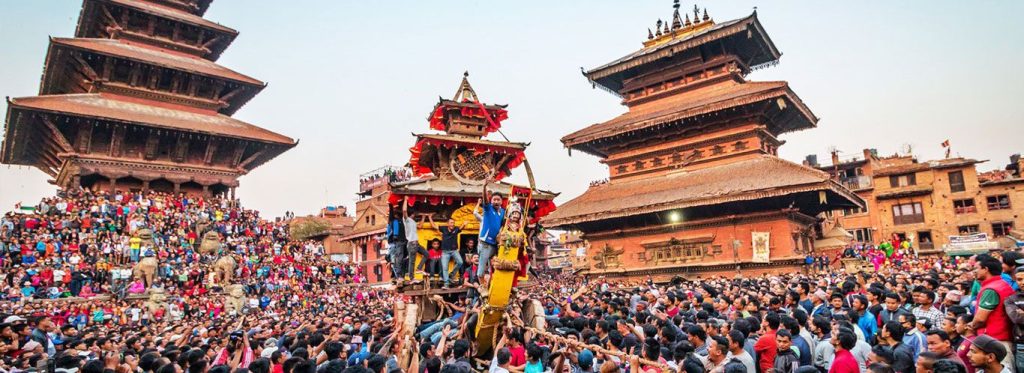
The main public spectacle follows the three-day chariot procession of Kumari, Ganesh and Bhairav. The first procession goes through the lower parts of the old city, while the following procession goes through the upper neighbourhoods. The routes follow through historic areas including Maru, Chikangalmugal, Jaisideval, Lagan, Brahma Tole, Pyafal, Yatkha, Naradevi, Asan, Indra Chowk and Makhhan before returning toward Basantapur. The Nanichaya procession for the last time also carries particular importance, with local women continuing the tradition of pulling the three chariots.
Stories and traditions behind Indra Jatra
The name of the festival is associated with Indra, the Hindu deity traditionally regarded as the god of rain and king of the heavens. According to a traditional religious narrative, Indra came down to the Kathmandu Valley in human form while searching for an herb for his mother. He was captured by local residents, who did not recognise him, and the story is associated with the rituals and symbolism of Indra Jatra. This is a traditional religious narrative, not a historically verified account, and different communities and sources preserve variations of the story.
The festival also carries traditions associated with remembering the deceased and honouring deities connected with Kathmandu’s historic religious culture. Following the first major chariot procession, the Dangi is traditionally taken around the city and associated with Indra’s mother and prayers for the peaceful journey of people who died during the preceding year. The festival includes worship and performances dedicated to numerous deities, while the lowering of the sacred Indradhwaja marks the end of the eight day celebration.
Kumari, Lakhe and living cultural landscape
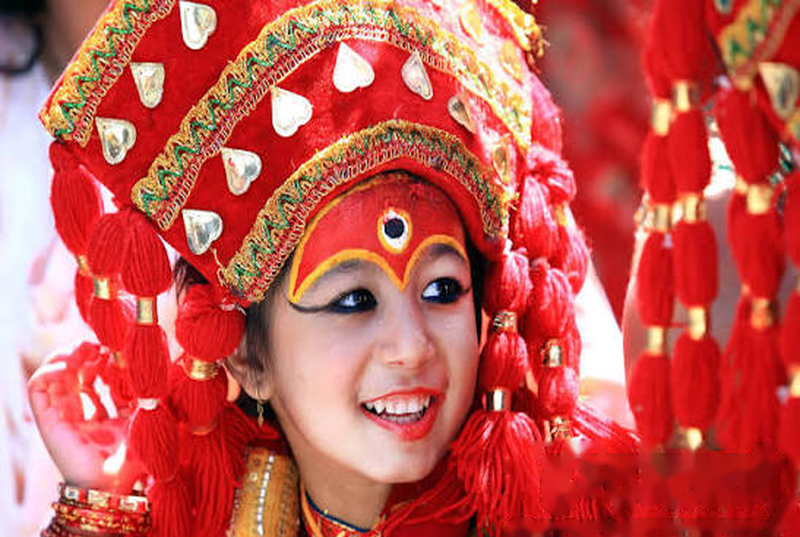
The appearance of Kumari, the Living Goddess, is among the most distinctive traditions of Indra Jatra. Nepal Tourism Board says Kumari represents Taleju Bhawani, with the tradition involving the selection of a young girl from the Shakya community who is revered by both Hindus and Buddhists. The institution of Kumari was formalised during the Malla period, and the Kumari Ghar at Basantapur, built by King Jaya Prakash Malla in 1757, remains the residence of Kathmandu’s Living Goddess.
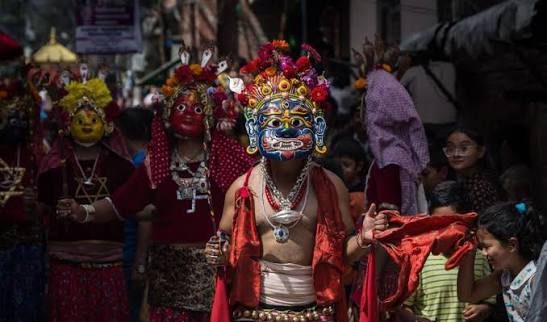
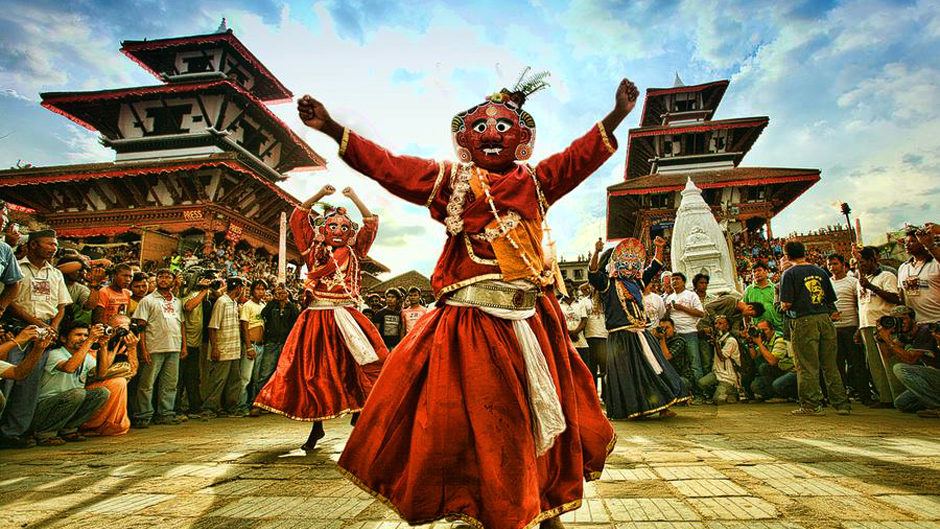
During Indra Jatra, Kumari leaves her residence and appears publicly in her chariot as devotees gather along the traditional procession routes. She is accompanied by the chariots of Ganesh and Bhairav, while masked performers and musicians add movement and sound to the procession. Lakhe, one of the festival’s best-known masked figures, appears in traditional dances, while Pulukisi represents Airavata, the elephant traditionally regarded as Indra’s vehicle. Other performances include Bhakku, Mahakali and Dashavatar, linking the festival’s street celebrations with religious narratives and traditional performing arts.
Basantapur and the old city become a living stage
The heart of Indra Jatra is Kathmandu Durbar Square, where the Kumari Ghar, Hanuman Dhoka, Kasthamandap, Kal Bhairav and other historic monuments form the backdrop to the celebrations. The square has long been a major social, religious and political centre of Kathmandu, and its historic courtyards and surrounding streets provide the setting for many of the festival’s most important ceremonies. The annual opening of Swet Bhairav during Indra Jatra is another distinctive attraction, as the normally restricted shrine becomes accessible during the festival period.

As processions move through the old neighbourhoods, the atmosphere changes from one historic courtyard to another. Traditional drums and other instruments accompany the chariots, masked dancers perform among crowds and devotees gather to observe the deities and receive blessings. Oil lamps, decorated shrines, traditional costumes and the illuminated historic architecture add to the visual character of the festival, while the narrow streets make up an intimate setting for residents and visitors to experience the celebrations at close range.
A tradition passed from one generation to another
Indra Jatra remains deeply rooted in the participation of local families, guthis, performers, musicians, volunteers and community groups. The preparation of chariots, religious objects, performance spaces and ceremonial routes require the cooperation of numerous local groups. Kathmandu Metropolitan City has also worked with guthi organisations, security agencies, traffic authorities, volunteers and festival management committees to coordinate the celebration and ensure that traditional activities can take place safely.

The festival also demonstrates how traditional culture continues to adapt to contemporary city life. Kathmandu Metropolitan City has introduced measures including volunteer mobilisation, ambulance arrangements and coordinated security during the celebrations, while previous editions have used digital mapping and GPS-based information to help people follow chariot and dance locations. Such efforts allow younger generations and visitors to engage with the festival, while preserving its traditional character.
What visitors can see during Indra Jatra
Visitors in Kathmandu during the festival can experience the celebrations around Basantapur Durbar Square, Hanuman Dhoka, Maru, Indra Chowk, Asan and surrounding historic neighbourhoods. The main Kumari, Ganesh and Bhairav chariot processions are the principal public events, while traditional dances, deity displays, music and religious ceremonies continue throughout the festival. Visitors should expect large crowds around the procession routes and should follow local instructions, avoid obstructing religious ceremonies and dress and behave respectfully at temples and sacred sites.
For 2026, Kathmandu Metropolitan City’s calendar places Indra Jatra on September 25, while the main chariot procession begins that day and continues through the festival’s scheduled sequence of lower and upper town processions. The last Nanichaya procession is another significant moment before the sacred pole is ceremonially lowered and the festival ends. Visitors should check current information from Kathmandu Metropolitan City and local festival authorities for any changes to routes, timings, crowd management or access arrangements.
What makes Indra Jatra unique
What distinguishing Indra Jatra is the way it brings together religion, living heritage, mythology, traditional performance and community life within the historic centre of Kathmandu. Few celebrations place a Living Goddess, enormous wooden chariots, masked dancers, sacred rituals and ancient palace architecture within the same public festival. The participation of different generations also keeps the traditions connected to the communities that have maintained them over centuries.
For Nepal’s tourism sector, the festival provides visitors with a direct encounter with the living cultural heritage of the Kathmandu Valley. Yet its significance extends beyond tourism: for the communities that organise and participate in it, Indra Jatra remains a religious and cultural tradition woven into neighbourhood life, family practices and collective memory. As drums echo through the old streets and the chariots move through Kathmandu’s historic quarters, the festival demonstrates how the city’s heritage continues not to be preserved in monuments, but to be performed, practised and experienced by its people.