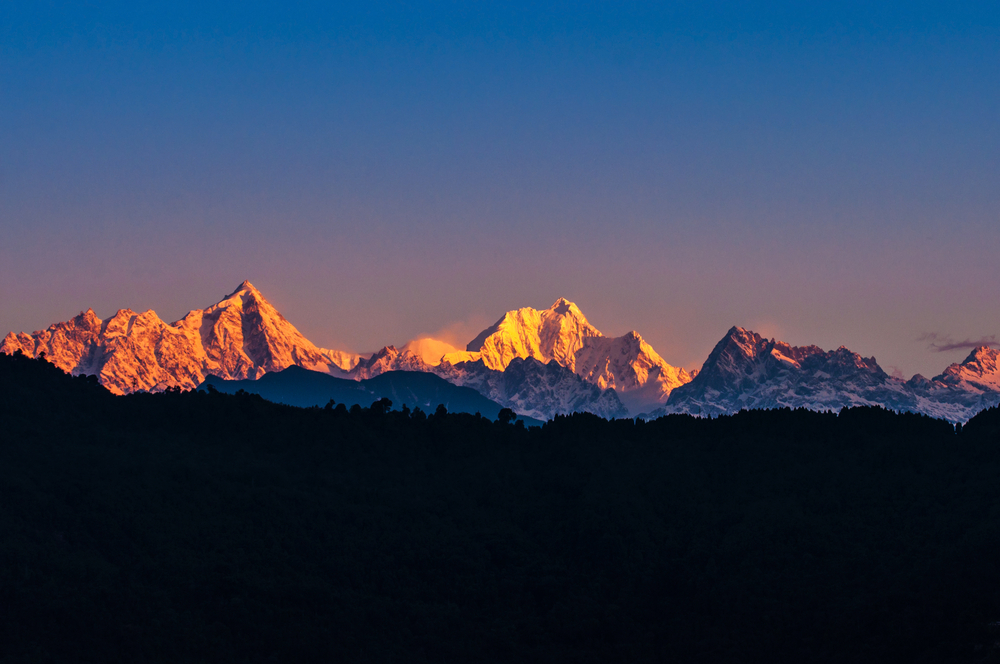
Kanchenjunga Day is celebrated every year on May 25 to commemorate the first successful ascent of Mount Kanchenjunga in 1955 by British climbers Joe Brown and George Band. Their historic climb marked a major achievement in Himalayan mountaineering history and placed Kanchenjunga among the world’s legendary peaks.
Standing at an elevation of 8,586 meters (28,169 feet), Mount Kanchenjunga is the third-highest mountain in the world after Mount Everest and K2. The mountain lies on the border between eastern Nepal and the Indian state of Sikkim. Its name, derived from Tibetan and Sikkimese languages, means “The Five Treasures of the Great Snow,” symbolizing its five magnificent peaks and the sacred treasures believed to be hidden within them.

A Mountain Once Believed to Be the Highest
Before modern surveying techniques confirmed the height of Everest, Kanchenjunga was once believed to be the tallest mountain in the world. However, during the Great Trigonometrical Survey of India in the mid-19th century, calculations revealed that Peak XV, later named Everest, was higher. In 1856, Kanchenjunga was officially recognized as the third-highest mountain on Earth.
Despite losing its title as the world’s highest peak, it retained immense geographical and spiritual significance. Located around 125 kilometers east-southeast of Everest, the mountain dominates the eastern Himalayas with its massive glacial systems, steep ridges, and dramatic landscapes.
The Sacred Mountain of Sikkim and Nepal
The mountain is regarded as a deeply sacred mountain by the people of Sikkim and surrounding Himalayan communities. According to local beliefs, the mountain is home to divine spirits and hidden treasures that reveal themselves only in times of great need.
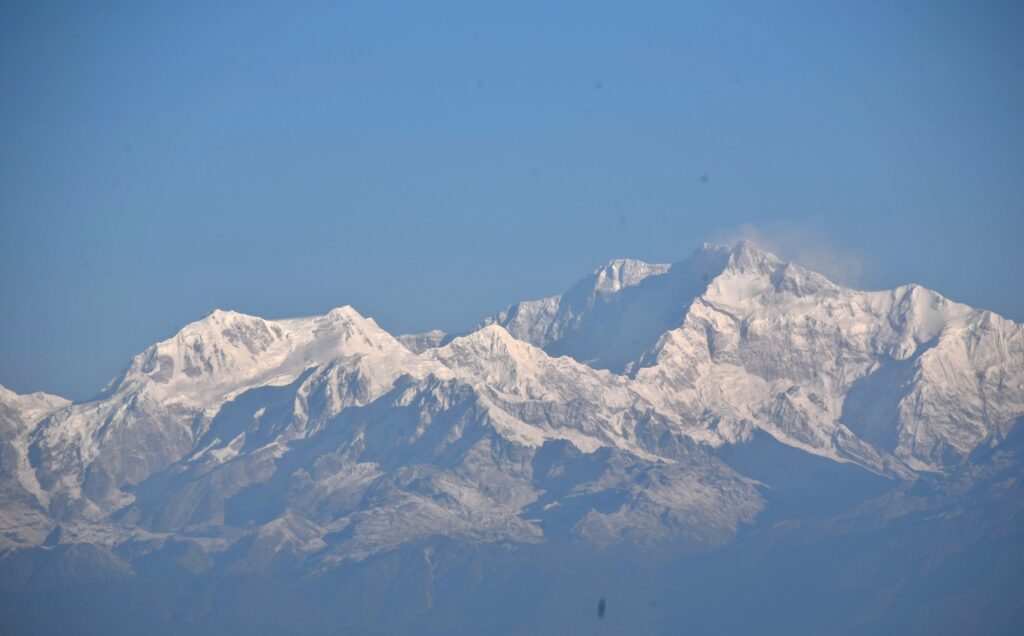
Out of respect for these traditions, Joe Brown and George Band famously stopped just short of the true summit during their successful 1955 ascent. The climbers honored a promise made to the Chogyal (king) of Sikkim that no one would step directly on the sacred summit. This tradition of stopping a few feet below the top continues among many climbers today.
Early Expeditions and Dangerous Attempts
The history of Kanchenjunga exploration is filled with courage, tragedy, and determination. Climbers first showed serious interest in the mountain during the late 19th century, but no major attempt was made until 1905, when occultist and climber Aleister Crowley led an expedition through the Yalung Glacier route. The attempt ended in disaster after an avalanche killed four members of the team.
For many years afterward, the mountain was feared as one of the world’s most dangerous mountains. In 1929, American climber Francis Farmer disappeared while attempting the mountain alone and was never found. German and Bavarian expeditions later reached impressive altitudes but failed to reach the summit due to harsh weather, avalanches, and technical difficulties.
Following the Second World War, several new expeditions explored possible routes. Finally, in 1955, a British expedition led by Charles Evans, who had previously been part of the successful Everest expedition, achieved the long-awaited summit success.
Geography and Natural Beauty
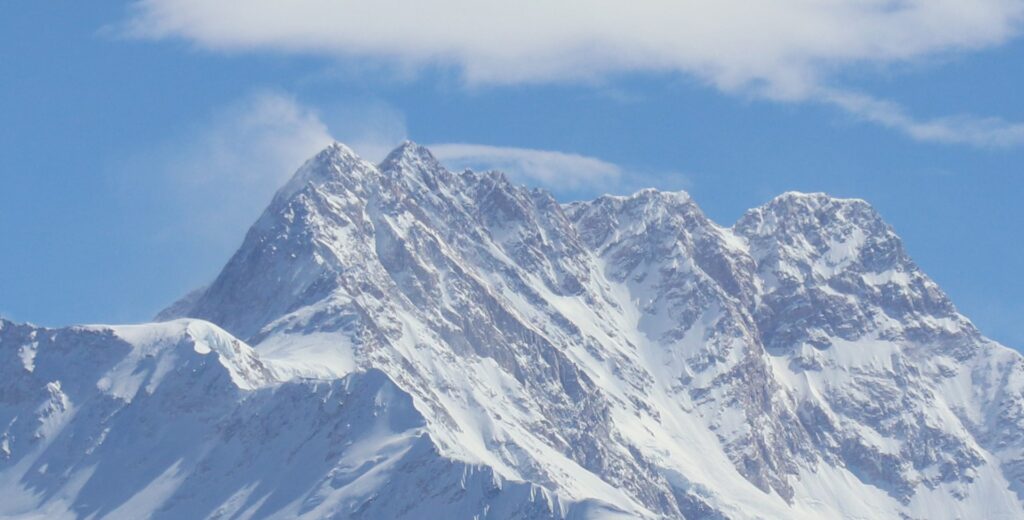
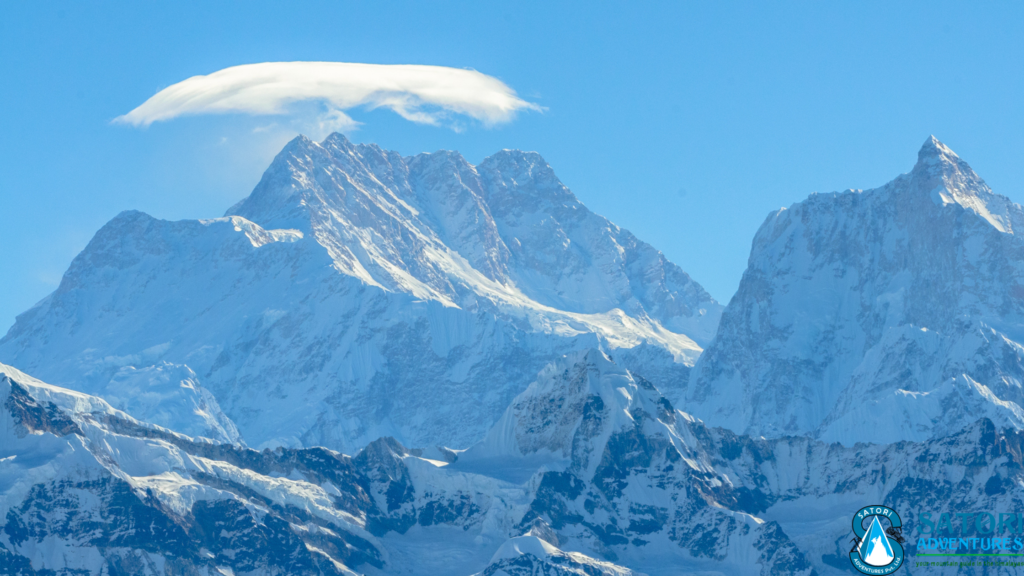
The mountain is not just a single mountain but a vast massif consisting of several peaks above 8,000 meters. Its five main summits include Kanchenjunga Main, Yalung Kang, Kanchenjunga Central, Kanchenjunga South, and Kangbachen.
The mountain is surrounded by enormous glaciers, including the Zemu, Talung, Yalung, and Kangchen glaciers. More than 120 glaciers exist within the Kanchenjunga Himalayan region, feeding major river systems such as the Koshi and Teesta rivers.
The region is also known for extraordinary biodiversity. Dense forests, alpine meadows, and rare wildlife, including snow leopards, red pandas, Himalayan black bears, and musk deer, make the Kanchenjunga area ecologically significant.
In 2016, Khangchendzonga National Park was declared a UNESCO World Heritage Site, recognizing its unique combination of natural beauty, cultural heritage, and biodiversity.
Nepal’s Connection to Kanchenjunga
On the Nepali side, Kanchenjunga lies in Taplejung District of Koshi Province and remains one of Nepal’s most remote and pristine trekking and mountaineering destinations. Unlike Everest and Annapurna, the Kanchenjunga region is less crowded and offers untouched Himalayan wilderness.

The first Nepali climber to summit Kanchenjunga was Ang Phurba Sherpa on May 14, 1980. Since then, many Nepali climbers and Sherpas have continued to contribute significantly to mountaineering achievements on the mountain.
Today, Kanchenjunga Day serves not only as a celebration of mountaineering history but also as a reminder of the need to preserve Himalayan culture, fragile mountain ecosystems, and sacred traditions.