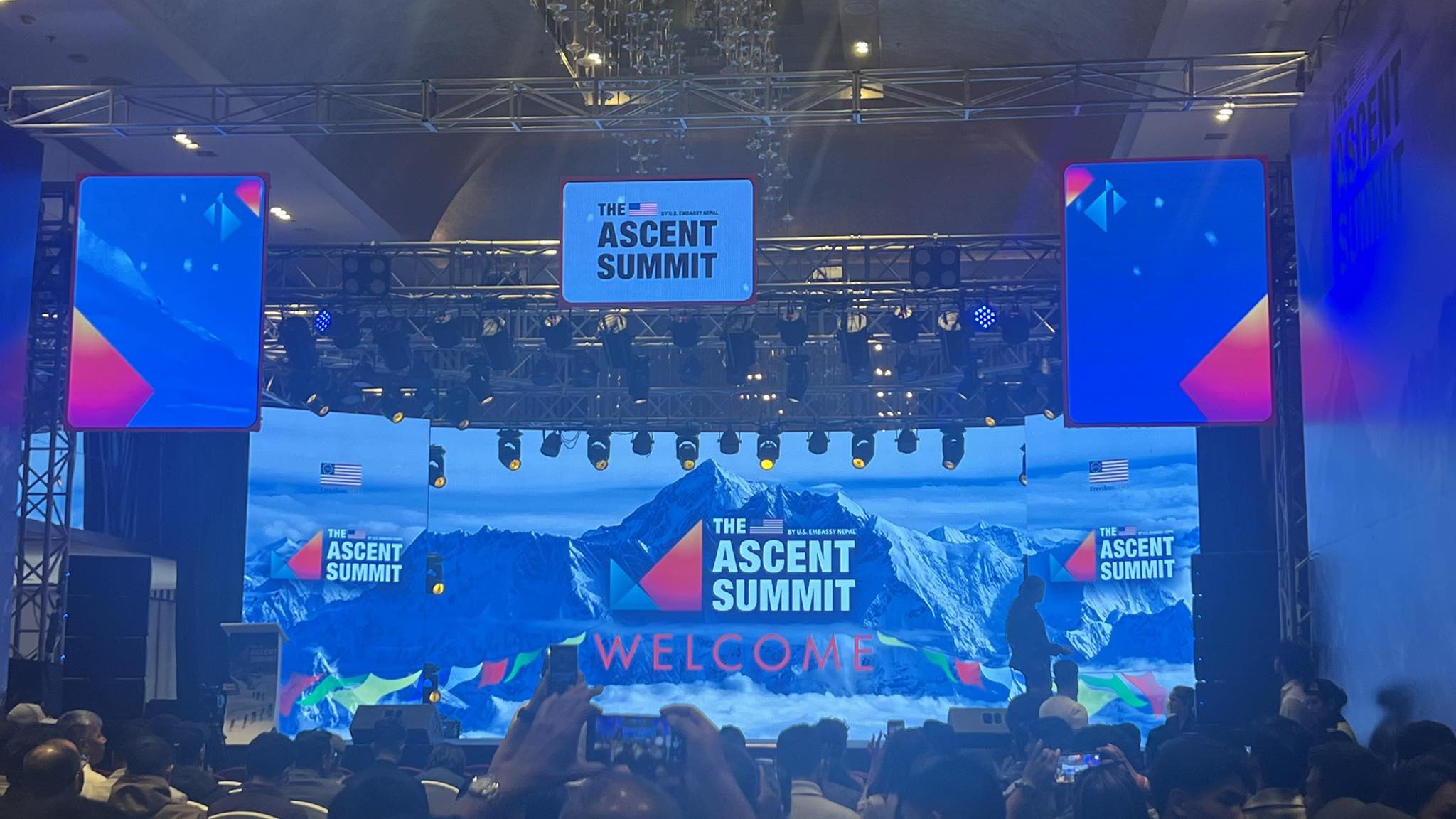
The “Ascent Summit 2026,” organized jointly by the U.S. Embassy in Nepal, the Nepal Tourism Board, and Seven Summit Treks, is being held in Kathmandu today with the aim of promoting dialogue on the future of Everest and Himalayan mountaineering tourism.
The one-day summit is taking place at Aloft Kathmandu in Thamel and has brought together mountaineers, expedition leaders, trekking guides, rescue professionals, adventure athletes, tourism entrepreneurs, journalists, innovators, and cultural representatives from Nepal and abroad.
According to the organizers, the summit seeks to create a comprehensive platform for discussions on the current state of Sagarmatha (Mount Everest), emerging challenges in mountaineering, tourism management, safety standards, technological advancements, and future opportunities in Himalayan tourism.

Focus on Sustainability, Leadership and International Cooperation
The event features keynote speeches, expert sessions, panel discussions, storytelling presentations, interactive exhibitions, and networking opportunities focused on the changing dynamics of Everest expeditions and their impact on Nepal’s tourism and mountaineering industries.
Organizers stated that the summit aims to strengthen collaboration among the mountaineering community, tourism sector, media, cultural institutions, businesses, and innovation sectors to ensure the sustainable development of Himalayan tourism.
Discussions during the programme are expected to highlight issues such as climate change in mountain regions, expedition safety, responsible tourism practices, waste management, technological innovation in climbing, and the role of leadership in preserving the fragile Himalayan ecosystem.
Renowned International Climbers Participate
The summit features participation from several globally recognized mountaineers and adventure experts, including Conrad Anker, Justin Sackett, Ben Ayers, Dawa Yangzum Sherpa, Lakpa Sherpa, Tenzing David Sherpa, and Mingma David Sherpa, among other prominent personalities from Nepal and the international mountaineering community.
These speakers are sharing their experiences, insights, and perspectives on high-altitude climbing, expedition leadership, environmental responsibility, and the evolving culture of mountaineering in the Himalayas.
The organizers noted that the presence of internationally acclaimed climbers and expedition leaders has added global significance to the event, reinforcing Nepal’s position as a leading destination for adventure tourism.
Senior Officials Address the Summit
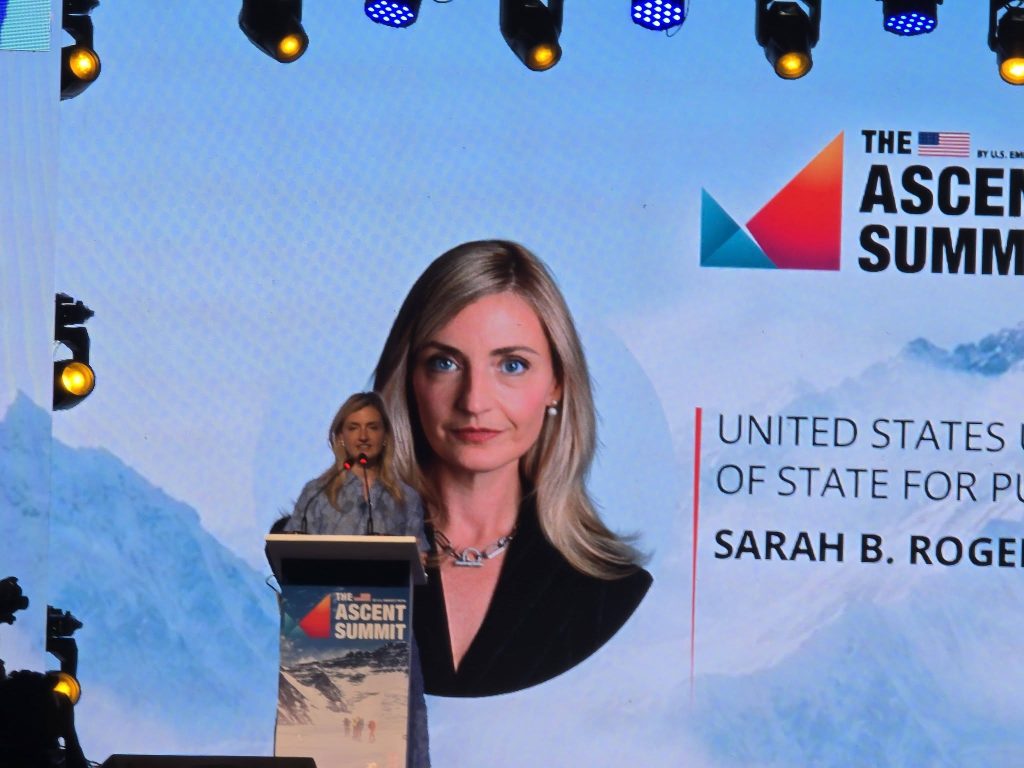
The summit also includes addresses from senior government and diplomatic representatives. U.S. Under Secretary for Public Diplomacy Sarah Rogers, Chairperson of the House of Representatives International Relations and Tourism Committee Sunima Udas, and U.S. Embassy Chargé d’Affaires Scott Urbom are scheduled to speak during the programme.
Speakers are expected to emphasize the importance of international cooperation, sustainable tourism, and cultural exchange in preserving Everest and Nepal’s mountain heritage for future generations.

Additionally, Mike Harker, Chief of Public Affairs at the U.S. Embassy, will deliver a presentation during the event, while world-renowned climber Conrad Anker will give the closing address.
According to organizers, the speakers will share their views on the opportunities and challenges associated with Everest expeditions and discuss the need for strong international partnerships and leadership in promoting sustainable mountain tourism.
Elite Sherpa Team to Receive Special Recognition
One of the major highlights of the summit is the recognition of the 10-member “Elite Sherpa Team” for its significant contribution during the 2026 Everest climbing season.
The team, widely known as the Everest Rope Fixing Team, played a crucial role in establishing ropes and safety systems along some of the mountain’s most dangerous and technically challenging sections. Organizers said the team’s efforts ensured safer climbing routes for mountaineers from around the world attempting to summit Everest.
The recognition ceremony aims to honor the dedication, expertise, and risk undertaken by Sherpa climbers who form the backbone of Himalayan expeditions.

Cultural Exhibitions and Environmental Awareness
The summit also features cultural performances and special exhibitions related to Everest and mountain life.
Among the key attractions is “The Yeti,” a massive sculpture created from approximately 90 kilograms of waste collected from the Everest region. Organizers said the installation symbolizes the growing need for environmental responsibility and sustainable waste management in high-altitude tourism.
Another exhibition titled “A Day in a Climber’s Life” provides participants with an immersive experience of life during high-altitude expeditions, showcasing the physical and emotional challenges faced by climbers in the Himalayas.

Participation Open to Mountain Tourism Stakeholders
The summit has offered free participation to mountaineers, trekking guides, expedition operators, rescue workers, tourism entrepreneurs, adventure athletes, educators, media professionals, and other stakeholders associated with Himalayan tourism.
However, due to limited capacity, organizers implemented a pre-registration and selection process for participants.
The event is expected to serve as an important international platform for promoting sustainable mountaineering practices, strengthening Nepal’s adventure tourism industry, and encouraging greater global collaboration for the protection and preservation of the Himalayan region.