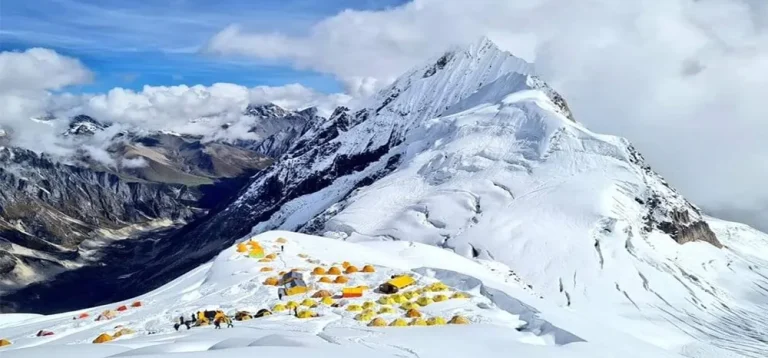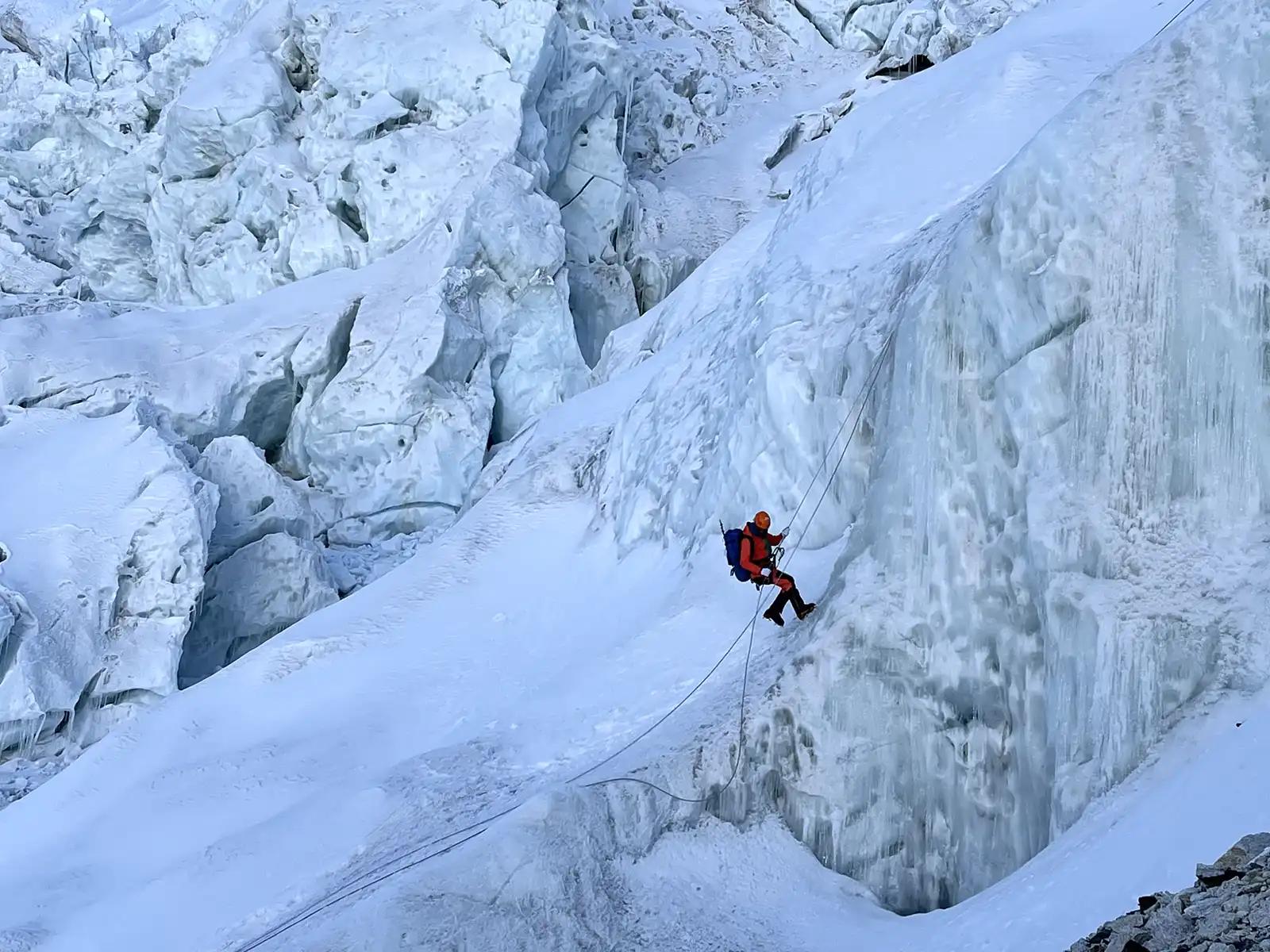
The Department of Tourism Nepal (DoT) has confirmed that the climbing route through the Khumbu Icefall up to Camp II on Mount Everest has been successfully established for the 2026 spring expedition season.
The route from Everest Base Camp through Camp I to Camp II was prepared by the Sagarmatha Pollution Control Committee in coordination with the Expedition Operators’ Association (EoA), the Nepal Mountaineering Association (NMA), and local authorities. Officials stated that despite significant challenges, including a large unstable ice serac in the Khumbu Icefall, the route has been secured following detailed technical assessment and strict adherence to safety protocols.

Challenging Conditions Delayed Progress in Khumbu Icefall
The route-setting process began after a formal agreement between the Department of Tourism and SPCC on January 20, 2026. Logistics and essential equipment were transported to Khumbu Icefall base camp in February, while the Icefall Doctors were mobilized on February 29.
Work officially commenced on March 16 following the traditional Puja ceremony. However, progress was slowed by difficult weather conditions, including strong winds and continuous snowfall, as well as the presence of a massive ice serac blocking a critical section of the route. The Icefall Doctors conducted multiple assessments, carefully monitoring the unstable formation before proceeding with route construction.
Critical Section Secured After Joint Effort
A major breakthrough came on April 26–27, when a joint team of SPCC Icefall Doctors and Sherpa climbers from the Expedition Operators’ Association successfully secured the most hazardous section between Base Camp and Camp I. This achievement followed several previous attempts and extensive safety evaluations. The clearance of this section has now enabled climbers to move safely through the Khumbu Icefall, one of the most dangerous parts of the Everest ascent.
Summit Rope Fixing to Begin
With the route up to Camp II now open, the next phase of the expedition will focus on fixing ropes from Camp II to the summit. The Department of Tourism has directed the Expedition Operators’ Association to proceed with this task as soon as conditions allow. Authorities have instructed that additional manpower and logistical support be mobilized to complete the rope fixing efficiently while maintaining strict safety standards.
Climbers Begin Summit Rotation
Following acclimatization at designated camps, expedition members, along with their guides and support staff, have already begun their summit rotations. This marks the transition into the most critical phase of the Everest climbing season.
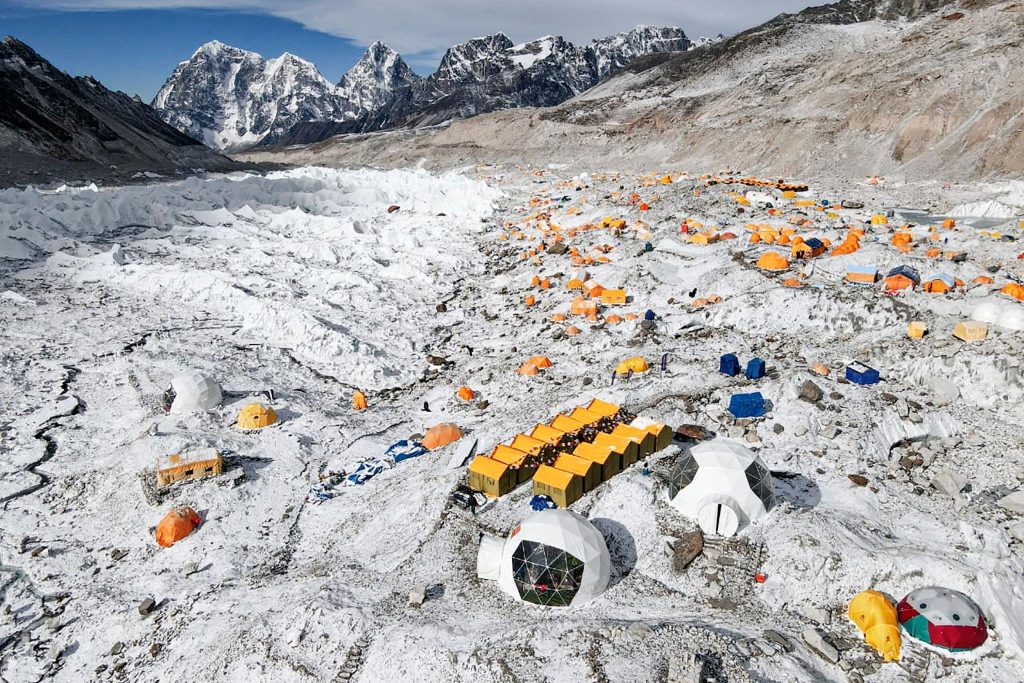
To enhance coordination and safety, the Department of Tourism has also established a temporary field office at Everest Base Camp on April 26, deploying Everest summiteer liaison officers to facilitate on-site operations throughout the season.

Emphasis on Safety and Coordination
The Department of Tourism has acknowledged the dedication, expertise, and resilience of the Icefall Doctors and Sherpa climbers who played a crucial role in preparing the route under challenging conditions.
Officials have urged all climbers and expedition teams to strictly follow safety protocols, particularly in high-risk sections such as the Khumbu Icefall, where conditions can change rapidly. With the route now operational and summit preparations underway, authorities remain focused on ensuring a safe and well-coordinated climbing season on Mount Everest.