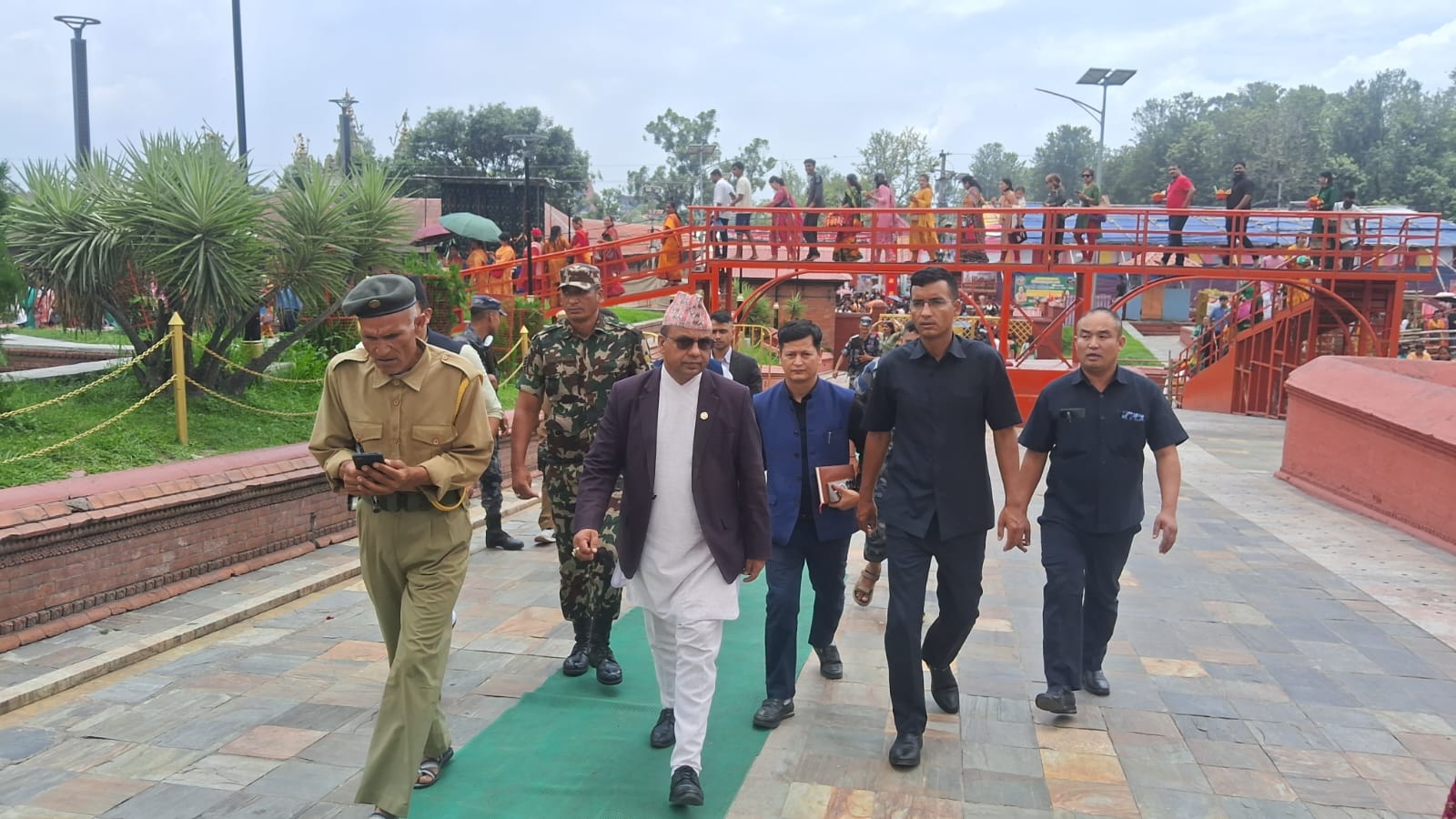
On the auspicious occasion of the first Monday of Shrawan, Minister for Culture, Tourism, and Civil Aviation, Badri Prasad Pandey, conducted an inspection visit to the sacred Pashupatinath Temple and surrounding premises. As the Chairperson of the Pashupati Area Development Trust (PADT) Board of Directors, Minister Pandey personally assessed the arrangements made by the concerned authorities for the smooth facilitation of the large number of devotees who gather to worship Lord Shiva on this special day.
During his visit, Minister Pandey interacted with representatives of the Nepal Police, Armed Police Force, Traffic Police, and various other stakeholders involved in crowd and pilgrimage management. He also held informal conversations with visiting devotees, many of whom shared their satisfaction with the peaceful, orderly, and accessible darshan (visit) experience.
According to the Minister, the collaborative efforts of security forces and local administrative units created an environment where devotees were able to perform their religious rituals with minimal hassle. He expressed gratitude to the devotees for maintaining discipline and to the officials for their efficient execution of duties.
Devotees Appreciate Improved Arrangements
This year’s Shrawan arrangements were notably better than those of previous years, according to many devotees. Free transportation services, streamlined queue systems, and enhanced security measures were among the improvements most appreciated by pilgrims.
Rama Rimal, a devotee from Ramkot, highlighted how the upgraded facilities, especially the availability of free buses, well-managed lines, and respectful treatment of elderly and disabled individuals, contributed to a more inclusive and comfortable spiritual experience.
“The environment was calm, disciplined, and spiritually uplifting,” Rimal stated. “The special provisions for senior citizens and physically challenged devotees made it easier for all to participate equally in the sacred occasion.”
The Monday of the Shrawan month holds immense religious significance for Lord Shiva’s devotees. Considered the most sacred day for Shiva worship during this period, thousands of pilgrims from across Nepal and abroad flock to Shiva temples, especially the iconic Pashupatinath Temple in Kathmandu.
Free Bus Services and Crowd Control Measures
To support the massive influx of devotees, the government arranged four free shuttle bus services that operated in a circular route along the Ring Road. These buses helped transport pilgrims from different parts of the capital city to the temple area, thereby easing traffic congestion and enabling orderly arrival and departure.
Minister Pandey, during his inspection, commended the peaceful behavior and discipline shown by the worshippers. He further instructed relevant authorities to remain vigilant and proactive throughout the rest of the Shrawan month, as the number of visitors is expected to increase every Monday.
The Ministry of Culture, Tourism, and Civil Aviation has committed to enhancing the coordination and readiness of all supporting agencies, particularly for the remaining Mondays of Shrawan. This includes improved crowd control, traffic regulation, medical assistance, and public sanitation services.
Religious Significance and Government’s Commitment
The Shrawan month, particularly its Mondays, is revered in the Hindu tradition as a time for penance, fasting, and devotion to Lord Shiva. The Pashupatinath Temple, a UNESCO World Heritage Site and Nepal’s most sacred Hindu shrine, becomes a focal point for spiritual gatherings during this period.
Recognizing the importance of religious festivals in Nepal’s cultural identity and tourism sector, Minister Pandey assured that the government would continue to support and promote religious tourism. He emphasized that well-managed pilgrimage sites not only reinforce spiritual values but also contribute to local economic and tourism development.
In addition to the inspection, Minister Pandey also participated in the Pitrimukti Gyan Mahayagya, a religious program organized in memory of those who lost their lives in a recent Saurya Airlines plane crash. His participation highlighted the government’s commitment to honoring the spiritual sentiments of the nation while remembering national tragedies.
Future Plans and Continued Oversight
With more Mondays remaining in the holy month of Shrawan, the Ministry has planned stricter management protocols and real-time monitoring systems to prevent overcrowding and ensure public safety. Surveillance teams will oversee operations, and feedback from devotees will be collected to further improve services.
Minister Pandey concluded his visit with a directive to the Pashupati Area Development Trust and all concerned bodies to remain fully engaged and to take proactive steps in ensuring smooth religious observances throughout the month. The PADT has reaffirmed its readiness to extend all necessary facilities and coordinate with the security agencies for efficient temple management.
As the nation continues to navigate a balance between spiritual traditions and modern governance, the seamless execution of events like Shrawan Mondays at Pashupatinath sets a positive example. With effective planning, community cooperation, and government oversight, Nepal aims to preserve its rich religious heritage while enhancing the experience for millions of devotees every year.