The Maithil/Mithila tradition is unique in that it involves inviting a bael fruit, whose stem is later used to open the eyes of the clay idols of the goddess Durga. The festival of Dashain, which is celebrated throughout the Mithila region, including Mahottari district of Nepal’s Madhes Province, begins with the Belnaut ritual on the sixth day of Sharadiya Navaratri.
This observance takes place on the Shashthi, the sixth day of the lunar fortnight, and comes ahead of the ritual of opening the eyes of the goddess’s idols on Saptami, the seventh day of the Dashain Festival. The Maithil people have long held the Belnaut ritual as an important part of their religious and cultural tradition, and it is especially prominent in communities where the clay idols of Goddess Durga are created for festival worship.
Bael Fruit Invited Through a Traditional Ceremony in Mithila Region
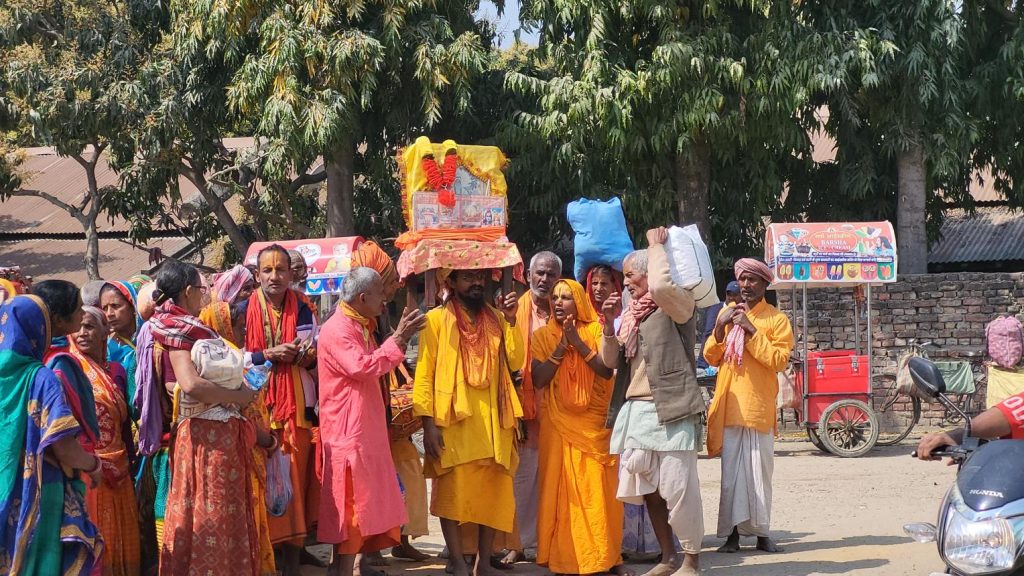
During Belnaut, the participants visit a bael tree near their settlement after midday, and they accompany themselves with traditional musical instruments as they observe religious customs. A bael fruit is tied with a red handkerchief while the customs are performed. The Belnaut is observed one day before the fruit is collected and used in the ritual of opening the goddess’s eyes.
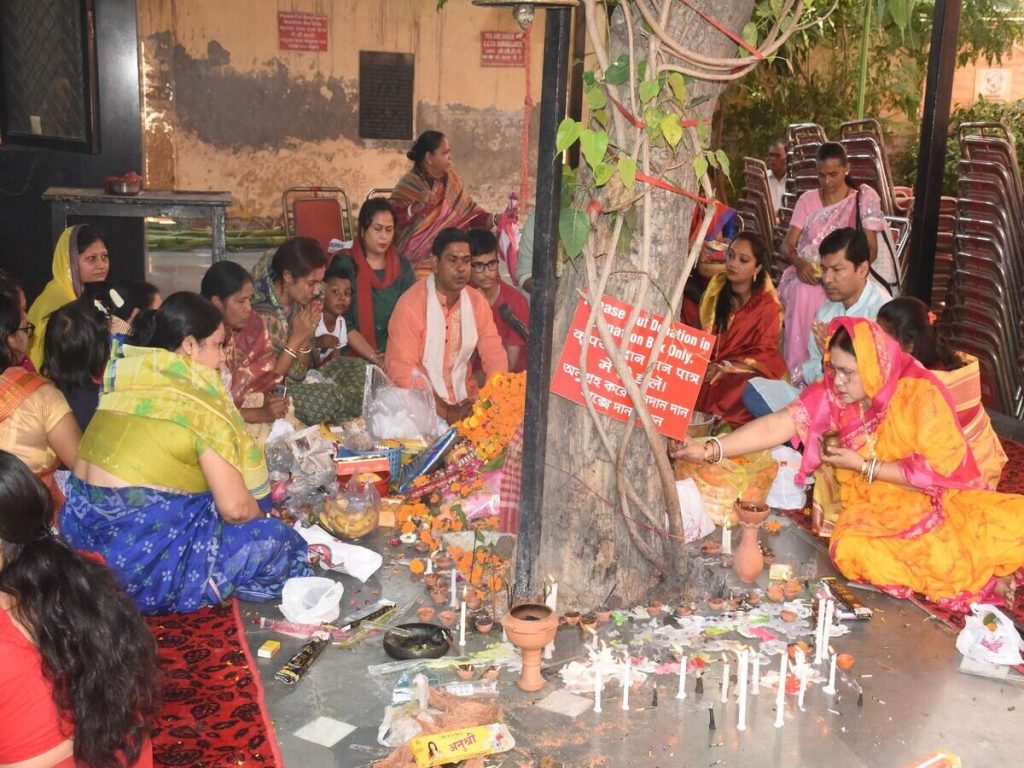
The word Belnaut literally means inviting the bael fruit, and the observance reflects the symbolic purpose behind it. The participant must also recite Vedic mantras, says Shobhakant Jha, a teacher of religious rituals at the Government Sanskrit Secondary School (Gurukul) in Matihani. This bael fruit is regarded as sacred in Hindu religious tradition, and its stem has a specific role in the Maithil ritual. By ceremonially inviting the bael fruit on Shashthi, the devotees prepare for its application in the following day’s proceedings.
Bel Fruit Stem Used to Open Durga Idols’ Eyes
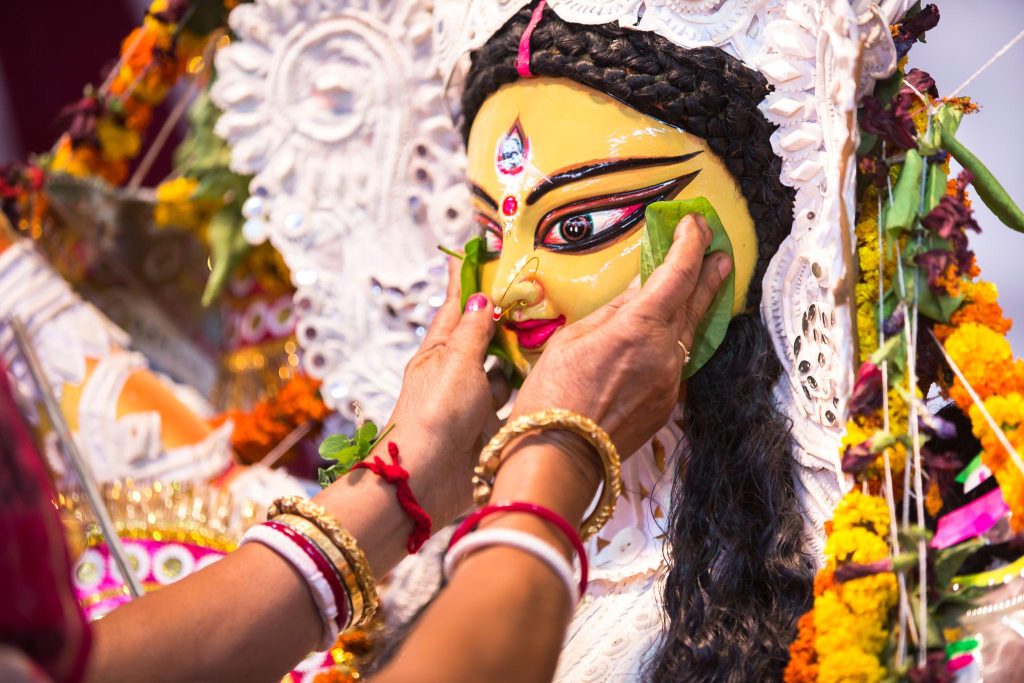
On Saptami, the seventh day of Navaratri, the devotees return to the tree with traditional music to collect the bael fruit, along with its stem. A priest then ceremonially traces or opens the eyes of the clay idol of Goddess Durga using the stem. The local belief is that the idol has been brought to life after the ritual, so that the devotees may openly worship it for the next few days.
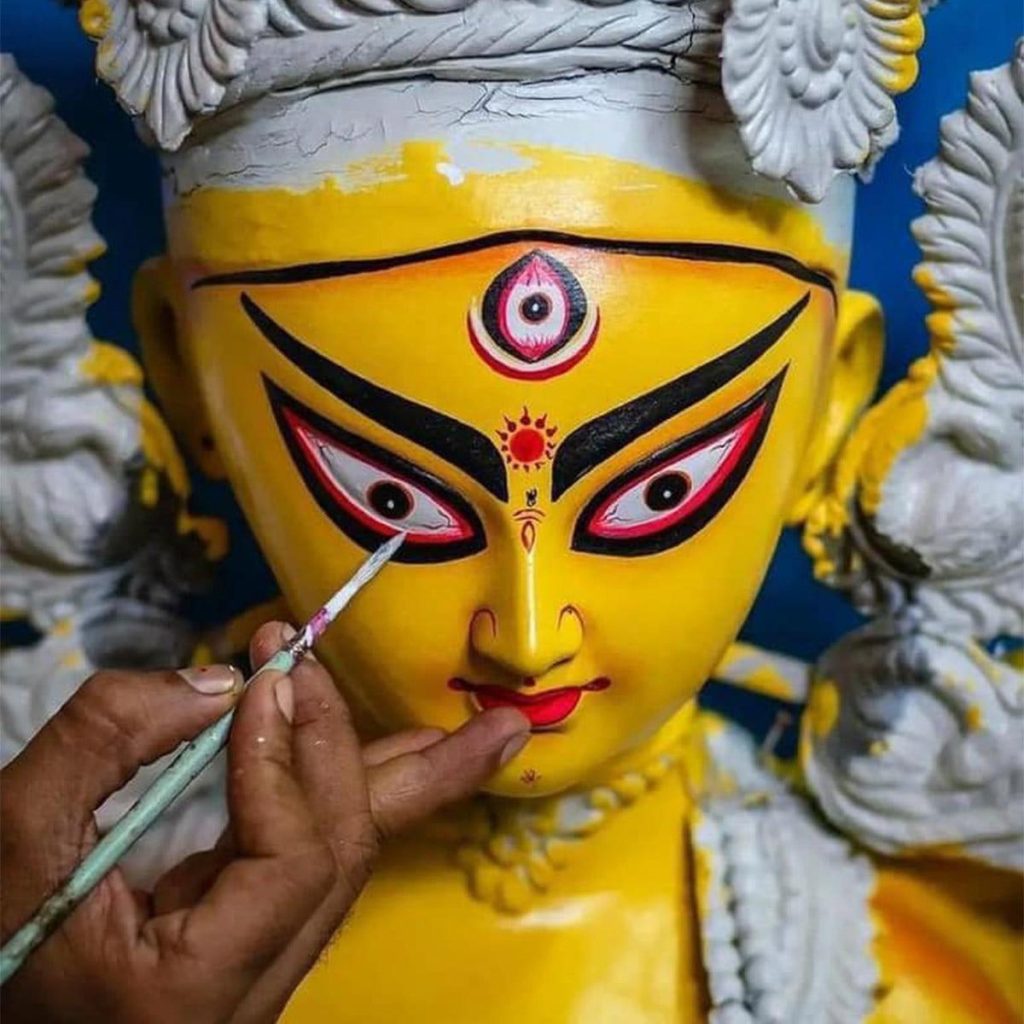
This eye opening ceremony follows the preparations made during Belnaut and represents an important stage in the ritual worship of the goddess. Belnaut is observed specifically for the newly made clay idols for whose eyes have not yet been opened ceremonially. Idols created earlier from wood or metal do not require the same procedure, although some communities do bring the invited bael fruit and place it near the deity as part of their observance.
Community Participation Preserves Mithila’s Cultural Heritage
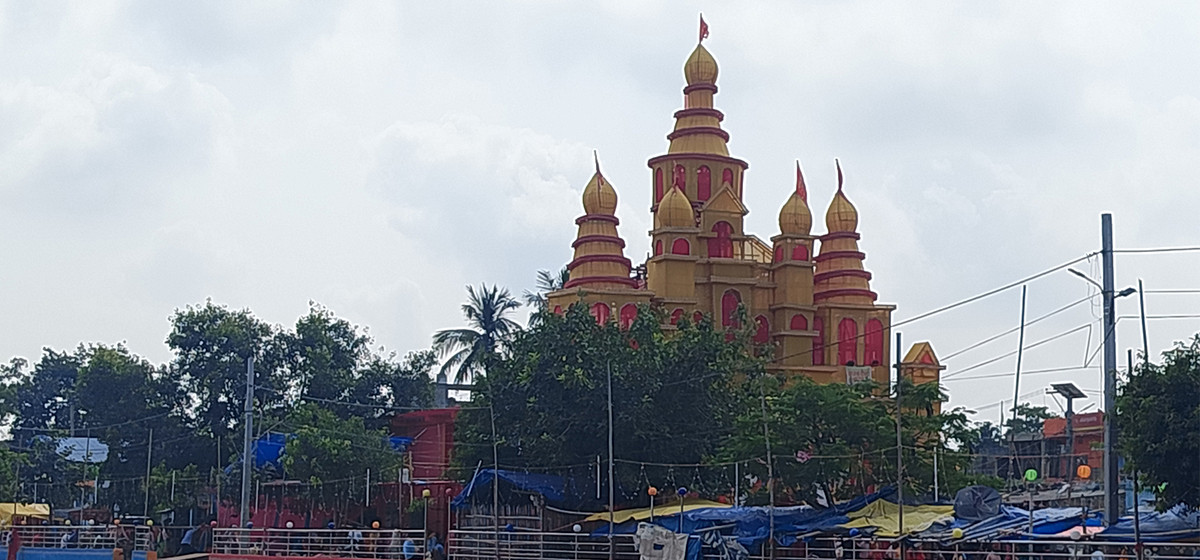
Preparations for Belnaut have brought increased activity to settlements across the Mithila region, where the clay idols of Goddess Durga are installed for Dashain. Both men and women participate in the preparations after completing their household duties, and the traditional music, ritual observances and collective participation help preserve customs that have been passed down through generations.
The Belnaut ritual is part of the broader cultural heritage of the Maithil community, and it reflects the distinctive ways Dashain is observed in the Mithila region. The specially created clay idols are traditionally immersed in rivers considered religiously significant or deep ponds on the tenth day of Dashain, i.e., Vijaya Dashami, the concluding day of the main Dashain celebration. This immersion is locally known as murti bhasaaune, or idol immersion. Together, these customs help preserve a living religious tradition that may also interest visitors seeking to explore Nepal’s regional festivals and cultural heritage