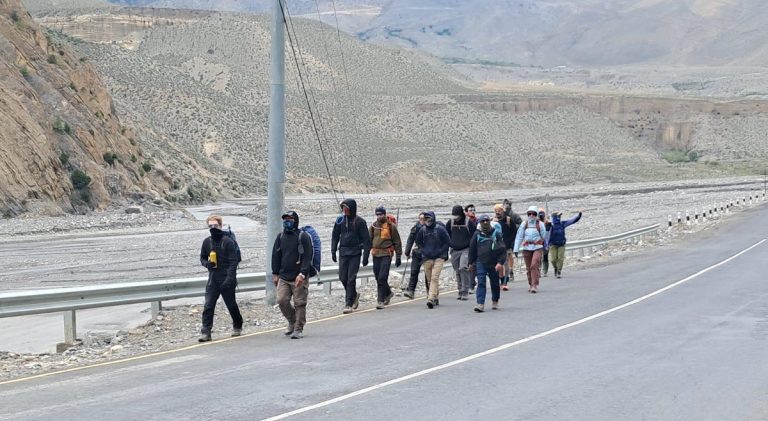
With the onset of the monsoon season, some of Nepal’s most popular tourist destinations in Myagdi district have grown noticeably quiet. Areas such as Ghorepani, Poon Hill, Mohare Danda, Khopra Ridge, Todke, Annapurna Base Camp, Singa and Bhrung Hot Springs, Tatopani Kunda, Rupse Waterfall, and Narchyang Falls have seen a sharp decline in tourist arrivals since heavy rainfall began.
Ghorepani Hotels Stand Empty Amid Downpour
Mina Pun, Chairperson of the Hotel Management Sub-Committee in Ghorepani, under Annapurna Rural Municipality–6, said the continuous rainfall and poor weather conditions have led to a significant drop in tourism activity.
“Due to bad weather, tourists have stopped coming. The trekking trails are muddy and at risk of landslides, and the mountains are often covered in clouds, hiding the main attractions,” Pun said.
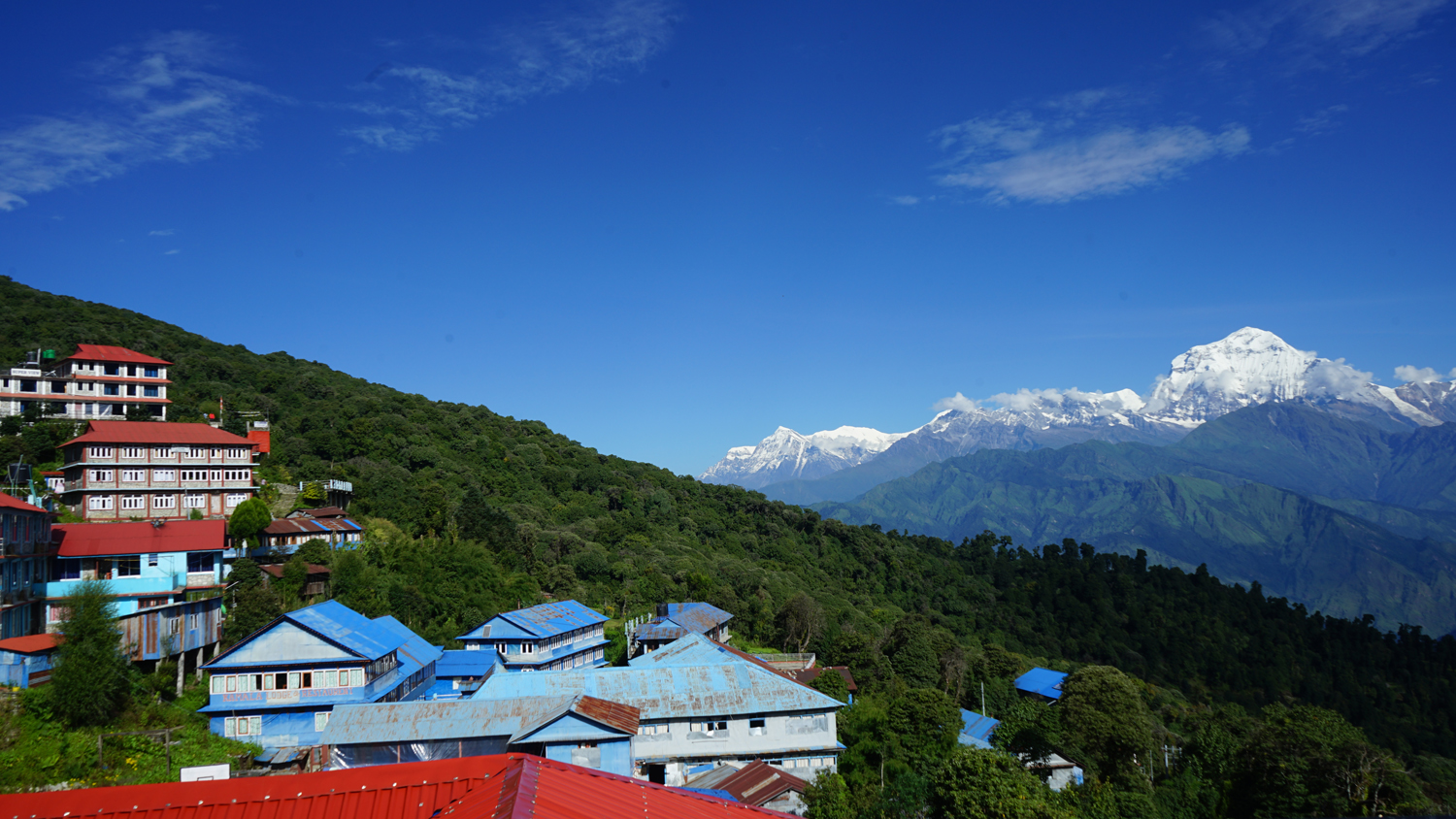
Ghorepani, one of the key destinations on the world-renowned Annapurna Circuit Trek, is home to 25 well-equipped hotels with a total capacity of around 1,000 visitors. However, these hotels are now sitting mostly empty.
Monsoon Declared Off-Season for Tourism
According to tourism operators, the months of Jestha to Bhadra (May to August) are considered the off-season for tourism in the hilly and mountainous regions due to frequent rain, slippery trails, and poor visibility. The weather also makes road access unpredictable, often causing roadblocks and trail closures that make trekking difficult or dangerous.
“During the monsoon, we mostly get clouds instead of clear mountain views. It’s no surprise that visitors are skipping this time of year,” Pun added.
Tatopani and Singa Hot Springs Deserted
The impact of the monsoon isn’t limited to trekkers. Even relaxation and spiritual tourism sites, such as Bhrung Tatopani in Annapurna Rural Municipality–2 and Singa Tatopani Kunda in Beni–4, have lost their usual crowd of visitors. These hot springs are known as recovery spots for tourists trekking to Mustang or Annapurna Base Camp, and also serve as natural healing destinations for religious and wellness-focused travelers.
Birendra Man Shakya, former Chairperson of the Singa Hot Springs Management Committee, shared that visitor numbers have dropped drastically. “During peak tourist seasons, around 1,000 people used to come here to bathe every day,” he said. “But now, we hardly see even 50 people a day.”
Tourism Activities Come to a Standstill
Myagdi, a district known for its diverse trekking routes, mountain expeditions, sunrise views, waterfalls, gorges, and indigenous cultures, is usually bustling with tourists for most of the year. Popular months include Ashwin, Kartik, Falgun, Chaitra, and Baishakh (September to May), when weather conditions are favorable, skies are clearer, and the mountains are fully visible.
However, the monsoon months of Jestha, Ashadh, Shrawan, and Bhadra (May to August) are typically considered dead months for tourism. During this time, the number of tourist arrivals drops to near zero. As a result, hotel operators, trekking guides, porters, and transport providers enter a period of inactivity.
“The trails are empty. There’s no buzz of backpackers. Even locals who earn by providing food, lodging, or guiding services are taking an unplanned break,” said one hotel owner in Tatopani.
30,000 Annual Foreign Tourists Affected
According to data from the District Police Office, Myagdi sees about 30,000 foreign tourists annually, most of whom arrive during the peak seasons for trekking and mountain viewing. These tourists contribute significantly to the local economy by supporting hotels, guides, porters, and transport services.
However, the current season has left local tourism stakeholders idle and uncertain. While some are using this time for maintenance and preparation for the next tourist cycle, others are worried about the economic consequences of having four consecutive months of inactivity every year.
Looking Ahead: Opportunity Amid Challenges
Despite the temporary dip in visitors, tourism operators remain hopeful. With the clear skies and favorable conditions expected from mid-September, bookings and inquiries from trekking groups and tour operators are expected to pick up again.
Several local governments, including Annapurna Rural Municipality and Beni Municipality, have also shown interest in developing off-season tourism packages, such as wellness retreats, cultural exchanges, and village stays, to maintain a modest flow of visitors even during monsoon.
“Tourism here is seasonal, but we can find alternatives that are not weather-dependent. We just need proper planning and investment,” said one representative from the local tourism office.
The onset of monsoon has undoubtedly pushed Myagdi’s vibrant tourism industry into a temporary hibernation. But as soon as the clouds part and the peaks reappear in the autumn sky, trekkers, pilgrims, and adventure seekers are expected to return in full force.
Until then, local entrepreneurs and community-based tourism operators are focusing on maintenance, skill-building, and infrastructure upgrades, preparing to welcome the world once again when the season shifts.