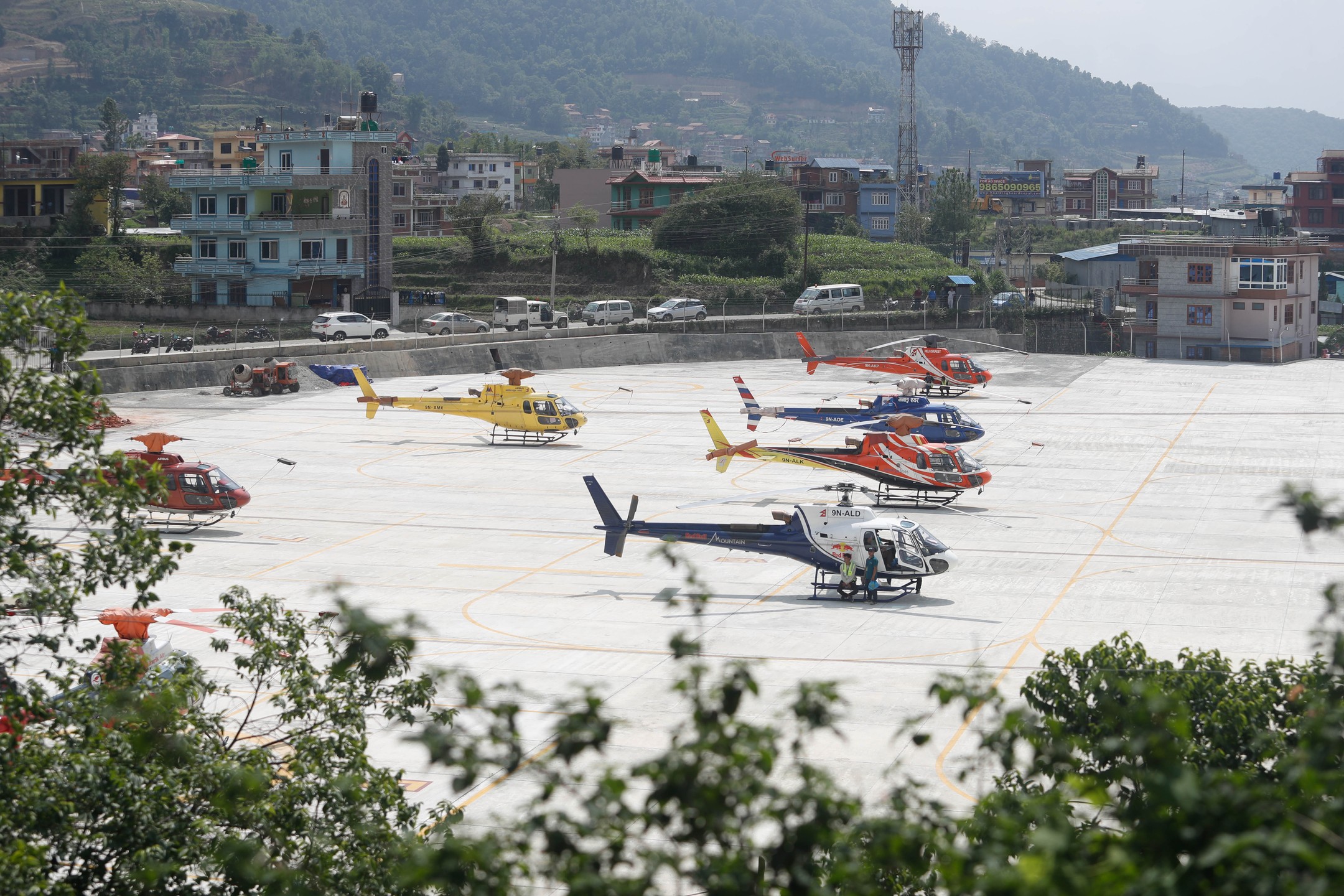
The ongoing absence of helicopter operations at Nalinchowk Heliport in Bhaktapur is intensifying the operational strain on Tribhuvan International Airport, since the majority of Nepal’s helicopter fleet is still based in Kathmandu. For roughly 10 months, the heliport has experienced little to no regular helicopter traffic after a corruption case tied to its construction. The Commission for Investigation of Abuse of Authority (CIAA) lodged the case at the Special Court against former Civil Aviation Authority of Nepal (CAAN) Director General Pradeep Adhikari and six others, accusing them of financial irregularities in the project. The matter is still being reviewed by the courts.
Helicopters Continue to Be Concentrated in Kathmandu
Nalinchowk was built to offer helicopters an alternative operating base and to relieve pressure on Tribhuvan International Airport. Yet most operators have kept their aircraft based in Kathmandu instead of moving regular operations to the Bhaktapur heliport. CAAN information officer Gyanendra Bhul stated that helicopter companies had in the past stationed at least one aircraft at Nalinchowk.

With most helicopters returning to Kathmandu, activity at the capital’s airport has risen, making the coordination of aircraft movements more challenging. The clustering of helicopters in Kathmandu also has implications for Nepal’s tourism sector. Helicopter operators offer services that include mountain and sightseeing flights, charter transportation, and emergency evacuations, which makes helicopter infrastructure a vital component of the country’s tourism and aviation network.
Operators Point to Practical and Safety Concerns
Some operators’ hesitancy to use Nalinchowk predated the corruption investigation. As an operator quoted in the report noted, companies had earlier expressed worries about the facility’s safety, infrastructure, and practical suitability for regular operations. The operator added that the investigation has in effect eased some of the pressure companies had felt to use the heliport.
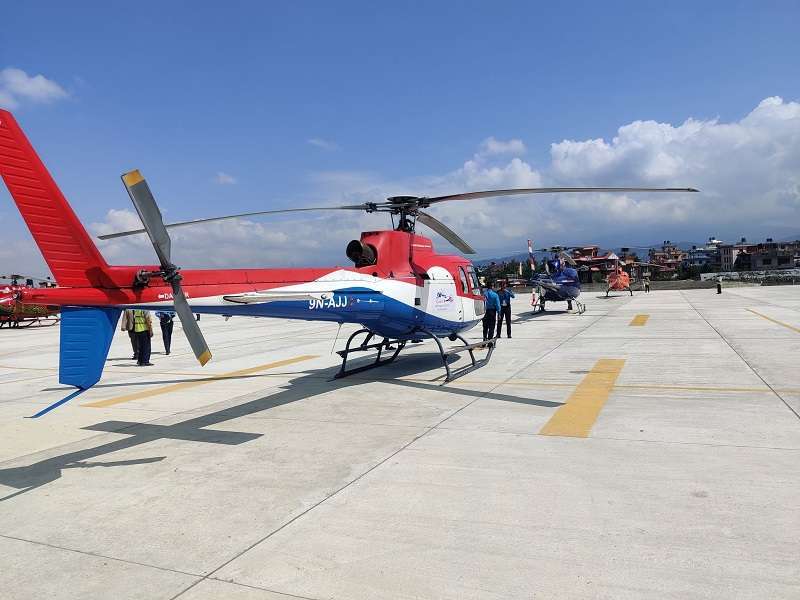
Operators had already doubted whether the facility provided the infrastructure and operating conditions needed for their daily activities. For tourism operators, these concerns matter because helicopter flights often run on tight schedules, especially during trekking and mountaineering seasons. Helicopters are also commonly deployed for rescue and evacuation missions, where adequate infrastructure and efficient ground arrangements can influence operational response
Improved Use of Heliport Could Reduce Airport Pressure
Giving Nalinchowk a more active role might help lower the amount of helicopter traffic at Tribhuvan International Airport. Depending on the infrastructure and operating arrangements in place there, helicopter companies could also perform tasks like maintenance and cargo handling from the facility. Even so, a long-term solution has not yet appeared. Because Nalinchowk belongs to CAAN, aviation officials must tackle the facility’s operational problems while the legal cases tied to its construction proceed on a separate track.
The situation also prompts a wider question: how should public aviation infrastructure be managed when allegations are raised against people involved in its development? Observers of the aviation sector have contended that probes into alleged wrongdoing should not by themselves stop public assets from being used, provided the facilities can be made safe and operational.

Helicopter Services Remain Important for Tourism
Nepal’s helicopter sector continues to be a significant contributor to tourism, especially in places where road links and scheduled flights are scarce. Helicopters are commonly used for reaching mountains, sightseeing, pilgrimage trips, charter services and emergency rescues of trekkers and climbers. At present, 11 helicopter companies operate in Nepal with a total fleet of roughly 34 helicopters, most of them stationed in Kathmandu.
Putting suitable heliports into effective service could help spread helicopter movements more evenly, support tourism services and ease pressure on the capital’s main airport. The Nalinchowk case thus goes beyond the running of a single heliport. How it is used in the future could affect helicopter companies, airport management and tourism activities that rely on dependable aerial transport throughout Nepal.