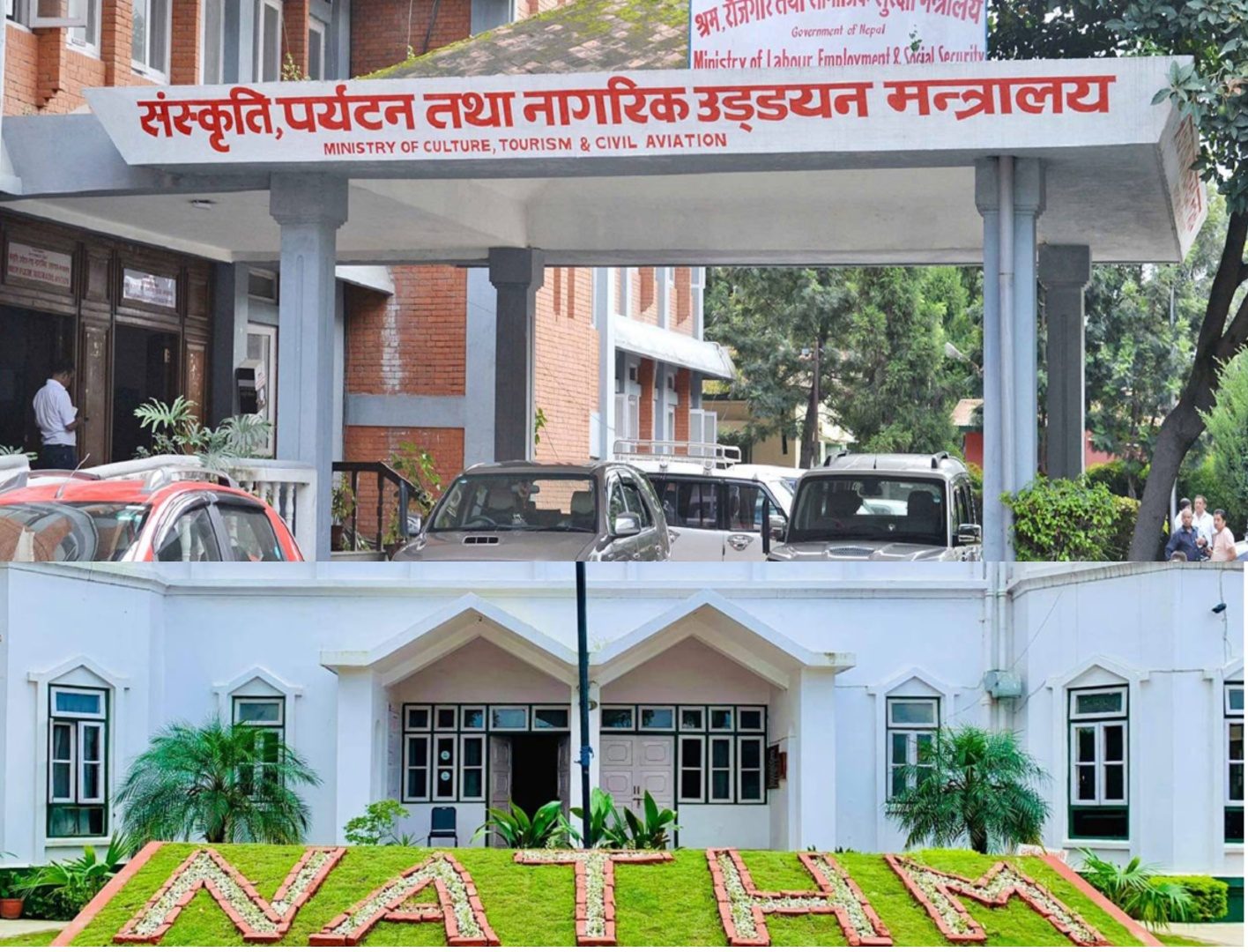
The Ministry of Culture, Tourism and Civil Aviation has introduced new employee regulations for the Nepal Academy of Tourism and Hotel Management (NATHM) following its integration with the Mountain Training Academy. The Nepal Tourism, Hotel and Mountain Academy Employee Administration Regulation, 2083, approved through a ministerial decision, establishes a broad package of financial incentives, healthcare provisions, insurance coverage, retirement benefits and employee welfare measures. The new framework is designed to improve employee motivation and social security while also creating additional long-term financial responsibilities for NATHM.
NATHM Employees to Receive New Incentives and Service Awards
Under the new regulation, employees will receive a festival allowance equal to one month’s salary once a year and an annual clothing benefit covering two sets of uniforms. Staff members demonstrating strong performance may receive cash rewards or grade advancement. The regulation also introduces service awards based on the length of an employee’s service.

Employees completing 25 years of service will be eligible for a long-service medal, while those completing 15 years will receive an employee service medal. The long-service medal will feature a 40-gram silver frame with an 8-gram gold coin, while the employee service medal will contain a 40-gram silver coin.
NATHM will also allocate 10 percent of its annual internal revenue to two employee-related funds. Of this amount, 5 percent will be deposited into a Performance Incentive Fund and another 5 percent into an Employee Welfare Fund. The Performance Incentive Fund can provide outstanding employees with an annual reward of up to two months of their existing salary. The Employee Welfare Fund will support staff through concessional loans and other welfare services.
Medical Benefits and Insurance Coverage Expanded
The new regulation provides broader healthcare and risk protection for employees. During their service period, employees at officer level can receive regular treatment expenses equivalent to up to 15 months of salary. Employees at the assistant fifth level can receive medical expenses of up to 20 months of salary, while other assistant-level and non-classified employees can receive up to 24 months of salary.
NATHM will cover the full cost of eligible hospitalization and surgical treatment. Employees undergoing treatment for serious illnesses such as heart disease, kidney disease and cancer may also receive additional financial assistance of up to Rs. 500,000. The institution will pay the annual premiums for Rs. 1 million life insurance and Rs. 500,000 accident insurance for all permanent employees.
The regulation also extends financial protection to employees’ families in cases of workplace accidents. If an employee dies due to a workplace accident, the family will receive an extraordinary lump-sum benefit equivalent to eight months of salary. Employees who become disabled may receive up to Rs. 300,000 in disability benefits. Up to two children below the age of 18 may also receive a monthly educational allowance equivalent to 10 to 12 percent of the starting salary scale.
Contribution-Based Gratuity System Introduced
The new rules introduce a contribution-based gratuity arrangement for permanent employees appointed on or after Shrawan 1, 2082. Under the new system, 10 percent of an employee’s monthly salary will be deposited into a gratuity fund, with NATHM making an additional contribution of an equal 10 percent.

Employees appointed before the specified date will continue under the existing gratuity arrangement. Depending on their service period, they can receive gratuity equivalent to up to three months of salary per year. Employees who complete 20 years of service and choose voluntary retirement will also receive an additional benefit equal to one month’s salary. NATHM will additionally contribute 10 percent of the monthly salary to the Employees Provident Fund, strengthening the institution’s long-term retirement support for its staff.
Expanded Benefits Raise Long-Term Financial Commitments
The new employee regulation is expected to strengthen staff motivation and welfare through improved financial incentives, healthcare support, insurance protection, retirement benefits and family assistance. However, the expanded benefits will also increase NATHM’s long-term financial obligations. The institution will have to regularly finance employee incentive and welfare funds while meeting commitments related to gratuity, medical treatment, insurance premiums and other benefits. With 10 percent of annual internal revenue now earmarked for employee-related funds, NATHM will face greater pressure to expand and diversify its internal income sources to sustain the new benefits over the long term.