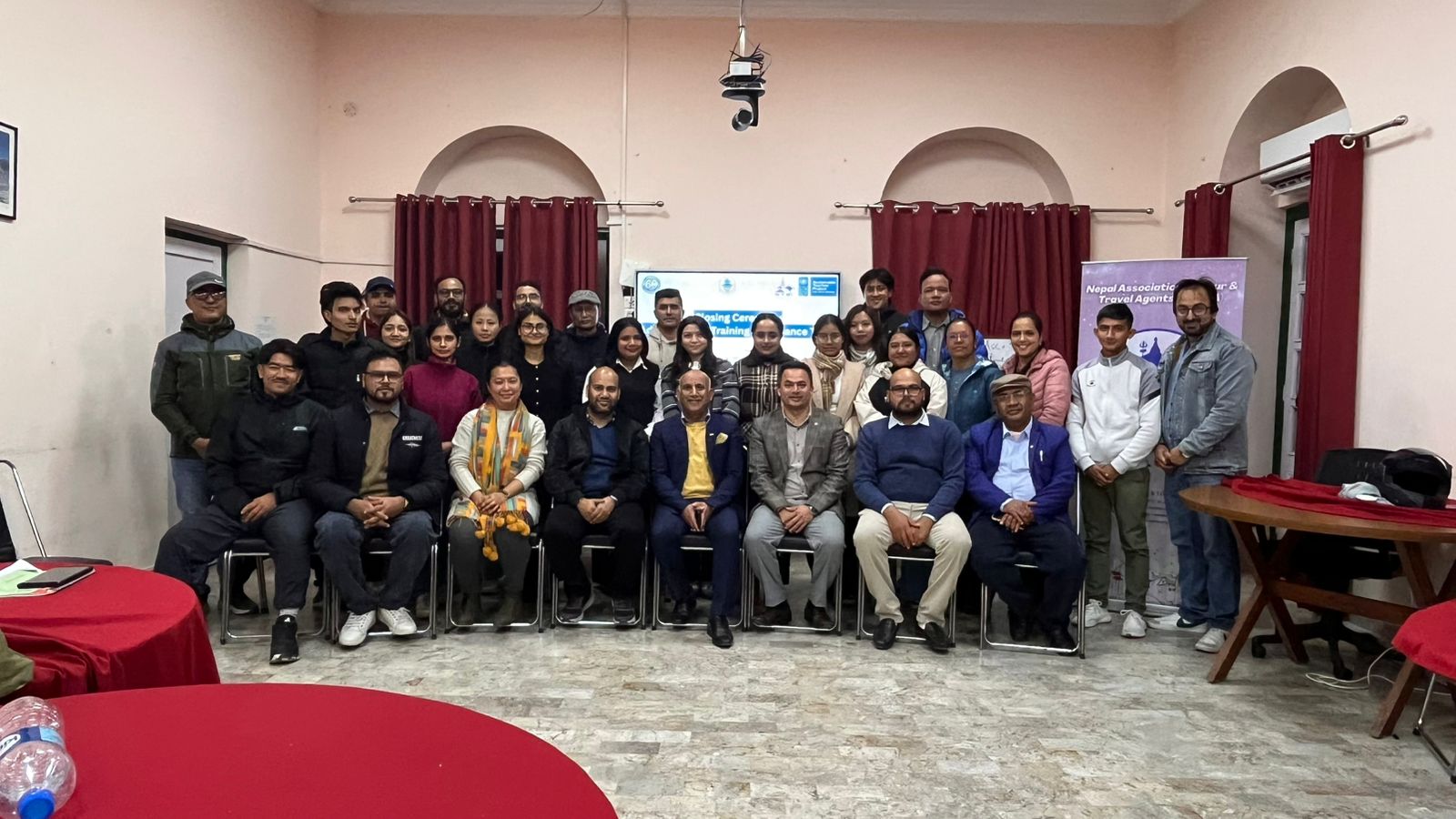
The Nepal Association of Tour & Travel Agents (NATTA) successfully organized a three-day Advanced MS Excel Training Program from December 21 to 23, 2025, at the Nepal Academy of Tourism and Hotel Management (NATHM) in Ravibhawan, Kathmandu. The training was conducted in collaboration with the Sustainable Tourism Project (STP), a joint initiative of the Nepal Tourism Board (NTB) and the United Nations Development Programme (UNDP), to enhance digital and analytical skills within Nepal’s tourism and travel industry.
Focus on Digital Skills for Modern Tourism Businesses
The program was officially inaugurated by NATTA President Kumar Mani Thapaliya, who underscored the increasing importance of digital literacy and data-handling skills in today’s rapidly evolving business environment. Addressing the participants, he emphasized that proficiency in tools such as MS Excel has become essential for tourism professionals to improve efficiency, accuracy, reporting standards, and data-driven decision-making.

He noted that as the tourism industry becomes more competitive and data-oriented, professionals must be equipped with advanced technical skills to manage financial data, customer information, operational records, and performance analysis. According to him, strengthening these competencies will enable tourism businesses to operate more professionally and sustainably in both domestic and international markets.
Practical, Industry-Focused Training Sessions
The training sessions were facilitated by Ram Prasad Niraula, a Certified MS Excel Specialist, and Prakash Bhandari, a semi-qualified Chartered Accountant. The trainers delivered practical, hands-on sessions tailored specifically to real workplace scenarios in the tourism and travel sector. Rather than focusing solely on theory, the program emphasized the application of Excel tools for daily business operations, financial management, reporting, and data analysis.
The training aimed to enhance participants’ capacity in managing large datasets, performing business analysis, improving operational efficiency, and producing professional reports required by stakeholders, regulators, and management.
Key Areas Covered During the Training
Over the three days, the program covered a wide range of advanced Excel topics essential for tourism professionals. These included advanced Excel features and customization techniques, data organization, validation, and conditional formatting, as well as advanced formulas and functions for business and financial analysis.
Participants also received in-depth training on Pivot Tables and Pivot Charts for professional reporting and data visualization. Other key areas included data analysis tools such as Goal Seek and Scenario Analysis, structured printing methods, collaboration tools, and effective reporting techniques. The hands-on and interactive methodology enabled participants to immediately apply newly acquired skills to real-life work situations within their organizations.
Strong Participation from NATTA Member Organizations
More than 30 participants from NATTA member organizations took part in the training, demonstrating strong interest in strengthening digital and analytical skills across the tourism sector. Participants actively engaged in discussions, exercises, and problem-solving activities, reflecting the growing recognition of technology-driven management practices within the industry.
The program was coordinated by Shradha Joshi, Executive Member of NATTA, who ensured smooth implementation and effective coordination throughout the training sessions. Her role was instrumental in maintaining continuity, participant engagement, and overall program effectiveness.
NTB Highlights Importance of Data-Driven Tourism
On the closing day, Nepal Tourism Board CEO Deepak Raj Joshi addressed the participants and highlighted the critical role of digital tools like Excel in advancing data-driven decision-making within Nepal’s tourism industry. He encouraged tourism professionals to utilize Excel not only for operational efficiency but also for improving reporting standards, transparency, and strategic planning.
Joshi emphasized that data literacy is increasingly vital for sustainable tourism development, enabling organizations to measure performance, assess market trends, and respond effectively to changing consumer demands.

Commitment to Capacity Building and Sustainability
NATTA expressed sincere appreciation to the Sustainable Tourism Project (STP), Nepal Tourism Board (NTB), and United Nations Development Programme (UNDP) for their collaboration and support in making the program successful. The association believes that such capacity-building initiatives play a crucial role in strengthening the professionalism, competitiveness, and sustainability of Nepal’s travel and tourism sector.
According to NATTA, the Advanced MS Excel Training Program is expected to significantly contribute to improved data management, informed decision-making, operational efficiency, and long-term sustainable growth within Nepal’s tourism industry.