The Nepal Airlines Corporation (NAC) is considering the adoption of aircraft leasing as a strategy to supplement its inadequate fleet while addressing growing demand for domestic and international services. The Ministry of Culture, Tourism and Civil Aviation has requested Nepal Airlines Corporation (NAC) management to consider a leasing approach and expand its international routes due to the current financial constraints of purchasing new aircraft.
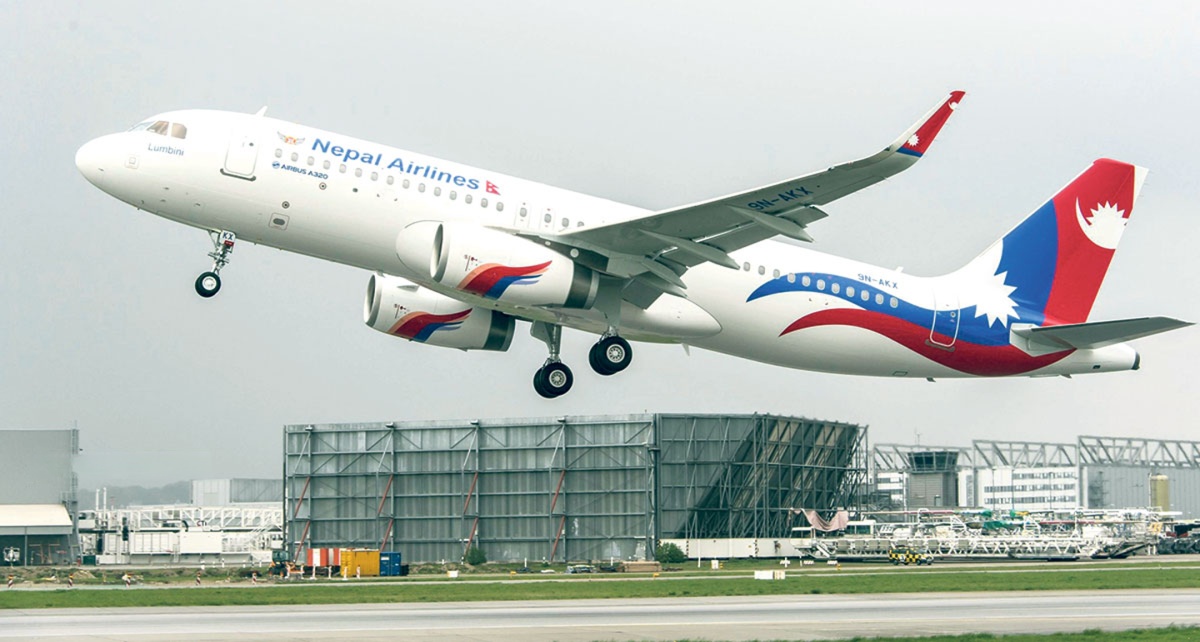
Tourism Minister Khadak Raj Paudel has stated to the Federal Parliament’s International Relations and Tourism Committee that the corporation should acquire additional aircraft through a leasing model and expand its international presence rather than invest in the lengthy and costly purchase process. The request comes at a time when Nepal Airlines Corporation (NAC) continues to struggle with keeping its fleet of four Airbus aircraft, including two A330s and two A320s, fully operational. Disruptions due to maintenance have repeatedly affected Nepal Airlines Corporation (NAC)’s international operations with two A330s in September being under long-term maintenance in Italy and temporarily grounded in Narita, respectively.
Nepal Airlines Corporation (NAC) Considering Leasing Options Amid Fleet Expansion Debate
Government authorities have been discussing the need for the NAC to expand its current fleet, which in recent years has included exploring ways to increase international reach and accommodate greater demand. The corporation had previously made a 2024 international tender for two narrowbody aircraft on a wet-lease basis which it indicated was a necessity for it to increase its market share and widen its international network.

The latest request from government authorities to consider a leasing approach for additional aircraft will add further impetus to that push. According to Minister Paudel, the corporation would find it practically impossible to invest in new aircraft with its current financial profile and would benefit in the short term from being able to grow its capacity by adopting a leasing approach. He has also associated fleet expansion with the chance to open up new international routes.
The Nepal Airlines Corporation (NAC) has been seen as potentially capturing a greater share of Nepal’s aviation market through such a strategic push. Paudel has also stressed the need to improve the financial structure of the corporation and facilitate better debt resolution and more efficient utilization of the fleet.
He has also argued that fleet modernization should be complemented by improved financial performance and other forms of restructuring. The immediate challenges of Nepal Airlines Corporation (NAC) are evident in its ongoing struggle to maintain its international operations fleet. The prolonged absence of one of the A330s from its international fleet has contributed to its reduced capacity to maintain the international schedules. According to Nepal Airlines Corporation (NAC) technical officials, problems discovered during the inspection and the unavailability of a required replacement component have caused the aircraft’s prolonged absence.
In September reports indicated that Nepal Airlines Corporation (NAC)’s A330, 9N-ALZ, nicknamed Makalu, had been undergoing a C-check at Atitech in Italy and had spent more than a month there. This has been combined with a similar, temporary grounding of Nepal Airlines Corporation (NAC)’s other A330, 9N-ALY, after it was grounded earlier in Narita.

While 9N-ALY was eventually released and returned to service, the simultaneous challenges illustrated the vulnerability of the corporation to having its domestic and international travel networks disrupted by even one or two of the currently available four Airbus aircraft being unavailable. Nepal Airlines Corporation (NAC) Acting General Manager Janakraj Kalakheti has also identified other maintenance and procurement-related challenges affecting the NAC. In his comments at the parliamentary committee, he said that the airline requires substantial funds for engine maintenance and that the current procurement requirements, with issues surrounding bid and performance guarantees and advance payments, have been limiting its ability to make the necessary maintenance.
NAC’s Five Grounded Chinese Aircraft Remain a Challenge
While the NAC is considering options to lease additional aircraft, its five grounded Chinese aircraft continue to pose a challenge. The five grounded aircraft include two MA-60s and three Y-12Es that have been out of commercial service since 2020 after the NAC concluded that their fuel consumption, maintenance requirements and commercial performance rendered them unsuitable for further service.
The NAC has attempted on multiple occasions to dispose of the five aircraft, including leasing and sale attempts, but without success. The corporation invited bids for leasing the five aircraft in 2022 without receiving any successful offers before eventually attempting to sell them. An independent appraisal in 2023 reportedly valued the five aircraft at approximately Rs220 million, while NAC has set significantly higher internal asking prices.
Despite multiple sale attempts, the five aircraft continue to be a burden for the NAC. The grounded fleet of five aircraft continues to be a cost for the corporation. According to reporting citing the Office of the Auditor General, the insurance, parking and engine preservation for the five aircraft amounts to roughly Rs200 million annually, while the outstanding loan-related interest have contributed significantly to the burden.

Leasing to Help Address Immediate Capacity Needs
The decision of the NAC to consider a leasing approach for additional aircraft comes at a time when the corporation has a substantial debt burden and faces recurring maintenance and scheduling challenges. The government has stated that fleet expansion should be accompanied by financial, scheduling and management restructuring. The need for additional aircraft is particularly crucial for Nepal’s tourism industry.
A stronger domestic carrier can help to support the country’s efforts to develop its international connections, including facilitating the movement of tourists, and help it to develop new air links with key tourism and labour markets. Industry observers have warned that the increase in aircraft leasing without addressing the issues surrounding NAC’s maintenance, aircraft utilization and financial management can add to the liabilities of the corporation.
The government has therefore linked the push of the government to expand the NAC’s fleet with wider reforms, including debt restructuring, interest rate adjustments, improved aircraft maintenance and management restructuring. For the NAC, the immediate challenge is to restore sufficient capacity to meet its current transportation needs while developing a more sustainable and long-term fleet. The proposed adoption of a leasing approach can potentially help the corporation to quickly increase its aircraft stock and open new routes, but the success of this initiative will ultimately depend on the ability of the corporation to ensure that these aircraft are kept in service and contribute to revenues.