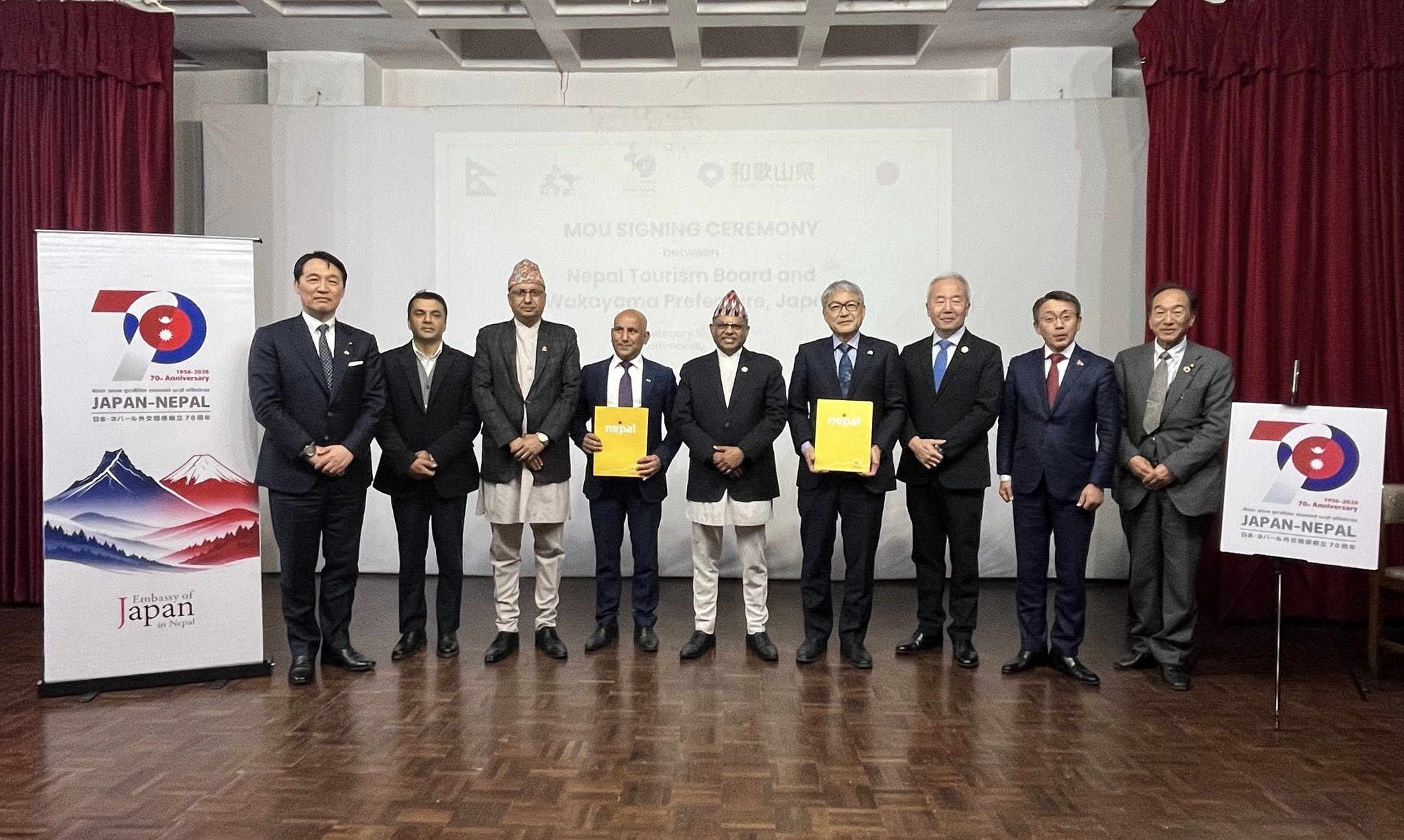
To reinforce tourism diplomacy between Nepal and Japan, the Nepal Tourism Board (NTB) and Wakayama Prefecture have signed a Memorandum of Understanding (MoU) to foster bilateral cooperation in the tourism sector. The agreement aims to boost joint promotion, knowledge exchange, and sustainable tourism initiatives between the two countries.
Cultural and Historical Ties Drive Collaboration
The MoU signing coincides with the 10th anniversary of the Cultural and Tourism Exchange Agreement between World Heritage Cities signed in 2015 between Lumbini, the birthplace of Lord Buddha, and Koya Town in Wakayama Prefecture. On February 16, the Governor of Wakayama Prefecture, Izumi Miyazaki, and the CEO of the Nepal Tourism Board (NTB), Deepak Raj Joshi, formally signed the tourism cooperation agreement in Kathmandu, witnessed by the Japanese Ambassador Toru Maeda and Nepal’s Minister of Culture, Tourism, and Civil Aviation, Hon. Anil Kumar Sinha.
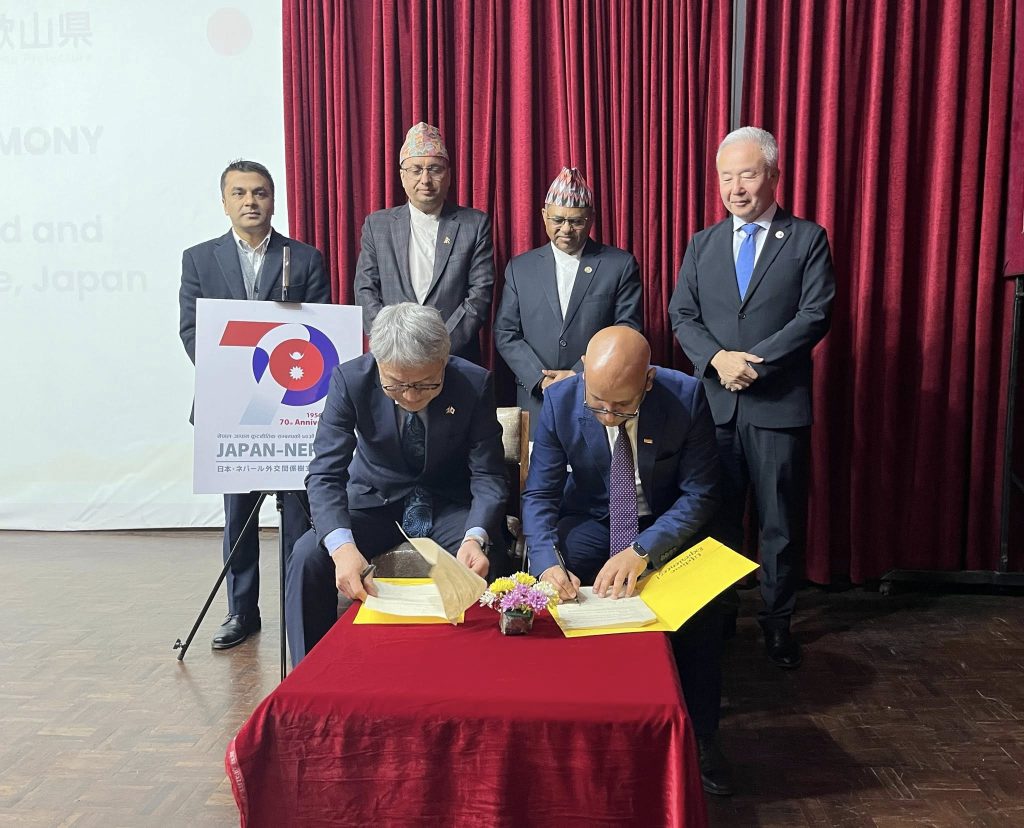
Governor Miyazaki highlighted the enduring historical and cultural links between Japan and Nepal. “We are delighted to collaborate with Nepal, a country enriched by history and culture. This MoU will strengthen the tourism promotion and foster closer ties between Wakayama and Nepal,” he said.
Joint Commitment to Sustainable Tourism
The agreement lays out a roadmap for collaborative initiatives, including joint marketing campaigns, sharing tourism-related information and best practices, expert and official exchanges, communication and public relations cooperation, and promotion of culturally respectful and sustainable tourism practices. Both parties emphasized the importance of promoting responsible and sustainable tourism that honors local culture while creating economic opportunities.
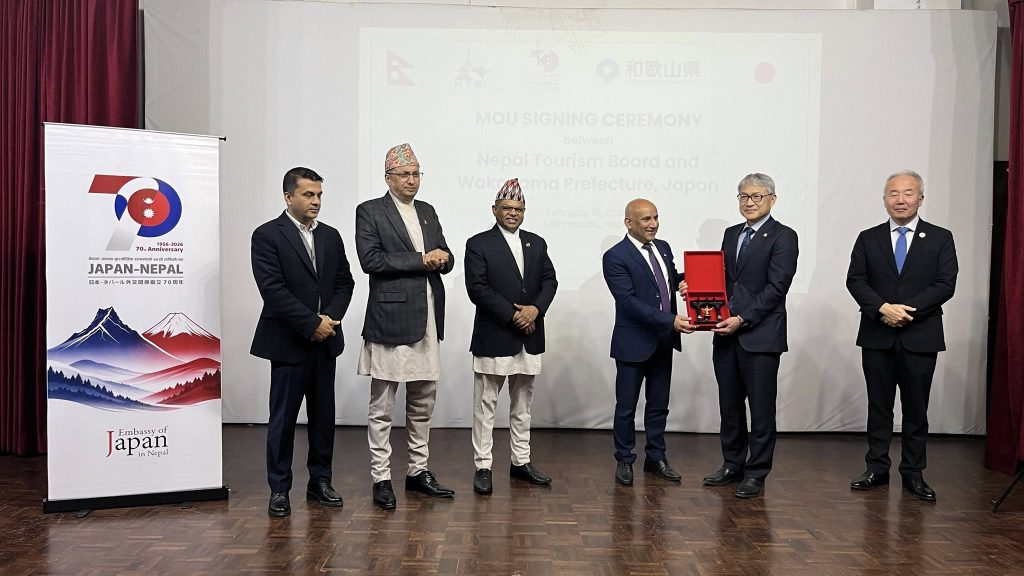
Minister Anil Kumar Sinha welcomed the MoU as a timely step, noting that it comes in the context of the 70th anniversary of diplomatic relations between Nepal and Japan. “Both countries place a high value on cultural cooperation. This partnership provides a strong foundation for sustainable tourism and reinforces the long-standing friendship between our nations,” he said.
Similarly, Secretary of the Ministry of Culture, Tourism, and Civil Aviation, Mukunda Prasad Niraula, described the MoU as a historic milestone for tourism promotion. “Nepal and Japan share a long-standing relationship. For Nepal, a Himalayan nation and the birthplace of Buddha, this agreement is timely for diversifying the tourism market. It integrates shared values and cooperation, and we are confident it will strengthen bilateral tourism collaboration in the future,” he said.
Nepal Tourism Board’s Vision and Opportunities
Deepak Raj Joshi, CEO of the Nepal Tourism Board (NTB), highlighted Japan as one of Nepal’s key source markets for tourism, noting that Japanese tourist arrivals have recently increased by nearly 8 percent. “Nepal is a destination of diverse and vibrant experiences. This MoU is not just a formal agreement; it is a bridge connecting destinations, knowledge, and opportunities. It opens new doors for the Nepalese tourism market and strengthens our engagement with Japanese travelers,” he explained.
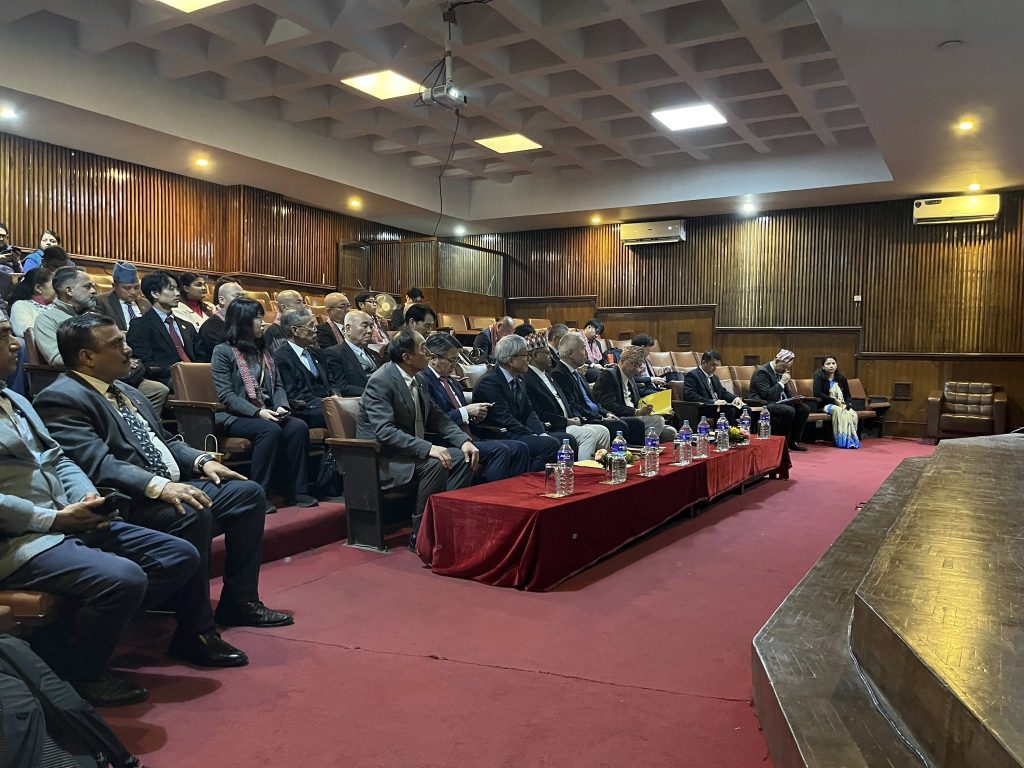
The MoU will be implemented from the date of signing, with both parties designating coordination points and managing expenses independently. While not legally binding, the agreement is based on mutual goodwill and trust, reflecting the long-standing 70-year diplomatic relationship between Nepal and Japan. The MoU is expected to promote further exchanges between Nepal and Wakayama Prefecture in areas such as tourism promotion, professional knowledge sharing, and cultural tourism development.
Experts believe that this cooperation will enhance Nepal’s international profile, diversify its tourism markets, and create sustainable avenues for cultural and economic exchange between the two nations. By formalizing collaboration in tourism, Nepal and Japan aim to strengthen people-to-people connections, showcase cultural heritage, and foster mutual understanding through travel and tourism initiatives. This partnership marks a significant milestone in the long history of Nepal-Japan relations, reinforcing bilateral ties while creating new opportunities for sustainable tourism growth.