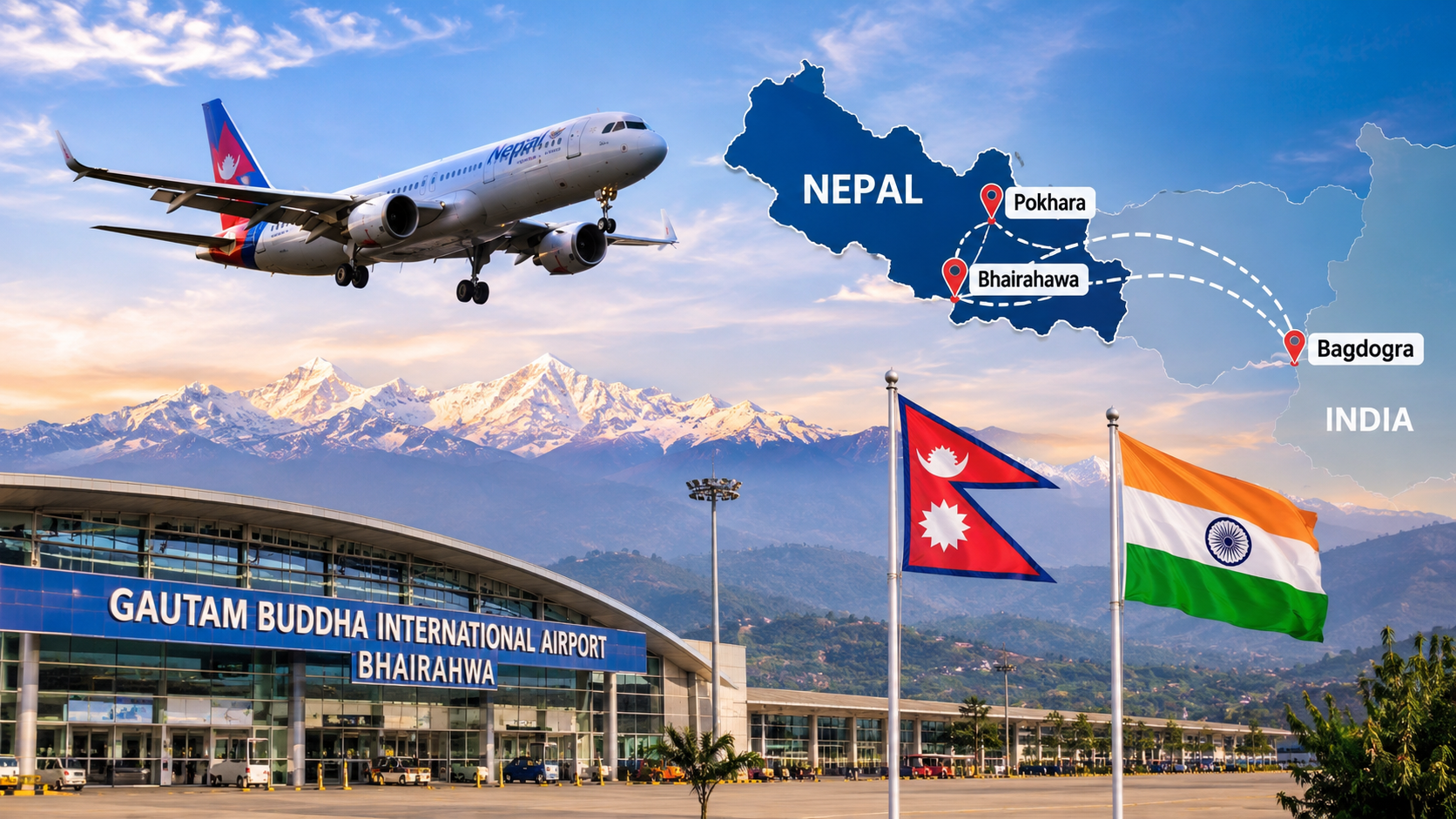
Nepal is considering allowing international flights operating to and from India’s Bagdogra Airport to use its eastern airspace as part of ongoing discussions with India to secure additional air entry routes for the country’s international airports. The proposal has emerged during bilateral aviation discussions ahead of Prime Minister Balendra Shah’s upcoming visit to India, where Nepal’s long-standing demand for improved air connectivity is expected to receive attention.
The proposal for the Bagdogra Airport could create an opportunity for Nepal to make progress on its demand for additional air routes, particularly for Gautam Buddha International Airport in Bhairahawa and Pokhara International Airport. While Nepal has indicated that it is open to allowing the use of its airspace for flights connected to Bagdogra, the government is seeking further discussions and a clearer understanding of India’s cooperation on the Bhairahawa route. The proposal concerning Raxaul, another location included in India’s request, requires additional study.
The discussions represent an important development in Nepal-India aviation relations, as both countries seek to address their respective air connectivity requirements. Nepal has been pursuing additional international entry points for more than a decade, aiming to make its regional international airports more accessible to international airlines and strengthen the country’s position as a regional tourism destination.
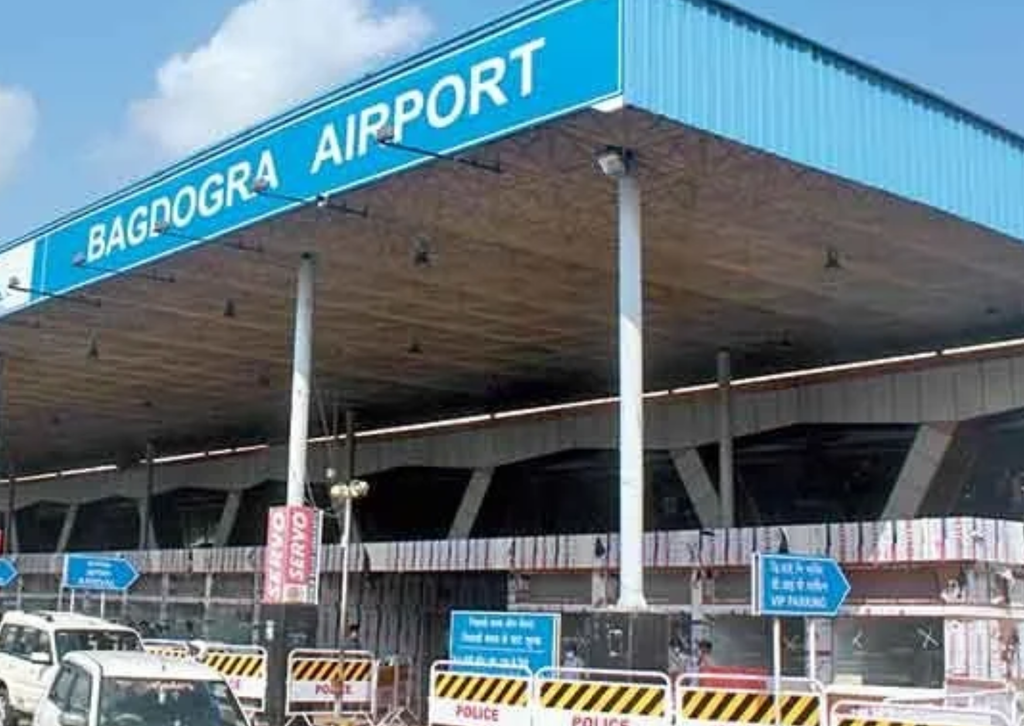
Nepal Open to India’s Bagdogra Airspace Proposal
The Indian proposal was discussed during recent bilateral consultations between aviation authorities in New Delhi. A Nepali delegation led by Mukesh Dangol, Director General of the Civil Aviation Authority of Nepal (CAAN), travelled to India to discuss additional air routes that Nepal has been seeking from its southern neighbour. During the discussions, India proposed allowing international flights operating to and from Bagdogra Airport in West Bengal to use Nepal’s eastern airspace. Located close to Nepal’s eastern border, Bagdogra serves as an important aviation gateway for the surrounding region. India also raised a proposal concerning the use of Nepali airspace near Raxaul.
Nepal’s initial response to the Bagdogra airspace proposal has been positive, although the government has indicated that the request must be assessed through the necessary technical and administrative processes. Regarding Raxaul, Nepali officials have sought additional time to study the proposal before taking a position. The Indian side has reportedly linked its request for access to Nepal’s airspace for Bagdogra flights with Nepal’s demand for additional air routes to Bhairahawa. Discussions have therefore focused on the possibility of addressing both countries’ aviation requirements through a broader understanding. For Nepal, securing a practical solution for Bhairahawa remains a major priority.
Prime Minister Balendra Shah’s India Visit May Advance Air Connectivity
The airspace issue is expected to become an important subject during Prime Minister Balendra Shah’s upcoming visit to India. The visit provides an opportunity for Nepal to raise its long-standing aviation concerns at the highest political level and seek a clear direction for resolving the restrictions affecting international flight operations. Nepal has repeatedly requested India to provide additional air entry routes that would allow international aircraft to reach Bhairahawa and Pokhara more directly via Bagdogra Airport. Although the country has invested significantly in developing modern international airport infrastructure outside Kathmandu, the availability of suitable international flight routes remains an important factor in attracting airlines and expanding airport operations.
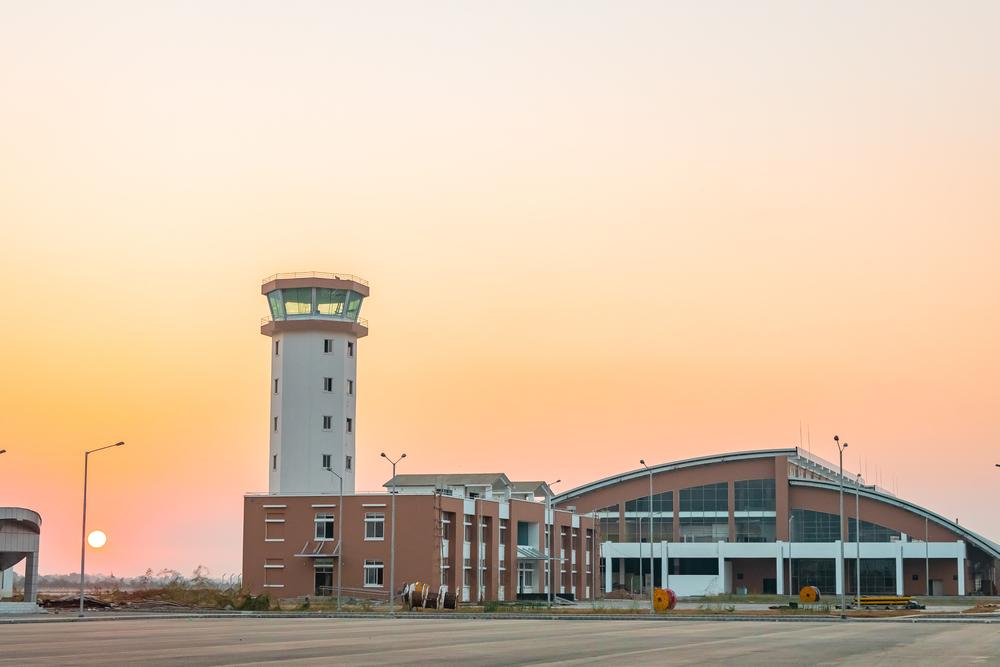
The government has been seeking a lasting solution that would improve access to Nepal’s international airports while addressing the technical and security considerations raised by India. The upcoming discussions could help establish a framework for further cooperation between the two countries’ aviation authorities. Tourism and Civil Aviation Minister Ganesh Paudel has also been involved in advancing the issue through diplomatic engagement. The government has indicated that improved air connectivity is essential for making fuller use of Nepal’s international airports and supporting the expansion of international tourism.
Better Air Routes Could Strengthen Bhairahawa and Pokhara Tourism
Additional international air entry routes could improve the operational prospects of Gautam Buddha International Airport and Pokhara International Airport. Both airports were developed to expand Nepal’s international aviation network, reduce pressure on Tribhuvan International Airport and provide more convenient access to important tourism destinations. The ongoing discussions over the Bagdogra airspace proposal have further highlighted Nepal’s efforts to address bilateral aviation concerns and secure better international connectivity for its regional airports.
Bhairahawa is particularly significant for religious and cultural tourism because of its proximity to Lumbini, the birthplace of Gautama Buddha and one of Nepal’s major international pilgrimage destinations. Improved international connectivity could make it easier for Buddhist pilgrims and other international visitors to access Lumbini and surrounding destinations. Similarly, Pokhara is one of Nepal’s leading tourism centres, known for its mountain views, lakes, trekking opportunities and adventure activities.
More convenient international flight connections could help attract visitors directly to the city and support tourism businesses across the wider Gandaki region. At present, international aircraft arriving from western destinations face operational limitations because of the available air entry routes. Nepal has been seeking additional western entry points, including through Nepalgunj and Mahendranagar, to make flights to Bhairahawa and Pokhara more efficient. While the proposed Bagdogra arrangement concerns India’s access to Nepal’s eastern airspace, Nepal continues to seek progress on its separate demand for additional international entry routes.
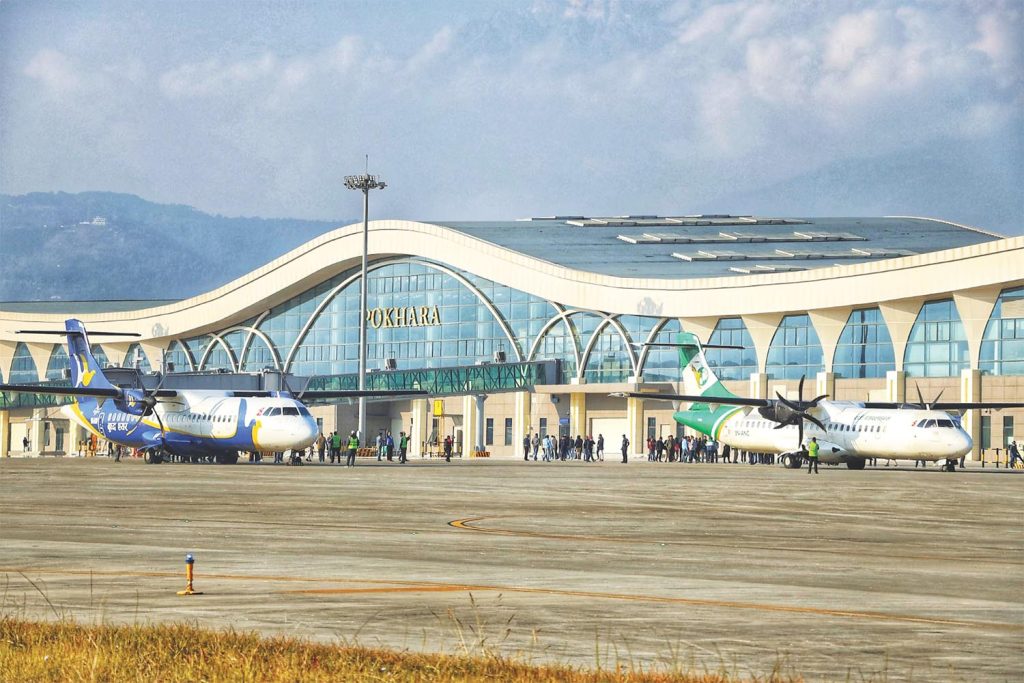
A suitable arrangement could reduce unnecessary flight diversions, shorten travel distances and improve the commercial attractiveness of operating services to these airports. Improved access would also support Nepal’s broader tourism development objectives by connecting international visitors more conveniently with destinations beyond Kathmandu. This could contribute to regional economic activity, create opportunities for hospitality and tourism businesses and encourage airlines to consider new services.
Nepal Seeks a Permanent Solution to Air Route Restrictions
Nepal’s demand for additional air entry routes has remained a major issue in aviation discussions with India for more than a decade. The government has repeatedly raised the matter through diplomatic meetings and technical consultations, seeking routes that would allow international flights to enter Nepal more efficiently from different directions. India has previously raised security and airspace-management considerations in response to Nepal’s requests. As a result, technical discussions must address flight altitudes, designated routes, air traffic coordination and other operational requirements before additional routes can be implemented.
The current Bagdogra proposal has introduced an opportunity for both countries to discuss airspace access on the basis of mutual requirements. However, Nepal’s priority remains securing a clear and workable arrangement for Bhairahawa and improving international connectivity for Pokhara. The government will need to ensure that any understanding includes practical provisions, technical assessments and a clear process for implementation.
Permission for Indian flights to use Nepali airspace would represent one part of the proposed cooperation, while additional entry routes for international flights arriving in Nepal would require their own technical and regulatory arrangements. If the upcoming discussions produce meaningful progress, the development could mark an important step towards strengthening Nepal’s aviation network. A lasting solution to the air route issue would help the country make better use of its international airport infrastructure, improve access to major tourism destinations and support the continued growth of Nepal’s international tourism industry.